Tankless gas water heater repair usually starts with power, gas, or a clogged intake, and the first thing to check is the error code plus the shutoff valves. If the unit is leaking, smells like gas, or shows scorch marks, stop there and call a licensed technician.
The most common mistake is swapping parts before you read the fault code or confirm the unit is actually getting gas, water flow, and power. That habit turns a simple check into a guessing game, and usually the loser is your wallet and time.
Lowe’s sold plenty of different brands, so the model tag matters more than the store receipt. Match the problem to the heater type first, then decide whether you need a cleaning, a part, or a replacement.
The essentials
Check the error code, breakers, gas shutoff, and water valves before buying parts.
A clogged inlet screen or intake filter is more common than a failed control board.
If you smell gas, see soot, or find a leak at the vent or gas line, stop and call a licensed technician.
On tankless gas units, fan faults and flame-sensing faults often trace back to airflow or ignition parts, not the whole heater.
Replace the unit when the heat exchanger leaks, the tank is rusted through, or the repair cost is getting too close to a new heater.
Top 5 Lowe’s Water Heater Repair Secrets You Wish You Knew
For tankless gas water heater repair, start with the fault code and confirm power, gas, and water flow before replacing anything. Check the gas shutoff, breaker, inlet valve, and hot-water flow first; if you smell gas, see a leak or scorch mark, stop and call a licensed technician.
Before You Touch Anything
A tankless gas heater combines gas, electricity, hot water, and combustion exhaust. Don’t remove panels, bypass a safety switch, adjust gas controls, or work near a leak; shut the unit down and use a licensed technician when the fault involves those parts.
60-Second Check
Read the fault code on the display and write it down before resetting the unit.
Confirm the breaker is on and the heater’s power switch, if fitted, is on.
Make sure the gas shutoff handle is parallel with the gas pipe.
Confirm the cold-water inlet valve is open.
Open a hot-water tap fully and check whether water flows normally.
Look and listen for water leaks, hissing gas, scorch marks, or unusual exhaust problems.
The first secret is that many no-hot-water complaints are supply problems, not failed parts: the unit can’t fire if electricity is off, gas is shut off, or water flow is too low to trigger it. A clogged inlet screen or partially closed valve can make a healthy heater act like an expensive box of buttons.
1
Read the code
Record the exact code, then check the owner’s manual for that code’s test. A code is a clue, not permission to order the first part that appears in a search result.
2
Check power
Look at the heater’s breaker and any nearby service switch. If the breaker trips again after you reset it once, leave it off; repeated trips need electrical diagnosis.
3
Check gas supply
Verify the appliance shutoff is open and other gas appliances work normally. Don’t test for a gas leak with a flame.
4
Check water flow
Open one hot tap fully. A weak stream, closed inlet valve, clogged inlet screen, or plumbing restriction can keep the flow sensor from calling for heat.
5
Reset once
After the basic checks, use the manufacturer’s reset procedure once. If the same code returns, stop resetting and arrange diagnosis instead of turning the heater into a very stubborn slot machine.
Worked Example
Say the display is blank and the shower has gone cold. The breaker is off, the gas valve is open, and the inlet valve is open; restoring power brings the display back and the heater fires. That five-minute check avoids buying a control board for a problem caused by a tripped breaker.
First checkFault code and display
Supply checksBreaker, gas shutoff, inlet valve
Next moveReset once after confirming supplies
Myth
A tankless heater that won’t heat needs a new igniter or control board.
Fact
A missing power supply, closed gas valve, or weak water flow can produce the same cold-water complaint. Confirm the supplies and code first; parts should match a confirmed fault.
Save The Code
Take a photo of the display before cycling power. Some codes disappear after a reset, and a technician can work faster with the original code and the conditions that caused it.
In short
Start with the code, breaker, gas shutoff, inlet valve, and water flow. Changing parts before those checks wastes money and can hide the real fault.
Parts and Tools That Match the Fault
Use a part only after confirming the cause and checking that your model calls for it.
Temporary Hot Water
FIVECUBS Immersion Water Heater
This portable heater can warm up to 5 gallons of water for a temporary bath or wash while you arrange the proper water-heater repair. Its auto shut-off, dry-burn protection and stainless steel guard add useful safeguards, but it won’t repair a tankless unit or a plumbing leak.
For tankless gas water heater repair, the usual causes are restricted water flow, missing gas, ignition or flame-sensing faults, blocked airflow, scale, and a failed control board. Check the display code and the simple items first; gas-pressure and combustion checks belong to a licensed technician unless your manual explicitly permits them.
Clogged Inlet Screen Or Water Filter
A dirty inlet screen can starve the heater of flow, so the unit may show a flow-related code, start and stop, or deliver cold water. Shut off the water, follow the manual to remove the inlet filter, and rinse it clean.
1
Check the flow path
Close the water valves, remove the inlet screen, and look for grit or scale.
2
Restore flow
Clean or replace the screen as specified, reopen the valves, and test a hot-water tap.
No Gas Supply Or Low Gas Pressure
A closed gas valve, empty propane supply, or pressure problem can leave the heater clicking without producing heat. Check that the appliance gas valve and fuel supply are open, then look for the fault code; don’t adjust a regulator or measure combustion pressure yourself.
1
Confirm supply
Check the fuel gauge or other appliances, and verify the heater’s gas shutoff is open.
2
Stop at pressure work
If supply is present but the code remains, schedule a licensed gas technician.
Ignition Failure
A failed igniter or interrupted ignition sequence usually produces an ignition code and repeated clicking, followed by no flame. Confirm that the unit has power and that its gas valve is open; sealed ignition parts need service.
1
Read the code
Record the exact display code and listen for clicking when a hot tap opens.
2
Arrange repair
Use the manual’s approved reset procedure once; repeated failure calls for service.
Flame-Sensing Problem
The burner may light briefly and then shut down when the flame sensor can’t prove combustion. The display often shows a flame or ignition fault, but sensor cleaning and combustion testing should follow the manual or a technician’s diagnosis.
1
Observe the cycle
Open a hot tap and note whether the burner lights, then drops out.
2
Don’t bypass safety
Have the sensor and burner checked rather than defeating the flame safeguard.
Vent Fan Or Airflow Fault
A failed fan, blocked intake, or obstructed exhaust can stop the burner before heating begins. Look for a fan code, unusual silence, or debris at the approved outdoor vent openings.
1
Check the vent path
Remove leaves, snow, or nests from accessible openings without dismantling sealed venting.
2
Call for sealed repairs
A fan that won’t run or a recurring airflow code needs qualified service.
Scale In The Heat Exchanger
Mineral scale can reduce water flow and cause short cycling, especially with hard water. A maintenance or flow-related code, weaker hot-water flow, and uneven temperature support this diagnosis.
1
Compare the symptoms
Check whether hot-water flow has fallen and whether temperature swings occur.
2
Schedule flushing
Descale the heat exchanger only by the procedure and solution named in the manual.
Control Board Fault
A blank display, random codes, or a unit that has correct power and supply but won’t sequence can point to the control board. Check the breaker and display first; don’t open the control compartment unless the manual permits it.
1
Verify power
Reset a tripped breaker once and check whether the display returns.
2
Leave the board alone
If power is present and the fault persists, schedule service for diagnosis and replacement.
One useful rule
A code narrows the search; it doesn’t prove which part failed. Record the code, water temperature, and what the burner or fan does before buying a repair kit.
How To Repair A Water Heater Fan
To repair a water heater fan, first confirm the fan fault and clear the intake and exhaust path; don’t replace the motor before checking the simple airflow problems. On many tankless gas heaters, the fan is part of the combustion safety system. If it can’t move air, the control board may lock out the burner rather than allow poor combustion.
Look for a fan-related error code, listen for the startup whir, and inspect the outside vent terminals for leaves, snow, nests, or other blockage. A fan that stays silent, damaged wiring at the visible connectors, or debris inside the fan housing points toward a real fan or control problem. Soot or exhaust indoors changes the job from troubleshooting to safety: stop using the heater.
1
Turn the heater off
Switch off electrical power at the service switch or breaker and follow the manual before touching the cabinet or visible wiring.
2
Clear the vent path
Remove safe-to-reach debris from the intake and exhaust openings. Don’t poke tools into the vent or alter its length, slope, or termination.
3
Inspect what you can see
Look for loose, cut, or heat-damaged wiring and dust around the intake. Clean dust only if the manual permits it; keep water and sprays away from the controls and motor.
4
Test once
Restore power and call for service if the fan still won’t start, the code returns, or the heater shuts down again.
The part may be upstream
A blocked vent, failed pressure sensor, damaged harness, or control board can look like a bad fan because each can prevent the startup sequence. A seized fan motor or failed board is usually a replacement job, not a spray-and-pray fix.
Stop for exhaust or soot
Smelling exhaust indoors or seeing soot around the heater means stop using it, leave the area if needed, and arrange qualified service. Keep a working carbon monoxide alarm nearby, but never use the alarm as permission to keep running a suspect appliance.
From HeaterGuides · our own guideWater Heater Owner's ToolkitFix the common faults yourself, keep it running for years, and know when a repair is money wasted.No-hot-water flowcharts, gas and electricFlush, anode, relief valve and descaling stepsRepair-or-replace calculator (Excel)$14.99$9.99Get it for $9.99See what's inside and watch the 2-minute video →18-page printable PDF + Excel calculator · instant download · 30-day refund
Rheem Water Heater Repair Kit And Other Parts
A Rheem water heater repair kit is useful only after the fault and model are identified, and Bradford White water heater repair follows the same rule: match the exact appliance, not the name on the tank. Brand-specific kits exist for some electric tank heaters, while tankless gas units more often need a model-specific igniter, flame rod, air filter, sensor, or service kit.
Find the full model and serial information on the data plate before ordering. Bradford White, Rheem, and similar labels narrow the search, but the exact model number determines connector shape, sensor type, ignition parts, and control compatibility. A generic box can contain several parts you don’t need and still miss the one that caused the fault.
A kit helps when
The manual lists the kit for your exact model.
The fault code and inspection identify a known service part.
You need matching seals or several related parts in one approved package.
Skip the kit when
The box is sold only by brand name.
The fault has not been confirmed.
A gas, combustion, or sealed control part is involved.
1
Record the fault
Write down the error code, symptoms, and when the heater stops. Check the manual’s troubleshooting chart before shopping.
2
Match the part
Compare the exact model number and the manufacturer’s part number. Confirm connectors, mounting points, and any required gasket or seal.
3
Set a hard boundary
If the part touches combustion, gas, or sealed controls, match the OEM part number or skip the DIY route and use a licensed technician.
4
Recheck the result
After an approved repair, verify that the heater starts normally and has no gas smell, soot, or exhaust problem. A kit can’t correct a blocked vent or failing board.
A box isn’t a diagnosis
Buying a repair kit before identifying the failed part creates optimistic inventory on the floor. If the tank is old, leaking, or repeatedly failing, compare repair costs with replacement before ordering parts; repair or replace your water heater can help with that decision.
Water Heater Leak Repair Sealer And Solvent Questions
A water heater leak repair sealer only belongs on the exact threaded connection its manufacturer allows; there is no universal solvent for water heater repair, and many leaks need a part replaced rather than sealed. The right compound depends on the pipe material, fitting, temperature, pressure, and joint type. A solvent that softens one plastic can damage another, while thread sealant won’t repair a split valve or tank.
Myth
Sealant fixes any water heater drip.
Fact
Sealant can help a compatible threaded joint, but it can’t repair a rusted tank, cracked heat exchanger, leaking valve body, or pressure-relief valve. Smearing compound over the outside usually hides the leak until water finds a more expensive path.
Leak source
What it usually means
Threaded fitting
The connection may need the correct listed thread compound or PTFE tape, applied after depressurizing and draining as required.
Drain valve
The valve may need tightening within the manufacturer’s limits or replacement; don’t block its outlet.
T&P valve discharge
The pressure-relief valve may be opening or failing. Never seal, cap, or plug its discharge pipe.
Inlet or outlet connection
A loose union, fitting, gasket, or corroded nipple needs identification before sealing.
Heat exchanger or tank seam
Internal corrosion or a failed component usually means replacement, not sealant.
Find the source before buying a tube of anything.
1
Shut down safely
Turn off the fuel or electrical supply as appropriate, close the water inlet if the leak is active, and let hot water cool. Gas-line or electrical work belongs to a licensed professional.
2
Trace the first wet point
Dry the fittings, then watch for the first place water returns. Water can run along insulation or pipe and make a sound joint look guilty.
3
Match the repair
Use only the sealant, gasket, valve, or thread compound listed for that connection and model. If the tank body or a corroded seam is leaking, arrange replacement instead.
Leave These Alone
Never apply sealer to a tank body, heat exchanger, T&P valve, or its discharge opening. A pressure-relief device must remain able to release dangerous pressure.
In short
There isn’t one solvent used for every water heater repair. Identify the leaking joint first; a leaking tank or heat exchanger has reached replacement territory.
When To Call A Licensed Technician
For tankless gas water heater repair, call a licensed technician as soon as the fault involves gas, combustion, venting, or a sealed internal component. The same answer applies to Should you repair or replace your water heater: save a sound unit with a defined, supported fault, but replace one with a leaking heat exchanger, failing tank, or repair cost that approaches a large share of a new heater.
Call Now
Leave the heater off and call for help if you smell gas, have repeated flame failures, see venting damage or scorch marks, find a leak at the tank or heat exchanger, see water around electrical parts, or a high-limit switch keeps tripping. Don’t keep resetting a safety control; the reset is a warning, not a repair.
Gas-line work, venting changes, combustion checks, and repairs inside sealed combustion components belong with a licensed technician in most places. A professional can test gas pressure, airflow, flame signal, exhaust, and safety controls without turning a small fault into a carbon-monoxide risk.
Repair Or Replace
Age matters, but the failure matters more. A clean sensor or valve fault on a supported unit may be worth fixing; a corroded heat exchanger, repeated control failures, or a repair estimate near a substantial portion of a new unit usually favors replacement. Some heaters are worth saving. Others are expensive ways to schedule a second appointment.
Ask the technician to check warranty status and parts availability before approving the work. A store receipt or purchase history may help confirm coverage and support the correct replacement part; Lowe’s water heater warranty details are worth checking if the unit came from that retailer.
In short
Stop at gas, combustion, electrical, tank, heat-exchanger, and recurring safety faults. Repair a defined problem on a serviceable heater; replace a leaking or uneconomical one.
More Questions, Answered
Why Did My Tankless Gas Water Heater Stop Heating All of a Sudden?
A sudden shutdown can come from a brief power interruption, a flow rate below the heater’s activation threshold, or a gas supply problem. Check whether another gas appliance works, open one hot tap fully, and read the display before resetting the unit. If the same code returns, stop resetting it and arrange service.
How Do I Know If the Fan on My Water Heater Is Bad?
A failed fan may stay silent during a call for heat, make grinding noises, or trigger a fan or airflow code while the intake and exhaust are clear. A technician should test the fan motor, wiring, pressure switch, and control signal; don’t bypass a safety switch to keep the heater running.
What Solvent Is Used for Water Heater Repair?
There is no general-purpose solvent for water heater repair. Threaded water or gas connections need the sealant specified for that fitting and appliance, while sensors, valves, and circuit boards should not be soaked in solvent. Shut off the gas and water before working on a leaking connection.
Should I Repair or Replace a Leaking Water Heater?
Repair an accessible threaded fitting or serviceable valve when the tankless heat exchanger and cabinet are sound. A cracked heat exchanger, corroded body, or leak from a sealed internal assembly usually points toward replacement or licensed service rather than sealant. Gas connections and combustion parts belong to a licensed technician.
Before you go · a welcome giftGet the Water Heater Owner's Toolkit for $4.99Fix the common faults yourself, keep it running for years, and know when a repair is money wasted. Normally $14.99; your welcome price saves $10.00. We'll email your link right now.One email with your link now. We never share your address.


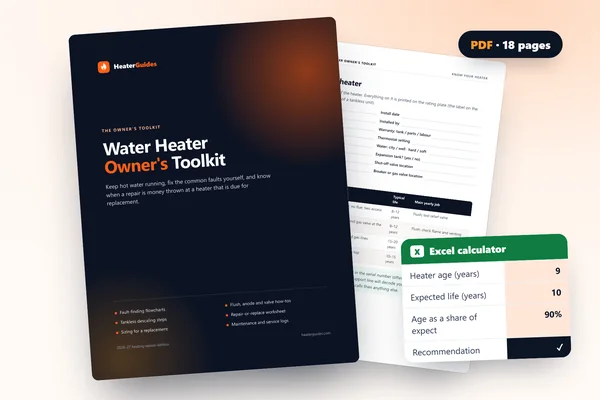 Water Heater Owner's ToolkitFix the common faults yourself, keep it running for years, and know when a repair is money wasted.No-hot-water flowcharts, gas and electricFlush, anode, relief valve and descaling stepsRepair-or-replace calculator (Excel)