Top 4 Low Wattage Space Heaters That Will Transform Your Winter Comfort
On this page 8 sections
- Compare The Low Wattage Heater Picks
- Top Low Wattage Space Heaters
- Choose The Right Low Wattage Space Heater Fast
- Match Heater Wattage To Room Size And Circuit
- Check Safety Features Before You Plug In
- Use Low Wattage Heaters With Solar, RVs And Old Wiring
- Plan How You’ll Actually Use The Heater
- Questions People Ask
Compare The Low Wattage Heater Picks
| Rank | Model | Best for | Wattage (High) | Heater Type | Best Use | Price |
|---|---|---|---|---|---|---|
| 1 | R.W.FLAME 750W Electric FireplaceLowest Heat Setting | Supplemental heat in bedrooms, living rooms and apartments | 1,500W | Electric fireplace | Supplemental heating up to 400 sq. ft. | Check price |
| 2 | R.W.FLAME Mini Ceramic HeaterBest Portable Pick | Desks, bedrooms, offices and RVs needing focused warmth | 1,500W | Ceramic heater | Up to 200 sq. ft.; desks, bedrooms and offices | Check price |
| 3 | De’Longhi Oil-Filled Radiator EW7707CMSteady Room Heat | Quiet office or bedroom heat without a fan | 1,500W | Oil-filled radiator | Office and bedroom heat | Check price |
| 4 | DREO Heater 319 Ceramic HeaterQuiet Smart Control | Bedrooms and offices needing adjustable, directed warmth | 1,500W | Ceramic heater | Bedrooms and offices with directed airflow | Check price |
| 5 | DREO 25-Inch Ceramic HeaterLarge-Room Coverage | 100-270 sq. ft. rooms needing wide, quiet airflow | — | Ceramic heater | 100-270 sq. ft. rooms | Check price |
You want more warmth, not another tripped breaker. Low wattage electric heaters focus their heat on you, use a fraction of the power of a 1,500W tower, and are small enough for offices, RVs and bedrooms.

Below you’ll see five heaters ranked by how they fit real situations: cold desks, drafty small rooms, shared circuits and even small solar or RV setups. Then we’ll walk through how to match wattage, room size and wiring so you buy once and plug in safely.
Top Low Wattage Space Heaters
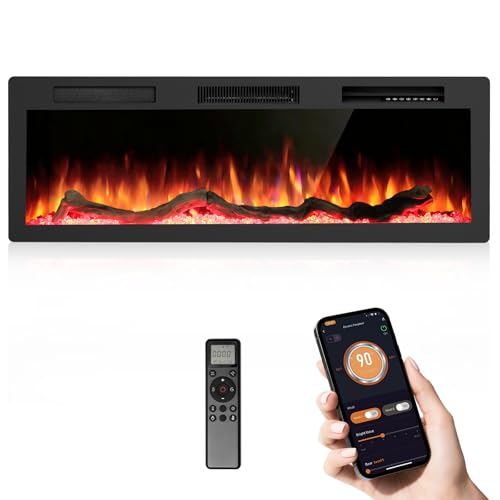
R.W.FLAME 750W Electric Fireplace

R.W.FLAME Mini Ceramic Heater
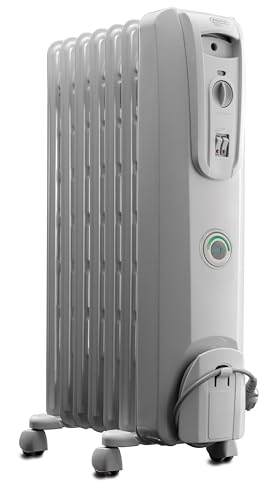
De’Longhi Oil-Filled Radiator EW7707CM

DREO Heater 319 Ceramic Heater

DREO 25-Inch Ceramic Heater
Choose The Right Low Wattage Space Heater Fast
The right low wattage space heater for you comes down to wattage, heater type and controls, so you can match the heater to your room, circuit and how close you sit to it.
In this guide a low wattage space heater, low wattage heater or low watt space heater means roughly under 600W for plug-in personal use, compared with standard 1,500W room heaters. A 1,500W unit pulls around 12.5 amps and needs more circuit headroom, while a 520W low wattage electric heater like the Amazon Basics mini ceramics draws under 5 amps and fits safely on most office and bedroom circuits if they aren’t already loaded up.
Most of the best low wattage space heater options in this range are ceramic fan heaters or slim panel/radiant heaters. Oil-filled radiators generally start around 700W and really live in their own category of oil filled radiators, so they’re separate from these low watt heaters electric picks.
Three specs separate the best low wattage heaters from the rest: wattage (heat output and amp draw), heater type (ceramic fan, infrared cabinet, tower) and controls (simple on/off vs thermostat, ECO modes, timers). A ceramic fan like the Amazon Basics Portable Ceramic Space Heater throws heat at you quickly; an infrared cabinet like the Dr Infrared DR-968 is better as a 1,500W whole-room supplement with a smarter thermostat and ECO mode.
| Use Case | Typical Wattage | Heater Style That Fits |
|---|---|---|
| Desk or under‑desk feet | 200–500W | Tiny ceramic fan (Amazon Basics mini) or compact panel |
| Small enclosed room, you sit close | 500–600W | R.W.FLAME small ceramic, other compact fan or radiant |
| Larger rooms on a strong circuit | 1,000–1,500W | DREO tower, Dr Infrared cabinet with thermostat/ECO |
For pure personal comfort at a desk or in a cubicle, a 200–500W low wattage electric heater aimed at your legs is usually the best low watt space heater approach. To warm a small, closed room while you sit nearby, 500–600W helps, but you still want the heater within a few feet. For bigger rooms, a 1,500W model with a real thermostat or ECO mode, like the DREO or Dr Infrared, makes sense only if the circuit can spare the load.
All of the recommended models here are plug-in low wattage electric heaters rated for indoor use only—no propane, no kerosene, no open flames to worry about.
Noise and size are your tiebreakers between the best low wattage heaters. Small ceramic fans usually land somewhere in the low‑30s to high‑40s dB range at low speed, like a quiet desk fan; that matters in a bedroom or on a call-heavy workday. Physical size also counts: a heater that’s roughly a 6–8 inch cube fits on a crowded desk or bedside table without stealing all your surface area, while taller towers belong on the floor across the room.
 Winter Heating Bill CutterSee what every heater in your home really costs, heat the rooms you use, and cut the waste in 30 days.Cost-per-hour tables for every heaterThermostat schedule and draft-proofing planRunning-cost and bill calculator (Excel)
Match Heater Wattage To Room Size And Circuit
To match heater wattage to your room and circuit, start with about 10 watts per square foot for supplemental heat, then check the amp draw so you don’t overload a 15A breaker.
For wattage of space heater sizing, a common rule is 10W per square foot in a reasonably insulated room. That means a 120 sq ft bedroom (10 × 12 ft) wants around 1,200W of electric heater wattage for room-wide comfort in real winter weather. A 500W heater in that same room supplies less than half of that, so it behaves as a personal heater unless the central heat already keeps the room close to your target temperature.
On the electrical side, convert any portable heater wattage to amps by dividing by 120V: a 500W heater pulls about 500 ÷ 120 ≈ 4.2A, 1,000W is about 8.3A, and a 1,500W heater is roughly 1,500 ÷ 120 ≈ 12.5A. On a 15A circuit that also runs lights, a TV and a PC, that 12.5A portable heater wattage is right at the practical limit, which is why breakers trip when someone adds a hair dryer or vacuum.
So what wattage of portable heater is good for home use? For shared circuits in bedrooms and home offices, 500–600W is usually the sweet spot for warming the person at a desk or in a chair; that covers the best low wattage space heater 500–600W category. Step up toward 1,500W only on a circuit with little else plugged in, preferably with a modern breaker and outlets in good shape.
If you’re searching for the lowest wattage space heater or a very low wattage electric heater, know that 150–250W units exist mostly as foot warmers and tiny desk heaters. They’ll take the chill off your toes under a desk but won’t move the thermometer in a full room unless the room is already near your target temperature.
For running cost, energy use scales directly with watts. A 500W low wattage heater uses one-third the power of a 1,500W unit at the same setting, but if you try to heat a whole room with the smaller unit by running it three times as long, the bill ends up similar.
| Heater | Watts | Per hour | Per day (8 h) | Per month (30 days) |
|---|---|---|---|---|
| 500 W low wattage heater | 500 W | 8.5¢ | 68¢ | $20.40 |
| 1,500 W space heater | 1,500 W | 26¢ | $2.04 | $61.20 |
Check Safety Features Before You Plug In
Low wattage electric heaters still need serious safety features, because any low watt electric heater can ignite nearby fabric if it tips, overheats or gets buried. All the models here are portable electric heaters that don’t use a lot of power \u2014 space heaters that are low wattage and do not use propane so you avoid combustion gases and carbon monoxide, but the heating elements still run hot. If you want a low wattage indoor heater or low wattage Portable heater for a bedroom, kids’ room or under-desk use, safety matters more than style. For portable low power electric heaters for offices, give shutoff features and a stable design more weight than fancy displays.
Independent safety listings like UL, ETL or CSA mean the heater’s tip-over switch, overheat cutoff, cord and plug have been tested as a system, not just claimed in marketing. A listed heater with a thermostat is the bare minimum if you ever plan to leave the room for more than a few minutes while it’s running.
Placement finishes the job. Keep at least 3 feet between the heater and anything that can burn, aim the airflow away from loose papers, and keep it well clear of bedding or curtains that can drift over the grille. Set it on a hard, level surface and route the cord around, not through, walkways so nobody kicks the heater or trips into it.
Office and cubicle use needs extra care. Check workplace policy first; many offices only allow small, low wattage electric heaters with tip-over protection. Keep the heater clear of paper piles, trash cans, fabric bags and under-desk clutter, and point it away from surge protectors or cable nests. Turn it off whenever you leave your desk for more than a short break.
Use Low Wattage Heaters With Solar, RVs And Old Wiring
Limited-power systems change how you should use a low-wattage electric heater. Even a modest heater can overload a small inverter, an RV hookup or fragile house wiring, so the real limits are watts and amps, not marketing phrases like “low voltage space heater”. Low-draw heaters reduce strain, but on tiny systems they still add up. On old wiring, choose low-amp portable heaters in the 200–600 W range. In RVs and boats, pick targeted heat such as heated pads or 12 V seat/sleeping pads instead of trying to warm all the cabin air.
Voltage is pressure, wattage is work. Most plug-in space heaters in the US are 120 V; a 500 W heater on 120 V draws about 500 \/ 120 \/= 4.2 amps, which is easy for a 15 A circuit by itself. Delivering that same 500 W at 12 V would need over 40 amps (500 \/ 12 \/≈ 41.7), which is why true low voltage space heaters for direct 12 V systems are rare and demand very heavy wiring.
Solar and inverter setups hit their limits quickly with heaters. A 500 W low power space heater already uses half of a 1,000 W inverter’s capacity, leaving little room for anything else. Run that heater for 2 hours and it consumes around 1 kWh (500 W × 2 h), which is roughly the usable energy in a healthy 12 V, 100 Ah battery once you allow for inverter losses. That is why even “small” heaters feel huge on battery power.
Old-house wiring and already busy circuits benefit most from low amp portable heaters. If a branch already feeds a fridge, microwave or another heater, stay in the 200–600 W range so the total draw stays under the breaker rating printed in the panel. Some 1,500 W room heaters include ECO modes and thermostats that cycle the element off once the target temperature is reached, which lowers average power use but doesn’t change the fact that they still pull the full 1,500 W while actively heating.
RV parks and marina hookups add their own limits. Whenever possible, plug a heater into an outlet fed by its own breaker, and avoid running other high-wattage appliances like toasters or microwaves on the same 15 A branch. A 1,500 W heater already takes about 12.5 A on 120 V leaving only a small margin before the breaker trips if anything else kicks on.
For solar, batteries and tight shore-power limits, alternatives often work better than any air heater. Heated mattress pads and seat cushions usually draw about 50–150 W, so a 100 W pad uses roughly one-fifteenth the power of a 1,500 W heater and can keep the person warm instead of the whole room. If you only need spot comfort at a desk or in bed, those low wattage heat sources are far kinder to small electrical systems than even the most efficient low power draw electric heaters.
Plan How You’ll Actually Use The Heater
How you plan to use a low wattage heater decides if it feels strong or useless, so decide first if you need spot heat on your body or background heat in the room.
Mini heaters that draw the least power – about 200–500 W – are great as portable heaters for your feet, hands or legs, but they’re weak at warming a whole room unless that room is tiny and closed off. For actual use, treat low-watt models as personal warmers: product 2 and product 3 work well on a desk or bedside table, not across a drafty living room. All plug-in electric heaters convert nearly all their watts to heat; comfort differences come from where the heat goes and how fast a fan moves it.
Room setup can make a small heater feel much bigger. Shut doors, block obvious drafts, and aim the heater at the body area that feels cold, so a 500 W unit focused on your shins in a closed 100 sq ft office feels far warmer than the same heater pointed into a hallway. Marketing photos of a palm-sized cube heating a big open-plan space are optimistic; physics wins.
Ultra-low power consumption usually means heating you, not the air. If you truly want the heater with lowest power consumption, think about a 100 W heated throw or mattress pad keeping one person warm instead of a 1,500 W blower heater warming the whole room; those pair nicely with a small 400–500 W desk heater. For silent, all-night background heat in a bedroom, an oil-filled radiator or flat panel heater often suits better than any fan-style low wattage unit, even though their nameplate wattage can be higher, because the gentle, stored heat and lack of fan noise feel calmer overnight.
| Heater | Watts | Per hour | Per day (6 h) | Per month (30 days) |
|---|---|---|---|---|
| 500 W desk heater + 100 W heated throw | 600 W | 10¢ | 61¢ | $18.36 |
| 1,500 W tower heater | 1,500 W | 26¢ | $1.53 | $45.90 |