

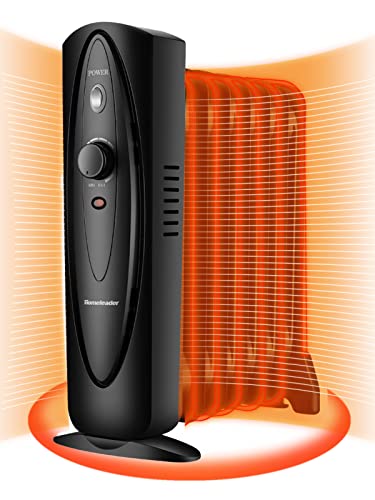


Mini radiator heaters are a smart choice when you need steady, quiet heat for a small room without the bulk or noise of a fan heater.
Choosing the wrong size or ignoring safety can cost you comfort, higher bills, or worse. This guide cuts through the specs to help you pick the right oil-filled radiator heater quickly.
Compare Mini Radiator Heaters
| Model | Best for | Heat Output (W) | Thermostat | Safety Features | Portability | Price |
|---|---|---|---|---|---|---|
| Homeleader Mini Oil Radiator, 700W | Best For Small Rooms | 700W | Adjustable thermostat | Overheat safety | Carry handle; light weight | See it on Amazon |
| Comfort Zone Oil-Filled Radiator, 1200W | Best For Bedrooms | 500W, 700W, and 1200W | Adjustable thermostat | Tip-over switch; overheat protection system | Oversized back wheels; solid front end | See it on Amazon |
| DREO Oil-Filled Radiator, 1500W | Best For Large Rooms | 600W, 900W, and 1500W | Eco mode; precise sensor and smart algorithms | Triple overheat protection; tilt protection; fire-resistant material; ETL listed | Large wheels and handles | See it on Amazon |
| Sweetcrispy Oil-Filled Radiator, 1500W | Best For Quiet Heat | 600W, 900W, and 1500W | — | Tip-over safety switch; overheat protection | Four heavy-duty universal casters; carry handle | See it on Amazon |
| Amazon Basics Oil Space Heater, 1500W | Best For Simple Control | 600W, 900W, and 1500W | Adjustable thermostat | Tip-over and overheat protection; ETL Safety Certificate | — | See it on Amazon |
Best Mini Radiator Heaters for Small Spaces
Homeleader Mini Oil Radiator, 700W
Comfort Zone Oil-Filled Radiator, 1200W
DREO Oil-Filled Radiator, 1500W
Sweetcrispy Oil-Filled Radiator, 1500W
Amazon Basics Oil Space Heater, 1500W
What Makes an Oil Filled Radiator Heater Good for Small Rooms
An oil filled radiator is an electric heater with sealed thermal oil inside metal fins; electricity heats the oil, and the oil releases steady warmth into the room. The oil never burns and normally never needs replacing. That makes it a good choice for bedrooms, offices and other small rooms where quiet, even heat matters more than instant blast.
The heating element warms the oil, which warms the fins, which warm nearby air by convection and radiation. Because there’s no fan motor, a mini radiator can run almost silently. After the thermostat switches the element off, the hot oil and metal fins keep giving off heat for a while.
Choose Wattage for the Room
Wattage sets the heater’s maximum heat output: common mini radiators range from about 600W to 1500W. A 600W unit suits a small, reasonably insulated room, while a 1500W model gives you more reach in a larger or colder space. Wattage doesn’t tell you how quickly the room will feel warm by itself; insulation, drafts, ceiling height and outdoor temperature matter too.
A thermostat is the control that keeps the room from turning into a sauna. Set the target temperature, and the heater cycles its element on and off instead of running at full power constantly. An adjustable thermostat is more useful than a simple high-low switch, especially in a bedroom where you want steady comfort rather than repeated hot and cold swings.
For a practical small-room pick, the Homeleader Oil Filled Radiator Heater has the features that matter most here: silent operation, an adjustable thermostat and portability. The DREO Oil Filled Radiator Heater is another option if its controls and size better match the room you’re heating.
Check the Built-In Protection
A good indoor oil-filled radiator includes overheat protection and a tip-over switch, along with a UL, ETL, or CSA safety listing you can confirm on the heater or its box. Always plug it into a dedicated wall outlet. Keep at least 3 feet clear around the heater from bedding, curtains, and furniture. Avoid extension cords or power strips to prevent overheating risks. Only run the heater unattended or overnight if the manufacturer explicitly allows it.
How to Size Your Mini Radiator Heater Correctly
Size a mini oil filled radiator at about 10 watts per square foot, then adjust for drafts, insulation and unusually cold rooms. If you’re asking “small oil filled radiators how costly mumsnet,” the answer is that cost depends mainly on wattage, hours of use and your electric rate—not on the oil reservoir itself; the running-cost section breaks out that calculation.
Is a radiator heater good? Yes, when you want quiet, steady heat and can wait longer for the room to warm; a fan heater usually feels faster at close range. Measure the room before choosing, because a small radiator can heat a suitable room well while struggling in a drafty space.
Oversizing doesn’t make heat free: a 1500W heater can warm a small room quickly, but its thermostat may cycle it off sooner and its maximum draw is higher. Undersizing brings the opposite problem—the heater runs for long periods while cold spots remain near windows, exterior walls and floors. A 700W unit can still work in a well-insulated small room, while a poorly insulated room may need the extra capacity of the Homeleader or Sweetcrispy 1500W models.
Use the next wattage up when the room has noticeable drafts or weak insulation, and use a lower-wattage model when the space is compact and well sealed. For more choices beyond oil-filled designs, compare these top space heaters after you’ve measured the room.
Running Costs: What to Expect from Mini Oil Filled Radiators
Yes, oil filled radiators are good heaters for steady room heat, and oil filled radiator heaters are usually cheaper to run than their wattage first suggests because the thermostat cycles them off after the room warms. They still use the same electricity as any other electric resistance heater while the element is on.
Calculate energy use with watts ÷ 1,000 × hours. A 700 W mini radiator uses 0.7 kWh in one hour at full power; a 1,500 W model uses 1.5 kWh. At 17 cents per kWh, the cost block shows the hourly comparison.
| Heater | Watts | Per hour | Per day (1 h) | Per month (1 days) |
|---|---|---|---|---|
| 700 W mini radiator | 700 W | 12¢ | 12¢ | 12¢ |
| 1,500 W mini radiator | 1,500 W | 26¢ | 26¢ | 26¢ |
For an eight-hour night, multiply those figures by eight: the 700 W heater uses 5.6 kWh, while the 1,500 W heater uses 12 kWh before thermostat cycling. At the same 17-cent rate, this cost block gives the per-night estimate.
| Heater | Watts | Per hour | Per day (8 h) | Per month (1 days) |
|---|---|---|---|---|
| 700 W mini radiator | 700 W | 12¢ | 95¢ | 95¢ |
| 1,500 W mini radiator | 1,500 W | 26¢ | $2.04 | $2.04 |
Residual heat helps after the thermostat clicks off: hot oil and metal fins continue releasing warmth, so the room doesn’t cool at once. That stored heat doesn’t reduce the electricity used to heat the oil, but it can lengthen the off-cycle and lower actual daily consumption. Drafty rooms, high thermostat settings and open doors shorten that break.
Safety and Certification to Look For in Mini Radiator Heaters
A safe oil filled radiator should have tip-over protection, overheat protection and a recognized UL or ETL listing before you bring it into a bedroom or living space. Oil filled radiator heaters get hot enough to cause burns and overload a circuit, so placement and connection matter as much as the thermostat.
Look for a tip-over switch that shuts the heater off if it falls and overheat protection that cuts power when internal temperatures rise too far. UL or ETL marking means the listed model was evaluated against applicable electrical safety requirements; confirm the mark on the heater itself, not only in an online description.
Plug the radiator directly into a wall outlet—never an extension cord or power strip. Keep at least 3 feet between the heater and bedding, curtains, furniture or clothing, and don’t run it while sleeping or away from home unless the manufacturer specifically says the model is designed for that use.
Oil filled radiators explained simply: an electric element warms permanently sealed thermal oil inside the metal body, and the oil transfers heat to the fins. A sealed unit is safer than a refillable design because you don’t have to open it, add oil or risk a leak from an incorrect fill; skip any heater that invites user refilling.
What Competitors Don’t Tell You About Mini Oil Radiator Heaters
Yes, oil filled radiators are effective in winter and generally good for small rooms, bedrooms and offices when you want steady heat rather than a fast blast of hot air. The sealed oil stores heat, so the metal fins keep warming the room after the thermostat switches the heating element off. They won’t heat a drafty whole house as quickly as a forced-air system, but they can hold a comfortable temperature quietly.
Silent operation matters most where a fan would become part of the problem. An oil radiator has no fan motor pushing air around, so the Homeleader Oil Filled Radiator Heater with Adjustable Therm… and similar models suit sleeping areas, reading corners and desks; you may still hear an occasional thermostat click as the heater cycles.
Position the heater where warm air can rise freely and cooler air can reach the fins from below and around the sides. An open spot near the colder part of the room usually circulates heat better than a tight corner, behind a chair or beneath a desk. Keep curtains, bedding, papers and furniture away from the fins, and never drape clothing over the unit.
Maintenance Takes Minutes
Maintenance is minimal, but blocked air passages make any radiator work less effectively and can raise surface temperatures. Unplug the heater, let it cool completely, then wipe dust from the fins, grille and controls with a dry or slightly damp cloth; keep vents clear and don’t open the sealed oil circuit.
More Questions, Answered
Are oil filled radiators any good for heating small rooms?
How much electricity does a 700W oil filled radiator use?
Can I leave an oil filled radiator heater on overnight?
What safety features should I check before buying a mini radiator heater?
Is a mini oil filled radiator better than a ceramic heater for a bedroom?

HeaterGuides covers home heating, water heating and HVAC: how the equipment works, what it costs to run, and how to use it safely.