Most Economic Heater for a Sunroom: 1,500 W Picks
On this page 8 sections
- Sunroom Heater Comparison
- Best Heaters for Sunrooms and Enclosed Porches
- Most Economic Heater for a Sunroom
- Propane Versus Electric Space Heaters in a Sunroom
- How to Size a Heater for Your Sunroom or Gazebo
- Safety and Placement Tips for Sunroom Heaters
- What to Do Next: Pick, Place and Run Your Heater
- More Questions, Answered
Sunroom Heater Comparison
| Rank | Model | Best for | Heat Output (Watts) | Type / Mounting | Controls | Price |
|---|---|---|---|---|---|---|
| 1 | DREO Portable Space HeaterBest Overall | Quiet supplemental heat where you sit in a sunroom | 1500 W | Portable PTC space heater | Remote, thermostat, 12-hour timer | Check price |
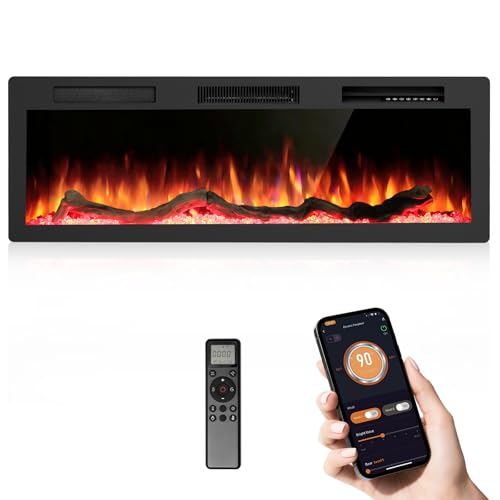
| 2 | R.W.FLAME 50-Inch Electric FireplaceBest Fireplace Style | Larger rooms that need supplemental heat and a fireplace look | 750 W or 1500 W | Electric fireplace; wall-mounted or recessed | Remote, touch panel, smartphone, Alexa | Check price |
| 3 | WINHL Oscillating Space HeaterBest for Wider Airflow | A small seating area where you want heat swept side to side | 1500 W | Portable PTC ceramic heater; oscillating | Remote, thermostat, 12-hour timer | Check price |
| 4 | VOCRS Portable Space HeaterBest Low-Heat Setting | Small sunrooms where you want to reduce heat output when possible | 700 W, 1000 W or 1500 W | Portable PTC electric heater | Remote, digital display, 1–12 hour timer | Check price |
| 5 | R.W.FLAME Small Ceramic Space HeaterBest Compact Pick | Personal heat near a desk or chair in a small room | 950 W or 1500 W | Portable ceramic heater | Two knob controls | Check price |
A sunroom only earns its keep if you can actually sit in it in January. The good news is you usually don’t need to rebuild the room — the right electric heater can make a glassy space usable again in under an hour.
The picks below focus on safe, indoor‑rated electric heaters that plug into a standard outlet, from a smart wall‑mounted fireplace to compact portable units. After the choices, you’ll see how to pick the most economic heater for a sunroom like yours, what it will cost to run, and how to place it safely.
Best Heaters for Sunrooms and Enclosed Porches

DREO Portable Space Heater
R.W.FLAME 50-Inch Electric Fireplace

WINHL Oscillating Space Heater

VOCRS Portable Space Heater

R.W.FLAME Small Ceramic Space Heater
Most Economic Heater for a Sunroom
The most economic heater for a sunroom is usually a plug‑in 1,500 W electric space heater with a built‑in thermostat that you run only for the few hours you actually use the room.

In winter you’re typically heating a sunroom for evenings and weekends, not 24/7, so a portable electric like the DREO Space Heater or the WINHL Portable Electric Heater makes financial sense: low upfront cost, no fuel deliveries, and you only pay for the hours it’s on. Almost all plug‑in heaters in the US top out at 1,500 W because a standard 120 V, 15 A circuit safely supports about 1,800 W for continuous use, and manufacturers leave some headroom.
That 1,500 W cap means any of these heaters will put out roughly the same maximum heat; the difference is how they control it. A 1,500 W heater draws 1.5 kW, so the basic cost formula is: watts ÷ 1,000 × hours × your electric rate. For example, 1,500 ÷ 1,000 × 5 hours × $0.17/kWh is 1.5 × 5 × 0.17 ≈ 1.275 kWh‑dollars for that evening. The cost block below uses the same math for a typical month at $0.17/kWh so you can compare high vs low settings.
| Heater | Watts | Per hour | Per day (6 h) | Per month (30 days) |
|---|---|---|---|---|
| 1,500 W heater on HIGH | 1,500 W | 26¢ | $1.53 | $45.90 |
| Same heater on LOW setting | 750 W | 13¢ | 77¢ | $22.95 |
Running a 1,500 W heater flat‑out on HIGH all evening is like driving everywhere with your foot to the floor: warm, but expensive. Using ECO mode, a thermostat, or even a simple plug‑in timer cuts the number of hours it actually draws full power. In a well‑sealed small sunroom, the heater may only fire for 10–20 minutes each hour to maintain temperature, so you’re paying for 2–3 hours of run time instead of 6.
Low‑power modes are an easy win. Many units offer 700–1,000 W settings; the VOCRS multi‑mode heater, for example, can drop to a lower wattage for mild days or smaller glass rooms. Halving the wattage roughly halves the cost per hour, as the cost block shows, and in a 120–150 sq ft sunroom that’s often enough to keep the chill off without blasting full power.
Cheap, non‑heater tricks make just as much difference. Close interior doors so you’re only heating the sunroom, not the whole floor. Seal obvious drafts around the sunroom door and baseboards with weatherstripping or temporary foam. A thick rug over tile or concrete cuts that icy‑floor feeling so you can live with a slightly lower thermostat setting. Thermal curtains pulled across the glass at night trap a layer of air that slows heat loss.
Decorative electric fireplaces like the R.W.FLAME Smart Electric Fireplace 50 Inch can still be economical if you treat the heat as occasional. Use flame‑only mode most nights for the look, which uses far fewer watts, and reserve the full 1,500 W heater mode for genuinely cold snaps or pre‑heating before you sit down. If you later want more options, you can browse the best electric heaters for sunrooms for models that balance looks and running cost.
Propane Versus Electric Space Heaters in a Sunroom
For a typical enclosed or attached sunroom, an indoor‑rated electric space heater is usually the safer and simpler choice than portable propane.
Electric heaters like the DREO Space Heater or the small R.W.FLAME office heater don’t burn fuel, so there’s no carbon monoxide, no open flame, and no added moisture from combustion. You plug them into a properly sized outlet, give them 3 feet of clearance in front, and let the built‑in thermostat manage temperature. That’s a much cleaner fit for a glass room that connects directly to your house.
Portable propane, kerosene, and diesel heaters all burn fuel and create exhaust. That exhaust always includes some carbon monoxide and uses up oxygen in the room. Many indoor‑rated propane heaters add an oxygen‑depletion sensor, but plenty of popular patio and construction models are outdoor‑only. Those outdoor units should never run inside a sunroom, even with windows cracked, because the space is still a small, semi‑sealed room attached to your home.
Permanent gas solutions are a different category. A vented wall heater or, in some regions, a listed vent‑free gas unit can heat a sunroom well, but they have to be sized, installed, and vented by a licensed pro and signed off under local code. That means running a gas line, dealing with combustion air and flue routing, and budgeting for a real project instead of a plug‑in purchase.
On fuel cost, propane packs a lot of BTUs into a gallon, and on paper it can look cheap per unit of heat. Electric resistance heaters, though, convert nearly 100% of the electricity they draw into room heat, with no flue losses or standby losses from a big tank sitting outside. Once you factor in that you’re only heating the sunroom for a few hours a day, the monthly bill difference between a well‑used electric unit and portable propane is often smaller than people expect.
For very leaky three‑season rooms, open gazebos, or spaces with screens instead of glass, the logic changes. In those cases, you’re essentially outdoors, so you should stick with heaters explicitly rated for outdoor or semi‑outdoor use and accept that you’ll need more wattage or BTUs because the heat blows away continuously. That’s where many of the sunroom space heaters in outdoor sections of guides come into play.
Choosing an electric heater now doesn’t lock you out of upgrading later. If you eventually add a ductless heat pump or a properly installed gas unit, the portable electric can still serve as backup or spot heat under a table or near a chair on especially cold nights. For most attached sunrooms, starting with safe, electric heat is the low‑friction way to get the room usable again this winter.
How to Size a Heater for Your Sunroom or Gazebo
For heating sunroom gazebo spaces, the easiest way to size a heater is to match watts to your floor area, then bump that number up for all the glass and outdoor exposure.
A simple rule for three-season sunrooms is 10–15 watts per square foot of floor. Use closer to 10 W/sq ft for a tighter room with decent windows in a mild climate, and 15 W/sq ft for very glassy rooms, three exterior walls or colder winters. That number gives you the total electric heat you’d like to have in the room, even if you reach it with more than one 1,500 W space heater.
In a room like that, one 1,500 W tower such as the DREO Space Heater or the R.W.FLAME Small Space Heater 1500W can keep a seating area comfortable, but you’ll get more even warmth by pairing a smart wall-mounted unit like the R.W.FLAME Smart Electric Fireplace 50 Inch with a smaller portable heater near your favorite chair. Think of the fireplace as the main background heat and the portable unit as a personal boost.
The same math works for an enclosed porch or a gazebo with solid walls and windows. Measure the seating area, multiply by 10–15 W/sq ft, and size your heater or heaters to that number; a compact 1,500 W portable from our picks will usually handle a small enclosed nook, and an enclosed porch portable electric heater can do double duty in both spaces. In a very open gazebo with just a roof and railings, you’re mostly warming the people and furniture right in front of the heater rather than the whole volume of air, so keep the unit close to where you sit.
If your calculation says you’d need far more than two standard 1,500 W plug-in heaters—for example 4,000–6,000 W—to keep the room comfortable, the space isn’t really a good candidate for portable heaters alone. That’s the point where adding rugs, tightening up weatherstripping, upgrading windows or talking with a pro about a small ductless mini-split will usually do more for comfort than lining the walls with extra plug-in units.
Safety and Placement Tips for Sunroom Heaters
Safe heat in a sunroom starts with where you put the heater and how you power it, because even the safest model can be dangerous if it’s plugged in or placed badly among long curtains, blinds and wicker furniture.
Every heater needs about 3 feet of clear space in front and to the sides. Keep that zone free of drapes, roller shades, bamboo blinds, throw pillows, plants and storage boxes. Avoid tucking a heater directly under fabric-covered furniture, wall hangings or low window sills, since heat rising into fabric is exactly how things scorch and catch.
All of the plug-in heaters above, including the DREO Space Heater and the smaller R.W.FLAME and WINHL units, must go directly into a wall outlet. Skip extension cords, power strips and multi-plug adapters; a 1,500 W heater draws close to the limit of a typical household circuit by itself, and extra connections just add heat and failure points in the cord.
Because there’s only a few amps of headroom on a 15 A circuit, running two large heaters on the same set of outlets, or a heater plus a hair dryer or vacuum, can push things over the edge. If you find breakers tripping when you turn on the sunroom heater, map which outlets are on which breaker and spread the big loads to different circuits or reduce what’s running at the same time.
Most modern space heaters include tip-over shutoff and overheat protection—use those features by keeping the unit upright on a solid floor or low shelf where kids and pets are less likely to bump it. Test the tip-over switch once in a while by gently nudging the heater while it’s on to confirm it shuts off, and unplug any unit that smells strongly of hot dust or plastic until you’ve cleaned or inspected it.
Electric fireplaces in sunrooms need a bit more planning. Mount a unit like the R.W.FLAME Smart Electric Fireplace 50 Inch at the height the manual specifies, fastened into proper framing, and keep decor, TVs and mantels clear of the hot air outlet so the blower can move air freely. Don’t recess an electric fireplace into a wall or surround that doesn’t meet the manufacturer’s clearance and framing requirements, especially in a sunroom wall that may already be tight on insulation and wiring space.
Any home that has fuel-burning appliances—a gas furnace, gas or wood fireplace, pellet stove or vented propane heater—should have working carbon monoxide alarms on each level. Even though the electric heaters in your sunroom don’t produce CO, an alarm near that space adds a layer of protection if your main heating system or an attached garage ever leaks exhaust into the house.