The best electric golf cart heater for most readers is Product 3 because it runs on 12V, makes 800W of heat, and is built for vehicle use rather than room use. Pick the wrong voltage and you waste money, lose battery fast, or end up with a heater that belongs in the garage, not the cart.
What to remember
Choose 12V vehicle heaters for direct cart use and 120V room heaters only with a proper inverter and secure mounting.
An 800W 12V heater draws about 66.7 amps, so battery runtime is the first number to check.
Propane heaters are outdoor-use only; don’t put them inside an enclosed cart.
For a quiet cab, look at lower-noise electric models, but don’t ignore size and mounting stability.
If you want windshield defrosting, aim airflow at the glass instead of the seat.
A cart heater is a small load with a big appetite. A 12V, 800W unit pulls about 66.7 amps, so battery size and wiring matter as much as heat output.
Open carts, enclosed carts, and inverter setups need different heaters. Get that part wrong and you’ll pay for it in cold hands, fogged glass, or a dead battery before the round is over.
Best Electric Golf Cart Heater Picks
#1Best Cart Fit
CYDZSW 12V 800W Car Heater
Best for 12V golf carts, trucks, UTVs, and other vehicles
The 12V power requirement matches the vehicle use this guide is about, and the 800W PTC ceramic heater is designed for defrosting, defogging, and cabin heat. Overload and insulation protection add useful safeguards for battery-powered operation. Choose it only after confirming your cart battery is 12V.
Heat output 800WPower source 12V batteryHeating element PTC ceramicVehicle fit Golf cart, truck, UTV, RV, and other 12V vehiclesInstallation Less than 10 minutes
Why it made the cut
12V and 800W output
Designed for golf carts and vehicles
Overload and insulation protection
Installation takes less than 10 minutes
Good to know
Requires a 12V battery
Battery-powered operation can reduce runtime
Wiring must connect red to positive and black to negative
Skip it if Skip it if your cart battery isn’t 12V or you need a heater for a stationary indoor room.
Best for Indoor rooms, offices, garages, basements, and RVs
A 1500W PTC ceramic heater with a handle is easy to move, while the thermostat, remote, and four operating modes make room heating simple. ETL certification, tip-over shutoff, overheat protection, and a child lock are useful indoors. The product data describes it for indoor use, so it isn’t a proper moving-cart heater.
Heat output 1500WCoverage Up to 200 sq. ft.Noise level 35dBTimer 24 hoursSafety listing ETL-certified
Why it made the cut
1500W high setting
35dB quiet operation
45° tip-over shutoff and overheat protection
Thermostat, remote, timer, and ECO mode
Good to know
Designed for indoor use
1500W is a heavy electrical load
Not designed specifically for vehicle battery power
Skip it if Skip it if you need direct 12V operation from a golf cart battery.
Best for Large indoor rooms, garages, offices, and basements
The 1500W PTC ceramic heater adds fast indoor heat, while 70° oscillation spreads airflow across a room. Its ETL-certified safety package includes tip-over protection, overheat protection, a 12-hour timer, and 24-hour automatic power-off. Those are sensible room-heater features, but the product is not specified for golf-cart use.
Best for Bedrooms, offices, and other indoor spaces needing broad airflow
This 24-inch indoor heater combines 1500W PTC ceramic heating with 70° oscillation, a thermostat, ECO modes, and a 1-to-12-hour timer. Tip-over protection, overheat shutoff, and ETL certification cover the basic safety functions expected from an indoor space heater. Its indoor design makes it a poor match for an open or moving golf cart.
Best for Indoor rooms where fireplace appearance matters as much as heat
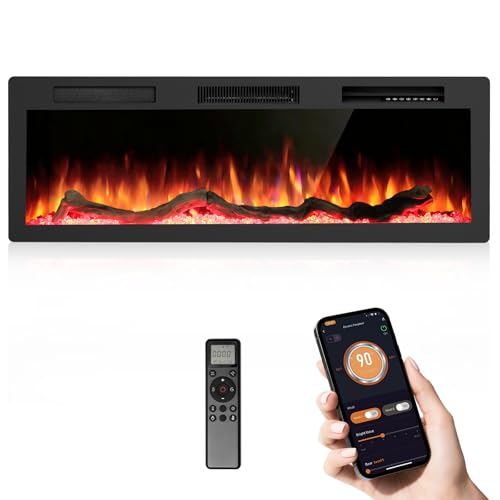
The recessed or wall-mounted fireplace offers 750W and 1500W heating modes, adjustable temperature from 59-95°F, and supplemental heating for spaces up to 400 square feet. Remote, touch, smartphone, and Alexa controls add convenience, while the flame colors and sound effects are aimed at indoor ambience. A golf cart has no suitable mounting opening for this design.
Heat output 750W warm air / 1500W hot airTemperature range 59-95°FHeating coverage Up to 400 sq. ft.Dimensions 50L × 17.32H × 5.71W inchesInstallation Wall-mounted or recessed
Why it made the cut
750W and 1500W heating modes
59-95°F temperature range
Wall-mounted or recessed installation
Remote, touch, smartphone, and Alexa control
Good to know
Large 50-inch indoor fireplace
Requires wall-mounted or recessed installation
Not designed for vehicle use
Skip it if Skip it unless you want a fixed indoor fireplace rather than a portable cart heater.
Choose the heater by voltage first: a 12V direct-connect model fits a cart electrical system, while a 120V electric room heater needs a properly sized inverter and secure mounting. For most golf carts, the best electric golf cart heater is vehicle-rated, propane-free, and matched to the cart’s voltage—not simply the heater with the biggest watt number.
Spec
What it tells you
Best fit
Voltage
Whether the heater can connect to the cart without damaging the unit or electrical system
12V cart heater for direct connection; 120V heater only with a suitable inverter
Heat output
How much electrical power becomes heat
400W is common for carbon fiber heating; Product 3 lists 800W
Airflow
Where the heat goes
Directed flow for windshield defrosting; wider circulation for cabin warmth
Mounting and controls
Whether heat stays aimed while the cart moves
Secure mount, 360° adjustable head, tip-over and overheat protection
Listing
Evidence of electrical safety testing
ETL or a similar recognized listing, where available
Match the heater to the cart before comparing convenience features.
Fast Buying Check
Confirm the cart’s battery or accessory voltage before ordering.
Choose direct 12V power only when the heater is designed for 12V use.
Use a real inverter for a 120V heater; don’t improvise with loose wiring.
Look for tip-over, overheat, overload, and insulation protection.
Check for an ETL or similar recognized safety listing where available.
Pick directed airflow for glass and a wider pattern for hands, lap, or feet.
Worked Example
A 12V, 800W heater such as the CYDZSW 12V 800W Car Heater Battery Powered,Windshield Windo… would draw about 800 ÷ 12 = 66.7 amps before wiring and conversion losses. That figure is why voltage compatibility and the cart’s electrical installation matter; connecting a heater to a battery just because the terminals fit is a costly shortcut.
Heater output800W
System voltage12V
Simple current estimateAbout 66.7A
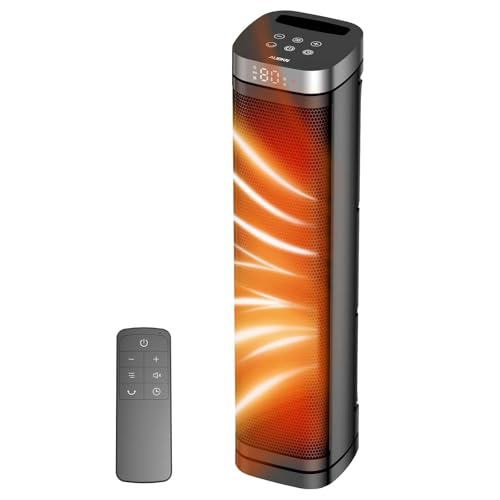
Use heat output and airflow for the job in front of you. Windshield defrosting needs a directed stream aimed at the glass, while warming your hands and lap benefits from a broader pattern; a 360° adjustable head helps with both, but adjustment never replaces a solid mount. Product 3 suits cart use, while the R.W.FLAME Small Space Heaters for Indoor Use, DREO Space Heaters for Indoor Use with Thermostat, 1500W El…, and AUBKN X-Large 1500W Electric Space Heaters for Indoor Use are room heaters that need a proper 120V supply and stable placement.
A 120V, 1,500W electric room heater draws about 12.5 amps at 120V, so an inverter must handle that load continuously and be mounted securely; a cup holder adapter alone doesn’t solve the electrical or stability problem. If you’re shopping for home use rather than a cart, compare the best electric space heaters separately because room heating and vehicle heating have different power and mounting demands.
In short
For a cart, start with 12V compatibility, then choose directed airflow for the windshield or broader circulation for your lap and hands. Safety shutoffs matter, but they can’t correct an unsuitable voltage or a heater that isn’t secured.
Myth
An oxygen depletion sensor makes a propane heater safe inside an enclosed golf cart.
Fact
It doesn’t. A low-oxygen shut-off senses falling oxygen and turns the burner off, but it doesn’t detect carbon monoxide; propane heaters such as the Mr. Heater F242010 MH4GC are outdoor-use equipment and stay outdoors, even with a sensor. An electric heater avoids combustion and fuel consumption, but it still needs correct voltage, wiring, ventilation around the unit, and a working tip-over shutoff.
A gas-powered golf cart doesn’t automatically make any electric heater safe to connect. Use only a circuit or battery system the heater manufacturer allows, with the specified hardwiring, fuse, insulation, and overload protection; if the cart lacks that supply, use a properly installed accessory system rather than tapping random wires. The heater should stay off if its listing, voltage, or mounting instructions don’t match the cart.
Voltage And Runtime
Voltage decides whether a golf cart heater helps or drains the batteries before the ninth hole. Match the heater to the cart’s electrical system first, then calculate the amp draw and expected runtime.
A portable plug-in electric heater usually draws up to 1,500 watts on its high setting. A tankless electric shower heater uses several thousand watts and normally needs a dedicated 240V circuit, so it has no practical place in a golf cart. An oil-filled radiator commonly uses 1,500 watts on high, then cycles off and on with its thermostat. A heater without electricity means propane, kerosene, wood, or another fuel source; a non-electric indoor heater still needs the correct indoor rating, ventilation, and a working carbon monoxide alarm. None belongs inside an enclosed golf cart unless the manufacturer and local rules specifically allow it.
66.7 A
800W at 12V
The calculation is 800 ÷ 12 = about 66.7 amps before wiring and conversion losses. That’s a heavy draw for a small battery.
Worked Example
Say the CYDZSW 12V heater runs at its full 800W output. Divide 800 watts by 12 volts and you get about 66.7 amps. One hour uses roughly 66.7 amp-hours before battery losses, so a small battery can lose useful charge quickly. Lowering the heat setting, shortening the ride, or using a lower-wattage heater changes the result; the battery’s rated capacity and condition matter too.
Heater800W
System voltage12V
Calculated drawAbout 66.7A
A 400W carbon fiber heater is easier on the electrical system and can suit shorter rides or battery-operated use. At 12V, 400W is about 33.3 amps; at full output it uses 0.4 kWh per hour. Some battery-operated heaters claim up to 20 hours, but that figure depends on battery capacity and the selected heat setting. Runtime falls fast at higher output.
Heater load
Approximate draw at 12V
Best reading of the number
400W carbon fiber
33.3A
Lower load for shorter rides
800W cart heater
66.7A
Strong heat, heavy battery demand
1,500W room heater
125A
Usually impractical from a small cart battery
Amps equal watts divided by volts; real-world draw is higher after losses.
A 1,500W heater on 120V needs a strong inverter and a battery bank that can handle the load, not a light plug-in adapter. The heater alone requires 1,500 ÷ 120 = 12.5 amps on the AC side; from a 12V battery, the DC demand is roughly 125 amps before inverter losses. An inverter also adds conversion waste, wiring demands, and another failure point, so a household heater such as the DREO or AUBKN is generally a poor cart match.
Heater
Watts
Per hour
Per day (4 h)
Per month (30 days)
400W cart heater
400 W
6.8¢
27¢
$8.16
800W cart heater
800 W
14¢
54¢
$16.32
1,500W portable heater
1,500 W
26¢
$1.02
$30.60
Calculated at 17¢ per kWh. Illustrative electricity use at 4 hours per day and $0.17 per kWh; your cart battery cost depends on charging losses and your electricity rate.
Runtime Is The Useful Comparison
Winter electricity bills matter here only as a way to compare run time and energy use. A 400W heater running four hours uses 1.6 kWh; an 800W heater uses 3.2 kWh. The higher-output heater warms faster or covers more space, but it consumes twice the energy during the same ride.
Before You Connect Anything
Confirm the heater voltage matches the cart system or the manufacturer’s approved connection method.
Calculate watts ÷ volts to estimate current draw.
Check battery capacity, age, charge level, and the wiring or fuse size specified by the manufacturer.
Don’t connect a 120V room heater to a small inverter or use an unapproved adapter.
Treat a claimed 20-hour runtime as a best-case figure tied to a lower heat setting and a suitable battery.
Safety Around Enclosed Carts
Keep every fuel-burning heater out of an enclosed golf cart cabin. Propane heaters are outdoor-use equipment, even when they have a tip-over switch or an oxygen depletion sensor. That includes the Mr. Heater F242010 MH4GC and any similar heater using a disposable 1 lb propane cylinder.
The answer to searches such as safe indoor heaters non electric, heaters for indoor use non electric, and non electric indoor heater is simple here: a heater that needs no electricity is usually a fuel-burning heater, and propane is not safe inside an enclosed cart. A room heater labeled for indoor use belongs in the room it was listed for, not automatically in a cart cabin.
Myth
An oxygen depletion sensor makes a propane heater safe inside an enclosed golf cart.
Fact
An oxygen depletion sensor shuts the burner down when oxygen falls too low; it does not detect carbon monoxide. Propane combustion can produce carbon monoxide before oxygen reaches the sensor’s shutdown point, so the sensor is no permission slip for cabin use.
Fuel Stays Outside
Carbon monoxide can build quickly in a small enclosed space. If fuel-burning heat is used outdoors near people, follow the heater’s ventilation instructions, keep exhaust away from the cart and people, and use a working carbon monoxide alarm in any nearby occupied or enclosed area. Never bring a propane cylinder or outdoor-rated propane heater into the cabin.
Electric heat avoids combustion, but it still needs the correct electrical setup. A 12V vehicle heater such as the CYDZSW must match the cart system and its wiring; a 120V room heater needs an inverter that can supply its load and a secure installation. Wrong voltage, loose terminals, undersized wire, or a sloppy hardwire job can damage the heater, melt insulation, or harm the cart’s electrical system.
Safety feature
What it does not do
Tip-over switch
Shuts a heater off after it falls; it does not replace stable mounting.
Oxygen depletion sensor
Detects low oxygen; it does not detect carbon monoxide.
Safety fuse
Limits damage from an electrical fault; it does not correct wrong voltage.
CO alarm
Warns about carbon monoxide; it does not make a fuel heater safe inside the cabin.
A safety feature handles one hazard, not every hazard.
Before the First Cold Ride
Confirm the heater’s voltage matches the cart or inverter output.
Inspect the plug, fuse, terminals, and wire insulation for heat damage.
Use a tip-over switch and overheat protection on an electric heater, but still mount it securely.
Keep 3 feet of clearance from seats, curtains, bags, and other combustibles.
Keep propane heaters and cylinders outside the cart cabin, with no exhaust aimed at occupants.
Gas-Powered Carts
A gas-powered cart does not make a propane heater safe inside the passenger area. The cart’s engine and the heater both add combustion and exhaust hazards, so use a properly matched electric heater instead and follow the cart and heater wiring instructions.
Mounting And Heat Direction
For maximum heat distribution in a golf cart, mount the heater where warm air reaches your hands and lap without blocking the pedals, steering wheel, windshield, or forward view. Aim it at the driver first; defrosting the windshield needs a separate, deliberate angle toward the glass.
Non-hardwired heaters are the easiest to move between carts, while hardwired installations usually suit vehicle-specific heaters and must follow the maker’s wiring instructions. The CYDZSW 12V 800W Car Heater is the kind of vehicle-focused unit that belongs in this conversation; an indoor room heater such as the R.W.FLAME Small Space Heater isn’t automatically safe just because it plugs in.
1
Choose the mount
Pick a rigid dash, center-console, or approved cup holder adapter position that leaves the controls visible and the driver’s knees clear. A 360° adjustable head can send radiant heat toward your hands, lap, or feet, but the head still needs a solid mount so a bump doesn’t tip the heater.
2
Aim for the job
Point the outlet toward your hands for open-cart comfort, toward your feet for lower-body warmth, or toward the windshield when clearing light fog. Don’t aim hot air at one small patch of plastic, vinyl, or fabric for a long period.
3
Secure the wiring
Route the cable along a protected edge and away from pedals, steering joints, hinges, sharp metal, and wet floor areas. Leave enough slack for steering movement, then secure the wire so a coat sleeve or club won’t snag it.
Before You Drive
The heater cannot reach the accelerator, brake, steering wheel, or gear selector.
The windshield and mirrors remain fully visible from the driver’s seat.
The mount stays firm when the cart stops, turns, or crosses a bump.
The cable cannot catch clothing, clubs, doors, or folding windshield hardware.
The heater’s voltage matches the cart circuit or correctly sized inverter.
No plug, fuse, or connection is pinched, wet, loose, or warm to the touch.
Gas-powered carts can use an electric heater without making the setup risk-free: the heater still needs the correct electrical supply, and any inverter must be sized for its load. A gas engine doesn’t excuse a loose battery connection or an improvised wire run.
A heater without electricity means a fuel-burning or battery-operated heater. Portable non-electric indoor heaters do exist, but never treat an indoor-rated label as permission to use a propane heater inside an enclosed cart; oxygen depletion sensors shut down low oxygen, not carbon monoxide. Outdoor propane heaters remain outdoors.
Use the smallest useful angle
Start with the head aimed at your hands, then tilt it only as far as needed to warm your lap or glass. More spread can feel pleasant, but an unstable mount turns every bump into a tip-over test.
Clean It And Keep It Running
Maintain a golf cart heater by disconnecting its power before cleaning, then clearing dust from the intake and outlet grills so airflow stays open. Wipe the grills with a dry or slightly damp cloth; don’t spray cleaner into the heater or open its housing unless the manual tells you to.
Electric heaters can work with different golf cart battery systems only when the heater’s voltage matches the system and the wiring follows the manufacturer’s instructions. A 12V heater isn’t a safe fit for every battery bank just because the cart has batteries; check the heater label and cart wiring before buying or connecting it. On a gas cart, use only a heater and power setup specifically approved for that application.
Power consumption affects battery life directly: the more watts the heater draws and the longer it runs, the more energy it uses. As a reference, a 400W heater running for one hour uses 0.4 kWh; an 800W heater uses twice that energy in the same time. Actual runtime depends on battery capacity, condition, and the cart’s other electrical loads, so don’t treat a published runtime as a promise.
Adjustable temperature controls are available on some heaters and let you reduce heat output after the cart warms up, trimming battery draw. The CYDZSW 12V 800W is built for vehicle use; room heaters such as the DREO 1500W model aren’t automatic substitutes, even if their wattage looks appealing. Searching for the best electric space heaters 2026? Those are designed for rooms, not cart wiring or mounting.
Check The Connections Before Cold Weather
Battery terminals, connectors, and hardwired leads should stay tight and free of corrosion. Heat and vibration can loosen a weak connection over time. With power disconnected, look for loose fittings, green or white corrosion, damaged insulation, and darkened or melted plastic; stop using the heater if you find damage and have the connection repaired according to the cart and heater manuals.
Don’t Scrape Corrosion On A Live Circuit
Disconnect power before inspecting or cleaning terminals. If you’re unsure how to isolate the cart’s electrical system, have a qualified golf cart technician check it.
Before The First Cold Ride
Voltage matches the cart’s battery system.
The heater fits securely without blocking controls or the driver’s view.
Warm air points toward your hands or lap, not away from you.
Expected runtime leaves enough battery for the ride and return.
Tip-over and overheat shutoffs work, and wiring is intact.
Questions People Ask
Are electric golf cart heaters safe with different golf cart battery systems?
Yes, but only when the heater’s voltage matches the cart’s supply and the wiring follows the manufacturer’s instructions. A 12V heater on the wrong circuit can damage the heater, wiring, or battery pack, so check the cart voltage before connecting anything.
How do propane heaters compare with electric heaters for safety and efficiency?
Electric heaters avoid propane cylinders, combustion fumes, and carbon monoxide inside the cart. A propane heater can provide strong heat—about 4,000 BTUs for up to 5.5 hours with a 1 lb cylinder—but outdoor-rated models must stay outside enclosed carts, even with an oxygen depletion sensor.
What is the best mounting location for maximum heat distribution in a golf cart?
Aim the heater toward your hands and lap from a stable position near the front of the passenger area. Leave the pedals, steering wheel, windshield, and forward view clear; a 360° adjustable head helps direct radiant heat without moving the mount.
Can electric heaters be used on gas-powered golf carts without risk?
A gas engine doesn’t automatically provide a safe electrical connection for a heater. Use a properly fused, voltage-matched circuit approved for the cart and heater, rather than tapping ignition wiring or an undersized accessory lead.
Are there electric heaters that do not require hardwiring?
Battery-operated heaters are available and can run up to 20 hours, depending on battery capacity and heat setting. Portable 12V models may still require a direct connection, so check whether the product includes a plug, cup holder adapter, or hardwire kit before buying.
What is the typical runtime and heat output for electric golf cart heaters?
Many electric cart heaters use a 400W carbon fiber element that produces heat in about two to three seconds. At 400W, the heater uses roughly 0.4 kWh per hour; runtime depends on the cart battery capacity, voltage, wiring, and whether the heater runs continuously.