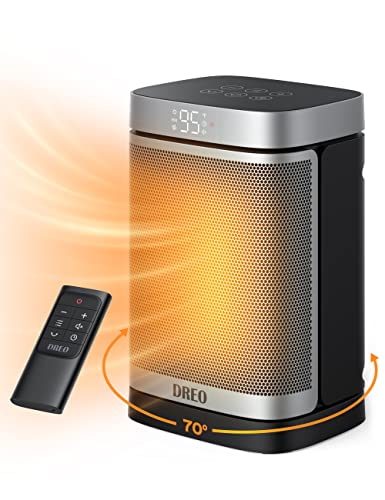
For most sunrooms, the DREO 70° oscillating heater (Product 3) is the best starting pick: its 1,500 W output, adjustable thermostat and wide sweep help spread heat across a seating area. It can take the chill off, but a single plug-in heater may not hold a comfortable temperature in a large, drafty glass room.
Key takeaways
Choose Product 3 for oscillation and adjustable thermostat control across a seating area.
All five picks top out at 1,500 W; none can exceed the output limit of a standard plug-in heater.
A 1,500 W heater running 8 hours uses 12 kWh; multiply by your electric rate to estimate the cost.
Plug a heater directly into a wall outlet, keep 3 feet of clearance and check for a recognized safety listing.
Seal drafts and use daytime sun before buying a second heater for a cold sunroom.
Getting the size wrong can mean paying to run a heater that still leaves the far side of the room cold. Ignoring electrical and clearance rules can create a fire risk.
The picks below are portable electric heaters, not a substitute for fixing drafts or sizing permanent heat for a sunroom you use all winter.
Best Electric Heaters for Sunrooms
#1Best Overall
DREO 70° Oscillating Space Heater
Best for Sunrooms where you want heat to reach more than one seat
The 70° oscillation sweeps warm air across a seating area instead of aiming it in one direction. Its thermostat adjusts from 41 to 95°F in 1°F increments, and ECO mode changes the heat level to help maintain your setting. A good starting pick for a small or moderately sized sunroom; it may not keep a large, drafty glass room comfortable on its own.
Maximum power 1,500 WThermostat range 41–95°FOscillation 70°Noise As quiet as 37.5 dBSafety ETL-listed; tip-over and overheat protection
Why it made the cut
70° oscillation distributes airflow around the room
Thermostat adjusts in 1°F increments from 41 to 95°F
ETL-listed with tip-over and overheat protection
Good to know
Reaches up to 1,500 W, so coverage can be limited in a large or drafty room
Fan airflow may not suit anyone who wants radiant heat without moving air
Skip it if Skip it if your sunroom is large and poorly insulated and you need one heater to maintain an even temperature.
Best for Sunrooms where you want the heater to adjust output as the room warms
Its ECO mode switches between 1,000 W and 1,500 W to maintain the temperature you set, rather than staying at full power the whole time. The 70° oscillation helps spread airflow, while the 12-hour timer and listed safety features add useful controls for regular use.
Maximum power 1,500 WECO mode 1,000 W and 1,500 WOscillation 70°Timer 12-hour timer; 24-hour automatic power off without interactiSafety ETL-certified; tip-over and overheat protection
Why it made the cut
ECO mode uses 1,000 W or 1,500 W
70° oscillation for broader airflow
Includes tip-over and overheat protection
Good to know
Maximum output is 1,500 W, which may not be enough for a large, leaky sunroom
The listed thermostat range and adjustment increments aren’t specified
Skip it if Skip it if you need a heater with a clearly specified thermostat range or prefer heat without a fan.
Best for Smaller sunrooms where quiet operation and a remote matter
The 35 dB noise claim is the lowest listed among these picks, and the remote lets you change modes without crossing a chilly room. Its thermostat, ECO mode and 24-hour timer give you useful control, though the product’s stated coverage of up to 200 sq ft is not a guarantee for a glass room with drafts.
Power 1,500 WStated coverage Up to 200 sq ftNoise 35 dBTimer 24-hour timerSafety ETL-certified; 45° tip-over shutoff and overheat protection
Why it made the cut
35 dB listed noise level
Remote control and four modes: Low, High, Eco and Fan
ETL-certified with tip-over and overheat protection
Good to know
No oscillation is specified
Coverage depends on the room; glazing and drafts can reduce comfort
Skip it if Skip it if you want a heater that sweeps warm air across the room.
Best for Sunrooms where you want a wide thermostat range and quieter airflow
The thermostat ranges from 41 to 95°F in 1°F increments, giving you more control over your target setting. DREO lists noise at 34 dB and a heat-funnel design intended to send warm air farther, which suits a seating area where you want less fan noise and more reach.
Power 1,500 WThermostat range 41–95°FThermostat adjustment 1°F incrementsNoise 34 dBTimer 12-hour timer
Why it made the cut
Thermostat adjusts from 41 to 95°F in 1°F increments
34 dB listed noise level
Includes remote control and ECO mode
Good to know
Oscillation is not specified
No coverage area is specified
Skip it if Skip it if spreading heat by oscillation is your priority.
Best for Sunrooms where you want to choose among three heat levels
The three settings—700 W, 1,000 W and 1,500 W—let you select lower output when the room needs less heat. Its 70° oscillation, remote and thermostat offer convenient controls, and the listing specifies ETL certification and tip-over and overheat protection.
Power settings 700 W, 1,000 W and 1,500 WOscillation 70°Timer 12-hour timerSafety ETL-certified; tip-over and overheat protectionHeight 17 inches
Why it made the cut
Three power settings: 700 W, 1,000 W and 1,500 W
70° oscillation
ETL-certified with tip-over and overheat protection
Good to know
No thermostat range or adjustment increments are specified
No noise level or coverage area is specified
Skip it if Skip it if low noise or a precisely stated thermostat range is important to you.
The DREO 70° oscillating heater (Product 3) is the best starting pick for most sunrooms: its 1,500 W output, adjustable thermostat and wide sweep suit a seating area. That makes it a strong choice among the best electric heaters and an electric heater with thermostat; the best electric space heaters for your room still depend on its layout and drafts.
Pick
Best fit
What stands out
DREO Product 3
Most seating areas
70° oscillation and adjustable thermostat
DREO Product 4
Larger layouts
A 1,500 W model for spreading heat across more space
DREO Product 2
Noise-sensitive rooms
Low listed noise
WINHL Product 5
Lower heat settings
Selectable lower wattage
R.W.FLAME Product 1
Convenient controls
Remote and timer controls
Compare the exact model details before choosing; ranked picks appear above.
For electric heaters for large rooms, Product 4 is the one to compare first, but its wattage alone can’t promise comfort across a big glass room. Air leaks, ceiling height, shade and outdoor temperature all affect how warm the space feels; advertised coverage figures are not a guarantee.
Searches for electric heaters at Walmart and Walmart electric heaters point to retailer-shopping intent, not a different kind of heater. The Amazon portable heater search doesn’t change the selection criteria either: wherever you shop, compare the exact model number and safety listing. For more options, see sunroom space heaters.
Check the model, not just the listing
Product names can cover similar-looking versions. Match the model number on the listing to the manual, then verify its wattage and safety listing before buying.
What to Check Before Buying a Sunroom Heater
Check maximum wattage, thermostat control, oscillation and listed safety features first; those tell you more than a label such as ECO. An electric heater with thermostat can reduce unnecessary runtime by switching off near its set temperature, while oscillation changes where the warm air goes—not how much heat the unit makes.
Feature
What to check
What it tells you
Maximum wattage
Highest setting in the specs
The heater’s maximum electrical input and heat output
Thermostat
Whether temperature is adjustable
Can limit runtime once the set temperature is reached
Oscillation
Whether the unit sweeps side to side
Spreads airflow across a wider area
Safety features
Listed tip-over and overheat protection; safety listing
Checks to confirm for a portable heater
Compare the model’s specifications and manual, not just its marketing name.
Electric heaters energy saving claims need context: portable resistance heaters convert electricity into heat where they’re used, so ceramic, oil-filled and radiant models don’t make the same wattage magically cheaper to run. How efficient are oil filled electric heaters? At turning electricity into room heat, they’re still resistance heaters; the oil stores heat and releases it gradually. The cheapest most efficient electric heater is usually the one that meets your comfort need without running longer or harder than necessary.
Myth
An ECO label or heater type guarantees a lower bill.
Fact
It doesn’t. ECO may describe a control mode, but the label alone doesn’t specify a savings percentage. Compare wattage and controls, then check the manual for what the mode actually does.
Choose a portable heater when you need temporary, directed heat and can place it safely near a suitable wall outlet. That’s the practical test for a best portable heater; searches for a Jndro portable electric space heater don’t change it. Electric heaters sold at Walmart or elsewhere need the same checks: model number, wattage, safety listing and manual. For another buying guide, see portable electric heaters for an enclosed porch.
Sunroom Heater Electricity Use
A 1,500 W sunroom heater uses 1.5 kWh for each hour it runs at full output, so eight hours costs $2.04 at an assumed electricity rate of 17 cents per kWh. Space heaters can use a lot of electricity if they run for long stretches; electric resistance heaters convert nearly all the electricity they use into heat, but that doesn’t make them cheap to run. Among electric heaters with the same wattage, lower settings use less power while running, and a heater’s efficiency chart can show energy use—not guarantee lower bills or more heat.
Why Sunroom Sizing Varies
Say your sunroom is 12 by 14 feet. A square-foot rule may suggest a wattage, but large glass areas and drafts can lose heat faster than insulated walls. A 1,500 W plug-in heater is already at the common plug-in ceiling; it may take the chill off without holding a comfortable temperature in a leaky room. Electric heaters for large rooms may need a properly sized permanent heat source for reliable winter comfort.
Room12 × 14 ft
Plug-in heater1,500 W maximum common output
Main variablesGlazing and drafts
Heater
Watts
Per hour
Per day (8 h)
Per month (30 days)
1,500 W heater
1,500 W
26¢
$2.04
$61.20
700 W setting
700 W
12¢
95¢
$28.56
Calculated at 17¢ per kWh. Assumes eight hours of use daily for 30 days and electricity at $0.17 per kWh. A lower setting uses less electricity per hour, though the heater may run longer to maintain the temperature.
12.5 A
Current drawn by a 1,500 W heater
At 120 V, 1,500 W ÷ 120 V = 12.5 A. Check what else is on the circuit before adding another heater; other loads share its capacity.
Air-seal drafts, use curtains suited to the windows, and make use of sunlight before buying another heater. If you need dependable winter temperatures, a properly sized permanent heat source is a better fit than expecting a plug-in unit to overcome every glass-room heat loss.
How to Use a Portable Heater Safely
Electric heaters cut off automatically only if the exact model has a working shutoff feature; check its manual for tip-over and overheat protection. For a safe electric space heater at home or in a bedroom, look for those features and a UL, ETL or CSA listing, then follow the manufacturer’s instructions. No feature makes a portable heater suitable for unattended or overnight use unless the manufacturer specifically says the model is designed for it.
1
Check the outlet
Plug the heater directly into a wall outlet. Never use an extension cord or power strip, and check what other equipment shares the circuit.
2
Set clear space
Keep at least 3 feet between the heater and curtains, cushions, furniture or other combustible items. Set it on a stable, level surface, away from water and foot traffic.
3
Confirm shutoffs
Check the manual for tip-over and overheat protection, and test or inspect the heater as the manufacturer directs. A timer doesn’t replace supervision.
4
Place it with walking in mind
For older adults, keep the heater out of walking paths; don’t aim hot airflow at a seated person or route the cord where someone could trip or get burned.
Stop If the Heater Seems Damaged
If the plug, cord or heater is hot, damaged or smells scorched, switch it off and unplug it if you can do so safely. Don’t keep using it.
An electric heater E3 code doesn’t have one universal meaning; codes vary by model. Check the manual for that exact code, unplug the unit if it’s hot or damaged, and never bypass a sensor to clear an error.
Before Switching It On
Direct wall outlet; no extension cord or power strip
At least 3 feet of clearance
UL, ETL or CSA listing on the exact model
Manual confirms tip-over and overheat shutoff features
Heater and cord are out of walking paths
Warm a Sunroom With Daylight and Better Insulation
For a sunroom, electric is usually the simpler choice than propane: it adds heat without combustion or carbon-monoxide risk inside the room. Indoor non-electric heaters exist, but use a fuel-burning model only if the exact heater is rated for indoor use and you follow its ventilation instructions with a working CO alarm; check local code before using a vent-free gas heater.
To warm a house naturally, use sunlight and reduce heat loss: open suitable window coverings while sun reaches the room, close them after sunset, seal drafts, and add rugs over cold floors. Those steps can make a room feel warmer, though they won’t fix major heat loss through glass or a leaky frame.
Use the Sun While It’s Out
Open coverings only where direct sunlight reaches the room, then close them when the sun moves off the windows. The timing matters more than leaving the coverings open all day.
Solar panels can power electric heaters, but there’s no universal best solar-powered electric heater. A 1,500 W heater draws 1.5 kWh for each hour at full output; check your system’s actual winter power and storage, along with what else is using electricity. Panels alone don’t guarantee enough power through a cold, cloudy evening.
Myth
A small solar setup can run a plug-in heater all winter.
Fact
A heater’s power draw is substantial: at full output, 1,500 W uses 1.5 kWh per hour. Winter generation and battery capacity vary, so verify the system’s available power and stored energy before relying on it.
Keep Outdoor Heaters Outside
Never use a patio, construction, or other outdoor propane heater in a sunroom. Combustion can produce carbon monoxide; indoor use is appropriate only for a model specifically rated for it, with the ventilation the manual requires and a working CO alarm.
A thermostat and oscillation can spread heat, but they can’t make up for major heat loss. If the room stays cold despite a 1,500 W heater, look at sealing and insulation or consider a permanent heating solution.
Check These Details Before the First Cold Snap
Before buying or setting up electric heaters, check that the wattage, controls, safety listing and outlet suit your sunroom. The best electric space heaters still need a sound outlet, clear space and an undamaged cord.
Buying and Setup Checks
Check windows, doors and frames for drafts that could undermine a portable heater.
Match the heater’s wattage to your needs; confirm the thermostat and oscillation work for the area you want to heat.
Look for a UL, ETL or CSA listing and check the manual for tip-over and overheat protection.
Make sure you can plug the heater directly into a wall outlet without an extension cord or power strip.
Before use, inspect the heater and cord for damage; set it on a stable, level surface with at least 3 feet of clearance.
Read the manual for placement, operation and any model-specific restrictions.
If the outlet feels warm, looks discolored, feels loose or trips repeatedly, stop using it and call a licensed electrician. Don’t try to solve the problem with an extension cord.
Frequently Asked Questions
Do space heaters use a lot of electricity?
They can, because resistance heaters convert nearly all the electricity they draw into heat. A 1,500 W model running at full power for four hours uses 6 kWh; the cost depends on your utility rate and how often its thermostat cycles it off.
Do electric heaters shut off automatically?
Some do, but automatic shutoff depends on the specific model and the feature involved. Check the manual for tip-over and overheat protection, and don’t assume a thermostat is a safety shutoff.
How do I choose an electric heater with a thermostat?
Look for an adjustable thermostat with a temperature setting, not only low and high heat modes. For a sunroom, also check maximum wattage and oscillation; a thermostat can control cycling, but it can’t make an undersized heater warm a large, drafty room.
Are oil-filled electric heaters more efficient?
No. Oil-filled and other resistance electric heaters turn roughly the same amount of electricity into heat at the same wattage. Oil stores heat and releases it gradually after the element cycles off, which can make warmth feel steadier without reducing the energy needed to heat the room.
Can I use a propane heater or an electric space heater in a sunroom?
Use an electric space heater designed for indoor use, plugged directly into a wall outlet. A propane model belongs indoors only if its manufacturer rates it for indoor use; follow the required ventilation, use its oxygen-depletion sensor, and keep a working carbon-monoxide alarm in the room.
Can solar panels run an electric heater in winter?
Yes, but the panels or battery system must supply the heater’s power when it runs, including after sunset if you want evening heat. A 1,500 W heater draws 1.5 kW at full output, so check the system’s usable capacity and winter production rather than its headline panel rating alone.