Cozy and Safe: The Best Heater for Dog House!
On this page 8 sections
Compare the Picks
| Rank | Model | Best for | Heat output | Safety features | Noise | Price |
|---|---|---|---|---|---|---|
| 1 | DREO Whole Room Oscillating HeaterBest Overall | Bedrooms and offices where quiet, even heat matters | 1500W PTC | Overheat shutoff, tip-over protection, flame-retardant housing, ETL-listed | 34dB | Check price |
| 2 | R.W.FLAME Mini Ceramic HeaterQuiet Bedroom Pick | Bedrooms up to 200 sq ft where a timer and remote help | 1500W | Overheat protection, 45° tip-over shutoff, flame-retardant case, ETL-certified | 35dB | Check price |
| 3 | HomeRunPet Heater With Heated Cat BedBest for Pet Mode | Cat or small-dog households that want a separate warmed resting spot | 1500W room heater; 30W pet mode | Overheat protection, tip-over auto shut-off, cool-touch exterior, ETL certified | Below 40dB | Check price |
| 4 | HomeRunPet Heater With Bed and RemotePet Pick With Remote | Pet households that want separate heater and bed controls plus a remote | 1500W room heater; 30W heated pet bed | Overheat protection, automatic tip-over shutoff, cool-touch exterior, ETL certif | Below 40 dB | Check price |
| 5 | BLACK+DECKER Personal Ceramic HeaterBest for Desks | A desk or small personal area with simple manual controls | 750W low; 1500W high | Automatic tip-over shutoff and overheat shutoff protection | — | Check price |
Get this wrong and you pay twice: once in comfort, then again in either higher bills or a heater that does not belong in the room you put it in. A 1,500 W heater can draw about 12.5 A, so one bad outlet, one power strip, or one cramped setup can turn a warm room into a problem.
The right choice depends on where you need heat, how quiet it needs to be, and whether you have electricity at all. The wrong one is usually too small, too loud, or unsafe for the space.
Best-for Picks for Safe Indoor Heat
DREO Whole Room Oscillating Heater

R.W.FLAME Mini Ceramic Heater

HomeRunPet Heater With Heated Cat Bed

HomeRunPet Heater With Bed and Remote

BLACK+DECKER Personal Ceramic Heater
How To Choose A Safe Space Heater

Safe space heaters start with a realistic output and basic shutoffs: on a standard U.S. outlet, 1,500 W is the practical ceiling for a plug-in heater. That draws about 12.5 A at 120 V, so a claim of much higher output without hardwiring deserves a second look. For most rooms, safe electric heaters with thermostat control, tip-over shutoff, overheat protection, flame-retardant housing, and a UL, ETL, or CSA listing are a sound place to start.
| Check | Why it matters |
|---|---|
| Thermostat | Cycles the heater to maintain a set temperature instead of heating continuously. |
| Tip-over shutoff | Cuts power if the heater is knocked over; it doesn’t make unstable placement safe. |
| Overheat protection | Shuts the unit down if it gets too hot, but can’t compensate for blocked airflow. |
| Housing and listing | Flame-retardant housing and a recognized safety listing are useful checks, not permission to ignore the manual. |
Safe, efficient electric space heaters are still resistance heaters: a 1,500 W model uses 1.5 kWh for each hour it runs at full power. A thermostat can reduce that use by switching the heater off as the room warms; flashy controls don’t change the wattage. Compare the room-size guidance, noise level, and timer settings with where you’ll use it. A bedroom may call for a quiet setting and a timer; an office may benefit from direct warmth at your desk; a shared living area needs heat that reaches beyond one chair. For bedroom-specific picks, see the best space heater for bedrooms.
| Heater type | How it feels |
|---|---|
| Ceramic | Heats quickly; useful when you want warmth soon after switching it on. |
| Oil-filled | Takes longer to warm up, then stays warm for a while after cycling off. |
| Infrared | Warms people and nearby objects directly rather than relying mainly on warming all the room air. |
Seniors usually do better with simple controls, stable placement, and a remote or large buttons; complicated menus are where cold fingers go to lose arguments. Check that you can read the thermostat, set the timer, and switch the heater off without reaching across it.
Best Picks For Bedrooms And Quiet Rooms
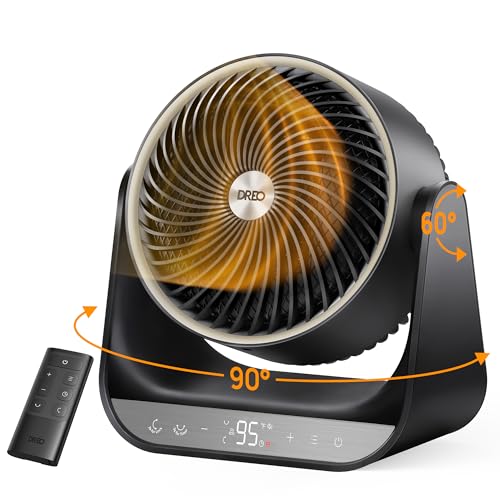
The DREO Whole Room Heater is the best overall pick for most bedrooms and quiet rooms because its 3D oscillation spreads heat around the room and its brushless DC motor keeps noise low. For a safe electric space heater for a bedroom, that combination is more useful than a heater that warms one spot loudly.
- Best for most rooms: DREO Whole Room Heater. Choose it when you want heat distributed across the room with less fan noise. Its overheat shutoff, tip-over protection, and ETL listing are useful safety features, though you still need to follow its manual and keep the required clearance.
- Runner-up for a bedroom or small office: R.W.FLAME Small Space Heaters for Indoor Use. A 24-hour timer, remote, child lock, and ETL listing make it a practical pick when you want straightforward scheduling and controls. Check the manual before relying on the timer to run it while you sleep.
- Best for a desk or very small area: BLACK+DECKER Personal Ceramic Heater, 1500 Watts, BHDC201,… Its small footprint, fan-only mode, and low and high settings suit personal heating rather than warming a whole room. Move it away from papers, curtains, and anything else that can catch heat.
For safe space heaters for seniors or older adults, simple controls usually beat extra modes. A remote, thermostat, and clearly marked buttons are easier to use than a heater that depends on an app; check that the display and controls are easy for the person using it to see and operate. The R.W.FLAME’s remote is a useful feature in that situation.
Are ceramic heaters safe? They can be, provided the model is listed by a recognized testing lab, placed with at least 3 feet of clearance, and used as its manufacturer allows. Keep any electric heater plugged directly into a wall outlet, not an extension cord or power strip. Don’t leave one running while you sleep or away from home unless its manual says that use is permitted; the word “ceramic” alone doesn’t make a heater safe.
How To Heat A Room Without Electricity
For safe indoor heating without electricity, an indoor-rated propane heater is the main true no-electric option among portable heaters—but it’s safe indoors only when its manual permits indoor use, required ventilation is provided, and a working carbon monoxide alarm is present. That’s the rule for non electric heaters safe for indoor use, a safe indoor non electric heater, or a safe indoor heater no electricity.
Check the label and manual before buying: a heater that burns propane outdoors isn’t automatically approved for a room. For an indoor safe heater propane users should choose a model designed for indoor use, with an oxygen depletion sensor, and follow the specified clearance and ventilation instructions. A small propane heater can provide heat during an outage, but it still needs the right fuel connection and operating conditions.
Gas heaters indoors require proper venting, clearances, and upkeep to prevent carbon monoxide buildup. Carbon monoxide is the invisible danger, not the flame itself. Keep vents clear and follow the manufacturer’s service schedule. Some states and cities restrict or ban vent-free gas heaters; confirm local codes before buying or installing one.
Sizing And Running Cost For Winter Heat
Safe, efficient electric space heaters are usually sized around the room and your heat loss; most plug-in models top out at 1,500 W. Safe electric heaters need the right listing and shutoffs, then a clear, correctly powered outlet. A home with a gas heater can be safe when the heater is approved for indoor use, installed and operated as its manual requires, and the home has a working carbon monoxide alarm; fuel-burning models also need the specified ventilation.
Oil-filled radiators are safe when listed and used correctly, but an oil heater isn’t safer than electric in some general sense: it is an electric heater with oil that stores heat. That stored heat keeps radiating after the element cycles off, so warmth feels steadier and the surface temperature changes more slowly. Neither feature makes it safe to ignore the manual.
You can leave an oil heater on all day only if its manufacturer allows continuous operation and you follow the instructions; don’t leave it running unattended or while you sleep unless that model is designed for it. For a larger room, a higher-airflow heater such as the DREO Whole Room Heater often spreads warmth better than a tabletop unit. A personal heater is usually enough to warm your desk or your spot in a chair.
| Heater | Watts | Per hour | Per day (8 h) | Per month (30 days) |
|---|---|---|---|---|
| 1,500 W heater at full power | 1,500 W | 26¢ | $2.04 | $61.20 |
Safety Checks Before You Buy Or Run It
A safe space heater needs a suitable spot, a good electrical connection, and the safety features built into the model. Always plug an electric heater directly into a wall outlet. Avoid using extension cords or power strips, even heavy-duty ones, since they can overheat and cause a fire hazard.
Bathrooms and laundry rooms call for extra caution: water, towels and steam change the risk. Use a heater only in a location and manner its manufacturer allows, and keep it well away from splashes. A regular portable heater isn’t made safe by placing it on a counter or outside the shower. If you need a model for that space, check guidance on a bathroom safe space heater.
Indoor propane heaters are safe only if they are specifically rated for indoor use, operated with the ventilation the manual requires, and paired with a working carbon monoxide alarm. Carbon monoxide is odorless, so the alarm is critical and cannot replace ventilation. Never bring an outdoor patio or construction propane heater inside a home, tent, or vehicle.
Don’t sleep with an electric heater running or leave it on when you leave home unless the manufacturer specifically says that use is allowed. If your manual doesn’t say, switch it off before bed.