Propane Boiler for Radiant Heat: 150,000 BTUs
On this page 8 sections
- Compare the Listed Products
- The Boiler Pick for Radiant Floor Heat
- Propane Boiler for Radiant Heat: What to Choose
- Check the Boiler’s Low-Temperature Range
- Boilers, Tankless Water Heaters, and Control Panels
- Estimate Heat Load and Running Cost Before You Buy
- Before You Buy or Call an Installer
- Frequently Asked Questions
Compare the Listed Products
| Rank | Model | Best for | Product type | Heat output | Fuel | Price |
|---|---|---|---|---|---|---|
| 1 | Rinnai Space-Heating Boiler i150SNBest Boiler Match | Homes needing a gas space-heating boiler with multizone controls | Space-heating boiler | Whole-home space-heating boiler | Natural gas | Check price |
| 2 | Generic Waste-Oil Burner KitWorkshop Burner Kit | Workshop setups using a compatible solid-fuel stove or boiler | Waste-oil burner kit | Up to 20 kW | Used motor oil, transmission fluid, waste vegetable oil | Check price |
| 3 | ChemWorld Wood Boiler Rust InhibitorWater Treatment | Owners maintaining a compatible outdoor wood boiler | Boiler rust inhibitor | — | — | Check price |
| 4 | ZDMEBEZ Industrial Oil-Fired BurnerIndustrial Burner Part | Industrial boiler or oven burner-part applications | Industrial burner | 200000cal | Light oil, waste engine oil, diesel | Check price |
Getting the size wrong can mean short cycling, uneven floor temperatures, and a boiler that costs more to run than the system needs. Buying a water heater, burner, or control panel when you need a boiler can leave you with the wrong equipment entirely.
The product list has one actual boiler. The other listings are a waste-oil burner, a corrosion inhibitor, and an industrial burner—not alternative boilers for a typical home. The ranking below keeps that distinction clear.
The Boiler Pick for Radiant Floor Heat
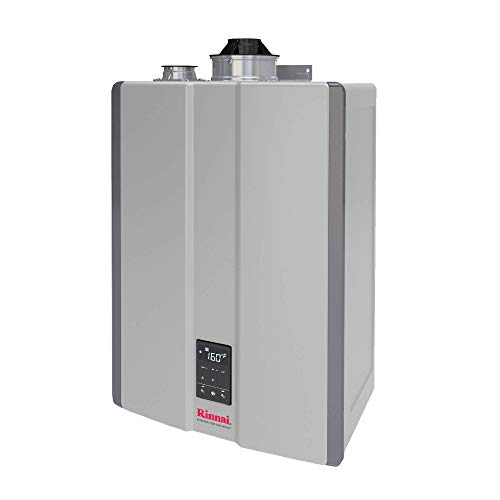
Rinnai Space-Heating Boiler i150SN

Generic Waste-Oil Burner Kit

ChemWorld Wood Boiler Rust Inhibitor

ZDMEBEZ Industrial Oil-Fired Burner
Propane Boiler for Radiant Heat: What to Choose
For a propane boiler for radiant heat, choose a model approved for propane and sized to a room-by-room heat-loss calculation. The listed Rinnai i150SN is identified as a natural-gas boiler, not a propane model; don’t assume it can use propane without an approved conversion and confirmation for that exact model.
If you’re searching for a radiant floor heat propane wall boiler or the best propane boiler for radiant heat, verify the fuel on the boiler’s rating plate and in its installation manual. Propane availability, an approved conversion, local service, and venting requirements all affect the choice. A lower fuel bill isn’t guaranteed; compare delivered propane costs and the actual equipment requirements for your home. propane boilers for radiant floor heating
The Rinnai I-SERIES Plus 150k and 90k are separate models from the i150SN product listing: the research identifies them as condensing combi boilers rated at 96% AFUE. Don’t transfer those specifications to the i150SN. For any boiler quote, ask whether the stated capacity is fuel input or usable heat output.
A boiler for radiant floor heat should be sized to the home’s calculated heat load, not floor area, the old boiler’s rating, or a quick guess. Oversizing can make the boiler cycle on and off too often, which can hurt comfort and operation. Radiant compatibility and controls also need to suit the floor loops; boiler capacity alone doesn’t settle that.
For the best propane boiler for a baseboard radiant heat system cost comparison, compare installed equipment and fuel use using your local propane price; baseboard and radiant-floor systems may need different water temperatures and controls. A boiler for radiant heat in a pole barn also needs a real heat-load calculation: insulation, air leakage, slab insulation, ceiling height, and winter design temperature all change the result. The building label won’t size it.
 Heating System Upgrade PlannerChoose between a heat pump, a furnace, a boiler or a hybrid with your own numbers, and hire the right installer.Every system compared side by side25 questions for contractors, red flagsRunning-cost, payback and quote calculator (Excel)
Check the Boiler’s Low-Temperature Range
A boiler setting for radiant floor heat depends on the floor design; the loops commonly need cooler supply water than conventional baseboard systems. Tubing, flooring, outdoor conditions, and the system’s design all affect the right temperature, so there’s no single setting that suits every home.
For radiant floor heat boiler setup, check the boiler’s temperature range and controls before connecting the floor loops. The Rinnai i150SN lists central-heating adjustment from 104°F to 180°F and an outdoor reset sensor. Outdoor reset lowers the water temperature when the weather is milder, then raises it as outdoor conditions get colder.
A condensing boiler can recover more heat from its exhaust when return water is cool enough. A radiant system may help create those conditions, but the boiler won’t necessarily condense throughout every cycle. Non-condensing boilers handle heat differently and shouldn’t be assumed to operate efficiently or safely at any temperature a radiant loop happens to need.
| Boiler type | What happens | What to check |
|---|---|---|
| Condensing | Can recover additional heat from exhaust when return water is cool enough. | Confirm the boiler’s temperature limits and controls suit the system. |
| Non-condensing | Doesn’t recover that additional exhaust heat through condensation. | Follow the manufacturer’s required operating temperatures and installation instructions. |
Your existing boiler may serve radiant floors if its capacity, minimum firing rate, temperature range, controls, and piping arrangement suit the loops. A technician may need to add a mixing valve to temper the water or a separate circulator to move it; don’t connect floor loops directly without checking the boiler and system design.
A residential boiler can serve a new slab, but radiant floor heat startup should follow the tubing and flooring manufacturers’ instructions. Raise the temperature gradually rather than sending a sudden blast of hot water into fresh concrete or flooring.
Boilers, Tankless Water Heaters, and Control Panels

A tankless boiler for radiant heat should be a boiler built for space heating, not a domestic tankless water heater chosen because its listing mentions floor loops. A boiler heats water for a building’s heating system; a tankless water heater is designed primarily to supply household hot water.
A propane combi boiler for radiant heat can supply space heating and domestic hot water, but the installer needs to verify simultaneous demand, hot-water flow limits, controls, and the radiant design. The Rinnai I-SERIES Plus 150k, for example, is listed as a 150,000-BTU condensing combi boiler with 96% AFUE. Those specifications don’t tell you whether its output matches your home.
An electric radiant boiler setup is hydronic: an electric boiler heats water that circulates through tubing. Electric radiant floor heating may instead use a mat beneath the floor; a mat heats the floor directly and isn’t a boiler. If you’re comparing electric boiler options, see the best electric boilers for radiant floor systems.
What a Hydronic System Needs
Floor loops need more than a heat source. Typical equipment includes a boiler, circulator pump, expansion tank, air separator, manifold, zone valves or pumps, thermostats, and temperature controls.
A radiant floor manifold isn’t automatically wired from the boiler. Wiring depends on the control design: thermostats may connect to a zone control, which then signals pumps or the boiler. Have the installer identify the wiring diagram before connecting anything.
To bring radiant floor lines into a boiler, the installer connects the PEX loops through the manifold and adds the required pumping, air removal, expansion, and temperature controls. The exact arrangement depends on the boiler and system design; don’t treat a manifold or control panel as a complete heating appliance.
Estimate Heat Load and Running Cost Before You Buy
Your boiler capacity should meet your home’s calculated heat load at the local winter design temperature; radiant heat boilers for homes aren’t sized by floor area alone. Ask for a Manual J or equivalent room-by-room heat-loss calculation that accounts for the building envelope, including insulation, windows and air leakage.
Compare running costs with your actual local fuel rates and the appliance’s verified efficiency, not a generic monthly estimate. AFUE estimates how much seasonal fuel energy becomes heat; cycling, controls, distribution losses and fuel prices also affect the bill. For an electric boiler, use your electricity rate and verified electrical input; for propane, natural gas or oil, use the local fuel price and the appliance’s verified consumption or efficiency.
Radiant boiler error codes are model-specific. Before calling for service, write down the exact code and boiler model; don’t keep resetting the unit if you smell gas, see a leak or suspect a combustion problem.
Before You Buy or Call an Installer
A safe radiant floor heating boiler installation needs a qualified professional, not a DIY wiring or gas-piping diagram. Gas connections, venting, combustion setup and electrical work must follow the manufacturer’s instructions and local code; use licensed trades where required.
For a request like “show me a block diagram on how to install an electric boiler for radiant heat,” the safe answer is to have an electrician and hydronic installer design the connections for your equipment and home. An electric boiler’s service capacity and electrical requirements must be checked by a licensed electrician; a standard household circuit may not supply the load.
Before purchase, get the exact model and fuel in writing, along with input and output ratings, AFUE, minimum firing rate, temperature range, listing or certification, warranty and compatible venting. Ask the installer to confirm the heat-loss report, PEX tubing and manifold layout, zone count, circulator and expansion-tank sizing, air removal, mixing or injection controls, and thermostat wiring plan.
Connecting a bathroom floor loop to an existing boiler also requires a design for the floor, tubing, water temperature and controls; don’t connect it by guesswork. If the existing boiler is leaking, shut it down if safe and call a technician. Never bypass a safety control or run equipment with a water, fuel or flue leak.