Bathroom-Safe Space Heaters Built for Moisture & Steam
On this page 9 sections
- Bathroom Heater Features Compared
- Top Bathroom-Safe Space Heaters for Moisture and Steam
- Best Bathroom-Safe Space Heaters for Moisture and Steam
- Safety of Infrared and Ceramic Heaters in Bathrooms
- How to Choose the Right Size and Power for Your Bathroom Heater
- Running Costs of Bathroom Space Heaters
- Key Safety Certifications and Features for Bathroom Heaters
- What Competitors Miss About Bathroom Space Heaters
- Frequently Asked Questions
Bathrooms demand heaters that can handle moisture and steam without risking safety or damage. Not all space heaters are built for this, but some come with features like ALCI plugs and flame-retardant materials that make them suitable.
Choosing the right heater means balancing quick warmth, quiet operation, and safety certifications. This guide ranks the top bathroom-safe space heaters and explains how to pick the right one for your needs.
Bathroom Heater Features Compared
| Model | Best for | Power (W) | Safety Features | Room Size Coverage | Noise Level (dB) | Price |
|---|---|---|---|---|---|---|
| DREO Bathroom Space Heater | Best Overall | 900/1300/1500 | ALCI plug; tip-over; overheat; 24-hour auto shutoff | — | 36.5 | Why it is here |
| Lasko Bathroom Ceramic Heater | Best Simple Choice | 1500 | ALCI safety plug; ETL Listed; automatic overheat protection | — | — | Why it is here |
| Amaze Ultraslim Wall Heater | Best Wall-Mounted Pick | 250 | ETL certified; UL 2021 standards; triple insulation; non-conducting materials | Up to 80 sq ft | Silent | Why it is here |
| DREO Portable Indoor Heater | Best Quiet Indoor Model | 1500 | Tilt-detection; overheat protection; V0 flame-retardant materials | — | 34 | Why it is here |
| Amazon Basics Ceramic Heater | Best for Dry Rooms | 1500/900 | Tip-over protection; overheat protection | — | 43 | Why it is here |
Top Bathroom-Safe Space Heaters for Moisture and Steam
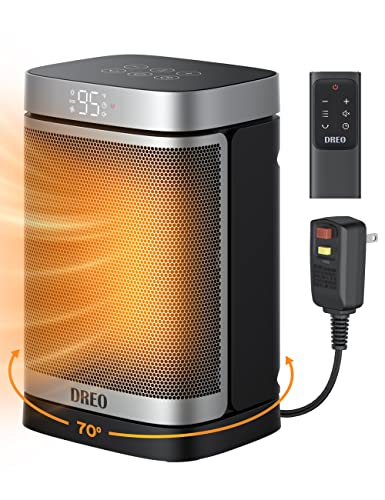
DREO Bathroom Space Heater

Lasko Bathroom Ceramic Heater

Amaze Ultraslim Wall Heater

DREO Portable Indoor Heater

Amazon Basics Ceramic Heater
Best Bathroom-Safe Space Heaters for Moisture and Steam

The best bathroom safe space heater is a listed electric model with an ALCI plug, flame-retardant materials, tip-over protection and overheat shutoff; for a portable heater for bathroom use, the DREO Space Heater for Bathroom and Indoor is the strongest fit in this group. Its ALCI plug cuts power when electrical leakage suggests moisture has reached the circuit, which is a much better backup than hoping steam behaves itself.
Flame-retardant plastics and other heat-resistant materials help the heater resist ignition if an internal part overheats, but they don’t make a wet location harmless. Keep the heater on a dry, stable surface, at least 3 feet from towels and curtains, and plug it straight into a wall outlet—never an extension cord or power strip.
| Typical power | What it means | Best fit |
|---|---|---|
| 900W | Lower heat output and electrical demand | A small bathroom or a short preheating session |
| 1,200W | Middle setting for steady supplemental heat | A small-to-medium bathroom with the door closed |
| 1,500W | Maximum common plug-in output | A larger or colder bathroom that needs faster warm-up |
A standard 1,500W setting draws about 12.5 amps on a 120V circuit, so a bathroom circuit with other heavy loads may trip the breaker. Quiet operation matters more in a bathroom than a garage: a loud fan can drown out a timer, wake someone nearby or make a two-minute shower sound like airport ground support. Compare the manufacturer’s noise rating when one is provided; don’t assume every ceramic fan heater is quiet.
Tip-over and overheat protection are basic requirements for a portable heater suitable for bathroom use. The first shuts the unit off if it gets knocked over, while the second responds when airflow is blocked or the internal temperature rises too far. Neither feature permits operation beside a tub, sink or shower.
 Winter Heating Bill CutterSee what every heater in your home really costs, heat the rooms you use, and cut the waste in 30 days.Cost-per-hour tables for every heaterThermostat schedule and draft-proofing planRunning-cost and bill calculator (Excel)
Safety of Infrared and Ceramic Heaters in Bathrooms
Is it safe to use infrared heater in bathroom? Only when the specific infrared model is approved for that environment and has the required moisture and electrical protection; infrared heating by itself doesn’t make a heater bathroom-safe. A portable heater suitable for bathroom use needs the model’s safety instructions, an ALCI or equivalent leakage-protection plug where provided, and the same clearance and outlet rules as any other electric heater.
Ceramic describes the heating element, not the safety rating. A ceramic heater with an ALCI plug, overheat shutoff, tip-over switch and bathroom-use instructions is a different proposition from a general indoor ceramic heater with none of those protections. The Lasko Electric Ceramic Space Heater for Bathroom is the kind of product to compare on those specific features; the phrase “ceramic” on a box is not a permission slip.
Infrared heaters can be a poor bathroom choice because many models are intended for dry indoor rooms, workshops or outdoor areas rather than steam and splash. They heat people and nearby surfaces directly, so a towel, bath mat or other combustible item close to the radiant element can heat quickly. A model lacking bathroom-use approval, moisture guidance or leakage protection should stay out of the bathroom.
How to Choose the Right Size and Power for Your Bathroom Heater
For a wall-mounted electric heater in a bathroom, choose a 250 W unit for rooms up to about 80 sq ft; a 1,500 W portable heater for bathroom use heats typical rooms up to about 150 sq ft faster. The right choice depends on room size, insulation, ceiling height and how quickly you want warmth.
A small wall heater such as the Amaze Ultraslim Electric Wall Heater suits a compact bathroom where you want permanent installation and no heater sitting on the floor. Its 250 W output fits bathrooms up to about 80 sq ft, while a 1,500 W model such as the DREO Space Heater for Bathroom and Indoor has enough output to bring a larger, colder bathroom up to temperature quickly.
| Bathroom size | Useful starting point | Best fit |
|---|---|---|
| Up to 80 sq ft | 250 W | Small wall-mounted heater |
| About 80 to 150 sq ft | 1,200 to 1,500 W | Portable ceramic or radiant heater |
| Over 150 sq ft | Check the heater’s stated coverage | A larger heating plan may be needed |
Coverage angle matters as much as the wattage when you’re standing in one cold corner. Oscillation spreads warm air across the room; a fixed heater works better when aimed toward the open floor rather than a wall, shower curtain or vanity. Keep a portable unit on a stable, dry surface with its required clearance, and plug it directly into a wall outlet.
Running Costs of Bathroom Space Heaters
A 1,500 W bathroom heater running for 30 minutes each day uses 0.75 kWh daily, so your monthly cost depends on your electric rate and how often the thermostat actually calls for heat. At $0.17 per kWh for 30 days, the cost block below shows the calculation without pretending every utility bill charges the same rate.
| Heater | Watts | Per hour | Per day (0.5 h) | Per month (30 days) |
|---|---|---|---|---|
| 1,500 W heater for 30 minutes daily | 1,500 W | 26¢ | 13¢ | $3.83 |
| 1,200 W heater for 30 minutes daily | 1,200 W | 20¢ | 10¢ | $3.06 |
Wattage changes the bill in direct proportion when both heaters run for the same time: 1,500 W uses 25% more electricity than 1,200 W. A 250 W wall heater uses one-sixth as much electricity as a 1,500 W heater per hour, though it also supplies one-sixth the heat output.
ECO mode can reduce consumption by lowering output or cycling the heating element after the room reaches the set temperature. A timer helps more reliably because it stops the heater after your morning routine instead of letting it run until someone remembers. Neither feature makes a heater safe to leave running unattended.
A bathroom-safe 1,200 W radiant heater or radiator, including the TRN0812T search often associated with DeLonghi, still needs a bathroom-appropriate listing and placement; lower wattage alone doesn’t make a standard radiator suitable near steam or splashes. For a closer look at portable options, see portable bathroom space heaters.
Key Safety Certifications and Features for Bathroom Heaters
A bathroom safe space heater should have an independent safety listing, an ALCI plug, overheat protection and a tip-over switch before you worry about heat settings. Those features address the two problems a steamy room creates: electricity near moisture and a heater operating where it shouldn’t.
Why an ALCI Plug Matters
An ALCI, or appliance leakage circuit interrupter, monitors the electrical current and cuts power when some of it starts leaking through an unintended path. If moisture creates a fault, the plug can shut the heater off before the fault becomes a shock hazard. The DREO Space Heater for Bathroom and Indoor uses this style of protection, which is why its plug matters more than a long list of warm-air settings.
Look for the ALCI test and reset buttons on the plug, then test it according to the heater’s instructions before use. A reset button that won’t hold, a warm plug or a damaged cord means the heater stays unplugged.
What ETL Listing and Shutoffs Tell You
An ETL Listed mark shows that the heater was independently tested and certified to applicable electrical safety standards. It isn’t a waterproof rating, and it doesn’t permit placing the heater beside a tub or sink; follow the manual’s bathroom location and clearance rules.
Overheat protection shuts the heater down when an internal sensor detects excessive temperature, often from blocked airflow or a fault. A tip-over switch does a different job: when the heater tilts or falls, a small switch opens the circuit and stops heating. Both safeguards need clear airflow and a clean, stable floor to work as intended.
What Competitors Miss About Bathroom Space Heaters
A portable heater suitable for bathroom use needs more than a bathroom label: check its filter access, sound level, controls and timer before buying. Those details decide whether you’ll use it safely at 6 a.m. or shove it into a closet after one noisy, dusty week.
Small Details Worth Checking
| Feature | Why it matters | What to check |
|---|---|---|
| Detachable filter | Towels, lint and dust can restrict airflow, making the heater work harder and triggering overheat protection. | The filter comes out without dismantling the heater, and the manual explains cleaning or replacement. |
| Quiet operation | A loud fan can wake sleepers during a nighttime bathroom visit and encourage you to switch the heater off too soon. | Look for a stated noise figure or a genuinely quiet mode in the product data; don’t assume ceramic means silent. |
| Remote control | You can start or stop the heater without reaching across a damp floor or stepping close to it. | Controls remain usable from the intended seating or doorway, and the remote doesn’t replace safe placement. |
| Timer | A shutoff time can prevent the heater from running after the room is warm or after you’ve left. | The timer has a clear end point and works with the heater’s thermostat or heat setting. |
A detachable filter also gives you a maintenance routine: unplug the heater, let it cool, remove the filter as directed and clear lint before the next cold spell. Never run a heater with its intake or outlet covered, and don’t wash a filter unless the manual specifically allows it.
Quiet operation and a timer can reduce wasted runtime, although neither changes the heater’s wattage. For example, a 1,500 W heater uses 1.5 kWh for each hour it runs; a timer that prevents one unnecessary hour per day saves 30 hours of runtime in a 30-day month. At $0.17 per kWh, that is 45 kWh, or about $7.65.
