A 1500 W radiant heater is the best pick for most single-bay garages that just need quick spot heat, while the 7,500 W ceiling unit is the right call for bigger, hard-wired spaces. Choose by room size, mounting, and whether you need whole-space warmth or heat where you stand.
Key takeaways
A plug-in 1,500 W unit is fine for spot heat; a 7,500 W hard-wired heater suits larger garages and workshops.
Ceiling or wall mounting frees floor space and usually works better in a crowded garage than a portable base.
Wi-Fi and remotes are convenience features, but the thermostat and wattage matter more.
Look for tip-over protection, overheat protection, and a real listing such as UL, ETL, or CSA.
If you need indoor heat, buy an indoor-rated model and keep extension cords out of the plan.
Say your garage is 24 by 24 feet, uninsulated, and you want to warm one workbench without turning the whole space into a power bill parade. A plug-in 1,500 W radiant unit can help there; a larger hard-wired ceiling heater makes more sense once the room gets bigger or the cold hangs around.
These picks are for readers who want a garage electric radiant heater, not a patio toy with a garage label slapped on. The job is simple: match heat output to space, check how it mounts, and make sure the safety features fit the way you actually use the room.
Five Garage Electric Radiant Heaters Worth Comparing
#1Best Flexible Pick
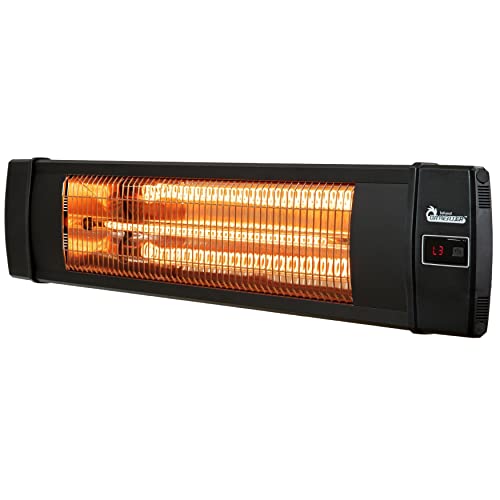
DR. INFRARED HEATER Portable 1500W Infrared
Best for Spot heat in a single-bay garage or an indoor-outdoor work area
Product 1 gives you clean, instant infrared heat at 900W, 1200W, or 1500W, so you can warm the person and workbench instead of the whole garage. Its standard 120V plug, remote control, and included wall and ceiling brackets suit renters and homeowners who don’t want a hard-wired installation. The IP55 approval and weatherproof aluminum body also make it a practical choice for covered outdoor areas.
Heat settings 900W, 1200W, and 1500WVoltage 120V, 60HzMounting Wall and ceiling brackets includedProtection IP55 approvedControls Remote controlled
Why it made the cut
Three power settings: 900W, 1200W, and 1500W
Remote control and standard 120V plug
Wall and ceiling mounting brackets included
IP55 approved for indoor and outdoor use
Good to know
No thermostat
Doesn’t provide the whole-space airflow of a fan-forced heater
Skip it if Skip it if you need a hard-wired heater with a digital thermostat for a large, poorly insulated garage.
Best for A fixed workbench or bay needing focused overhead radiant heat
Product 4 puts 1500W of radiant heat overhead through dual quartz tubes, keeping the heater off the floor and aimed at the area where you work. Two heat settings and a pull-string switch keep operation simple, while the adjustable halogen light can illuminate the same workspace. Its compact ceiling-mount design fits garages and workshops that need direct heat without a remote or thermostat.
Heat output 1500WHeat settings 2Dimensions 24.0 x 12.2 x 3.3 inchesMounting Ceiling mountListing ETL approved for use in the US
Why it made the cut
Dual quartz tubes provide focused radiant heat
Two heat settings with a pull-string switch
Adjustable halogen light works with or without heat
Metal safety grille and ETL approval for US use
Good to know
No thermostat or remote control
Ceiling mounting is less flexible than a portable unit
Skip it if Skip it if you need phone control, automatic temperature adjustment, or heat that follows you around the garage.
Best for Large or poorly insulated garages with a suitable hard-wired circuit
Product 2 is the heavy hitter here: its 7,500W fan-forced output is intended for ceiling-mounted, hard-wired use where a plug-in spot heater would be outmatched. Adjustable louvers and a variable mounting angle let you direct airflow, while the digital thermostat, remote, and 12-hour timer give you more control than a pull string. The steel body and overheat shutoff fit tougher garage and workshop conditions, but the installation is a real electrical project.
Heat output 7,500WVoltage 240VInstallation Hard-wiredMounting Ceiling mountControls Digital thermostat, remote, and 12-hour timer
Why it made the cut
7,500W fan-forced heat
Digital thermostat, remote, and 12-hour timer
Adjustable louvers and variable mounting angle
Heavy-gauge steel body with overheat protection
Good to know
Requires 240V hard-wired installation
More heater than a small garage workspace needs
Skip it if Skip it if you only have a standard plug-in outlet or want quiet, direct radiant heat at one work position.
Best for A finished garage where wall space matters more than portability
Product 3 keeps the floor clear with a wall-mounted infrared design and adds Wi-Fi control from your phone. The touchscreen digital thermostat and included remote make temperature changes easier than reaching for a mounted switch, and the heater can hide its cord when installed over the outlet. It suits a finished garage or small workspace better than an open, drafty bay where portable placement matters.
Heat output 1500WVoltage 110VMounting Wall mountedControls Wi-Fi, touchscreen digital thermostat, and remoteSafety Tip-over safety shutoff
Why it made the cut
Wi-Fi control from a phone
Touchscreen digital thermostat and remote included
Wall-mounted design saves floor space
Grill and wall stay cool to the touch
Good to know
Wall-mounted version does not include feet
Only 110V is listed, with no heat-setting range provided
Skip it if Skip it if you need ceiling mounting, portability, or a heater with a stated 240V output.
Best for A small workshop or garage area up to the stated 150 sq. ft.
Product 5 keeps the choice straightforward with one 1500W setting, a lightweight portable design, and stated heating coverage of 150 sq. ft. Its IPX4 structure protects against water splashing, which is useful in a garage or greenhouse where damp conditions can show up. Choose it when you want simple infrared heat and don’t need a thermostat or multiple output levels.
How To Choose An Electric Radiant Heater For Garage Use
Choose a 120 V plug-in radiant heater for spot warmth where you stand, or a hard-wired 240 V unit when the garage needs stronger, broader heat. An electric radiant heater for garage use sends infrared energy toward your body, tools and nearby surfaces instead of spending its first hour trying to warm every cubic foot of cold air. You feel the difference quickly, especially near an open garage door or a workbench.
In short
A portable 1,500 W model suits a person who needs heat at one station and can plug into a wall outlet. A ceiling-mounted unit makes more sense for a larger garage, but its circuit and installation belong in the buying decision from the start.
Spec
What to look for
Best fit
Wattage
1,500 W for focused warmth; higher output for larger spaces
Workbench or spot heat versus whole-garage coverage
Mounting
Portable, wall-mounted or ceiling-mounted
Moveable heat versus permanent overhead coverage
Voltage
120 V plug-in or 240 V hard-wired
Existing outlet versus an electrician-installed circuit
Controls
Thermostat, remote or simple manual controls
Set-and-forget comfort versus occasional work sessions
Safety
Tip-over and overheat protection on portable units; indoor rating for enclosed use
A garage where people, shelves and vehicles share the space
Match the heater to how you use the garage, not to wattage alone.
1,500 W
The practical plug-in ceiling
At 120 V, a 1,500 W heater draws about 12.5 amps, so it belongs directly in a suitable wall outlet. Skip the extension cord and power strip; the circuit has little spare capacity for another heavy load.
The best electric garage/shop heaters usually separate into two groups: portable or wall-mounted 120 V models for one work area, and ceiling-mounted 240 V heaters for a permanent installation. The Comfort Zone Hard-Wired Ceiling Mount Garage Space Heater is aimed at the second job, while the DR. INFRARED HEATER Portable Infrared Indoor and Outdoor Sp… and Heat Storm HS-1500-PHX-WIFI Infrared Heater fit the first. A thermostat or remote helps when you want steady comfort; it can’t compensate for a heater aimed across the room instead of at the occupied area.
Myth
A patio heater can warm an enclosed garage if you leave the door cracked.
Fact
Outdoor and patio heaters aren’t substitutes for an indoor-rated electric unit. Enclosed garages need equipment listed for indoor use, with the clearances and installation method in its manual; repurposing outdoor equipment creates a fire and ventilation problem.
Searches such as garage infrared heater electric, top rated electric garage/shop heaters and even xin electric garage shop heaters usually point to the same practical choice: a ceiling- or wall-mounted garage/shop heater, not a narrow brand search. Compare the mounting, voltage, controls and protection first, then compare models such as the BEYOND HEAT Electric Garage Heater 120V or the DR. INFRARED HEATER DR218-1500W Greenhouse Garage Workshop…. For a broader model comparison, see these garage-ready electric radiant heaters.
From HeaterGuides · our own guidePage 4 sets boilers beside every other system, side by side.Heating System Upgrade PlannerChoose between a heat pump, a furnace, a boiler or a hybrid with your own numbers, and hire the right installer.Every system compared side by side25 questions for contractors, red flagsRunning-cost, payback and quote calculator (Excel)$14.99$9.99Get it for $9.99See what's inside and watch the 2-minute video →16-page printable PDF + Excel calculator · instant download · 30-day refund
Which Pick Fits Your Garage Size
For a garage infrared heater electric setup, match the wattage to the space you need to warm, not the square footage printed on a box. For guidance on 750 W models see best 750 watt heater. The top rated electric garage/shop heaters for a small work area are usually 1,500 W plug-in models; the 7,500 W Comfort Zone hard-wired ceiling heater is the only product here aimed at larger spaces or more constant use.
Worked Example
Say your one-car garage has a 6-by-8-foot bench area where you repair equipment for an hour at a time. A 1,500 W heater can put useful radiant warmth on you and the bench, but it won’t quickly make the entire garage feel like a heated room. Cold doors, concrete and air leaks continue pulling heat away.
Work area6 × 8 ft
Heater choice1,500 W spot heat
Best useShort projects near the bench
Garage situation
Better match
Why
Small insulated area or bench
1,500 W plug-in model
Warms the person and work zone without installing a new circuit
Up to 150 sq. ft. reference
DR. INFRARED HEATER DR218-1500W
Its listed coverage gives a specific small-space reference, not a promise for every garage
Large, drafty or frequently used garage
Comfort Zone 7,500 W ceiling unit
Higher output is suited to broader, steadier heating and requires hard-wired installation
Portable spot heat
DR. INFRARED HEATER Portable, Heat Storm HS-1500-PHX-WIFI or BEYOND HEAT
Useful when you move the heat between work areas
Use the listed 150 sq. ft. claim only as a starting reference; insulation, ceiling height and air leakage change the result.
Smaller insulated spaces can usually use plug-in radiant heat, while bigger or drafty garages usually need hard-wired output and ceiling placement. Ceiling mounting also keeps the heater above benches, tools and vehicles, leaving the floor and work paths clear.
A sizing rule that holds up
A 1,500 W heater is a spot-heat choice unless the room is small and reasonably insulated. Choose the 7,500 W unit when you need broader heat across a larger garage and have an electrician confirm the circuit and mounting plan.
Running Cost Matters Before Winter
An electric radiant heater for garage use costs according to two numbers: its wattage and how long you run it. At 17 cents per kWh, a 1,500 W heater uses 1.5 kWh in one hour, so the calculation is 1.5 × 1 × $0.17; the same heater running two hours uses 1.5 × 2 × $0.17.
5×
Power difference
A 7,500 W heater draws five times the power of a 1,500 W heater. It can serve more space, but five times the wattage makes run time matter quickly.
Heater
Watts
Per hour
Per day (2 h)
Per month (30 days)
1,500 W heater
1,500 W
26¢
51¢
$15.30
7,500 W heater
7,500 W
$1.28
$2.55
$76.50
Calculated at 17¢ per kWh. Example assumes 2 hours each day for 30 days at $0.17 per kWh. The formula is watts ÷ 1,000 × hours × days × electricity rate.
Radiant heaters are often used in short bursts, so a smaller unit may cost less for quick projects than a larger heater you leave running after you walk away. A 1,500 W model used for one hour draws 1.5 kWh; a 7,500 W model reaches 7.5 kWh in that same hour.
Pay for the warmth you use
A remote or thermostat can stop heating when you leave or when the work area reaches the set temperature. That control matters most in a garage used for brief jobs, where avoiding an extra hour of runtime can matter more than choosing the lowest wattage on the label.
Safety And Installation Are Part Of The Purchase
For top rated electric garage/shop heaters, safety features and installation requirements matter more than a star score. Look for a UL, ETL, or CSA listing, overheat protection, and a tip-over switch on portable models; those details tell you more than a product title stuffed with superlatives.
Plug It In Directly
A plug-in heater belongs in a wall outlet by itself, never in an extension cord or power strip. Keep at least 3 feet of clearance around the heater, including above it, and give extra room to any model with a fan or exposed heating element. Cardboard boxes, sawdust, oily rags, tires, and vehicle parts have no business crowding the heat path.
Before You Run It
Confirm the heater has a UL, ETL, or CSA listing.
Check for overheat protection and, on portable units, tip-over protection.
Keep the heater at least 3 feet from storage, vehicles, workbenches, and combustible materials.
Plug a 120 V portable heater directly into a wall outlet.
Make sure the outlet, plug, and cord stay cool during operation.
A 240 V ceiling heater such as the Comfort Zone hard-wired model is a different job from plugging in the Heat Storm or one of the 1,500 W DR. INFRARED HEATER units. The circuit, disconnect, wiring, and ceiling bracket need to match the heater’s instructions, and hard-wired work is typically a licensed electrician’s job.
Comparing Xin Listings
If you searched for Xin electric garage shop heaters, verify the exact model’s electrical requirements, listing mark, installation manual, and protection features before ordering. A marketplace label or a claim that a heater is shop-ready doesn’t replace a recognized UL, ETL, or CSA listing.
Mount a ceiling unit only where the manufacturer allows, using the specified hardware and clearances. Don’t improvise a bracket over a workbench or aim a fan and exposed element at stored lumber; the garage has plenty of ways to turn a small shortcut into a very large cleanup.
What Most Garage Heater Guides Leave Out
An electric radiant heater for garage use is usually quieter than a fan-forced heater, which matters when the room also serves as a workshop, hobby space, or home gym. Radiant elements warm people and nearby surfaces without a blower running continuously, so you avoid much of the fan noise.
Placement changes the experience more than a remote control does. A wall- or ceiling-mounted heater keeps the floor clear in a cluttered garage and won’t become one more object to trip over, while a portable unit lets you move the heat to the bench, doorway, or car.
Radiant Fits When
You want quiet spot heat at a workbench or exercise area.
A clear wall or ceiling can aim warmth where you stand.
Keeping the garage floor open matters.
Choose Fan-Forced When
Line-of-sight heat can leave far corners cold.
A blocked beam or changed work area can reduce comfort.
Remote control and Wi-Fi add convenience, not heating capacity.
Infrared heat travels in a line of sight, so your face and hands may feel warm while the far corners, tools, and vehicle remain cold. Remote control and Wi-Fi can start the Heat Storm from across the room, but they don’t change room sizing, wattage, or the electrical limit of the circuit.
In short
Pick radiant heat for quiet warmth where you stand. Skip it for a large garage that needs mixed, whole-room circulation, and look at a fan-forced hard-wired unit instead.
Check These Points Before You Buy
Top rated electric garage/shop heaters still need to match your garage’s wiring, mounting point, and heat target before you order. A 120 V plug-in model suits spot heat where you work; a larger 240 V ceiling heater requires a dedicated hard-wired circuit and an electrician.
Check the room itself before choosing wattage. An insulated, finished garage holds heat far better than an open or drafty space, so the same heater may feel comfortable in one garage and underpowered in another. Radiant heat warms people and nearby surfaces first; it won’t erase cold air rushing under the door.
Indoor use matters
Choose a heater specifically listed for indoor use in a garage or workshop. An outdoor patio heater or construction heater isn’t a substitute for an indoor-rated electric model. Keep the required clearance from stored cardboard, wood, gasoline, paint and other combustibles.
Final purchase checks
Voltage: Confirm the heater matches the available 120 V receptacle or the planned 240 V circuit. Never force a plug or use an extension cord or power strip.
Mounting location: Confirm the wall or ceiling can support the unit and that the heat points toward the work area, not shelves or the garage door.
Clearance: Measure the manufacturer’s required space around and above the heater, including clearance to vehicles and stored materials.
Listing: Look for a recognized safety listing such as UL, ETL or CSA, plus tip-over and overheat protection on portable models.
Control type: Pick a built-in thermostat, remote, timer or Wi-Fi control only if you’ll use it; confirm the control works from your usual work area.
Installation: Plug-in models go directly into a suitable wall receptacle. Hard-wired models need correctly sized wiring, a breaker and qualified electrical installation.
Frequently Asked Questions
What size electric radiant heater do I need for a garage?
For most single-bay garages needing spot warmth, a 1,500 W radiant heater is the practical starting point. Larger, poorly insulated spaces may need a 240 V heater or more than one heating zone; use the model’s coverage guidance and your garage’s insulation as the tie-breakers.
Can I use a plug-in radiant heater in a garage?
A plug-in model can work if the heater is listed for garage or indoor use and the outlet can handle its load. Plug it directly into a wall outlet, never an extension cord or power strip, and keep three feet of clearance from combustibles; a damp garage may also require GFCI protection under local code.
Are electric radiant heaters cheaper to run than fan heaters?
At the same wattage, a radiant heater and a fan heater use about the same amount of electricity. Radiant heat can feel more efficient because it warms your body and nearby surfaces directly, so you may run it for less time or at a lower setting.
Do I need a hard-wired heater for a two-car garage?
A two-car garage doesn’t automatically require hard-wiring, but a 240 V ceiling unit makes more sense when you want broad, sustained heat across a large or poorly insulated space. Have a licensed electrician confirm the circuit, disconnect, mounting location, and local requirements before installation.
Is a garage infrared heater safe for indoor use?
Yes, an infrared heater can be safe indoors if it’s designed for indoor use and installed according to its instructions. Choose models with overheat protection and certification from UL, ETL, or CSA. Keep the recommended clearance around the heater, and avoid using outdoor or construction heaters inside your garage.
Before you go · a welcome giftGet the Heating System Upgrade Planner for $4.99Choose between a heat pump, a furnace, a boiler or a hybrid with your own numbers, and hire the right installer. Normally $14.99; your welcome price saves $10.00. We'll email your link right now.or buy it now for $9.99 without the gift →One email with your link now. We never share your address.


 Heating System Upgrade PlannerChoose between a heat pump, a furnace, a boiler or a hybrid with your own numbers, and hire the right installer.Every system compared side by side25 questions for contractors, red flagsRunning-cost, payback and quote calculator (Excel)