




Choosing a 750 watt space heater is about balancing efficient warmth, safety, and quiet operation for small rooms or personal spaces. Many buyers make the mistake of assuming all low-watt heaters underperform, leading to overspending on higher wattage models that run up electricity bills without better comfort.
This guide cuts through the noise with five strong 750 watt heaters, comparing their heat output, safety features, and user comfort to help you pick the right one quickly.
750 Watt Heater Features At A Glance
| Model | Best for | Heat Output (W) | Safety Features | Noise Level (dB) | Room Size (sq ft) | Price |
|---|---|---|---|---|---|---|
| GiveBest Portable Ceramic Space Heater | Best Overall | 750/1500 | Overheat shut-off, tip-over protection, flame retardant | Quieter than conversation | Up to 200 | Check today’s price |
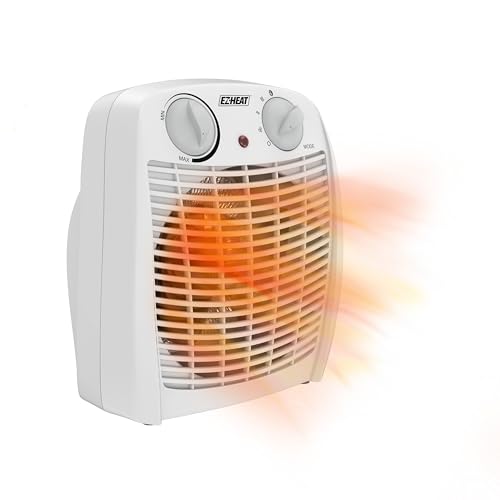
| EZ-HEAT Portable Indoor Space Heater BNS-15K | Energy Efficient | 750/1500 | Tip-over switch, overheat sensor | — | — | Check today’s price |
| EZ-HEAT Milkhouse Style Utility Heater MTFH-01C-MB | Durable Design | 1500 | Tip-over switch, overheat protection | — | — | Check today’s price |
| DREO Portable Electric Heater with Thermostat | Quiet & Precise | 1500 | Tilt-detection sensor, overheat protection | 34 | Up to 200 | Check today’s price |
| Amazon Basics Ceramic Space Heater | Compact & Simple | 1500/900/— | Tip-over protection, overheat protection | 43 | — | Check today’s price |
Top 750 Watt Heaters Reviewed and Compared
GiveBest Portable Ceramic Space Heater
EZ-HEAT Portable Indoor Space Heater BNS-15K
EZ-HEAT Milkhouse Style Utility Heater MTFH-01C-MB
DREO Portable Electric Heater with Thermostat
Amazon Basics Ceramic Space Heater
How To Choose A 750 Watt Heater That Works
A 750 watt heater suits small spaces, but picking one that works means focusing on heat output, element type, safety features, and noise levels.
Heat output directly ties to room size and your comfort. A 750 watt heater produces about 2,560 BTU per hour, enough for rooms up to roughly 100 to 150 square feet, depending on insulation and outside temperature.
Ceramic heating elements are common and preferred for 750 watt heaters. They warm up quickly, distribute heat evenly, and stay safe to touch. Other elements like mica panels or oil-filled radiators heat differently—mica is fast but less durable, oil-filled radiators provide steady warmth but usually need higher wattage.
A built-in thermostat and adjustable heat settings let you dial in comfort and save energy. Without these, the heater runs constantly at full power, wasting electricity and making the room too hot or too cold.
Safety features are non-negotiable. Look for tip-over switches that cut power if the heater falls, overheat protection, and UL or ETL certification. These prevent fires and electrical faults, especially in bedrooms or areas with pets and kids.
Noise levels vary. Ceramic heaters tend to be quieter, with a low fan-like whir or no fan at all. If you need silence for a bedroom or office, pick a model noted for quiet operation. Some heaters have oscillation for wider heat distribution but can add noise.
Sizing And Running Costs Of 750 Watt Heaters
A 750 watt heater pulls 6.25 amps from a standard outlet and uses 0.75 kWh per hour when running continuously. Most plug-in ceramic heaters you see advertised as 750 watts are actually 1,500 watt models with a low setting, giving you the option to cut power draw in half when full heat isn’t needed.
Room size determines whether 750 watts will be enough. A well-insulated bedroom that’s 10 by 10 feet—about 100 square feet—needs roughly 1,000 watts to stay comfortable in cold weather. A 750 watt heater can maintain warmth in a space like that if the room holds heat well, but it won’t catch up quickly on a freezing morning. Bump the size to 12 by 12 feet and you’re asking 750 watts to cover 144 square feet; in most climates that means supplemental heat, not full comfort.
Running cost is simple arithmetic. At 750 watts for 8 hours you use 6 kWh; at 17 cents per kWh that’s $1.02 for the night. The same heater on its 1,500 watt setting uses 12 kWh and costs $2.04. Over a month of nightly use the 750 watt setting saves you about $30 compared to running at full power.
| Heater | Watts | Per hour | Per day (8 h) | Per month (30 days) |
|---|---|---|---|---|
| 750 W setting | 750 W | 13¢ | $1.02 | $30.60 |
| 1,500 W setting | 1,500 W | 26¢ | $2.04 | $61.20 |
Electric heaters convert nearly 100% of the power they draw into heat, so a 750 watt model isn’t inherently more efficient than a 1,500 watt one—it just produces half the heat. The efficiency question is whether 750 watts meets your need. Running a 1,500 watt heater for 4 hours costs the same as a 750 watt heater for 8 hours, but the stronger unit warms the space faster and the thermostat shuts it off sooner.
The 750 watt setting makes sense in three situations: mild cold where you need a little warmth to stay comfortable, a very small or well-insulated space, or personal zone heating at a desk or bedside. If you’re heating a two-car garage or an uninsulated sunroom, 750 watts won’t keep up. A dual-mode heater lets you switch to 1,500 watts on the coldest nights without buying a second unit.
Safety And Certification You Can Count On
Safety certifications matter because they prove a heater meets key standards for electrical and fire safety. Look for UL, ETL, or CSA marks on any 750 watt heater you consider. These certifications mean independent labs tested the product against known hazards. Without them, you risk buying a heater that could short circuit, overheat, or cause a fire.
Tip-over protection is essential for 750 watt heaters since their compact size and portability increase the chance of being knocked over. A tip-over switch instantly cuts power if the heater falls, preventing sparks or fires. Overheat protection shuts the heater off if the internal temperature climbs too high, stopping damage to the element or casing.
Flame retardant materials in the housing and components reduce fire risk if something goes wrong. These materials slow or stop flames from spreading, buying time to react or shut off power. Avoid models without flame retardant plastic or metal housings; cheap plastics can melt or ignite under heat stress.
What Competitors Miss About Comfort And Noise
Raw wattage doesn’t tell the whole story about comfort. Even heat distribution matters more for a cozy feeling. A 750 watt heater with ceramic PTC elements spreads warmth smoothly, avoiding hot spots or chilly drafts.
Ceramic PTC heating elements self-regulate temperature by increasing resistance as they warm. This prevents overheating and keeps the heat steady. Fans designed for low turbulence reduce the fanlike whir common in cheaper models, cutting noise significantly.
Noise levels for 750 watt heaters vary widely. A quiet model might run at 34 decibels, about the sound of a whispering library. Compare that to 45 decibels, closer to a normal conversation, which might disturb sleep or concentration.
Oscillation spreads heat across a wider area rather than blasting one spot. This keeps the room temperature more uniform and reduces the feeling of sitting near a heater vent. Fixed heat flow can cause discomfort from uneven warmth.
Say you’re heating a small office with a 750 watt ceramic heater at 34 dB noise level. That’s quiet enough not to distract you while working or sleeping nearby. A model without oscillation might leave the far side of the room cooler, forcing you to move the heater around.
Comfort isn’t just heat power but how that warmth feels and how much background noise it adds. Models like the GiveBest Portable Electric Space Heater combine ceramic PTC elements, oscillation, and low noise fans to deliver reliable comfort that competitors often miss.
Energy Efficiency And Environmental Impact Of Small Heaters
A 750 watt heater uses 0.75 kWh each hour it runs, drawing about 6.25 amps from a 120 V outlet. That’s half the current of a 1,500 W heater. Efficiency depends on using the right heater size for the space and letting the thermostat cycle the heat to avoid waste.
Most 750 W heaters are dual-mode models with both 750 W and 1,500 W settings. Running the lower setting in a small bedroom or office means less power per hour, but the real savings come from thermostat cycling. A heater that clicks off when the room hits temperature uses 20 to 30 percent less energy than one running wide open, depending on insulation and outdoor cold.
| Heater | Watts | Per hour | Per day (6 h) | Per month (30 days) |
|---|---|---|---|---|
| 750 W heater, continuous | 750 W | 13¢ | 77¢ | $22.95 |
| 750 W heater with thermostat cycling | 525 W | 8.9¢ | 54¢ | $16.07 |
Comparing 750 W to 1,500 W isn’t about which is more efficient—it’s about which fits the job. A 750 W heater in a 100 sq ft bedroom with decent insulation will cycle comfortably and cost less to run. The same heater in a drafty 250 sq ft den runs constantly, never reaching setpoint, wasting energy heating air that leaks out. A 1,500 W unit that cycles in that den uses less total power than a 750 W heater grinding all night.
Electric heaters convert nearly 100 percent of input energy to heat, so a ceramic heating element and a coil element are equally efficient at turning watts into BTU. The difference shows up in how heat spreads: ceramic elements paired with a fan warm a room faster and more evenly, letting the thermostat shut off sooner. Oil-filled radiators hold heat longer after clicking off but take more time to reach temperature, so total runtime depends on use pattern.
Electric heaters produce zero emissions at the point of use, unlike propane or kerosene units that exhaust carbon dioxide, carbon monoxide and water vapor indoors. The environmental footprint depends on the grid: a 750 W heater in a region with wind or hydro power has a smaller carbon cost than one running on coal generation, but it’s still cleaner than burning fuel in the room.
Rebates and tax credits occasionally apply to electric fireplaces and permanently installed electric heating, but portable space heaters under 1,500 W rarely qualify. Check your utility’s efficiency programs—some offer bill credits for retiring old resistance heaters or upgrading to heat pumps, which move heat rather than generate it and cut energy use by two-thirds in mild climates.
The lowest-impact choice is heating only the room you occupy. A 750 W heater in your bedroom costs $9 a month for 6 hours nightly; turning the whole-house thermostat up 3°F to warm that same bedroom costs $40 to $60 in gas or central electric heat, depending on system efficiency and home size.
More Questions, Answered
Are 750 watt heaters enough to heat a whole room?
What safety features should I look for in a 750 watt space heater?
How much does it cost to run a 750 watt heater overnight?
Do 750 watt heaters come with programmable timers or smart controls?
Are there wall-mount options available at 750 watts?

HeaterGuides covers home heating, water heating and HVAC: how the equipment works, what it costs to run, and how to use it safely.