



Camping in cold weather demands a heater that’s both portable and safe. The Mr. Heater Portable Buddy strikes a practical balance with high heat output, built-in safety sensors, and a runtime that covers a typical night.
Many campers make the mistake of picking a heater without considering ventilation or power source, risking safety or running out of heat early. This guide helps you avoid those costly errors and choose the right heater for your trip.
Comparison of Small Portable Camping Heaters
| Model | Best for | Heat Output (BTU or W) | Safety Features | Runtime on 1 lb Fuel or Batter | Suitable Tent Size (sq ft) | Price |
|---|---|---|---|---|---|---|
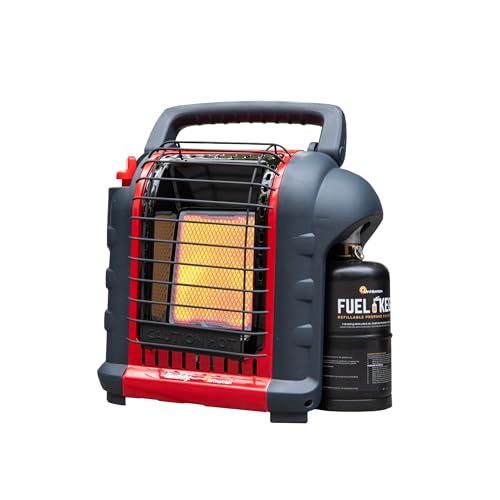
| Mr. Heater Portable Buddy Radiant Propane Heater | Best Overall | 4,000 or 9,000 BTU/hr | Emergency low oxygen system | 5.4 hours low, 2.4 hours high | Up to 225 sq ft | Check today’s price |
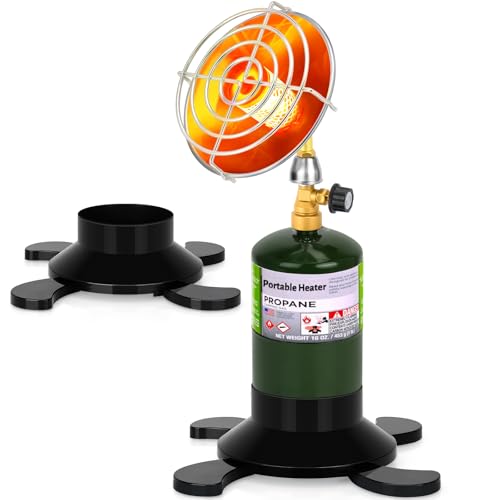
| GasCalorix Portable Propane Heater | Strong Heat | Radiant heat for 200 sq ft | Protective front grill | — | Up to 200 sq ft | Check today’s price |
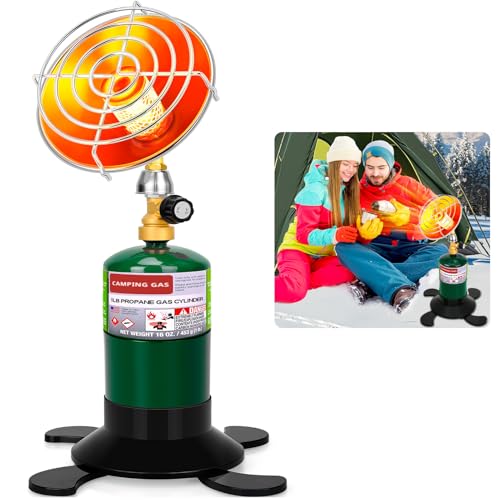
| HEYDUOTON Portable Propane Heater | Adventure Ready | — | Anti-tip design, secure connections | — | — | Check today’s price |
| YOUCIDI Cordless Gas Tent Heater | Lightweight Design | — | Low-pressure valve | — | — | Check today’s price |
| Mr. Heater Portable Buddy Radiant Heater (Canada) | Canadian Model | 4,000 or 9,000 BTU/hr | Emergency low oxygen system | 5.4 hours low, 2.4 hours high | Up to 225 sq ft | Check today’s price |
Top Small Portable Heaters for Camping
Mr. Heater Portable Buddy Radiant Propane Heater
GasCalorix Portable Propane Heater
HEYDUOTON Portable Propane Heater
YOUCIDI Cordless Gas Tent Heater
Mr. Heater Portable Buddy Radiant Heater (Canada)
Match Heater Size to Your Tent Space
Match your heater size to the volume of your tent for efficient warmth. Small tents need less heat, so a 1,000 to 1,500 W electric heater or a propane heater rated around 3,000 to 5,000 BTU can suffice. Larger tents require more powerful heaters, but avoid oversizing to prevent wasted fuel or electricity and excessive heat buildup.
BTU stands for British Thermal Unit and measures heat energy. Roughly, 1,000 BTUs heat 50 to 60 square feet of well-insulated space. For example, a 9,000 BTU heater covers tents up to 225 square feet, like the Mr. Heater 9,000 BTU Portable Buddy Radiant Propane Heater, our top pick for camping.
Undersizing a heater means your tent won’t warm adequately, leaving you cold and frustrated. Oversizing wastes fuel or electricity, risks overheating, and can drain batteries or propane tanks quickly. For small spaces, a heater with about 1,500 watts or 5,000 BTUs is efficient and safe.
Portable heaters designed for small tents avoid excessive heat output, which can cause condensation or fire hazards in tight quarters. Matching heater size to tent space ensures steady warmth without running the heater at maximum power constantly, saving fuel and extending runtime.
If you’re camping off-grid with a small tent, look for models rated close to 5,000 BTUs or under 1,500 watts. That balance keeps you warm without overloading your fuel supply or power source. Larger tents call for heaters with higher output, but never exceed what your tent’s ventilation and size safely support.
Understand Fuel Types and Power Sources
Fuel-burning heaters like propane models deliver strong heat but demand ventilation to avoid carbon monoxide risks. Electric heaters need a reliable power source, making them less practical for off-grid camping. Battery-powered heaters offer portability but usually run for just a few hours and provide lower heat output. Catalytic heaters produce flameless heat gradually and require routine maintenance to keep them safe and efficient.
Electric heaters need a steady power source and are great where you have campsite hookups or a generator. Without power, they won’t run, making them unsuitable for true off-grid camping.
Battery-powered heaters offer portability and convenience but provide lower heat output and run times. Most battery heaters produce under 100 watts, enough for personal warmth but not to heat a tent effectively over hours.
If you want a portable heater with no electricity, propane is your main option. Models like the Mr. Heater Portable Buddy use a 1 lb or 20 lb propane tank and produce up to 9,000 BTUs with safety features to monitor oxygen levels.
Electric heaters like the Outdoor Revolution Electric Eco Heater use 600 to 1,200 watts and need a power hookup or generator. They often include thermostats and timers but tie you to a power source.
Battery-powered options are best as a supplementary heat source rather than primary. They work well for keeping hands warm or in emergency kits but won’t replace a propane or electric heater for sustained tent heating.
Choosing the right fuel or power source depends on your campsite setup, desired heat output, and safety considerations. Propane offers the best heat-to-portability ratio if you can ventilate safely. Electric heaters need power, and battery models sacrifice heat output for convenience.
Check Safety Features Before You Buy
Check that your heater includes automatic shutoff features for tip-over and overheating. Look for UL or ETL safety listings. Propane heaters should have an oxygen depletion sensor (ODS) to cut fuel if oxygen runs low. Avoid models without these safety devices, especially for tent use. Follow the manufacturer’s ventilation guidelines strictly to prevent carbon monoxide buildup.
Look for heaters equipped with oxygen depletion sensors (ODS). These sensors detect low oxygen levels and automatically shut the heater off to prevent carbon monoxide poisoning.
A tip-over switch is another essential feature. It cuts power instantly if the heater tips over, reducing fire risk significantly.
Ventilation requirements must match the heater type. Propane heaters need constant fresh air exchange to avoid dangerous carbon monoxide buildup. Using them in sealed tents without venting is unsafe.
Avoid models without automatic safety shutoffs or flame failure sensors. These systems stop the fuel supply if the flame goes out, preventing gas leaks.
Electric heaters don’t produce carbon monoxide but still need a stable power source and clearance around them to avoid overheating. They usually include tip-over and overheat protection too.
If you plan to use a fuel-burning heater inside a tent, choose one specifically rated for indoor or tent use and follow all ventilation guidelines precisely.
Compare Runtime and Efficiency for Overnight Comfort
Compare heater runtimes by fuel capacity and burn rate or battery life. For example, a 1 lb propane cylinder typically lasts 3 to 4 hours at medium heat output. Battery heaters might run 2 to 5 hours per charge depending on settings. Electric heaters run as long as they remain plugged in but require steady power. Efficient heaters convert more fuel into usable heat, extending runtime and reducing costs.
Battery-powered heaters typically run between 2 and 4 hours on a single charge at low heat settings. Their wattage usually ranges from 100 to 300 W, which limits how much warmth they provide and for how long.
Propane heaters using a 1 lb cylinder run about 2.4 hours at full power and up to 5.4 hours on the low setting. This variation is crucial when planning overnight camping comfort.
For example, a 9,000 BTU propane heater roughly consumes 430 grams (about 0.95 lbs) of propane per hour at high output. Knowing your cylinder size and burn rate helps estimate runtime accurately.
Electric heaters usually specify wattage instead of BTUs. A 1,500 W electric heater draws about 12.5 amps at 120 V and uses 1.5 kWh every hour it runs.
Battery heaters suit short naps or quick warmups off-grid, while propane heaters with larger tanks handle all-night heating but need ventilation and safety checks.
Understanding these runtimes helps you pick a heater that matches your camping duration and available fuel or power sources without surprises.
For longer trips without electricity, a propane heater with a larger fuel supply is usually the best bet. If you have power hookups, electric heaters provide steady warmth but at higher energy costs.
Knowing the numbers behind each heater type lets you balance warmth, safety and convenience on your next camping trip.
What Competitors Miss: Integrating Heaters with Tent Ventilation
Tents must have ventilation openings to allow fresh air when using fuel heaters. Without proper airflow, carbon monoxide can accumulate quickly. Some tents designed for propane heaters include vents or flaps to direct exhaust safely. Electric heaters don’t produce combustion gases but still need clearance to prevent overheating. Position your heater away from fabric walls and keep at least 3 feet of clearance all around.
Tents designed for fuel heater use come with vents or windows that can be opened to ensure fresh air circulation. Without these, running a propane heater indoors risks trapping exhaust gases, including carbon monoxide, which is colorless and deadly.
Electric heaters avoid combustion risks altogether since they don’t burn fuel. However, they require a reliable power hookup, which makes them impractical for truly off-grid camping where no electricity is available.
Battery-powered heaters offer portability and off-grid operation but usually have lower heat output and shorter runtimes. They serve best as emergency backups rather than primary heat sources.
When using propane heaters in tents, always keep vents or windows open as the manufacturer recommends. Avoid using enclosed spaces without ventilation even if the heater has an oxygen depletion sensor or automatic shutoff.
Electric heaters need to plug into a stable power source, preferably through a properly rated outdoor extension cord if the campsite provides electricity. They should never be used with makeshift power setups that risk overload.
Catalytic heaters, which produce flameless heat from propane, also require good ventilation and routine maintenance to keep the catalyst clean and effective. Their gradual heat output fits well in well-vented tents.
For off-grid campers wanting fuel heat, the best approach is to choose a tent model specifically designed to work safely with propane heaters. That means vents positioned to exchange air without letting too much cold in.
Electric heaters are safe indoors but only where power runs reliably and the tent is dry. Battery-powered options offer a compromise but check their wattage and runtime carefully to avoid freezing nights.
In any case, a working carbon monoxide alarm inside the tent is indispensable when using fuel-burning heaters, providing an early warning if ventilation fails or the heater malfunctions.
The Mr. Heater 9,000 BTU Portable Buddy Radiant Propane Heater fits well in tents designed with ventilation for fuel heaters and includes safety features like an automatic shutoff and tip-over protection.
Choosing the right heater means matching the tent’s ventilation setup and the available power source. That balance ensures warmth without risking safety or running out of fuel or battery power.
For more on sizing and safety, see the guide to 5 Game-Changing Space Heaters for Your Next Camping Adventure and the advice on Choose the Best Rated Propane Heaters for Cold Nights.
Questions People Ask
What is the safest type of heater for a small tent?
How long can battery-powered heaters run on a single charge?
Are propane heaters safe to use inside tents?
Can electric heaters be used safely in all campsites?
Do portable heaters have automatic shutoff features?

I am a mechanical engineer and love doing research on different home and outdoor heating options. When I am not working, I love spending time with my family and friends. I also enjoy blogging about my findings and helping others to find the best heating options for their needs.
Related guides

The Best Electric Heaters for Tiny Rooms & Nooks
What truly makes the best electric heater for small spaces? Our guide reveals the key features for safe,…
Personal Desk Space Heaters: Close-Range Comfort Tested
Ever feel a chill at your desk? Find the perfect personal desk heater to stay warm and focused…
The Surprising Truth About the Best Mr. Heater Vent Kit Choices
Did you know that 80% of homeowners choose the Mr. Heater vent kits for efficient heating solutions? That’s…
