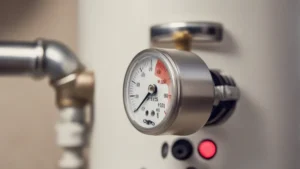
For most homes, choose a 50-gallon hybrid heat pump water heater if you have room for its airflow and drainage requirements: the ACiQ and Senville models list a 69-gallon first-hour rating and 3.75 UEF. For a remote sink, the VEVOR 18-gallon tank is a point-of-use option, not a whole-house replacement.
What to remember
Choose a 50-gallon hybrid model for whole-house use only if the installation space meets its airflow, temperature and drainage requirements.
A 69-gallon first-hour rating is a more useful demand clue than tank capacity alone.
The VEVOR 18-gallon model is a point-of-use tank; its product data does not establish a whole-house first-hour rating.
A heat pump water heater moves heat from surrounding air into the tank, which can use less electricity than resistance heating.
Have a licensed plumber or electrician handle connections and venting where required by local rules.
A poor match can mean cold showers, wasted electricity or paying to install a tank that cannot meet your household’s peak demand. A compact tank may solve a long wait at one sink, but it won’t replace a properly sized whole-house heater.
The picks below cover two different jobs: efficient 50-gallon whole-house storage and a smaller local supply. Check the product’s installation requirements and your home’s electrical setup before ordering.
The Best Electric Tank Water Heaters
#1Best Whole-House Fit
ACiQ 50-Gallon Hybrid Heat Pump
Best for Households of 3–5 with a suitable basement or garage
The 50-gallon tank has a 69-gallon first-hour rating and 3.75 UEF, which makes it the strongest fit here for a household using hot water across showers, laundry, and dishes. It needs 700–1,000 cubic feet of air circulation and proper drainage, so check the installation space before choosing it.
Best for Homes seeking a 50-gallon hybrid with listed certifications
Senville pairs a 50-gallon tank with a 69-gallon first-hour rating and 3.75 UEF, matching the ACiQ on the key hot-water and efficiency figures provided. Its product data lists UL and AHRI certification and an ENERGY STAR rating; choose it if those listed credentials matter to your purchase.
Capacity 50 gallonsFirst-hour rating 69 gallonsUEF 3.75Electrical rating 4.5 kWCertifications UL and AHRI certified; ENERGY STAR rated
Why it made the cut
69-gallon first-hour rating and 3.75 UEF
UL and AHRI certified; ENERGY STAR rated
Listed 7-year parts and 10-year compressor warranties
Good to know
The product data does not specify airflow or drainage requirements
The product data does not state a sound level
Skip it if Skip it if your installation space cannot meet the manual’s requirements for a hybrid heat pump water heater.
Best for A remote sink or small hot-water demand, not a whole-house replacement
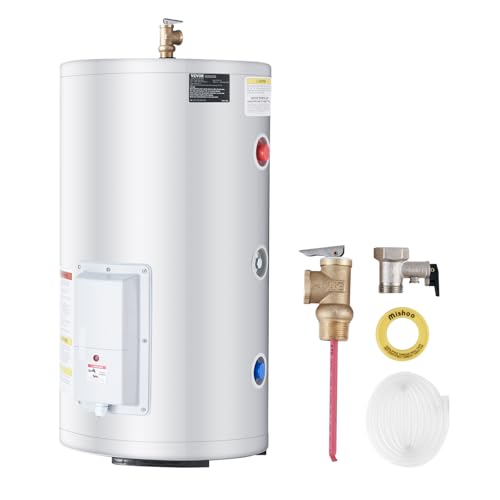
The 18-gallon storage tank is a smaller-scale option for a kitchen or bathroom where the main water heater leaves a long wait at the faucet. Its 1,600 W element, adjustable 86–167°F control, and side connection are useful details to check against your location and installation needs.
Capacity 18 gallonsElectrical rating 1,600 WTemperature control 86–167°FInsulation 20 mm foam
Why it made the cut
18-gallon storage capacity
Temperature control from 86–167°F
LED heating display and 20 mm foam insulation
Good to know
Smaller capacity than the 50-gallon whole-house options
The product data does not provide a first-hour rating or UEF
Skip it if Skip it if you need a whole-house water heater for several simultaneous hot-water uses.
Best for Heating water in a bucket or bathtub, not supplying household taps
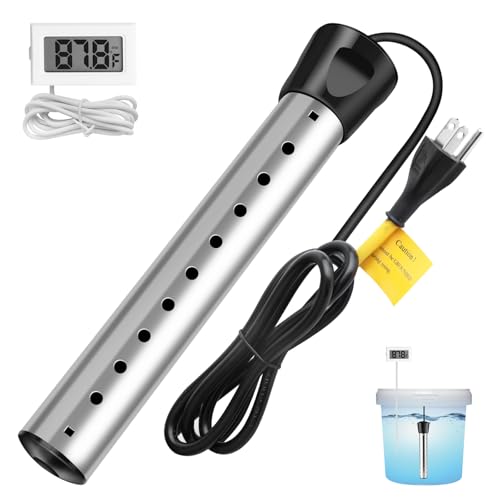
This is a portable 2,000 W immersion heater, not a storage-tank water heater. The LCD thermometer shows water temperature, and the 304 stainless steel guard is a stated construction feature; use it only for the container and conditions allowed by its manual.
Electrical rating 2,000 WGuard material 304 stainless steelLength About 10.8 inchesWeight 1.04 pounds
Why it made the cut
2,000 W heating element
LCD temperature display
304 stainless steel guard
Good to know
No stored hot-water capacity or first-hour rating is given
Does not replace a household water heater
Skip it if Skip it if you need hot water piped to a sink, shower, or whole house.
Best for Supplemental room heat only; it does not heat household water
This product is a 1,500 W ceramic space heater, not a water heater, so it has no tank capacity or hot-water rating. Its thermostat and tip-over shutoff are relevant to room heating, not to choosing a tank for showers or sinks.
Electrical rating 1,500 WListed coverage Up to 200 sq. ft.Timer 24 hoursCertification ETL-certified
Why it made the cut
1,500 W power
Thermostat and 24-hour timer
ETL-certified with tip-over and overheat protection
Good to know
Does not heat or store water
Product data does not state a water-heating capacity
Skip it if Skip it if your search is for a water heater; choose a tank sized for your hot-water demand instead.
Are AO Smith Water Heaters More Reliable Than Rheem Electric Water Heaters?
The available facts can’t show that AO Smith water heaters are more reliable than Rheem electric water heaters, or that Rheem is more reliable than AO Smith. A brand name alone isn’t enough to judge a specific model; compare its warranty, capacity, first-hour rating, efficiency, installation requirements and access to service in your area.
If you’re searching for a 50 gallon electric water heater, the ACiQ and Senville models listed here are 50-gallon hybrid heat pump water heaters, not conventional resistance tanks and not AO Smith or Rheem models. Both list a 69-gallon first-hour rating and 3.75 UEF. Those specifications help you compare capacity and efficiency, but they don’t establish reliability.
Compare The Exact Models
Warranty terms and what they cover
Tank capacity and first-hour rating
Efficiency rating
Installation requirements for the space and connections
Local availability of parts and service
What The Evidence Can’t Tell You
The supplied product details don’t provide comparable reliability records, failure rates or service data for AO Smith and Rheem. Treat claims that one brand is more reliable as unproven unless they’re backed by evidence for the exact models you’re considering.
For a broader brand comparison, start with top electric water heater brands. Then check the warranty and specifications for the particular tank your installer can service.
From HeaterGuides · our own guidePages 9 to 13 are the fault flowcharts: no hot water, noises, smells and leaks, in order.Water Heater Owner's ToolkitFix the common faults yourself, keep it running for years, and know when a repair is money wasted.No-hot-water flowcharts, gas and electricFlush, anode, relief valve and descaling stepsRepair-or-replace calculator (Excel)$14.99$9.99Get it for $9.99See what's inside and watch the 2-minute video →18-page printable PDF + Excel calculator · instant download · 30-day refund
Match The Tank To Your Hot Water Demand
For a 50 gallon electric water heater, capacity tells you how much hot water is stored; the first-hour rating estimates how much hot water the tank can deliver during a busy hour. Size for your household’s peak use, including showers that overlap with laundry or dishes—not head count alone.
69 gallons
Listed first-hour rating for the ACiQ and Senville 50-gallon
That rating makes each a candidate for medium-to-large household demand, but it can’t guarantee a fit without knowing your peak-hour use.
The ACiQ and Senville are 50-gallon hybrid heat pump models with a listed 69-gallon first-hour rating. The VEVOR is an 18-gallon storage tank, better matched to a smaller, local hot-water need; its supplied details don’t give a first-hour rating or establish whole-house suitability.
Check Your Busiest Hour
Say two people shower while a load of laundry is running. Compare that peak-hour demand with the tank’s first-hour rating, then allow for how much hot water is stored and how quickly the tank can recover. A rating alone doesn’t settle the fit.
ComparePeak-hour use against first-hour rating
Also checkTank capacity and recovery
A small tank runs out when you draw stored hot water faster than its heating element can replace it. A point-of-use tank near one remote sink can shorten the wait for hot water, but it doesn’t make the supply endless; a 2.5-gallon mini tank can suit that single-sink job. For that use, see mini tank water heaters for slow hot-water runs.
Before Choosing Capacity
List the fixtures likely to run during your busiest hour
Check the exact model’s first-hour rating and recovery information
Separate a whole-house need from one remote sink
Compare Efficiency And Heating Speed
The ACiQ and Senville are the highest-efficiency electric water heaters in this group, with a listed 3.75 UEF each. For gas vs. electric water heater heating speed, fuel type alone can’t give you a fair ranking: compare the exact input, tank size and first-hour rating. The supplied products don’t include a gas model or enough data for a numeric speed comparison.
A hybrid heat-pump water heater moves heat from the surrounding air into the tank; it doesn’t make all its heat with resistance elements. That can use less electricity, but only if the installation gives the heat pump enough air and a suitable place to drain condensate.
Operation
How it heats water
What to check
Hybrid heat pump
Transfers heat from room air; may use resistance elements as needed.
Air circulation, room temperature and drainage.
Standard resistance
Uses electric elements to heat the water directly.
Electrical requirements and the unit’s recovery and first-hour ratings.
Use the product’s listed ratings and installation requirements, not the fuel label alone.
The ACiQ listing calls for 700–1,000 cubic feet of air circulation, proper drainage and indoor temperatures above 37°F. Senville lists a 3.75 UEF and a 69-gallon first-hour rating. Its advertised savings of up to 70% aren’t a guaranteed household result; your bill depends on hot-water use, climate, installation and utility rates.
Check the room first
Before choosing a heat-pump model, confirm the installation space can provide the listed airflow and a suitable condensate drain. A cramped closet or cold location can make a high-efficiency rating a poor fit.
Changing a gas furnace to electric doesn’t automatically mean replacing a gas water heater. Keeping it depends on the water heater’s condition, venting, fuel supply and local code.
Check The Installation Before You Buy
If you’re searching for Walmart electric heaters, first separate portable room heaters from water heaters: a room heater warms a room; it doesn’t make domestic hot water. Electric baseboard heaters also warm rooms, so they can’t replace a tank water heater.
Changing a gas furnace to electric does not automatically require changing a gas water heater. Check the water heater’s condition, venting and local requirements before deciding whether it can stay.
Check before ordering
Confirm the exact unit’s electrical requirements and whether your home has the required circuit.
Check the manufacturer’s clearance requirements and whether the installation location can provide them.
Plan the water connections and proper drainage, including a route for condensate if the model requires it.
Check local permit rules and installation requirements for the specific model.
For the Senville, the listing gives UL and AHRI certifications and ENERGY STAR status. Those claims apply to that product listing; don’t assume the other picks have the same certifications.
Use qualified help
Gas connections, venting and 240 V electrical work generally belong to a licensed plumber or electrician. Don’t improvise a fuel connection or electrical circuit to make a water heater fit.
If you’re looking for heaters for indoor use that aren’t electric, treat them as a separate purchase from a water heater. Use only a fuel-burning model rated for indoor use, follow the manual’s ventilation instructions and keep a working CO alarm in service. Never use a patio heater or construction heater indoors.
Make The Next Step A Simple One
Start by deciding whether you need hot water for the whole house or only one nearby sink; that choice eliminates several poor fits immediately.
1
Define the job
Whole-house demand calls for a properly sized storage heater. Skip the VEVOR 18-gallon point-of-use tank for showers, laundry and multiple fixtures; it suits a remote sink or a small local supply.
2
Check peak-hour demand
Compare your household’s busiest-hour use with the model’s first-hour rating, not tank capacity alone. A 50-gallon tank may store 50 gallons, while its first-hour rating estimates what it can deliver during morning showers and other simultaneous use.
3
Confirm the room
For lower electricity use, compare the ACiQ or Senville hybrid’s efficiency with the installation conditions: adequate airflow, a drain for condensate, physical space and the required electrical connection. A hybrid that can’t fit or drain properly is an expensive paperweight.
4
Match a local supply
For a simpler remote-sink setup, assess whether the smaller tank’s capacity fits the actual task and recovery needs. Don’t treat a point-of-use heater as a whole-house replacement.
5
Verify the purchase
Before ordering, confirm local code, installation labor and warranty details for the exact model. If you’re still comparing manufacturers, use this electric water heater brands buying guide as a separate check rather than assuming a familiar name proves reliability.
Before you order
Whole-house or one-sink use identified
Peak-hour demand compared with first-hour rating
Space, airflow, drainage and electrical requirements confirmed
Local code, installer and exact-model warranty checked
Questions People Ask
Are AO Smith water heaters more reliable than Rheem electric water heaters?
There isn’t enough information here to rank AO Smith and Rheem for reliability. Compare the warranty, local repair support and the exact model’s specifications, then have the tank installed and maintained according to its manual.
What is the most reliable brand of electric tankless water heater?
No single brand is reliably best for every home; the right model depends on your incoming water temperature, required flow rate and electrical service. Check the manufacturer’s service coverage and parts availability in your area before choosing.
Do I have to change my water heater if I switch my gas furnace to electric?
No. A furnace heats your home, while a water heater supplies domestic hot water, so changing the furnace alone doesn’t require changing the water heater. You’d need to replace it only if you’re also changing how your home heats water or the existing unit needs replacement.
Are electric baseboard heaters the same as electric water heaters?
No. Electric baseboard heaters warm rooms directly, while electric water heaters heat and store domestic hot water in a tank. A baseboard heater can’t supply hot water to a sink or shower.
Before you go · a welcome giftGet the Water Heater Owner's Toolkit for $4.99Fix the common faults yourself, keep it running for years, and know when a repair is money wasted. Normally $14.99; your welcome price saves $10.00. We'll email your link right now.or buy it now for $9.99 without the gift →One email with your link now. We never share your address.




 Water Heater Owner's ToolkitFix the common faults yourself, keep it running for years, and know when a repair is money wasted.No-hot-water flowcharts, gas and electricFlush, anode, relief valve and descaling stepsRepair-or-replace calculator (Excel)