The best tank water heater gas for your home is the correctly sized, code-compliant model that matches your fuel and venting, not a single brand that suits every house. A gas tank water heater stores heated water for use at showers and faucets. Compare first-hour rating, tank size and installation requirements before choosing.
A poor match can leave you with cold showers or a tank that costs more to run than necessary. A rushed gas installation can also create fire or carbon-monoxide hazards.
Start with how much hot water your household uses at once, then check what your existing gas line, vent and space can support.
Key takeaways
Choose a tank by first-hour rating and household peak demand, not capacity alone.
Natural gas and propane models are not interchangeable unless the manufacturer lists the unit for that fuel.
Tankless heaters can supply continuous hot water only within their temperature-rise and flow limits.
Have a licensed plumber handle gas connections, venting and water-heater installation where required.
A water heater serving a shower must be sized for the shower and other fixtures likely to run at the same time.
Best Tank Water Heater Gas: How to Choose
The best tank water heater gas is the one sized for your household’s peak hot-water use and compatible with your fuel, venting, space and local code; there’s no universal best model. Compare first-hour rating, tank capacity and installation requirements before choosing, and don’t assume a 40- or 50-gallon tank fits just because it’s common.
For propane, choose a model specifically listed for propane. Don’t convert a natural-gas unit unless its manufacturer provides an approved conversion procedure. For questions like who makes the most efficient propane tank water heater, which is the best electric hot water heater 50 gallon tank, or which 40 gallon gas hot water tank to buy, the answer depends on the exact model, household demand and installation—not the fuel label or tank size alone. The best gas on demand water heaters tankless 2026 also depend on flow and incoming-water temperature, covered below.
Type
How it heats and stores water
Key sizing measure
Practical advantage
Limitation
Gas storage tank
Burner heats water held in an insulated tank
First-hour rating and tank capacity
Stored hot water is ready for a short burst of demand
Supply can run down during heavy use
Gas tankless
Burner heats water as it flows through the unit
Flow rate at the required temperature rise
No storage tank to replenish between uses
Simultaneous fixtures and cold incoming water can limit output
Electric storage tank
Electric elements heat water held in an insulated tank
First-hour rating and tank capacity
Doesn’t need a gas connection or flue
Recovery and electrical capacity affect how it fits your household
Compare the heater type before comparing models; installation requirements differ too.
A storage heater’s first-hour rating estimates how much hot water it can supply in one hour starting with a full tank. It includes the hot water already stored and what the burner can reheat during that hour, so it can tell you more about a busy morning than tank gallons alone. Use the manufacturer’s sizing guidance and your household’s peak-use pattern rather than treating 40 or 50 gallons as a rule.
Myth
A 50-gallon tank is automatically the right choice for a family.
Fact
Tank capacity alone doesn’t show how much hot water the heater can deliver during a busy hour. Check first-hour rating against your peak use, then verify the model fits your fuel and installation.
Rheem water heaters, Lochinvar water heaters and Bradford White are brands you may encounter; brand name alone doesn’t establish efficiency or fit. Compare the individual model’s rating, fuel listing and installation requirements. For a model-by-model starting point, see best gas water heaters for your home.
Check Before You Choose
Confirm the fuel printed on the model’s listing, then compare its first-hour rating with the manufacturer’s sizing guidance. Have a licensed plumber handle gas connections and venting in most places.
Understand How Gas Tank and Tankless Heaters Work
A gas tankless water heater heats water only when water flows, while a gas storage heater keeps a tank of hot water ready. Gas on demand water heaters tankless models don’t store a set number of gallons; their useful output depends on flow rate and how much they must raise the incoming water temperature.
1
Storage tank: heat and hold
A gas burner fires beneath or within the combustion chamber and transfers heat to water in the tank. When the thermostat calls for heat, the burner cycles on; once the water reaches its set temperature, it shuts off. Heat escapes gradually, so the burner may cycle even when no faucet is running.
2
Tankless: fire on flow
Opening a hot-water tap starts water moving through the unit. The burner fires and heats that passing water; output depends on the flow rate and temperature rise needed, not a stored-gallon figure.
3
At the faucet: water travels through pipes
An on demand hot water heater or instant hot water heater doesn’t make hot water arrive instantly at a distant faucet. The hot water still has to travel through the plumbing, so the wait depends partly on the pipe run.
Navien makes gas tankless water heaters, but a particular model is suitable only if its fuel, available flow, required temperature rise, venting and installation requirements match your home. Tankless water heaters gas models can struggle to supply several fixtures at once, especially when winter incoming water is cold: the unit has to raise each gallon’s temperature while keeping up with the combined flow.
Two Fixtures, One Heater
Say two showers and a faucet run at the same time. Their combined flow may exceed the tankless unit’s available output; colder incoming water makes the required temperature rise larger, which can reduce the flow the heater can deliver at the target temperature.
What changes demandFixtures running at the same time
What winter changesThe temperature rise the heater must pro
What to checkThe model’s flow at your required temper
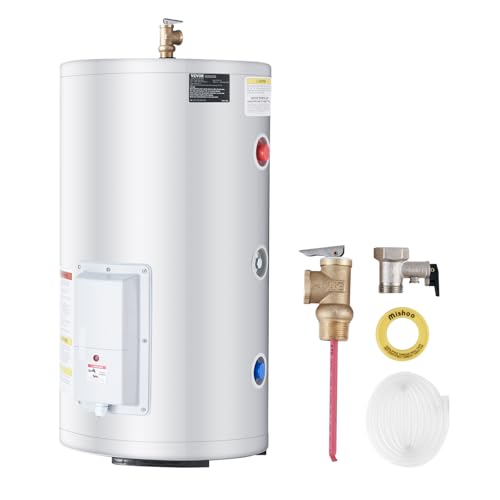
The available product is an electric 18-gallon storage heater, so it won’t help you choose a gas tank water heater. Match your new unit’s fuel and venting to your home before comparing models.
Electric, not gas
VEVOR Electric Storage Water Heater
This unit stores water in an 18-gallon tank and uses a 1,600 W electric element. It doesn’t match a search for a gas tank heater, so look for a gas model with the right first-hour rating and venting for your home.
A water heater supplies a shower by keeping hot water available at a usable temperature, so size it for showers and other fixtures likely to run at the same time. Tankless water heaters avoid storing a fixed volume, but their heating capacity limits how much water they can heat at once; a tank provides a reserve that can run down.
Which is better, tankless or tank? A tankless water heater may suit steady demand when the gas supply can support the model, while a storage tank can suit short, heavy peaks and homes already set up for a tank. The tankless water heater vs tank water heater choice comes down to peak use, the manufacturer’s sizing data and the home’s gas service—not a universal gallons-per-minute rule. Is a tankless water heater better? Only when its rated capacity matches your simultaneous demand.
Choice
What happens during a busy stretch
Check before choosing
Storage tank
Stored hot water can run low during repeated or overlapping showers.
Tank capacity and the manufacturer’s first-hour rating.
Tankless
Heats flowing water, but output is limited by the unit’s heating capacity and incoming water conditions.
The manufacturer’s sizing data for your expected flow and temperature rise, plus available gas supply.
Compare models using the same peak-use assumptions.
Worked Example: Two Showers at Once
Say two people regularly shower while the dishwasher is running. List those simultaneous uses, then compare the tank’s first-hour rating or the tankless model’s sizing data against that peak. If the tankless model cannot meet the combined demand, choose a model with adequate capacity or consider a storage tank; don’t size from the household head count alone.
Peak useTwo showers and a dishwasher
CompareManufacturer sizing data for the chosen
Myth
Tankless hot water heaters provide unlimited hot water.
Fact
They don’t have a fixed tank to empty, but they can’t heat more water than their rated capacity allows. Multiple simultaneous uses can exceed that limit.
Keep the temperature setting conservative: scald risk rises above 120°F at the tap. Follow the heater manufacturer’s instructions and any guidance for a required mixing valve; don’t raise the setting to compensate for a sizing problem.
From HeaterGuides · our own guidePages 9 to 13 are the fault flowcharts: no hot water, noises, smells and leaks, in order.Water Heater Owner's ToolkitFix the common faults yourself, keep it running for years, and know when a repair is money wasted.No-hot-water flowcharts, gas and electricFlush, anode, relief valve and descaling stepsRepair-or-replace calculator (Excel)$14.99$9.99Get it for $9.99See what's inside and watch the 2-minute video →18-page printable PDF + Excel calculator · instant download · 30-day refund
Check Gas, Venting and Installation Before You Buy
Water heater installation must match the specific unit’s fuel type, gas supply, venting, combustion-air needs, clearances and local code. Can tankless water heaters be gas? Yes, but a tankless gas hot water heater installed in place of a tank may need a larger gas line, different venting, condensate handling or an electrical supply for its controls and ignition.
Installing a tankless gas water heater isn’t a simple swap by default. The installer must verify the model’s requirements, the existing hot-water line and shutoffs, and whether the home’s gas service can supply the unit. A gas tankless heater may need electricity to operate, so don’t assume it will work during a power outage.
Confirm Before You Buy
Confirm the unit’s fuel type and gas-supply requirements with the installer.
Check venting, combustion-air needs, clearances and any condensate requirements for that model.
Have the installer inspect the hot-water line and shutoff valves.
Check local code and permit requirements before ordering the heater.
Ask whether the unit needs electricity for controls or ignition.
Leave Gas Work to a Professional
Don’t install or alter gas piping as a DIY task. Have a licensed plumber handle gas connections and venting where required; gas leaks and incorrect venting can create serious hazards.
1
Check local requirements
Ask your local building department whether the replacement or tank-to-tankless conversion needs a permit or inspection.
2
Get the model requirements
Give the installer the exact model so they can check gas capacity, venting, combustion air, clearances and electrical needs.
3
Get a site-specific quote
Ask the installer to assess existing connections and list required upgrades. There’s no reliable universal installed-cost figure: scope, local labor and upgrades determine the quote.
Plan for Expansion, Maintenance and Repairs
A water heater expansion tank gives heated water somewhere to expand when a check valve, pressure-reducing valve or other plumbing feature makes the system closed. An expansion tank for a hot water heater may be required by local code or by the plumbing setup; it isn’t automatically needed in every home.
The tank normally connects to the cold-water supply near the heater. Its size, mounting and support must follow the expansion tank and water heater instructions and local code. Because it connects to pressurized plumbing, have a qualified plumber determine what your system needs and install it; don’t treat this as a DIY fitting job.
Match Maintenance to the Heater
Storage-tank heaters can collect sediment at the bottom of the tank, while a tankless gas water heater’s heat exchanger can scale in hard water. Tankless gas water heater repair may involve descaling, but the right method depends on the exact model and the manufacturer’s instructions.
For a query such as “how to descale an AO Smith GWT750A water heater tank booster valve replacement,” identify the exact equipment and part before acting: a tank booster valve replacement isn’t the same job as descaling. Follow the correct manual for flushing or descaling. A generic pump flow rate or cleaning solution doesn’t prove it’s compatible.
Keep the Model Details Handy
Save the model and serial number, manual and any status-light pattern. Those details help a technician distinguish a pilot fault from another repair issue.
Stop If You Smell Gas
If you smell gas, shut the unit down only if you can do so safely, leave the area and contact your gas utility or emergency services from outside. Don’t relight the pilot or troubleshoot the heater; follow local emergency guidance.
Before Calling for Repair
Record the model number and the exact blinking-light or error pattern.
Note whether the pilot stays lit and when the problem began.
If there’s no gas odor, follow the manufacturer’s shutdown instructions and contact a qualified technician.
For gas connections, venting or electrical work, use a licensed professional where required by local law.
Frequently Asked Questions
How do I light the pilot on a Rheem gas water heater?
Follow the lighting instructions on your specific Rheem model, usually printed on the tank near the gas control; ignition steps differ by model. If you smell gas, don’t try to light it or operate switches—leave the area and contact your gas utility or emergency services from outside.
Can a gas tankless water heater work during a power outage?
Most modern gas tankless heaters need electricity for controls and ignition, so they stop heating during an outage even if the gas supply remains on. Check your model’s manual before considering backup power; never connect a generator indoors or near doors, windows or vents.
Can a tankless water heater be descaled with a 40-gallon-per-minute pump?
A pump rated at 40 gallons per minute is generally far more capacity than a tankless flushing job needs, and the rating alone doesn’t show whether it suits the heater. Use the flow, pressure and connection requirements in the manufacturer’s descaling instructions, along with the specified descaling solution.
What does a status light blinking every five seconds mean on a Bradford White gas water heater?
The meaning depends on the exact model and its status-light code chart; a five-second blink pattern alone isn’t enough to identify a fault. Read the label or manual for your model, and note the full sequence and any pauses before troubleshooting.
Can I add a storage tank to an existing tankless water heater?
Yes, a compatible storage tank can be added as a buffer or to support recirculation, but the piping and controls must be designed for that setup. Have a qualified plumber check the tankless manufacturer’s requirements, temperature control and local code before connecting one.
Before you go · a welcome giftGet the Water Heater Owner's Toolkit for $4.99Fix the common faults yourself, keep it running for years, and know when a repair is money wasted. Normally $14.99; your welcome price saves $10.00. We'll email your link right now.or buy it now for $9.99 without the gift →One email with your link now. We never share your address.

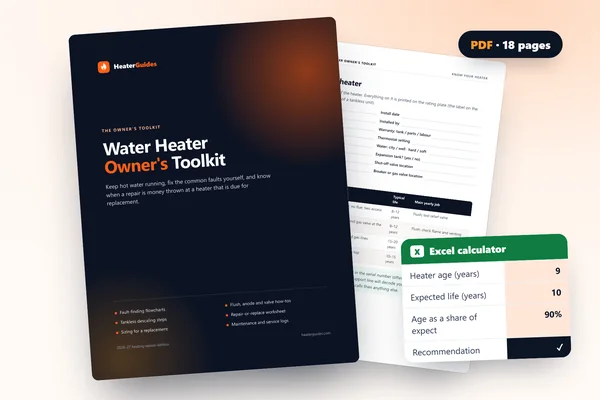 Water Heater Owner's ToolkitFix the common faults yourself, keep it running for years, and know when a repair is money wasted.No-hot-water flowcharts, gas and electricFlush, anode, relief valve and descaling stepsRepair-or-replace calculator (Excel)