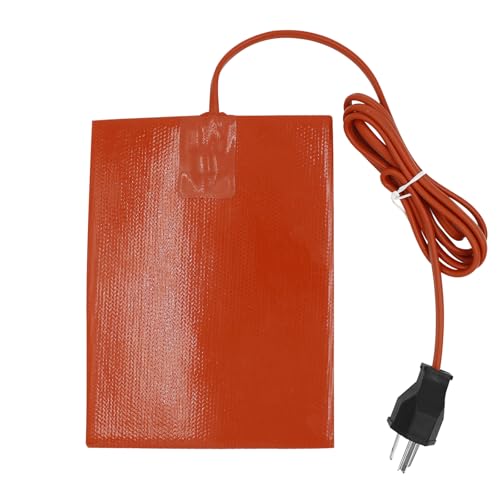
The best block heater for tractor for most readers is the 300W 6 x 8 inch silicone pad because it covers more metal and heats faster than a 150W pad without any fancy wiring. If your tractor has a flat oil pan, fuel tank or transmission pan, that extra pad area matters more than brand poetry.
The essentials
Pick a pad heater for flat metal surfaces such as an oil pan, fuel tank or transmission pan.
Choose 300W if you want faster warm-up and 150W if you only need gentle preheat.
Check cord length before you buy; 72 inches is useful if the outlet is not right next to the tractor.
Use a timer so you are not heating the block all night for a dawn start.
A heater pad only helps when it is bonded to clean metal, not dirt or paint.
A block heater sounds simple until you try to match it to a tractor with a different pan shape, limited cord reach and a winter morning that does not care about your plans.
A half-true belief hangs over this search: more watts usually do mean faster warm-up, but only if the pad can sit flat on metal and actually transfer the heat.
Best for Oil pans and flat metal surfaces on tractors parked where you can plug in overnight
The 300W output heats faster than smaller pads and the 6 by 8 inch surface covers a broad area on an oil pan or transmission case. It includes built-in temperature protection that cuts power above 194°F and restarts when the temperature falls, eliminating the need for a separate thermostat. The silicone rubber with glass fiber cloth construction resists oil and water, making it suitable for farm equipment, RVs, and boats exposed to cold weather.
Skip it if If your tractor’s oil pan is smaller than 6 by 8 inches or you need a thermostat to hold a lower temperature, the ABN pad gives you more control.
Best for Small oil pans, tight spaces, and anyone who wants to add their own thermostat
This 4 by 5 inch pad fits diesel engines under 30 horsepower and tight spots where a larger pad won’t lie flat. Rated at 150W, it provides gentle heat, which helps when running on a timer that switches on hours before use. The 72-inch cord reaches from the pan to a nearby outlet, and the silicone coating resists oil, acid, and water. ABN suggests adding a thermostat for better temperature control beyond the pad’s built-in safety cutoffs.
Compact 4×5″ size fits smaller pans and tight spaces
72-inch cord reaches farther than most
Silicone resists oil, acid and water
Lower 150W output for gentler overnight heating
Good to know
No built-in thermostat or temperature cutoff
Smaller pad covers less metal
150W takes longer to raise oil temperature
Skip it if If you need faster heating or don’t want to buy a separate thermostat, the 300W pad with built-in temperature protection is the simpler choice.
A tractor block heater works only if it contacts a flat metal surface and delivers enough watts to warm that mass before you turn the key. These are not magnetic stick-on pads or immersion elements that thread into a coolant port; they’re silicone heating mats with an adhesive back, designed for oil pans, transmission housings, fuel tanks and hydraulic reservoirs. The choice comes down to pad size, wattage and whether the cord reaches your outlet without an extension.
Most riders pick between a 150 W pad measuring 4 by 5 inches and a 300 W pad at 6 by 8 inches. The 150 W option runs cooler and draws half the current, which matters if you’re daisy-chaining multiple devices on one circuit or heating a small diesel engine overnight. The 300 W pad covers nearly three times the area and raises surface temperature faster, making it the better fit for larger oil pans, fuel tanks on older tractors, or any situation where you need the fluid warm in four hours instead of eight.
Spec
150 W Pad
300 W Pad
Size
4 × 5 in
6 × 8 in
Draw
1.25 A
2.5 A
Cord
72 in
Standard plug
Best for
Small diesels, auxiliary systems
Large pans, faster heat-up
Both run on 120 V and need a clean, dry metal surface for the adhesive to hold.
Cord length on the 150 W pad is 72 inches, enough to reach from an oil pan to a nearby outlet in most shop layouts. The 300 W pad uses a standard plug-in setup, but the product data doesn’t list cord length; confirm that before you buy if your tractor parks more than six feet from power. Neither pad heats the engine block itself—they warm the fluid or metal they touch, which reduces cranking drag and helps oil flow at start-up.
Car-specific searches
If you searched for a block heater for VW Golf or a TDI block heater, you likely need a freeze-plug or immersion element that threads into a specific coolant port, not a universal silicone pad. Those heaters are model-specific and warm coolant directly; a pad heater works for tractors because their oil pans and reservoirs offer large, accessible flat surfaces.
In short
Pick a 300 W pad if the surface is 6 by 8 inches or larger and you want the fluid warm in a few hours. A 150 W pad works for smaller pans, auxiliary tanks, or overnight heating when speed matters less than current draw.
Where The Heat Actually Goes
Silicone heating pads warm metal surfaces by direct contact, not the air around them and not the coolant passages inside a cast-iron block. You’re heating the oil pan, transmission case, fuel tank or hydraulic reservoir—whichever flat surface you stick the pad to. That warmed metal raises the temperature of the fluid inside it, which makes cranking easier and cuts the time your tractor needs to reach working pressure or flow. It’s not the old freeze-plug style that sits in a coolant jacket; it’s an external pad that relies on conduction through steel or aluminum.
Product spec sheets approve four mounting targets: oil pan, transmission pan, fuel tank and fluid reservoir. Pick the largest flat area you can reach without leaning over spinning belts or hot exhaust. A 6 × 8 inch pad spreads 48 square inches of heat across that surface, which matters because more contact area prevents hot spots and moves warmth into a bigger volume of oil or diesel. A 4 × 5 inch pad covers only 20 square inches, so it takes longer to raise the bulk temperature of a six-quart oil pan or a ten-gallon fuel tank.
Worked example
Say you plug in a 300 W pad at 10 p.m. and start the tractor at 6 a.m. That’s 8 hours, so 300 W ÷ 1,000 × 8 = 2.4 kWh. At 17 cents per kWh, you’ll spend about 41 cents. Cut the window to 4 hours with a timer and the cost drops to 1.2 kWh, roughly 20 cents per cold morning.
Power300 W
Runtime4 hours
Energy1.2 kWh
Cost at $0.17/kWhabout 20 cents
Surface prep matters as much as placement. Clean rust, grease and loose paint off the mounting area so the silicone backing sits flush against bare or well-adhered painted metal. Paint and rust add insulation; a heavy coating can cut heat transfer enough that the pad’s thermostat cycles early, leaving the metal cooler than you need. Worse, sticking a pad to rubber hose, plastic reservoirs not listed in the manual, or a fuel filter canister traps heat where it doesn’t belong and risks melting or warping parts that weren’t designed for 150°F contact.
Wrong surface
Never mount a heating pad on plastic, rubber or unmarked composite parts. Paint, gasket sealer and undercoating all block conduction and can overheat. Stick to bare or factory-painted steel and aluminum oil pans, transmission cases and fuel tanks.
Timer Choice Matters More Than People Think
A plug-in timer cuts your heating cost in half and stops you from running 300 W all night when two to four hours before start time is enough to warm five quarts of 15W-40 or a steel fuel tank. Look for an outdoor-rated mechanical or digital timer that handles at least 15 A at 120 V—every silicone pad in this guide draws 1.3 A to 2.5 A, well within that range. Mechanical dial timers with a weather-resistant cover work fine in unheated barns; digital models give you day-of-week programming if your schedule changes, but they need a dry spot or a NEMA 3R enclosure if rain and snow blow into the outlet.
Heater
Watts
Per hour
Per day (2 h)
Per month (30 days)
300 W pad, 2 hours
300 W
5.1¢
10¢
$3.06
300 W pad, 4 hours
300 W
5.1¢
10¢
$3.06
Calculated at 17¢ per kWh. Running a 300 W pad for 3 hours before each start uses 0.9 kWh, about 15 cents at typical residential rates. Multiply by the number of cold mornings in your season.
Set the timer to switch on early enough that the metal reaches working temperature by the time you turn the key, but not so early that you’re heating overnight. For most tractors, three hours is the sweet spot: long enough to raise oil-pan temperature 30°F to 50°F in zero-degree weather, short enough to keep the month’s electric bill under five dollars even with daily use. If you’re starting the same tractor every morning at six, a timer set for three a.m. does the job. If your starts vary by day or the tractor sits for a week between jobs, the best timer for block heater guide walks through programmable and manual options that suit intermittent use.
Sizing the timer
Check the heater’s amp draw on its label or in the manual, then pick a timer rated for at least twice that current. A 300 W pad pulls 2.5 A; a 15 A timer gives you margin and won’t trip under startup inrush.
Wet locations
Indoor timers and power strips aren’t rated for snow, rain or standing water. If the outlet sits outside or in a wash bay, use a timer with a NEMA 3R or weatherproof cover. Never set a timer on a dirt or concrete floor where melt and splash can reach the plug.
Safety And Installation Checks
Clean, dry metal and enough warmth for the adhesive to grab are what separate a pad that stays put from one you’ll find dangling by its cord in February. Surface prep matters: scrub the mounting area with degreaser or rubbing alcohol, let it dry completely, and install the pad when the metal is above freezing so the self-stick backing bonds instead of sliding off the first time condensation forms underneath.
The ABN pad is 120 V and 150 W with a 72-inch cord. It gets extremely hot during operation, and the manufacturer recommends pairing it with a thermostat to control cycling. The 300 W pad includes automatic temperature protection that shuts off at 194°F (90°C) and restarts around 40°C, so you won’t melt anything or waste power once the metal reaches target temperature.
Route the cord carefully
A cord chewed by a fan belt or melted against an exhaust manifold is a bad winter joke. Secure the power lead away from moving parts, sharp edges and hot exhaust components with zip ties or heat-resistant tape, and leave a little slack so engine vibration doesn’t yank the pad loose.
Plug the heater into a grounded outdoor-rated outlet or a heavy-duty extension cord rated for the wattage and cold. A 150 W pad draws 1.25 A; a 300 W pad draws 2.5 A. Standard 14-gauge outdoor cord handles either one, but anything lighter than 16-gauge will heat up itself instead of the tractor.
Before the first cold snap
Degrease and dry the mounting surface; install above 40°F if possible
Press the pad flat for 30 seconds; check edges for full contact
Route and secure the cord away from belts, sharp metal and exhaust
Confirm the outlet is grounded and the cord reach is adequate
Test the pad for 15 minutes; metal should feel warm to the touch
Alaskan and extreme-cold use
Readers searching for best alaskan engine block and oil pan heater or block heater, magnetic oil pan heater for diesel engine/tractor/truck should know that silicone pads work in sub-zero temperatures, but the adhesive may need mechanical backup. In climates below –20°F, add a hose clamp or steel strap around the pad perimeter so thermal cycling and ice buildup don’t peel it off mid-winter.
Which Pick Fits Your Tractor
Product 2—the 300 W, 6 × 8 inch silicone pad—is the best overall choice for most tractor owners because it covers more metal and heats faster than smaller pads. Larger oil pans, fuel tanks and transmission cases see better results from the extra surface area, and the built-in temperature protection means you can plug it in without babysitting a separate thermostat. Diesel tractors with big sumps or turbocharged engines that need quicker warm-up will notice the difference.
300 W pad strengths
6 × 8 inch area warms larger pans and flat surfaces faster
300 W output cuts preheat time nearly in half
Automatic shutoff at 194°F and restart at 40°C
Better for diesel engines and cold-soak climates below 0°F
Watch out for
Gets very hot; needs careful cord routing and clearance
Larger footprint may not fit cramped mounting spots
Draws 2.5 A; verify your extension cord and outlet can handle it
Product 1—the ABN 150 W, 4 × 5 inch pad—is the budget pick and the right call for smaller tractors or tight mounting surfaces where a 6 × 8 inch pad won’t fit flat. It’s simpler to place on cramped oil pans or hydraulic reservoirs, and the lower wattage makes it easier to pair with the best timer for block heater if you’re splitting one outlet between the tractor and a shop heater. The 72-inch cord gives you a little extra reach.
150 W pad strengths
4 × 5 inch footprint fits smaller or oddly shaped surfaces
Lower wattage and cost; easier to run on a shared circuit
72-inch cord reach helps in shops with distant outlets
Watch out for
Gets extremely hot; manufacturer recommends adding a thermostat
Smaller area and lower wattage mean slower warm-up on big pans
May not deliver enough heat for turbodiesel or very cold climates
Skip both if your tractor has no flat external metal surface for a pad to contact, or if the engine has a factory freeze-plug or coolant-jacket block heater already installed. Silicone pads heat metal by direct contact; they won’t warm coolant passages or fit inside a machined block port. Readers looking for block heater for vw golf or tdi block heater should check diesel block heaters for faster cold-starts or best magnetic block heater options that mount differently, because most VW TDI engines need a coolant-passage heater or a magnetic sump pad rather than an adhesive silicone sheet.
More Questions, Answered
What kind of timer can be used for a block heater?
Any mechanical or digital outdoor-rated timer that handles at least 15 A at 120 V will work with a 300 W pad heater. Look for a grounded three-prong pass-through outlet and a case rated for freezing weather; the cheapest indoor timers crack in winter. Set it to power the pad two to four hours before you start the tractor.
How many watts do I need for a tractor block heater?
A 300 W pad is enough for most small to mid-size tractors with a four-cylinder diesel or gas engine; 150 W pads take twice as long to warm the same mass and barely move the needle on a six-cylinder block. Larger tractors with eight-quart sumps or cast-iron transmission housings benefit from a second 300 W pad on a different surface.
Is a magnetic oil pan heater the same as a block heater?
Magnetic heaters clamp to a steel oil pan and warm the oil, while adhesive silicone pads stick to the block, pan, fuel tank or any flat metal you choose. Both accomplish the same goal—raising metal and fluid temperature before cranking—but magnets work only on ferrous steel pans, and silicone pads bond to aluminum, steel and cast iron alike.
Can I use a 300W pad heater on a small tractor?
Yes, a 300 W pad won’t overheat a small engine because it warms metal to roughly 100 to 120°F, not the 300°F that would damage seals or crack a pan. The extra wattage just means the tractor reaches starting temperature in two hours instead of four, and you spend less time on the timer each morning.
Will a block heater help a diesel tractor start faster?
Warming the block and oil drops cranking resistance and raises compression temperature, so the engine fires in fewer revolutions and puts less load on the battery and starter. In single-digit weather, a cold diesel may crank for twenty seconds before it catches; with a block heater it lights off in three or four.
Where should I mount a universal engine heater pad?
Mount it on the largest flat metal surface you can reach: the side of the oil pan, the lower side of the block near the frost plugs, the flat of the transmission bell housing, or the steel fuel tank if your tractor parks in the open and the fuel gels. Clean and dry the metal, peel the backing, press firmly and let the adhesive cure at room temperature for 24 hours before plugging in.