Natural gas tankless water heaters are worth it for their energy efficiency, endless hot water supply, and lower operating costs compared to traditional water heaters.
Natural gas tankless water heaters promise endless hot water and energy savings, but their higher upfront costs leave many homeowners wondering if they’re truly worth it. This in-depth guide examines the pros, cons, and long-term value of gas tankless systems compared to traditional tank models.

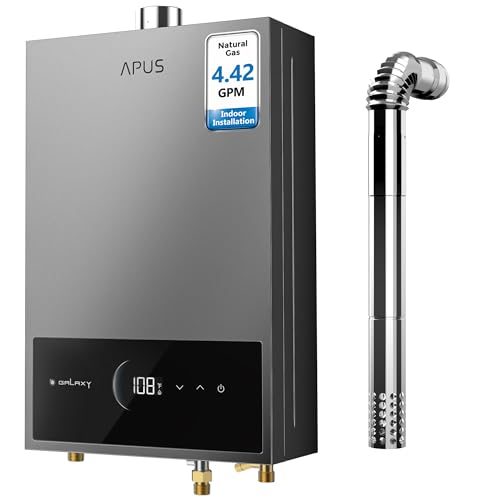
APUS
APUS Natural Gas Tankless Water Heater, 190,000…
- 𝐖𝐡𝐨𝐥𝐞-𝐇𝐨𝐦𝐞 𝐇𝐨𝐭 𝐖𝐚𝐭𝐞𝐫 𝐒𝐮𝐩𝐩𝐥𝐲: This high-efficiency tankless water heater natural gas delivers 190,000 BTU and 8.1 GPM of instant ho…
- 𝐒𝐦𝐚𝐫𝐭 𝐓𝐞𝐦𝐩𝐞𝐫𝐚𝐭𝐮𝐫𝐞 𝐂𝐨𝐧𝐭𝐫𝐨𝐥: Remotely adjust your insant tankless water heater via App (Works with Tuya APP) or wired controller ran…
- 𝐎𝐮𝐭𝐝𝐨𝐨𝐫-𝐅𝐫𝐢𝐞𝐧𝐝𝐥𝐲 𝐃𝐞𝐬𝐢𝐠𝐧: With a space-saving size of 22.48 × 15.51 × 6.54 inches, this unit is easy to install outdoors while keep…
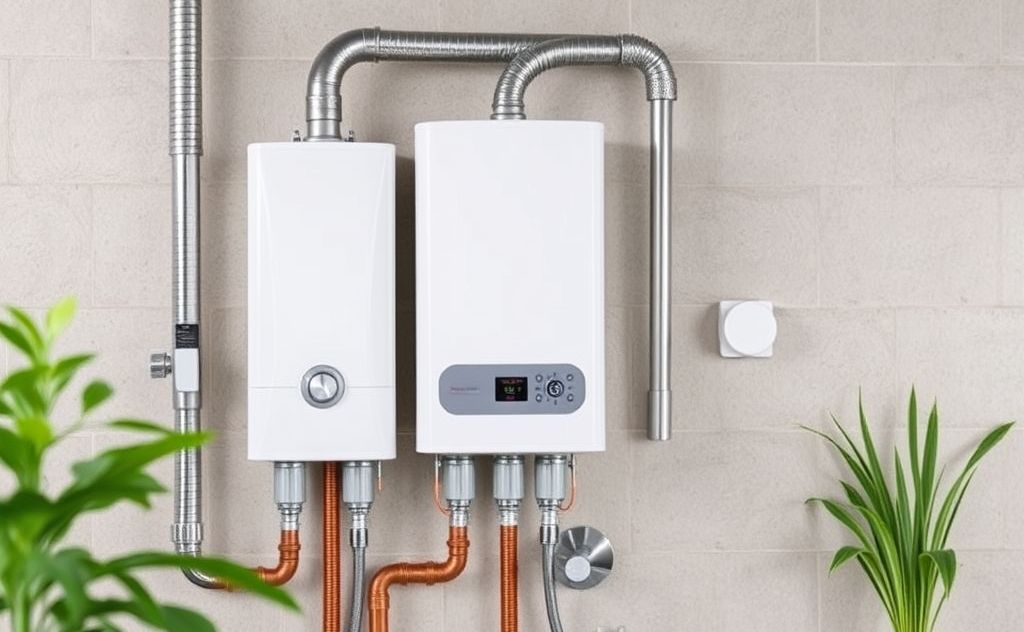
How Gas Tankless Water Heaters Work
Unlike traditional storage tank heaters that constantly maintain 40-50 gallons of hot water, tankless units heat water instantly as it flows through the system. When you turn on a hot water tap:
- Cold water enters the unit through an inlet pipe
- A gas burner activates to heat the water via a heat exchanger
- Hot water exits the unit and travels to your faucet or appliance
This on-demand operation eliminates standby heat loss – the energy wasted when stored hot water cools down in a traditional tank. According to U.S. Department of Energy, tankless heaters can be 24-34% more energy efficient for homes using 41 gallons or less of hot water daily.
Key Components of Gas Tankless Systems
Understanding these core parts helps explain their operation:
| Component | Function |
|---|---|
| Gas Burner | Provides heat source (natural gas or propane) |
| Heat Exchanger | Transfers heat from burner to water |
| Flow Sensor | Detects water demand and activates system |
| Venting System | Removes combustion gases (requires proper installation) |
Cost Comparison: Tankless vs. Tank Water Heaters
The biggest hurdle for most homeowners is the higher initial investment required for tankless systems:
Upfront Costs
- Tankless: $1,000-$3,000 for unit + $1,500-$4,500 installation
- Storage Tank: $300-$1,600 for unit + $300-$1,500 installation
Installation costs vary significantly based on:
- Need for gas line upgrades (common with tankless)
- Venting requirements
- Local labor rates
- Permit fees
Long-Term Savings
While more expensive initially, tankless heaters offer substantial savings over time:
- Energy savings of $100+ annually (gas models)
- Lifespan of 20+ years vs. 10-15 for tank heaters
- Potential rebates from utilities or ENERGY STAR programs
According to Consumer Reports, the payback period typically ranges from 10-25 years depending on usage patterns and local energy costs.
Performance Considerations
Flow Rate Limitations
Gas tankless units have maximum flow rates (measured in gallons per minute – GPM) that determine how much hot water they can produce simultaneously. For example:
- Shower: 2.5 GPM
- Dishwasher: 1.5 GPM
- Washing Machine: 2.0 GPM
A unit rated for 7 GPM could handle two showers running simultaneously (5 GPM total), but adding a dishwasher would exceed its capacity. Proper sizing is crucial – our guide on Rinnai RL94EN explains how to calculate your home’s needs.
Temperature Rise Challenges
The colder your incoming groundwater, the harder your tankless heater must work. In northern climates with 40°F groundwater, achieving a 70°F temperature rise (to 110°F) requires nearly twice the energy as in southern areas with 60°F groundwater.
Maintenance Requirements
To maintain efficiency and longevity, gas tankless systems need:
- Annual descaling: Mineral buildup reduces efficiency (more critical in hard water areas)
- Biannual inspections: Check burner, vents, and safety systems
- Filter cleaning: Most units have inlet water filters
Neglecting maintenance can lead to reduced efficiency and premature failure. For DIY enthusiasts, we recommend the best descaling pumps to simplify this process.
Ideal Candidates for Gas Tankless
These households benefit most from tankless systems:
- Homes with natural gas service (propane works but costs more)
- Families using <40 gallons of hot water daily
- Households with high hot water demand periods (back-to-back showers)
- Homes with space constraints (tankless units mount on walls)
For larger homes, consider multiple units or hybrid systems that combine tankless with small storage tanks for peak demand periods.
Environmental Impact
Gas tankless heaters offer several green advantages:
- Reduced energy consumption (lower CO2 emissions)
- No standby heat loss
- Longer lifespan means less frequent replacement
However, they still rely on fossil fuels. For maximum eco-friendliness, consider pairing with solar water heating systems.
Related pick: Check today's price on Amazon

I am a mechanical engineer and love doing research on different home and outdoor heating options. When I am not working, I love spending time with my family and friends. I also enjoy blogging about my findings and helping others to find the best heating options for their needs.
Related guides

Do Natural Gas Heaters Need to Be Vented? Safety & Efficiency Explained
Natural gas heaters typically need to be vented to safely expel combustion gases outside, preventing harmful carbon monoxide…
Which Direct-Vent Gas Water Heater Performs Best?
Forget cold showers—a premium direct vent gas water heater ensures reliable hot water and safety. Choosing the best…
Natural Gas Heaters: Maximizing Heating Capacity & Efficiency
Natural gas heaters vary in heating capacity, typically ranging from 20,000 to 100,000 BTUs, making them efficient for…