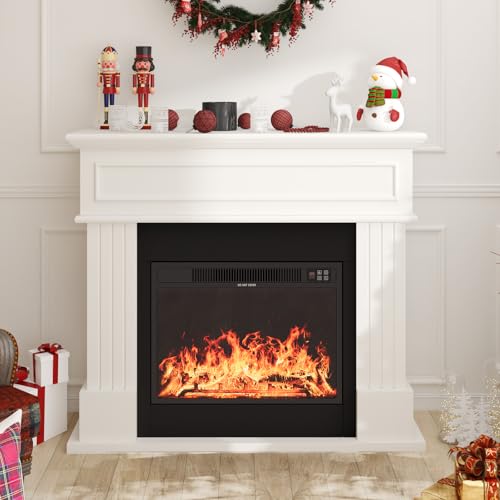


Say you want to warm a 400-square-foot living room with a sleek wall-mounted fireplace that blends modern style and efficient heat. You need a unit that fits your space, runs quietly, and offers a realistic flame effect without complicated installation.
Electric fireplaces provide zone heating and ambiance without venting or gas lines. This guide helps you pick the right model by comparing flame technologies, heat output, power needs, and installation types.
Electric Fireplace Feature Comparison
| Model | Best for | Heat Output (Watts) | Flame Colors & Effects | Room Coverage (sq ft) | Installation Type | Price |
|---|---|---|---|---|---|---|
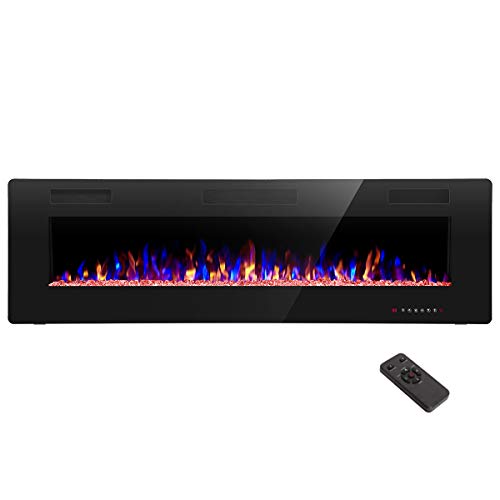
| R.W.FLAME 60″ Recessed Electric Fireplace | Best for Most Rooms | 750-1500 | 12 flame & LED bed colors | Up to 400 | Recessed and wall mounted | Check price on Amazon |
| Duraflame Freestanding Electric Fireplace Stove | Best Freestanding | — | 3D flames with glowing logs | Up to 1,000 | Freestanding | Check price on Amazon |
| Tehanld 60″ Ultra-Thin Electric Fireplace Heater | Best Customizable Flames | 0 / 750 / 1500 | 12 flame & 12 ember bed colors | — | Recessed, semi-recessed, flat wall mounted | Check price on Amazon |
| EUHOMY 50″ Electric Fireplace Recessed | Best for Small Rooms | 750 & 1500 | 12 flame & 12 LED fuel bed colors | — | Recessed and wall mounted | Check price on Amazon |
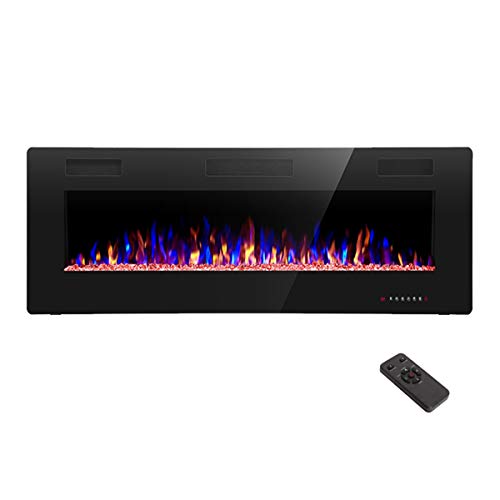
| R.W.FLAME 50″ Recessed Electric Fireplace | Best Slim Small Model | 750-1500 | 12 flame & LED bed colors | Up to 400 | Recessed and wall mounted | Check price on Amazon |
Top Electric Fireplaces to Buy in 2026
R.W.FLAME 60″ Recessed Electric Fireplace
Duraflame Freestanding Electric Fireplace Stove
Tehanld 60″ Ultra-Thin Electric Fireplace Heater
EUHOMY 50″ Electric Fireplace Recessed
R.W.FLAME 50″ Recessed Electric Fireplace
How to Choose the Right Electric Fireplace for Your Room
Electric fireplaces offer a reliable way to add warmth and style to your room, typically heating spaces up to 400 square feet. Some high-powered models can handle up to 1,000 square feet, making them a practical choice for supplemental heating without the need for venting or complicated installation.
They’re not designed to replace your home’s primary heating system but to provide spot heat where you need it most—think a chilly reading nook or a drafty living room corner. Whole-room heating is possible in smaller spaces with a higher wattage model, but efficiency drops as room size grows beyond the 1,000 square foot mark.
Flame brightness and color options aren’t just decoration. Adjustable flames let you tailor the ambiance, with warmer amber hues offering a cozy feel and brighter flames adding visual interest without heat. Many models let you shift colors and intensity, creating a personalized focal point.
Installation style plays a big role in where and how you use your fireplace. Wall-mounted and recessed units save floor space and often have slim profiles—some under 6 inches deep—to fit flush into drywall or a built-in cabinet. Freestanding fireplaces offer portability and can double as room dividers, while inserts slot into existing masonry or wood-burning fireplaces for an upgraded look without remodeling.
Dimensions vary widely but expect wall-mounted units to run 30 to 60 inches wide and 6 to 12 inches deep, with height around 20 inches. Slim designs are crucial for recessed setups to avoid protruding too much into your room.
If you want a fireplace under a TV or in a tight space, look for models with a low profile and good heat shielding. These keep heat away from electronics and maintain a clean, modern look without bulky mantels.
Comparing LED and LCD Flame Technologies
Electric fireplaces create their flame effects using either LED lights projected onto a screen or LCD screens that display flame images. These technologies simulate flames without producing real fire, which means no smoke, no sparks, and no carbon monoxide. LED flames tend to shine bright with color options, while LCD flames can display more detailed animations, though both remain visually artificial compared to real wood or gas fires.
LCD flames, on the other hand, produce a softer, more diffuse flame image on a liquid crystal display. This results in a gentler, more natural flicker but less intense brightness and somewhat muted colors compared to LED.
Neither technology creates a real flame, but preferences vary. People who want bold, colorful flames often prefer LED for its brightness and color range, including reds, oranges, blues and even purples. Users looking for a more subtle, realistic flicker tend toward LCD displays, appreciating the softer glow.
Most electric fireplaces allow you to adjust flame brightness, color, and flicker speed. Some models include sound effects that mimic crackling wood or a gentle fire, adding to the ambiance but not necessarily realism.
Among current models, LED-based fireplaces like the R.W.FLAME 60″ Recessed Electric Fireplace offer the most vivid and customizable flame colors, making them popular for those wanting a strong visual presence alongside efficient heating.
If flame realism is your top priority, expect some compromise. LCD flames lean toward natural flicker but can appear flat in low light, while LED flames stand out but can look a bit artificial up close.
Electrical Needs and Safety for Electric Fireplaces
Most electric fireplaces run on standard 120-volt household circuits and draw about 1,500 watts, which translates to approximately 12.5 amps. This power level fits comfortably on a typical 15-amp circuit but can trip breakers if other devices share the line.
Avoid plugging your electric fireplace into extension cords or power bars. These can overheat or cause voltage drops, which may damage the heater or create a fire risk. Instead, plug directly into a dedicated outlet on its own circuit if possible.
Larger or built-in electric fireplaces sometimes require a hardwired 240-volt connection. This setup provides more power for higher heat output or added features but must be installed by a licensed electrician following local electrical codes.
Electric fireplaces include safety features designed to prevent accidents. Automatic shutoff switches activate if the heater overheats, and overheat protection sensors monitor internal temperatures. Many models have cool-touch exteriors and tip-over switches that cut power if the unit falls.
Look for ETL certification on any electric fireplace you choose. This independent testing confirms the unit meets safety standards. Also, check local electrical codes before installation to ensure compliance, especially if you plan a hardwired model.
Questions about circuit breakers and power bars often come up: do not use circuit breaker power bars for your fireplace. They cannot safely handle the continuous load and may cause nuisance tripping or hazards. If your fireplace fuse blows, replacement requires the correct fuse type and rating—consult the manual or a professional rather than guessing.
Safety features are your best defense on cold nights when you rely on your fireplace. Models with automatic shutoff, overheat sensors, sturdy construction, and proper certification keep you warm without worry.
Electric Fireplace Running Costs and Heat Efficiency
Electric fireplaces convert nearly all the electricity they use into heat, reaching about 99.9% efficiency. For example, a 1,500-watt model running for 8 hours uses 12 kWh. At 17 cents per kWh, that costs about $2.04 per day. They provide supplemental heat to a room rather than replacing a central heating system. Running the flame effect alone uses less power, letting you enjoy the ambiance without the heat.
Running a typical 1,500-watt fireplace for 8 hours uses 12 kilowatt-hours (kWh) of electricity. At a national average electricity rate of 17 cents per kWh, that costs about $2.04 per day during heavy winter use.
Gas fireplaces generally cost less per hour to run because natural gas prices are lower than electricity. Wood stoves can be economical if you have a free or cheap wood supply, but they require more maintenance and produce emissions. Electric fireplaces excel as supplemental heat sources to reduce central heating costs, especially in frequently used rooms.
Many electric fireplaces come with energy-saving modes, thermostats, or timers. These features lower electricity consumption by cycling heat output or shutting off when the room reaches the set temperature, cutting costs further without sacrificing comfort.
These heaters work best for spot heating rooms up to about 400 square feet. Using them to offset your whole-house heating can reduce your furnace’s runtime and save money on fuel bills, even if the electric fireplace’s electricity cost is higher per hour.
If you want to compare models, look at the wattage and heat output ratings, then factor in your local electricity prices and typical daily use. This approach will give you a clearer picture of what you’ll pay to stay warm each winter.
For more on picking the right size and style, see our guide to best electric fireplace heaters.
Installation, Maintenance, and What Competitors Leave Out
Place an electric fireplace at least 12 to 18 inches above the floor for optimal heat circulation and safety. This height prevents damage from floor moisture and helps distribute warmth evenly. If you’re installing a fireplace insert, most models fit standard fireplace openings and can be mounted into noncombustible materials; avoid installing into drywall or wood framing unless the insert’s instructions specifically allow it.
Clearance from combustibles and sprinklers varies by model but always follows the manufacturer’s manual. Typically, keep at least 3 feet from curtains, furniture, and sprinkler heads to avoid fire hazards and false activations. Sprinkler clearance often trips alarms if blocked or overheated, so double-check the manual before final placement.
Electric fireplaces come in four main installation types: recessed into 2×6 walls, wall-mounted, freestanding, and inserts for existing fireplaces. Recessed installation requires framing that meets the unit’s depth and ventilation needs, often into 2×6 walls or thicker. Wall-mounted units hang like a TV, requiring sturdy studs and anchors. Freestanding units need flat, level floors with adequate clearance all around.
Maintenance is straightforward and limited to regular dusting, occasional bulb or LED replacement, and cleaning air filters if your model has them. Dust buildup can reduce flame visibility and restrict airflow, raising noise and overheating risks. Replace bulbs with the exact type recommended; LEDs last longer but may eventually dim or flicker.
Common error codes include E3 and E5. An E3 code typically signals a thermal overload or fan issue. Check that vents are clear and fans spin freely. E5 often relates to a sensor or control board fault. Reset the unit by unplugging it for a few minutes; if the error persists, call for professional repair rather than risking DIY fixes that void warranties.
Electric fireplaces do produce some noise—usually from internal fans and the simulated flame mechanisms. Noise levels vary by design and fan speed, with quieter models using brushless fans or multiple speed settings. To minimize noise, keep vents clean and avoid running fans at maximum speed unless necessary for heat.
Outdoor electric fireplaces require specific weatherproof ratings and materials. Most electric fireplaces are intended for indoor use only and lack the sealing and corrosion resistance needed outdoors. If you want an outdoor model, look for IP-rated units designed to withstand moisture, temperature swings, and dust.
Repairing electric fireplaces beyond bulb replacement or simple cleaning usually requires a qualified technician. Internal components like heating elements, control boards, and flame effect modules are delicate and can be hazardous to service without proper training and tools. Keep your receipt and warranty handy for these situations.
More Questions, Answered
How far from the floor should an electric fireplace be installed?
What does the E3 error code mean on an electric fireplace?
Can electric fireplaces be installed outdoors?
Do electric fireplaces make noise during operation?
How do I maintain and clean my electric fireplace?

HeaterGuides covers home heating, water heating and HVAC: how the equipment works, what it costs to run, and how to use it safely.