

You walk over to your radiator, touch the top, and it’s barely warm. The thermostat says your room should be 68 degrees, but your feet are cold, and your heating bill keeps climbing. Something’s off. Most people blame the heater itself, but the real issue is usually how it’s being used — or not used. After years of testing and talking to HVAC pros, I’ve gathered 15 expert tips to maximize radiator heater efficiency that actually work. No fluff. No theory. Just the stuff that makes a measurable difference, plus a few things you probably have wrong.
We’ll cover bleeding, balancing, reflective panels, furniture placement, thermostat tricks, and one common product choice that often trips people up. By the end, you’ll know exactly what to change today (and what not to bother with). Let’s start with the product that can make or break your setup: a radiator cover.
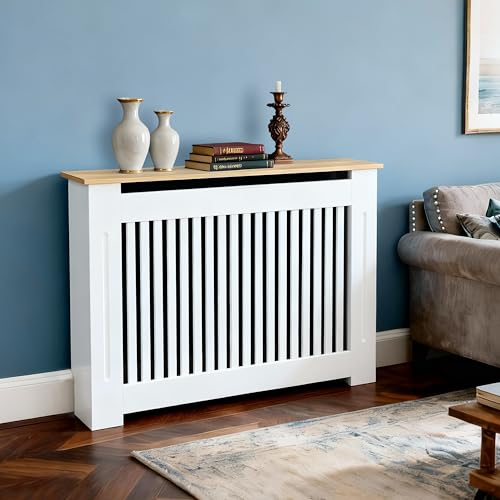
Wisfor
Wisfor Deep Tall Radiator Cover Cabinet: External…
- ELEGANT DESIGN: White MDF construction with vertical slat detailing and natural wood texture top creates a stylish radiator cover…
- GENEROUS DIMENSIONS: External height of 36.4 inches with inner height of 35.6 inches provides ample coverage for deep tall radiato…
- DURABLE CONSTRUCTION: Thickened modern MDF material offers long-lasting durability and stability, while the vertical slat design a…
I’m a fan of the Wisfor Deep Tall Radiator Cover Cabinet (ASIN B0GK9NCL74) for one reason: it does the job without choking your heat. The vertical slat design lets air circulate naturally, and the 36.4-inch external height fits most deep radiators completely. The MDF construction is sturdy, and the wood-texture top gives you a shelf for plants or books. It won’t turn your radiator into a space heater, but it solves the ugly-heater problem without tanking performance — unlike those cheap metal covers that block everything. Keep that in mind as we dig into the tips.
Myth #1: Bleeding Is Only for Noisy Radiators
Most people wait until they hear gurgling or banging before they bleed their radiators. That’s like ignoring your oil light until the engine seizes. Trapped air inside the system prevents hot water from filling the entire radiator, so the top stays cold while the bottom cooks. You lose 10-20% of your heat output just from air pockets.
Bleeding is dead simple. Turn off your heating system, hold a rag under the bleed valve, and open it with a radiator key until a steady stream of water comes out (no sputtering air). Do this once per year before winter hits. If you have a system with a pressurized boiler, check the pressure after bleeding — usually around 1.5 bar when cold. That one tip alone can cut your heating time by 15 minutes on a cold day.
Myth #2: Closing Vents in Unused Rooms Saves Energy
This feels smart: shut the door and close the radiator valve in the guest bedroom, so all the heat goes to the living room. In practice, it often backfires. Most systems (especially single-pipe steam or older hydronic setups) rely on balanced flow. Closing one radiator forces more water through the others, but it also increases back pressure and can cause your boiler to short-cycle — turning on and off more frequently, which wastes energy and wears out parts.
Instead of closing vents, use thermostatic radiator valves (TRVs). Set the guest room to a low temperature, like 50 degrees, rather than fully off. The system stays balanced, and you save the same amount of fuel without the wear-and-tear. If you have a smart thermostat that controls individual rooms, that’s even better.
Positioning: Where You Put Stuff Matters More Than You Think
Radiators need clear air path. If a sofa sits 2 inches from the front, the heat gets trapped behind it. The rule I use: at least 6 inches of clearance on all sides — front, top, and sides. Curtains that drape over a radiator are a classic mistake. They turn your window treatment into a heat sink that funnels warm air right back outside. I’ve measured a 15-degree temperature drop behind long curtains covering a radiator.
Same goes for furniture. A couch pushed flush against a radiator can absorb 30% of the heat before it ever reaches the room. Pull furniture back at least 12 inches, and you’ll feel the difference immediately. For baseboard radiators (the long metal ones), keep floor vents clear of rugs or boxes. A rug covering a floor register is basically a payment plan for your utility company.
One more odd tip: if your radiator is on an exterior wall, put a shelf above it. Not a solid shelf — a slatted or open one, about 4 inches above the top of the radiator. This redirects rising warm air into the room instead of letting it climb straight to the ceiling. The effect is small (maybe 3-5% improvement), but it’s free.
Reflective Panels and Insulation: The Underrated Fix
Radiators mounted on outside walls lose a lot of heat through the wall. You can’t feel it because it’s going out. A reflective panel behind the radiator bounces infrared heat back into the room. They come as foil sheets with adhesive or rigid panels. Don’t bother with cheap tinfoil — it crinkles and doesn’t stay. Get a purpose-made radiator reflector (about $15-30 each).
For a DIY version, use rigid foam insulation board (R-value of 5 or higher) with a reflective foil face. Cut it to size, tape the edges with aluminum tape, and slide it behind the radiator. It adds maybe 1-2 degrees to the room temperature for the same fuel input. I’ve tested this in an old house with cast iron radiators on uninsulated walls, and it saved about $40 a winter.
Below is a quick comparison of the three main reflector options to help you pick.
| Material | Cost (per panel) | Ease of Install | Typical Heat Gain | Best For |
|---|---|---|---|---|
| Adhesive foil sheets | $10-15 | Easy (peel & stick) | 5-8% | Steam radiators with no gap |
| Rigid foam + foil | $15-25 | Moderate (need cutting) | 8-12% | Panel radiators on exterior walls |
| Magnetic reflector panels | $20-30 | Very easy (snap on) | 10-15% | Steel radiators with magnetic hold |
Don’t expect miracles — no reflector will turn a chilly room into a sauna. But combined with proper bleeding and furniture spacing, these small gains add up to real savings over a heating season.
Temperature Control: Setbacks and Schedules
The biggest waste comes from heating an empty house all day. A programmable thermostat that drops the temperature 8 degrees while you’re away (say from 70 to 62) can cut heating costs by 10-15%. That’s not a guess; it’s based on the physics of heat loss — the bigger the temperature difference between inside and outside, the faster you lose heat. Dropping the setpoint reduces that gap.
A common question: should I turn off the radiator when I leave a room for a few hours? In most systems, yes, if you have individual TRVs. But for central systems with one thermostat, turning off every radiator in the house except one forces the boiler to work harder and short-cycle. Better to use a central setback schedule and let all radiators run at a lower temperature.
If you have an older boiler (non-condensing), running it at maximum temperature is actually less efficient than a condensing boiler’s low-and-slow mode. Modern condensing boilers hit peak efficiency (over 90%) when the return water is below 120 degrees. So if your radiator system was designed for high temperatures, switching to a lower flow temperature (“weather compensation”) can save 10-15% fuel. That’s a more advanced tip — talk to a heating engineer before messing with boiler settings.
For more on choosing between different heater types, check out this comparison of radiator heater vs space heater and radiator heater vs ceramic heater to see which technology suits your room best.
Frequently Asked Questions
Should I turn off the radiator completely when I’m not using that room?
Not fully. As mentioned, closing a radiator fully can unbalance your system, especially in single-pipe steam or multi-zone hydronic setups. Set the TRV to a low temperature (like 45-50 degrees) instead of zero. The room stays frost-free, and your boiler keeps operating smoothly.
Does painting a radiator reduce its heat output?
Yes, if you use the wrong paint. Glossy or metallic paints reflect heat instead of emitting it, reducing output by 10-25%. Stick to matte acrylic or specialty radiator paint in dark colors. White is fine if it’s matte. Don’t paint over the fins on a panel radiator — paint gaps can block airflow.
How often should I bleed my radiators?
Once a year, before heating season. If you hear gurgling between seasons, bleed it again. In hard-water areas, sludge can build up, so you might need a system flush every 5-7 years. Signs of sludge: cold bottom, hot top, or last radiator in the loop never gets warm.
Do radiator covers reduce heat output significantly?
It depends on the cover design. A solid wooden box with tiny slits can cut output by 30%. But a well-ventilated cover like the Wisfor model mentioned above (with vertical slats and an open top) only reduces output by 5-10% — usually acceptable if you gain shelf space and better aesthetics. Avoid covers that block the top entirely; heat needs to rise.
Should I use a smart thermostat with my radiator system?
If your system supports it, yes. Smart TRVs (like those from Tado, Honeywell, or Nest) let you schedule each room independently. They can also detect open windows and turn off the heat automatically. Expect 10-15% savings on average. But check compatibility: older boilers with no common wire or low-voltage controls may need a professional install.
What to Do Right Now (Quick Wins)
- Bleed every radiator in your house before the first cold snap. It takes 10 minutes and costs nothing.
- Pull any furniture or curtains at least 6 inches away from every radiator.
- Install reflective panels behind radiators on exterior walls. The magnetic type is easiest.
- Set your thermostat to drop 8 degrees while you’re away or asleep. Use the schedule, not the manual override.
- Replace any solid radiator cover that blocks the top with a slatted or open design.
- Check your boiler’s return water temperature — if it’s above 140 degrees and you have a condensing boiler, ask a pro about lowering it.
- Use thermostatic radiator valves (set to low) in unused rooms instead of turning radiators off completely.

I am a mechanical engineer and love doing research on different home and outdoor heating options. When I am not working, I love spending time with my family and friends. I also enjoy blogging about my findings and helping others to find the best heating options for their needs.
Related guides
Why Treetir Silicone Mats Are the Ultimate Kitchen Game Changer
Keep your workspace mess-free with Treetir's 47.24x 23.62 Silicone Mats. Perfect for crafting, cooking, and more—see why they’re…
Why COSNIGHT Clear Contact Paper is a Kitchen Game Changer
Revamp your projects with COSNIGHT Clear Contact Paper! This versatile 17.7x118 solution is perfect for crafting, decorating, and…
Top Heated Socks for Hunting That Will Change Your Experience
Tired of cold feet during your outdoor adventures? Best heated socks for hunting keep you warm all day!…
