You load the stove, light the fire, and settle in. An hour later, smoke drifts into the room. The glass is black. The burn is sluggish. That draft you used to get? Gone. A dirty wood stove does all that and worse — it wastes fuel, coats your home in fine ash, and risks a chimney fire. I have cleaned dozens of stoves over the years, and I keep seeing the same mistake: people scrub the glass and call it done. Deep cleaning takes a little more effort, but it pays back in heat and safety every single winter.
This article walks you through the seven steps that actually matter — from cold shutdown to final polish. You’ll learn what tools you need, how to handle creosote without a mess, and when to bring in a pro. I also include a table comparing cleaning methods so you can pick the approach that fits your stove type. By the end, you’ll know exactly what to do and why it works.
Imperial
Imperial Manufacturing KK0057 Stove Polish Liquid 8Oz
- Water soluble and low odor formula
- Restores and preserves cast iron and steel
- Available in an 8oz size
One product I regularly reach for is the Imperial Manufacturing KK0057 Stove Polish Liquid 8Oz. It’s a water‑soluble polish with low odor — a huge plus if you hate the chemical smell of most stove paints. It restores the look of cast iron and steel after you’ve scraped off surface rust or grime. I apply it after the final step to seal the finish and protect against rust through the off‑season. It’s not a cleaner, but it’s the right finishing touch for a stove that looks and works like new.
1. Why Regular Cleaning Actually Matters
Creosote is the real enemy. It’s a sticky, tar‑like substance that forms when wood smoke cools inside the flue. A 1/4‑inch layer of creosote can ignite at 450°F — a temperature your stove hits every time you reload. That’s how chimney fires start. I’ve seen stoves with half an inch of creosote that burned like a blowtorch. The damage is permanent.
Dirt inside the firebox also cuts burn efficiency by 10 to 15 percent. Ash cakes around the air intakes, starving the fire of oxygen. The result: more smoke, less heat, and a dirty glass door within one burn. Brushing the firebox before each reload is a habit that saves you wood and money. A clean stove also lasts longer — rust and acidic ash eat through steel over time.
So how often should you clean? It depends on use. A stove burning seasoned hardwood every day needs a full cleaning every two to four weeks during peak season. A weekend stove can stretch to every six to eight weeks. The seven steps below assume a moderate accumulation — not a full spring startup after months of sitting.
2. Tools and Materials You’ll Need
Gather everything before you start. Nothing kills momentum like digging for a brush with ash on your hands.
- Ash shovel and metal bucket with a tight‑fitting lid (ash stays hot for 24 hours)
- Shop vacuum with a fine‑dust filter (or a dedicated ash vacuum)
- Stiff wire brush for the firebox and baffle plates
- Chimney brush with flexible rods (size must match your flue diameter)
- Drop cloth or old newspapers to catch spills
- Safety glasses and a dust mask — fly ash is fine and irritating
- Rags and the stove polish (Imperial Manufacturing KK0057 if you plan to refinish)
- Gloves — steel or leather for handling brush rods, nitrile for polish
I recommend an ash vacuum rather than a regular shop vac. Regular vacs blow fine ash through the filter and back into the room. Ash vacuums have sealed motors and HEPA‑class filters. They cost around $60–$100 but save you from breathing that stuff every cleaning.
3. The 7 Steps — From Cold to Clean
Always start with a cold stove. If the stove was running, let it sit for at least 12 hours. Ash holds latent heat for hours. Trust me, burning your wrist once teaches that lesson.
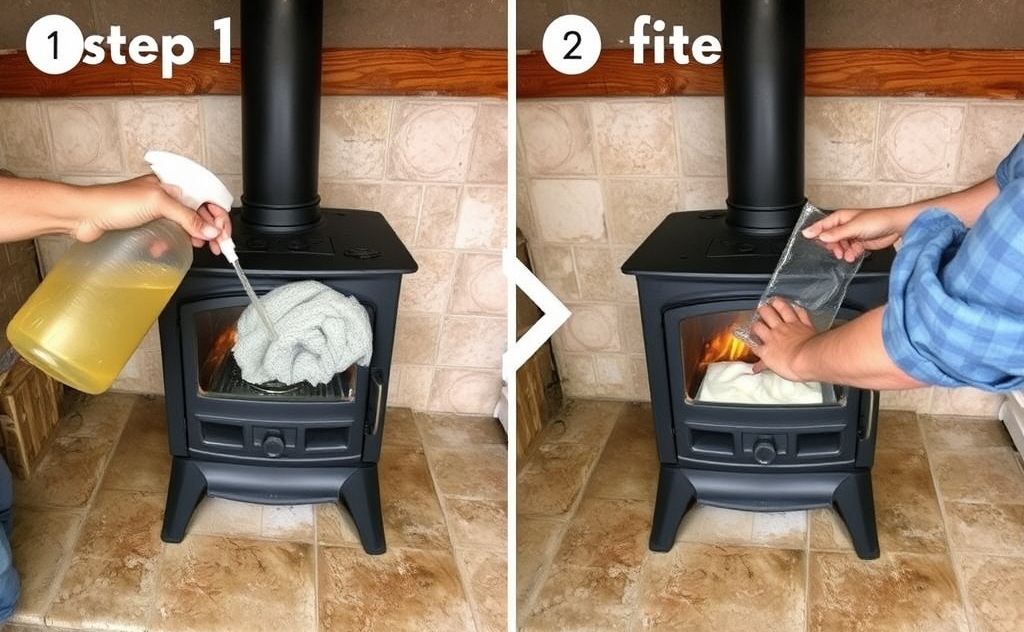
- Remove all ash and unburned wood. Use the ash shovel and bucket. Sift through the ash for any remaining coals — they can smolder for two days. Vacuum the firebox floor and walls after shoveling. Pay attention to air intake holes at the bottom; those clog easily.
- Scrub the firebox interior. Take the wire brush and work from top to bottom. Loosen baked‑on creosote and soot. Focus on the baffle plate (the metal panel at the top). If your stove has firebricks, brush them gently — they crumble if you hit them too hard. Vacuum again after brushing.
- Clean the glass door. Use a razor scraper for hard deposits, then wipe with a damp cloth dipped in fine ash. Ash is slightly alkaline and cuts the carbon residue without chemicals. Wipe dry with a clean rag. Avoid commercial glass cleaners — they leave residues that bake into a haze.
- Inspect and clean the door gasket. Run a dollar bill around the door seal while it’s closed. If the bill slides out with no resistance, the gasket needs replacing. Vacuum the gasket channel and check for fraying. Leaking gaskets waste 5–10% of your heat.
- Brush the flue and chimney. Assemble your chimney brush rods. Push the brush up from the stove opening (if accessible) or from the roof. Scrub each section with 10–15 strokes. Expect a cascade of soot — that’s normal. Vacuum the stove pipe connection afterward. If you can’t reach the full flue from below, hire a sweep. That 1/4‑inch creosote rule only applies to the flue, not just the firebox.
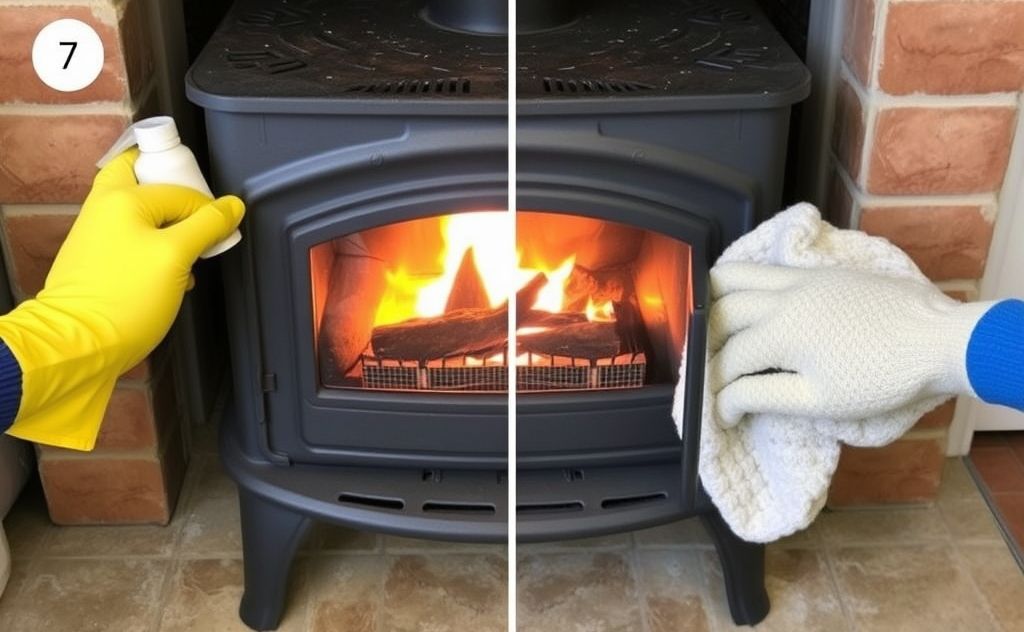
- Wipe down the exterior. Use a damp rag to remove surface dust and fly ash. For cast iron stoves, let the metal dry fully before applying polish. Steel stoves with paint can be wiped with a degreaser. Never use water on a hot stove — it can crack cast iron.
- Apply stove polish (optional). If your stove looks dull or has light surface rust, now’s the time. Shake the Imperial Manufacturing KK0057 well. Apply a thin coat with a soft rag in circular motions. Let it dry for 15 minutes, then buff with a clean cloth. The polish adds a protective layer that repels moisture and minor rust. Don’t apply it on the door glass or any plated surfaces — it leaves stains.
4. Maintenance Between Deep Cleans
You don’t need the full seven steps every week. A quick ash removal and glass wipe each morning keeps the stove running better. I do a mini‑clean every third fire: open the door, scoop out the ash pan, sweep the baffle with a small brush, and check the gasket. It takes five minutes.
Two things that matter more than most people think: burning only seasoned wood (moisture under 20%) and keeping the air supply open during startup. Damp wood generates four times the creosote. That alone cuts your cleaning schedule in half. If you’re struggling with efficiency, read our guide on how to improve wood stove efficiency — it covers fuel choices and draft adjustments.
Also, if you live in a mobile home or a modern tightly sealed house, your stove might need different airflow. Check out wood stove installation for mobile homes for specifics on clearance and combustion air.
Cleaning Methods Compared
The table below summarizes three common approaches. Your choice depends on how often you burn and how much buildup you tolerate.
| Method | Tools Needed | Time per Session | Best For |
|---|---|---|---|
| Quick daily ash removal + glass wipe | Ash shovel, metal bucket, damp cloth | 5 minutes | Everyday users who burn seasoned wood |
| Weekly firebox scrub + gasket check | Wire brush, vacuum, dollar bill | 15–20 minutes | Moderate use (3–5 burns per week) |
| Full deep clean (7 steps described above) | All tools including chimney brush, polish | 1.5–2 hours | Monthly maintenance or end of season |
Full deep cleans are the only way to tackle creosote inside the flue. The other two methods keep the firebox clean but leave the flue untouched. You need a chimney brush for that part.
Frequently Asked Questions
Can I clean a wood stove while it’s still warm?
No. Ash retains heat for 12 to 24 hours after the last flame. When you disturb it with a shovel or brush, hot coals can surface and ignite surrounding dust or drop into the vacuum. Always let the stove go completely cold — at least 12 hours. Touch the firebox floor with your bare hand. If it’s warm, wait longer.
How do I know if my chimney needs professional cleaning?
If you see creosote buildup thicker than 1/8 inch after brushing, or if flakes of shiny, tar‑like glaze appear on the flue walls, call a certified chimney sweep. Another sign: the brush rod gets stuck halfway up. That indicates a heavy accumulation or a structural blockage. A sweep will do a video inspection to confirm.
Is stove polish necessary, or can I skip it?
Not strictly necessary, but worthwhile if you want the stove to look good and resist rust. Cast iron stoves in humid basements or unheated cabins benefit the most. The polish fills micro‑pores in the metal, which slows surface rust. If your stove is painted steel, a polish isn’t needed — just wipe with a damp cloth. I apply polish once per year at the end of the burning season to protect the stove during summer.
Why does my glass door turn black again after one burn?
Two reasons. First, your wood might be too wet. Freshly split wood that hasn’t seasoned can have 30%+ moisture, which produces more smoke and soot. Second, the air intake might be closed too soon. Give the fire 15–20 minutes with the air wide open to establish a hot core, then dial it back. That high initial temperature burns off the volatile gases before they hit the glass. If the problem persists, check your wood source.
Can I use bleach or vinegar to clean the firebox?
Don’t. Bleach creates toxic fumes when heated. Vinegar is acidic enough to attack the welds and firebrick mortar over time. Fine ash and water is the only cleaner you need for the firebox. For stubborn creosote on the baffle, use a wire brush and then vacuum. A little dish soap on the glass works if ash doesn’t cut it, but rinse thoroughly. No chemicals inside the firebox.
What to Do With What You’ve Learned
- Clean your stove cold — never attempt this on a warm unit. Ash can reignite hours later.
- Remove ash before every burn to keep air intakes clear. A 5‑minute sweep each morning cuts fuel waste by 10%.
- Brush the flue at least once a month during heavy use or every 2 months for occasional burning. Creosote doesn’t lie.
- Check the door gasket with a dollar bill every cleaning. A leaking gasket costs you heat and creates draft problems.
- Burn only wood that crackles, not hisses — seasoned hardwood under 20% moisture. It halves creosote production.
- Apply stove polish at season’s end to prevent rust. Skip it if you own a painted stove; just wipe it dry.
- Hire a certified chimney sweep once a year for an inspection, even if you clean yourself. They spot cracks and blockages you can’t.
Related guides
Largest Wood Burning Stove: Which Model Should You Actually Buy in 2026
Heating a big home with wood requires a stove that can truly fill the space. But picking the…
How To Blend a Wood Stove Into Modern Home Design
You just finished renovating your living room — clean lines, pale oak floors, a soft gray sofa, and…
How Long Do Wood Stoves Last? Durability Explained
The durability of wood stoves typically ranges from 10 to 25 years, depending on material quality, usage, and…