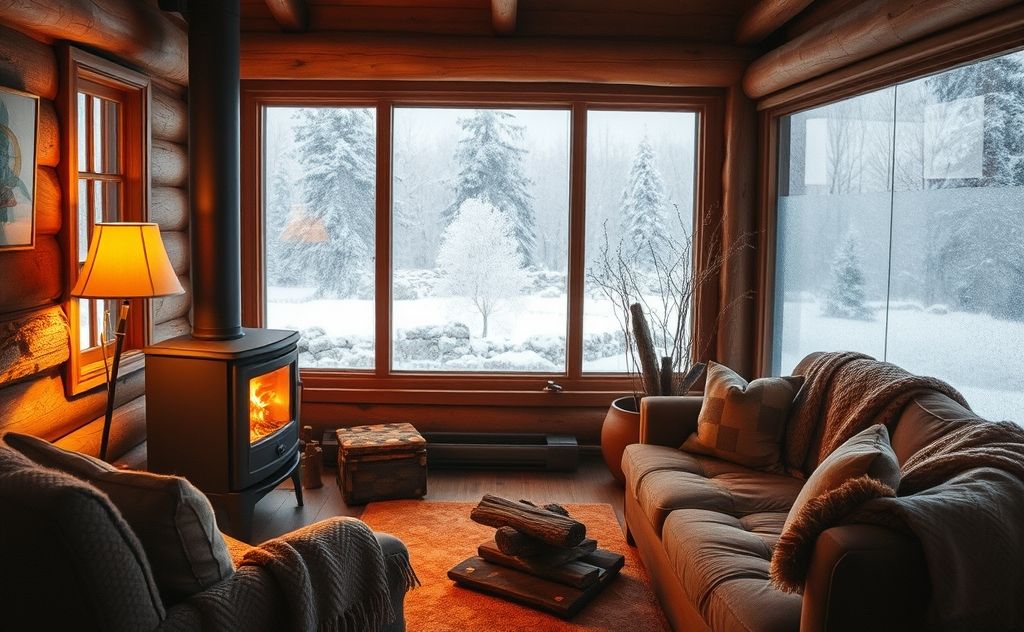
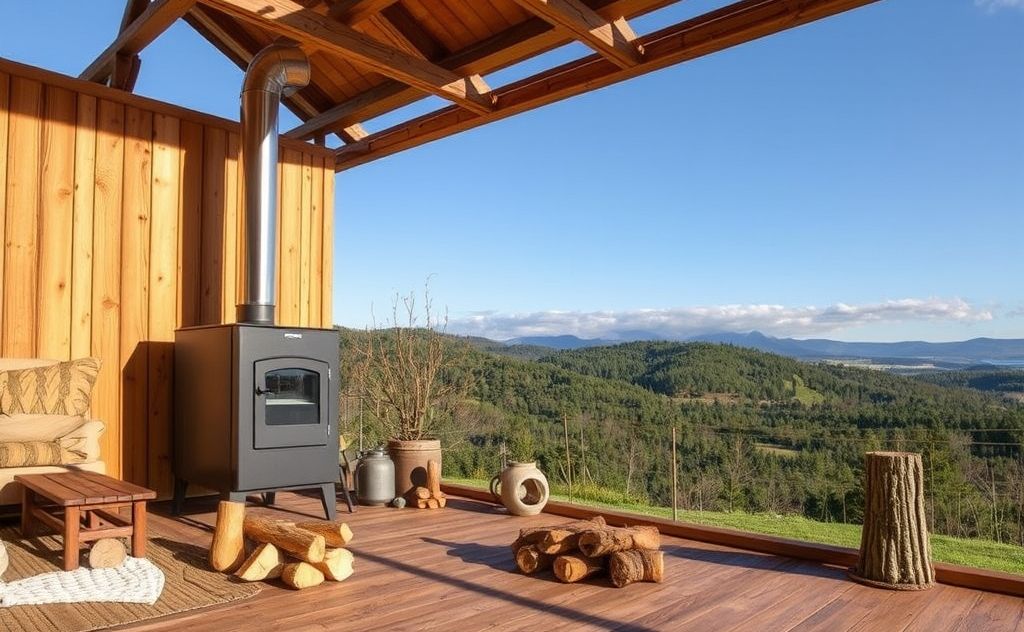
You wake up to a frosty bedroom, check the thermostat, and wince. That gas bill was already higher than last winter, and it’s only December. Electric baseboard heaters might be quieter, but they empty your wallet fast. Meanwhile, your neighbor with the wood stove walks around in a t-shirt, and his heating costs are half yours. Is it really that much better? Or is wood heating just nostalgia wrapped in work?
I’ve tested and reviewed dozens of heating appliances over the years, from heat pumps to pellet stoves. Wood heating gets a bad rap in some circles, but the reality is more interesting. Modern wood stoves are not your grandfather’s smoky, inefficient box. They burn clean, hold heat for hours, and can slash your heating bills if you have access to firewood. By the end of this article, you’ll know exactly which benefits are real, which are exaggerated, and whether a wood stove belongs in your home.
UNITED STATES STOVE Co
US Stove US1100E-BL 1,200 sqft Wood Stove…
- FREIGHT SHIPPING: THIS ITEM SHIPS VIA LTL FREIGHT CARRIER AND WILL BE DELIVERED CURBSIDE OR DIVEWAY ONLY. DELIVERY PERSONAL DO NOT…
- Produces up to 68,000 BTUs of heat, providing reliable warmth for spaces up to 1,200 square feet. Spacious 1.3 cubic feet firebox…
- Equipped with a 100 CFM blower to efficiently distribute heat and maximize heating performance (requires electricity)
One option that consistently delivers on these advantages is the US Stove 1,200 Sq. Ft Wood Stove. It heats up to 1,200 square feet with 68,000 BTUs, uses a cast iron door with a large ceramic glass window, and burns hours on a single load. You won’t be stoking it in the middle of the night.
Myth #1: Wood Heat Is Dirty and Inefficient
Walk into any big-box store and you’ll see cheap steel wood stoves that look like tin cans. Those models do burn dirty and waste fuel. But EPA-certified stoves are a different animal. Since 2026, the EPA has required all new wood stoves to emit no more than 2.5 grams of particulate matter per hour. That’s a 90% reduction from uncertified stoves.
Modern stoves like the US Stove Defender use secondary combustion to burn the smoke itself. The result? Less creosote buildup in your chimney and more heat from every log. Efficiency ratings on these stoves range from 70% to 82% — meaning only 18-30% of the potential heat goes up the flue. Compare that to a typical open fireplace, which is maybe 10-20% efficient.
Still, wood heat isn’t perfect. It requires dry, seasoned wood (moisture content under 20%). Burn wet wood and you get smoke, creosote, and wasted money. But if you source your firewood correctly, the cleanliness difference is stark.
Myth #2: You’ll Be a Slave to the Stove
That image of a homeowner feeding logs every hour, at 2 AM, shivering in a bathrobe — it’s outdated. Today’s wood stoves are designed for long burn times. Many models, including the US Stove unit, can run 8-12 hours on a single load. You load it before bed, set the air control, and wake up to warm coals.
Features like adjustable legs, a built-in ash drawer, and large glass windows make daily maintenance quick. You empty the ash drawer every few days, not every morning. You don’t need to split kindling into a hundred tiny pieces. A quality stove with a thermostat-controlled air intake keeps the burn consistent without constant fiddling.
That said, wood heating does demand upfront effort: stacking, splitting, and storing wood. It’s not as hands-off as a gas furnace. But the actual daily work is about 10 minutes — loading wood and maybe adjusting the air once. If you hate any kind of physical work, wood heat isn’t for you. If you don’t mind a bit of chore, the payoff is real.
Myth #3: Wood Heating Is More Expensive Than Gas or Electric
This one depends entirely on where you live and what fuel you’re comparing. Let’s run some numbers.
| Heating Method | Cost per Million BTUs (approx) | Annual Fuel Cost (1,200 sq ft, cold climate) | Maintenance | Carbon Footprint (operation) |
|---|---|---|---|---|
| Wood stove (EPA certified) | $10 – $20 | $600 – $1,200 | Moderate (chimney sweep, ashes) | Carbon-neutral if sustainably harvested |
| Propane furnace | $30 – $40 | $1,800 – $2,400 | Low (annual tune-up) | High (fossil fuel) |
| Electric resistance (baseboard) | $35 – $45 | $2,100 – $2,700 | Very low | Depends on grid mix (often high) |
| Heat pump (electric, COP 2.5) | $14 – $18 | $840 – $1,080 | Low (annual check) | Medium (grid dependent) |
| Pellet stove | $20 – $30 | $1,200 – $1,800 | Moderate (auger, cleaning) | Low (renewable pellets) |
If you have access to free or cheap firewood — from your own land, a neighbor clearing trees, or a local supplier — wood heating can cut your heating bill by half or more. Even buying seasoned cordwood at $250-400 per cord, the cost per BTU beats propane and electric resistance hands down. The catch is that wood prices vary regionally. In the Pacific Northwest, a cord might run $200. In the Northeast, $350 is common. Do the math before buying a stove.
A heat pump can sometimes match or beat wood on cost, especially in moderate climates. But if you live where winter temps drop below 20°F for weeks straight, heat pumps struggle and fall back to expensive resistive auxiliary heat. Wood stoves don’t care about the outdoor temperature.
Energy Independence and Reliability
Power goes out. Gas pipelines freeze. Fuel supply chains get disrupted. A wood stove works without electricity (most models rely on natural draft, not fans). Your home stays warm even during a blackout. That’s a benefit you can’t put a dollar sign on, but it matters deeply if you’ve ever spent three days without power after an ice storm.
Wood is also a local fuel. It doesn’t come from a foreign country or a pipeline. You control the supply chain. If you keep a year’s worth of cordwood stacked and dry, you are essentially immune to price spikes. During the 2026 energy crisis, wood prices hardly budged while propane doubled in some areas.
Environmental Angle: Better Than You Think
Wood is considered carbon-neutral because the carbon dioxide released during burning equals what the tree absorbed while growing. That’s only true if the wood is harvested sustainably — i.e., new trees planted or natural regrowth occurs. In practice, burning wood for heat emits about the same CO₂ per unit of heat as natural gas, but the difference is that the carbon would be released anyway as the tree decomposes. The net effect is near-zero if forests are managed responsibly.
Particulate emissions are the real environmental downside. EPA-certified stoves reduce this dramatically, but they don’t eliminate it. Some states (like Washington and Oregon) have stricter emissions limits. If you live in a dense neighborhood, be considerate of neighbors who might smell smoke. A good chimney height and dry wood minimize that.
For a deeper look at this topic, check out environmental benefits of wood heating.
Another often-overlooked advantage is that a wood stove can help convection heating reduce heating bills in your home by creating a warm air loop that circulates without a noisy fan.
Frequently Asked Questions
Is wood heating safe for a family home?
Yes, when installed correctly. Clearances to combustibles must be followed (usually 36 inches from single-wall pipe, less for double-wall). Use a proper floor protector, install smoke and CO detectors, and have your chimney inspected annually. Modern stoves have airtight doors and safety glass. The real danger is creosote buildup from burning wet wood — so keep your wood dry, below 20% moisture.
How do I choose the right wood stove size?
Don’t oversize. A stove that’s too big will be constantly damped down, creating more creosote and wasting fuel. Match the stove’s rated square footage to your actual heated area. For a 1,200 sq ft home, a stove rated for 1,200-1,500 sq ft is ideal. The US Stove unit is rated for 1,200 sq ft and produces 68,000 BTUs, which is a good fit for most open floor plans.
Can I install a wood stove myself?
You can, but it’s not a weekend project for a novice. You need to cut a hole in the roof or wall, install a chimney system that meets clearance requirements, and ensure the stovepipe is properly connected. Many insurance companies require professional installation or at least an inspection. Local building codes vary. If you’re handy and confident, a DIY install is possible, but I recommend hiring a certified chimney sweep or stove installer for the first time.
How much does it cost to heat with wood vs. other fuels?
As shown in the table above, wood is typically the cheapest per BTU if you source firewood locally. Expect to spend $600-$1,200 annually on wood for a 1,200 sq ft home in a cold climate, compared to $1,800-$2,700 for propane or electric resistance. Pellet stoves fall in between. Factor in the cost of the stove ($1,000-$3,000) and chimney installation ($1,500-$3,000). Payback period is usually 2-4 years if you’re replacing an expensive fuel.
What kind of maintenance does a wood stove need?
Daily: empty ash pan if full, load wood. Weekly: wipe the glass if it’s dirty. Seasonally: have the chimney cleaned and inspected (once a year, or after every cord of wood). Check door gaskets for leaks — a dollar bill test: close the door on a bill; if it pulls out easily, the gasket needs replacing. Also inspect the stovepipe joints for creosote buildup. That’s it. A well-maintained stove lasts 20+ years.
What to Do with This Information
- Check your local wood availability and prices before buying a stove. A wood stove only saves money if you have reasonable access to firewood.
- Only buy an EPA-certified stove. Uncertified models are often cheaper but cost more in fuel and create more pollution.
- Size the stove to your space — not larger. A properly sized stove burns cleaner and requires less tending.
- Invest in a moisture meter for your firewood. Anything above 20% moisture will cause smoking and creosote.
- Plan your chimney installation upfront. Single-story homes are easier and cheaper than multi-story retrofits.
- Consider a catalytic or secondary-burn stove for the highest efficiency and lowest emissions.
- If you want reliable heat that keeps working when the power goes out, a wood stove is one of the few options that delivers without batteries or generators.
Related guides
Highest BTU Butane Stoves: Power & Performance Compared
The highest BTU butane stove can reach up to 15,000 BTUs, providing powerful heat for cooking outdoors or…
How To Blend a Wood Stove Into Modern Home Design
You just finished renovating your living room — clean lines, pale oak floors, a soft gray sofa, and…
How to Clean a Wood Stove in 7 Simple Steps
You load the stove, light the fire, and settle in. An hour later, smoke drifts into the room.…