Must-Have Wood Stove Accessories for Safe & Efficient Heating
Joye
Updated October 6, 2026 17 min read
Straight answer
The best pick for most readers is Product 2, because a heat reclaimer can recover lost heat and move it back into the room instead of letting it run up the flue. The common mistake is buying a basket of handy-looking tools first and skipping temperature control and sealing work, which costs you heat, cleaner glass, and a faster creosote problem.
What to remember
Buy temperature and sealing gear before you buy comfort extras.
A heat reclaimer helps most when your stove is sending too much heat up the flue.
Use high-temperature sealant only on static joints the product is meant for.
Fatwood is handy for wet wood and stubborn starts, but it does not fix poor draft.
Clean and check accessories on the schedule the manual gives you.
Wood stove accessories do three jobs: they help you start fires cleanly, keep heat in the room, and catch problems before they become a chimney job. The useful ones are the ones that match your stove type and the way you burn.
Skip the decorative extras until the basics are covered. A thermometer, a sealing product for static gaps, and a heat-moving accessory will usually do more for comfort and safety than another poker stand.
Best for Anyone losing heat up an uninsulated flue
A 100 CFM fan sits in the stovepipe and pulls heat off the flue gas before it escapes the roof, then pushes it back into the room. It’s built to cut creosote and soot formation, so the pipe stays cleaner and the chimney is less of a hazard. It fits wood or coal stoves and seals fully from flue gasses, which matters because a leaky connector is a carbon monoxide path. If your stove heats well but the room never quite catches up, this is the accessory that changes the math.
Fan output 100 CFMCompatibility Wood or coal stovesDimensions 13 x 13 x 13 inWeight 14 lbMaintenance Clean every 3 months
Why it made the cut
Recovers heat that would otherwise go up the chimney
Fan is described as quiet and dependable
Compatible with wood and coal stoves
Fully sealed against flue gas leaks
Good to know
Needs cleaning every 3 months to keep working
Adds a 14 lb, 13 x 13 x 13 inch component to the pipe
Skip it if Skip it if your flue run is short and already delivering more heat than the room can hold.
Best for Cold starts without newspaper or chemical logs
Fatwood is pine stump wood loaded with natural sap, so it lights from a match even when it’s wet and burns long enough to catch real splits. Each stick runs about 8 inches long and 0.75 inches in diameter, an easy size to tuck under a couple of small logs. The 25 lb box lasts a full season of daily fires, and there’s nothing toxic in the material to send up your flue.
Material 100% natural pine fatwoodStick length Approx. 8 inStick diameter Approx. 0.75 inQuantity 25 lb
Why it made the cut
Lights damp or dry without kindling fuss
100 percent natural, toxic-free material
25 lb quantity covers a lot of fires
Compact 8 in sticks store easily
Good to know
Still requires dry, seasoned firewood above it
Sap-heavy wood can leave residue if you overload the firebox
Skip it if Skip it if you already split your own dry kindling and don’t mind the extra step.
Best for Sealing flue connections and stove surrounds
Most heat loss and most carbon monoxide risk hide in the same place: the joints where pipe meets collar and collar meets wall. This sealant cures into a hard, dark gray mass rated to 2700°F and bonds to brick, stone, metal, concrete and mortar. It’s paintable once cured and cleans up with water before it sets, so you can make a tidy job of a flue connection without special tools.
Temperature rating Up to 2700°F (1500°C)Size 10.1 oz cartridgeSurfaces Brick, stone, metal, concrete, mortarFinish Paintable, cures dark grayApplication Caulking gun
Why it made the cut
Rated to 2700°F for direct flame exposure
Bonds to brick, stone, metal, concrete and mortar
Paintable after curing
Water cleanup before curing
Good to know
Only 10.1 oz per cartridge, so larger jobs need more than one
Requires a caulking gun
Skip it if Skip it if your stove and pipe are already sealed tight and passing a smoke test.
Same 2700°F ceiling as the others, but this one skins over in 3 to 5 minutes, which is the difference between a clean bead and a sagging mess on a vertical pipe joint. It grips porous surfaces like brick and concrete without cracking or fragmenting, and it’s low odor enough for indoor work. Use it on fireplace doors, stove pipes and flue connections — anywhere a static joint sees heat.
Temperature rating Up to 2700°F (1500°C)Size 10.1 oz cartridgeSkin time 3 to 5 minutesSurfaces Brick, concrete, stone, metalCure Hardens after heating to 482°F
Why it made the cut
Skins in 3 to 5 minutes for vertical joints
Low odor and rated safe for indoor use
Adheres well to porous brick and concrete
Shapes cleanly with a putty knife or caulk tool
Good to know
Cures to a dark gray that may not match light masonry
Needs initial heating to 482°F to harden permanently
Skip it if Skip it if you’d rather have a longer open time to tool a large, complicated joint.
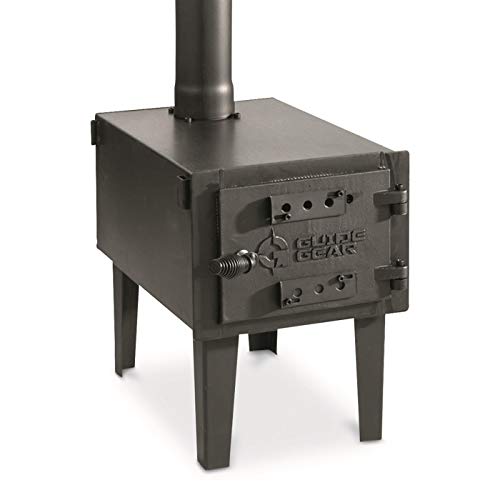
If you’re starting from nothing, this is the appliance the accessories attach to: an EPA certified cast iron stove that heats up to 900 sq ft and takes 22 inch logs for longer burns. The flat cooktop lets you boil or warm food during an outage, and the 6 inch flue collar matches common stovepipe. Cast iron holds heat after the fire dies down, which is what you want in a cabin that cools fast.
Heating capacity Up to 900 sq ftLog length 22 inConstruction Cast ironFlue collar 6 inCertification EPA certified
Why it made the cut
Heats up to 900 sq ft
Accepts 22 in logs for extended burn times
Cast iron retains heat well
Integrated cooking surface
Good to know
One-year warranty only
Compact firebox limits how much wood you can load at once
Skip it if Skip it if you’re heating a whole house rather than a cabin or tight living space.
Choose wood stove accessories by the job they perform, the fuel your stove burns, and the conditions they can safely handle—not by how full the accessory basket looks. For most wood stoves, the useful shortlist is a reliable firestarter, a way to move or retain heat if the layout supports it, and high-temperature sealant for approved static joints.
The best accessories for a wood stove match the stove’s fuel and construction first. Check each product’s instructions for wood, coal, or pellet compatibility; an accessory suited to one appliance may be wrong for another. A heat-moving device helps only when the stove produces enough heat and the room layout gives that heat somewhere useful to go.
Spec to check
Why it matters
What to confirm
Fuel compatibility
Wood, coal, and pellet appliances have different operating conditions.
The product listing names your fuel and stove type.
Temperature rating
A part that overheats, softens, or fails near the stove creates a real problem.
The rating covers the location where you’ll install or use it.
Size and fit
A sealant tube, heat reclaimer, or tool is useful only if it fits the appliance and clearance around it.
Measure the joint, flue collar, or available space first.
Cleaning interval
Soot, ash, and creosote can reduce performance or create a hazard.
The manual explains what to clean and how often.
A clear specification beats a long feature list.
Myth
Any high-temperature sealant is safe around the flue.
Fact
High-temperature alone doesn’t make a sealant suitable for every flue connection. Use sealing material only where the manufacturer allows it, and follow the stove and sealant instructions for the joint, temperature, and curing time.
Temperature control deserves priority over decorative tools. A thermometer or other control aid helps you see how the stove is operating, while a tool that merely sits beside it won’t change combustion, heat transfer, or sealing. The same rule applies to a heat reclaimer: the US Stove MH6-6 in Miracle Heat Reclaimer can help only if its connection, clearance, stove type, and room airflow match its instructions.
1
Name the problem
Decide if you need faster ignition, more usable room heat, a sealed static joint, or easier ash and wood handling.
2
Check the stove match
Read the stove and accessory manuals together. Confirm fuel type, connection details, temperature limits, clearances, and any cleaning requirement.
3
Measure before buying
Record the joint diameter, available clearance, and room layout. A product that nearly fits is still the wrong product.
Before you order
Your stove’s fuel type is listed as compatible.
The accessory’s temperature rating suits its actual location.
The size and connection match without forcing or improvising.
Any flue-related seal is approved by the manufacturer for that exact use.
The maintenance and cleaning interval is realistic for you.
Buy the accessory that fixes a measured problem, then verify fuel compatibility, temperature rating, fit, and maintenance. Skip anything that needs an improvised flue connection or cannot work with your stove’s layout.
Start Fires Cleaner
The best fire starter for a wood stove is Product 1, Better Wood Products 100% Natural Pine Fatwood Firestarter, especially for wet wood, cold starts, and backup fire lighting. Resin-rich pine catches quickly, so a small piece can establish a flame before the larger splits are fully burning.
To start a wood stove fire fast, use dry kindling with a few pieces of fatwood and leave the air control and draft set as the stove manual directs. Fatwood helps ignition; it can’t dry damp logs or correct a weak chimney draft. If the fuel is genuinely wet, the fire will still smoke and struggle after the starter burns away.
8 in × 0.75 in
Product 1 piece size
That length and diameter are easy to handle, place under kindling, and store as a backup without needing a large chunk of starter material.
Good for
Cold starts after the stove has been idle
Damp conditions or less-than-perfect kindling
Keeping a simple backup firestarter nearby
Not for
Doesn’t replace properly seasoned, dry firewood
Won’t fix inadequate draft or a blocked flue
Still needs safe storage away from the stove’s hot surfaces
Build the flame first
Arrange small, dry kindling so air can move through it, then place the fatwood where the flame can reach the kindling. Keep the stove door and draft controls in the position the manufacturer specifies, and never add gasoline, kerosene, or other liquid accelerants.
Keep Heat In The Room
A wood stove heat reclaimer is the best accessory for getting more room heat from the same fire, provided your stove and flue layout can accept it. Product 2, the US Stove MH6-6 in Miracle Heat Reclaimer, uses a 100 CFM fan to circulate heat that would otherwise continue along the chimney path.
A stove fan and a heat reclaimer work in different places. A stove fan sits on the stove top and pushes warm room air outward; a heat reclaimer works with the hot stove-pipe path, moving usable heat back into the room. That makes Product 2 the stronger pick when your goal is more heat from an established fire, rather than better air movement around the stove.
Accessory
What it moves
Best use
Stove fan
Warm room air
Spreading heat across the room
Heat reclaimer
Heat from the stove-pipe path
Returning more of that heat to the room
Fireplace tools
Logs, ash or embers
Handling the fire safely
Sealant
Air through small static gaps
Stopping leakage at suitable joints
These accessories solve different problems; one can’t replace the others.
Worked example
Say your stove heats the room well but the stovepipe sends a large share of its heat toward the chimney before the room feels comfortable. A compatible heat reclaimer can use its 100 CFM fan to circulate heat from that path into the room. The result depends on the stove, pipe arrangement and installation, so treat the reclaimer as a heat-moving accessory—not a way to burn more wood safely.
Fan rating100 CFM
Suitable fuelWood or coal
Main purposeCirculate heat back into the room
Best for more room heat
US Stove MH6-6 in Miracle Heat Reclaimer
Choose the US Stove MH6-6 in Miracle Heat Reclaimer if your compatible wood or coal stove has heat traveling up the chimney path and you want to redirect some of it into the room. Its 100 CFM fan addresses heat circulation directly, but skip it if your stove setup can’t accept this type of accessory.
Check the physical fit before ordering: Product 2 measures 13 × 13 × 13 inches and weighs 14 pounds. The unit also needs cleaning every three months, according to the product information, so leave enough access to inspect and clean it rather than wedging it into a cramped pipe area.
Before adding a reclaimer
Confirm the stove and flue arrangement can accept the accessory.
Verify the 13 × 13 × 13 inch size and 14-pound weight won’t create a clearance or support problem.
Follow the reclaimer and stove instructions for placement, clearances and cleaning.
Keep the chimney and flue maintained; a heat reclaimer doesn’t remove creosote risk.
Seal The Gaps That Steal Heat
For the best high temperature sealant for a wood stove, Product 3, Stanley 2700F High Temp Black Fireplace & Stove Sealant, is the clearer choice when you need a 2700°F-rated gasket sealant, paintability, and easy water cleanup before curing. Product 4, Akfix Heat Fighter Black Fireplace Sealant, suits small static gaps where a fast skin-over matters; it skins over in 3 to 5 minutes.
Both products are intended for heat-resistant sealing work on materials such as brick, stone, metal, concrete, and mortar, provided the product label allows that application. A stove pipe sealant for chimney joints needs more care: use either product on a flue or chimney joint only when its instructions and your stove or chimney manual specifically approve that location and temperature.
Product
Useful advantage
Best fit
Stanley 2700F High Temp Black Fireplace & Stove Sealant
Paintable; water cleanup before curing; 2700°F in the product name
A gasket, seam, or small repair where the cured finish will be visible
Akfix Heat Fighter Black Fireplace Sealant
Skins over in 3 to 5 minutes
A small static gap where quick surface setup helps
Either sealant
Made for heat-resistant joints on listed masonry and metal surfaces
Small, sound gaps—not moving parts or damaged vent sections
Read the cartridge and stove manual before applying sealant to a flue, chimney, or gasket.
Myth
A high-temperature sealant can repair any leaking stove pipe or chimney section.
Fact
Sealant handles a small, stationary joint or gap. A cracked pipe, loose connector, warped collar, or damaged vent section needs replacement or professional repair; covering the damage can hide a flue-gas and carbon-monoxide hazard.
Cure Before Heat
Apply the sealant to a clean, dry surface and let it cure and heat up only as the product directions and stove manual specify. A first fire before the sealant has cured can damage the bead, create smoke or odor, and leave the joint unsealed. Keep the stove cold while you work.
Product 3 is the practical pick for a paintable repair and for the wood stove gasket sealant 2700F search, while Product 4 is useful when its 3-to-5-minute skin-over time fits the job. Neither belongs on a hinge, door latch, expansion joint, or section of venting that is already structurally damaged.
What Most Guides Leave Out
Wood stove accessory maintenance starts before checkout: match each item to your stove type, room size, flue layout, and willingness to clean it. The accessories you need for a wood stove depend on the job—cleaner starts, more usable room heat, or sealed stationary joints—not on how many tools fit in a giftable box.
1
Match the stove
Check the stove manual and the accessory instructions for fuel type, permitted installation location, clearances, and temperature limits. A heat reclaimer that suits one flue arrangement may not suit another.
2
Match the room
A small room can become uncomfortably hot before a large room feels even. Choose heat-moving equipment for the stove and space you have, then keep the required clearance around the stove and accessories.
3
Plan the cleaning
Ask how often each accessory needs inspection or cleaning. If the instructions call for cleaning every three months, treat that item as a maintenance task, not a set-and-forget purchase.
Before the First Fire
Dry, properly seasoned firewood rather than wet wood
A chimney and connector inspected and cleaned as needed
Clearances that match the stove listing and local code
A sound door gasket, flue collar, and vent joints
A working carbon-monoxide alarm near sleeping areas
In short
Accessories can help a sound stove work more conveniently, but they can’t compensate for wet wood, neglected chimney care, or incorrect installation clearances. For wood stove accessory maintenance, follow each manual; how often to clean wood stove accessories depends on the accessory and the buildup it collects.
Buy in this order: for a new stove, start with the approved fire-starting, temperature-checking, safety, and cleaning equipment; for a smoky stove, correct the wood, draft, chimney, and door-seal problem before adding gadgets; for a stove that wastes heat, check sealing and flue compatibility, then consider Product 2, US Stove MH6-6 in Miracle Heat Reclaimer.
Questions People Ask
Do I need a stovepipe thermometer for a wood stove?
A stovepipe thermometer is a smart first purchase because it shows whether the flue gases are running too cool or too hot. Use the thermometer type and placement specified for your pipe, and treat the stove manual’s operating range as the final word.
What wood stove accessory helps the most with efficiency?
For a compatible installation, Product 2, the heat reclaimer, can return some flue heat to the room instead of sending it outdoors. Its benefit depends on correct sizing, regular cleaning, dry firewood, and a stove that can safely use the device; a reclaimer won’t fix a smoky or poorly drafting chimney.
Can I use firestarter sticks in a pellet stove or coal stove?
Only use a firestarter labeled for that appliance and approved by its manual. Pellet stoves often need a specific ignition method, while coal stoves can require a different kind of starter; never substitute gasoline, kerosene, or another liquid accelerant.
How often should a wood stove heat reclaimer be cleaned?
Inspect and clean the heat reclaimer whenever the stove and flue are serviced, and at least once each heating season unless its manual calls for more frequent cleaning. Soot or creosote buildup reduces heat transfer and can restrict the flue, so clean it only when fully cool and include the chimney in the annual inspection.
Can I use high-temperature sealant on stove pipe joints?
Use high-temperature sealant on a stove pipe joint only when the pipe manufacturer and sealant instructions allow that application. Sealant cannot replace the required mechanical fasteners, listed pipe sections, clearances, or a proper chimney connection.
What is the difference between a stovepipe thermometer and a stovetop thermometer?
A stovepipe thermometer measures the temperature of exhaust gases in or on the flue, while a stovetop thermometer measures the stove body’s surface temperature. Their readings describe different parts of the fire, so don’t use one thermometer’s target range for the other.
Which accessory should I buy first if my stove is already installed?
Buy a properly matched stove or stovepipe thermometer first, then confirm you have a working carbon monoxide alarm and the required chimney-cleaning tools or service. Temperature feedback helps you catch an underfired or overfired burn before spending money on add-ons that cannot correct the basic setup.
Share
Written byJoye
HeaterGuides covers home heating, water heating and HVAC: how the equipment works, what it costs to run, and how to use it safely.