Product 5 is the best vented gas heater for most buyers because it runs on natural gas or propane, heats up to 825 sq ft, and uses a sealed burn system with a safety pilot. If you need a wall heater for a whole room or larger zone, start there and size down only if the space is small and tight.
The essentials
Pick Product 5 if you want the most flexible heater for a larger room and have gas supply available.
Pick Product 3 if you need a direct vent natural gas heater sized for about 500 sq ft.
Pick Product 2 or 4 for smaller rooms, bedrooms, or modular-home installs that call for propane.
Do not choose a ventless heater if you want the simplest indoor air safety story; vented units move exhaust outside.
Have the vent route, gas type, and local code checked before you buy drywall-friendly hardware and regret it later.
Vented gas heaters are the right choice when you want combustion gases sent outdoors instead of into the room. The tradeoff is simple: you get safer indoor air, but you have to match the fuel, vent type, and room size to the unit.
For readers comparing vented propane heaters and vented natural gas heaters, the big question is usually coverage. A 11,000 BTU unit fits a bedroom or small living room; a 25,000 BTU unit fits a much larger zone and gives you more breathing room on cold nights.
Best Vented Gas Heaters
#1Best for most homes
Ashley Hearth Dual-Fuel Wall Heater
Best for Larger rooms or zones where you want natural gas or propane
This is the broadest-fit pick: it runs on natural gas or propane and heats up to 825 sq ft. Its sealed burn system and safety pilot with a built-in pressure regulator suit bedrooms and living spaces; the pilot shuts off gas if the flame goes out.
Fuel Natural gas or propaneHeat input Up to 25,000 BTUCoverage Up to 825 sq ftBurn system Sealed burn systemSafety Safety pilot with built-in pressure regulator
Why it made the cut
Works with natural gas or propane
Heats up to 825 sq ft
Sealed burn system with safety pilot
Good to know
No ignition type is listed in the product data
Maximum heat input is 25,000 BTU
Skip it if Skip it if your space is small and you want a lower-capacity heater.
Best for Rooms up to 500 sq ft with a natural gas connection
Choose this direct-vent model if your home uses natural gas and the 500 sq ft coverage fits the room. Electronic ignition, a thermostat, and a safety pilot with a built-in pressure regulator cover everyday control and flame-out protection.
Fuel Natural gasHeat input 17,000 BTUCoverage Up to 500 sq ftVenting Direct ventIgnition Electronic ignition
Why it made the cut
Natural gas fuel
Electronic ignition and thermostat
Professional vent kit listed
Good to know
Natural gas only
Coverage is lower than the top pick
Skip it if Skip it if you need propane fuel or heat for a larger area.
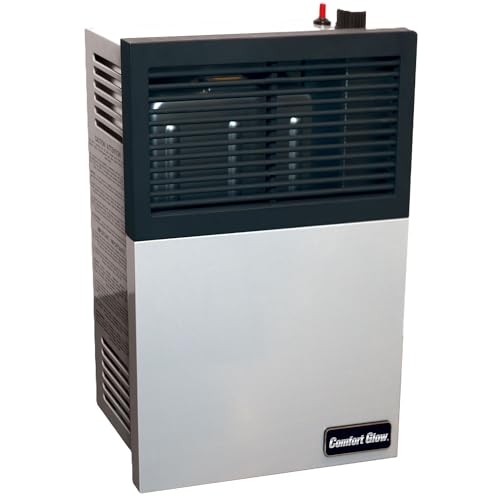
For a smaller space with propane, this direct-vent wall heater provides thermostatic heat control and a sealed burn system. It uses electronic ignition, and the safety pilot with a built-in pressure regulator stops gas flow if the pilot goes out.
Fuel PropaneHeat input 11,000 BTUCoverage Up to 350 sq ftVenting Direct ventIgnition Electronic ignition
Why it made the cut
Propane fuel
Thermostatic heat control
Listed as approved for bedrooms
Good to know
Heats up to 350 sq ft
Propane only
Skip it if Skip it if your room needs more coverage or your home uses natural gas.
Best for Compact propane-heated spaces up to 375 sq ft
The included heat shield, air intake pipe, and connecting rod make this a practical choice if you want those vent components in the box. Its sealed burn system and matchless piezo lighting suit compact bedrooms and living spaces, with a safety pilot that stops gas flow if the flame goes out.
Fuel Liquid propane onlyHeat input 11,000 BTUCoverage Up to 375 sq ftBurn system Sealed burn systemIgnition Matchless piezo lighting
Why it made the cut
Includes heat shield, air intake pipe, and connecting rod
Matchless piezo lighting
Heats up to 375 sq ft
Good to know
Liquid propane only
Lower heat input than the larger picks
Skip it if Skip it if you need natural gas or more coverage than the listed 375 sq ft.
Best for Small rooms where you need portable electric heat, not gas venting
This is the only portable electric option in the lineup, so it suits spot heating rather than a vented gas installation. It has a thermostat, remote, timer, and tip-over shutoff, but it needs a wall outlet and won’t provide heat during a power outage.
Fuel ElectricPower 1,500 WCoverage Up to 200 sq ftControls Thermostat and remoteSafety Tip-over and overheat protection
Why it made the cut
Portable with thermostat and remote
Tip-over and overheat protection
ETL-certified
Good to know
Electric, not gas
Coverage is listed as up to 200 sq ft
Requires power
Skip it if Skip it if you need a vented gas heater or backup heat during an outage.
Choose a vented gas heater by fuel first, then match its output and safety features to the room. If your home already has a natural-gas line, a natural-gas model avoids adding propane service; choose propane if you need an LP cylinder or propane supply. The best vented gas heaters for your home are the ones that fit its fuel and heating zone.
What is gas vented heating? A direct-vent heater draws combustion air from outdoors and sends exhaust outside through a wall, so it can heat an indoor room without a chimney. Does a natural gas heater need to be vented? A heater that burns natural gas produces combustion exhaust, so use a vented model as designed; direct venting keeps that exhaust out of the room.
Output
Typical fit in this lineup
Fuel examples
11,000 BTU
Compact spaces
Propane: Comfort Glow 11,000 BTU and Ashley Hearth 11,000 BTU
17,000 BTU
Mid-size rooms
Natural gas: Comfort Glow 17,000 BTU
25,000 BTU
Larger zones
Dual fuel: Ashley Direct Vent Wall Heater
Use BTU and room size together; the same output won’t suit every home’s insulation or layout.
Look for a safety pilot, built-in pressure regulator and sealed burn system on an indoor gas heater. A safety pilot shuts off gas if the pilot flame goes out; the regulator controls incoming gas pressure. Wall mounting also frees floor space, a useful trade in bedrooms, halls and smaller living rooms.
Check the fuel connection
A dual-fuel label means the heater can use natural gas or propane, but it still must be set up for the fuel you have. Follow the manufacturer’s instructions for the correct configuration.
For another comparison of room-heating models, see the best vented gas room heaters. Match the heater to your room before treating a larger BTU number as an upgrade.
Room Size And Heat Output
The best vented gas room heaters are sized by the room’s area and heat loss, not by choosing the largest BTU rating available. Use the product coverage as a rough starting point, then account for insulation, ceiling height and drafts; a cold, leaky room can need more heat than a tight room of the same size.
For a small vented natural gas heater, check the fuel carefully: the 11,000 BTU Comfort Glow and Ashley Hearth models listed here use propane, while the 17,000 BTU Comfort Glow is natural gas. Product 3 is rated for up to 500 sq ft, making it a reasonable mid-size option for a larger bedroom or family room. The 25,000 BTU Ashley dual-fuel model covers up to 825 sq ft, for the largest zones in this group.
A 350 Sq Ft Room
Say your room measures 350 sq ft and has ordinary insulation. Product 3’s 17,000 BTU rating covers up to 500 sq ft, so it already falls within its stated coverage. A 25,000 BTU heater rated for up to 825 sq ft would be a larger capacity than this room suggests; don’t size up unless poor insulation, high ceilings or drafts justify it.
Room area350 sq ft
Mid-size option17,000 BTU; up to 500 sq ft
Larger option25,000 BTU; up to 825 sq ft
Vented natural gas heaters for homes should be sized to the zone you actually want to heat, not assumed to warm every closed-off room. For a compact space, the propane 11,000 BTU models are the small-room tier; for broader coverage, use the stated room rating and your home’s heat loss as the guide. Gas heaters for homes need proper venting and installation for the specific model.
What It Costs To Run
The running cost of vented propane heaters depends on the heater’s input rate, how long it actually fires, and your local fuel price—not the marketing label. The best vented propane heaters can still cost more to run than a smaller model if they burn longer each night.
Propane is usually sold by the gallon, while natural gas appears on your utility bill by the therm or another billing unit. That changes the math. Start with the input BTU rating on the plate, then account for the heater’s duty cycle and your local price; a higher BTU number means more fuel whenever the burner is operating.
Worked Example
Say a 17,000 BTU vented propane wall heater runs for three hours each night. That is 51,000 BTU of input per night before the heater cycles off. A larger heater running six hours could use far more fuel, even if its listed efficiency is better on paper. The thermostat and the room’s heat loss often matter more than the headline rating.
17,000 BTU × 3 hours51,000 BTU per night
Billing unitPropane by gallon; natural gas by therm
Main variablesInput rate, run time, duty cycle, local
A sealed direct-vent heater keeps combustion separate from room air, which helps limit indoor moisture and keeps exhaust outside. That makes a vented propane gas heater with low moisture output a sensible choice for a tight room, but the heat still comes from fuel. A vented natural gas heater has the same cost logic, with the utility rate replacing the propane price.
Compare Real Use
For a vented propane heater, compare the input BTU rating with the hours you expect to use it. The Ashley Direct Vent Wall Heater Dual Fuel 25,000 BTU gives you fuel flexibility, while a smaller unit may cost less to operate in a compact room. For a broader buying comparison, see best vented propane heater.
Safety, Venting, And Code
Vented heaters are safer indoors than ventless models because the flue sends combustion exhaust out of the room. That does not make installation optional: every indoor gas heater needs the venting, clearances, and placement specified by its manufacturer.
Are non vented gas heaters safe? Some vent-free appliances are listed for indoor use, but “safe” depends on the exact model, room, ventilation, local code, and proper operation. Nonvented natural gas heaters can raise moisture and combustion concerns, and vent-free gas heaters are restricted or banned in some states and cities.
If you’re comparing a ventless and vented wall-mounted natural gas heater, the key difference is where combustion gases go: a vented model sends them outdoors through its listed vent, while a ventless model releases combustion products into the room. That is why unvented heaters deserve closer code and ventilation checks.
Carbon Monoxide Protection
A working carbon monoxide alarm belongs in every indoor fuel-burning heater installation; treat it as part of the install, not an optional accessory. Leave the heater off and get qualified help if the alarm sounds, the vent is damaged or blocked, or you notice soot, unusual odors, or poor flame behavior.
The direct-vent models in this guide are approved by their product data for bedrooms or living spaces, including the Comfort Glow and Ashley wall heaters. The manual and local code still decide the final location, vent route, clearances, and bedroom approval for your installation.
Before Lighting The Heater
Confirm the model is listed for indoor use and for your fuel: propane, natural gas, or dual fuel.
Follow the manual’s vent route, clearance, and wall or floor placement requirements.
Check local rules for bedroom use, vent-free appliances, and gas appliance permits.
Install and test a carbon monoxide alarm near the sleeping area.
Have gas connections or vent changes handled by a qualified professional where required.
What To Check Before You Buy
Before ordering a vented gas wall heater, confirm the fuel, vent system, and wall measurements match your home. Propane wall heaters vented to the outside aren’t interchangeable with natural gas models unless the heater is specifically dual fuel; a standard model uses one fuel only. For natural gas vented wall heaters with thermostat reviews, check the exact model’s manual and specifications to see whether a thermostat is included and what it controls.
A gas wall heater vented through an exterior wall is commonly a direct-vent unit, but confirm that detail rather than relying on the product title. Check whether its vent kit comes in the box or must be ordered separately. A vented gas wall heater also needs enough wall space and the clearances listed by its manufacturer from nearby combustible materials.
Measure the room and the installation area before you buy. If you’re replacing an old heater, compare the new unit’s vent route with the existing flue path and opening, and locate the gas shutoff. An old opening may not fit a new vent system. Have a qualified gas-heater technician confirm the connection and vent installation before use; don’t modify the gas line or vent yourself.
Before You Buy, Light, Or Call
Confirm the heater uses your home’s natural gas or propane supply, or is explicitly dual fuel.
Verify direct-vent requirements and whether the correct vent kit is included or sold separately.
Measure the room, wall space, and manufacturer-required clearances to combustibles.
For a replacement, check the flue path, gas shutoff location, and compatibility of the old opening.
Before lighting, follow the manual and confirm the vent is installed as specified; call a qualified technician if anything doesn’t match.
More Questions, Answered
Does a natural gas heater need to be vented?
A natural gas heater designed for vented operation needs its listed vent installed as the manufacturer specifies. Some natural gas heaters are vent-free, but local rules may prohibit or restrict them, so check your code before buying.
Are non vented gas heaters safe indoors?
Vent-free gas heaters can add combustion products and moisture to indoor air, even when they operate as designed. Use one indoors only if the model is approved for that use and local code allows it; follow its ventilation instructions and keep a working carbon monoxide alarm in the home.
What is the difference between vented and ventless wall heaters?
A vented wall heater sends combustion exhaust outdoors through a wall vent or flue, while a ventless model releases combustion products into the room. Vented units need the right vent path and clearances; ventless units face tighter local restrictions and require careful attention to the manual’s ventilation instructions.
What size vented gas heater do I need for a 350 sq ft room?
Room area alone can’t determine the right BTU output: insulation, ceiling height, window area, climate, and air leakage all change the heat loss. Use the heater manufacturer’s sizing guidance or a heat-loss calculation, then choose a model whose listed output can meet that load without substantially oversizing the room.