How to Heat Large Spaces Efficiently With the Right BTU Sizing
On this page 8 sections
- Heating Large Spaces Efficiently: What You Need to Know
- Calculate BTU Requirements Precisely for Your Space
- Compare Heating Technologies for Large Spaces
- Installation Challenges and Maintenance for Large Space Heaters
- Optimizing Comfort and Efficiency in Complex Layouts
- Safety and Running Costs for Heating Large Spaces
- Final Checklist Before Heating Your Large Space This Winter
- More Questions, Answered
Heating a large space efficiently means balancing upfront costs, running expenses, and comfort. It depends on how you size your heater, the room’s shape and height, and the heating technology you choose.
This article explains how to calculate heating needs, compares common and emerging systems, and details what each means for your utility bills and comfort this winter.
Heating Large Spaces Efficiently: What You Need to Know
Heating large spaces efficiently starts with accurate sizing, a tight building envelope and a heating system matched to how each area is used. Cost-effective heating solutions for large spaces usually combine a heat pump or radiant system for steady heat with separate zones or spot heaters where people actually spend time. One heroic space heater rarely conquers an open floor plan; cold corners tend to file a complaint.
Start with about 20 BTUs per square foot as a rough planning figure. A 2,000-square-foot space therefore begins at 40,000 BTUs, before adjusting for ceiling height, insulation, windows, climate and air leakage. That number is a starting point for a proper load calculation, not a permission slip to buy the biggest heater in the catalog.
Adjust For Ceiling Height And Air Loss

A tall room needs more heat because it contains more air and usually has more wall area for heat to escape. A 12-foot ceiling holds about 50% more air than an 8-foot ceiling; applying that simple adjustment to the 2,000-square-foot example raises the rough requirement from 40,000 to about 60,000 BTUs. Actual sizing still depends on the building, since warm air stratification and insulation can matter as much as the extra volume.
Insulation and draft proofing can reduce the heater size and the hours it runs. Seal gaps around doors, windows, pipe penetrations and other obvious leaks; properly sealing drafts can reduce heat loss by roughly 10% to 20%. Thermal curtains help at large windows, while a ceiling fan in reverse mode can push trapped warm air down from a high ceiling without turning the room into a wind tunnel.
Match The Technology To The Space
A ductless mini-split heat pump is often the efficient choice for a large occupied area because it moves heat instead of creating it with resistance elements; heat pumps can achieve roughly 300% to 400% efficiency, expressed as a coefficient of performance of 3 to 4. Radiant floor heating warms the floor and objects from the ground up, giving an even feel across a broad room. Hydronic systems are generally more efficient than electric floor mats, but installation can involve tubing, controls, a boiler or heat source, and finished-floor work.
Electric space heaters fit smaller occupied zones or short-term supplemental heating rather than whole-building duty. Typical portable units provide about 5,000 to 10,000 BTUs, so several may be needed in a large open area, with each unit placed and powered according to its manual. Higher wattage doesn’t make a resistive heater more efficient; it mainly lets the heater deliver more heat while running.
Divide Large Areas Into Heating Zones
Multiple zones improve efficiency by letting you heat occupied areas without maintaining one temperature everywhere. A mini-split serving the main living area, radiant heat in a regularly used workshop, and a small supplemental heater near a desk can reduce waste compared with one oversized system trying to cover rooms with different schedules.
Open layouts and irregular shapes need attention to cold spots, door openings and airflow paths. Place thermostats where people live, not beside a drafty entrance or a heat source, and use separate controls where rooms have different sun exposure or occupancy. For a deeper look at zoning systems and their control options, see HVAC zoning systems.
Calculate BTU Requirements Precisely for Your Space
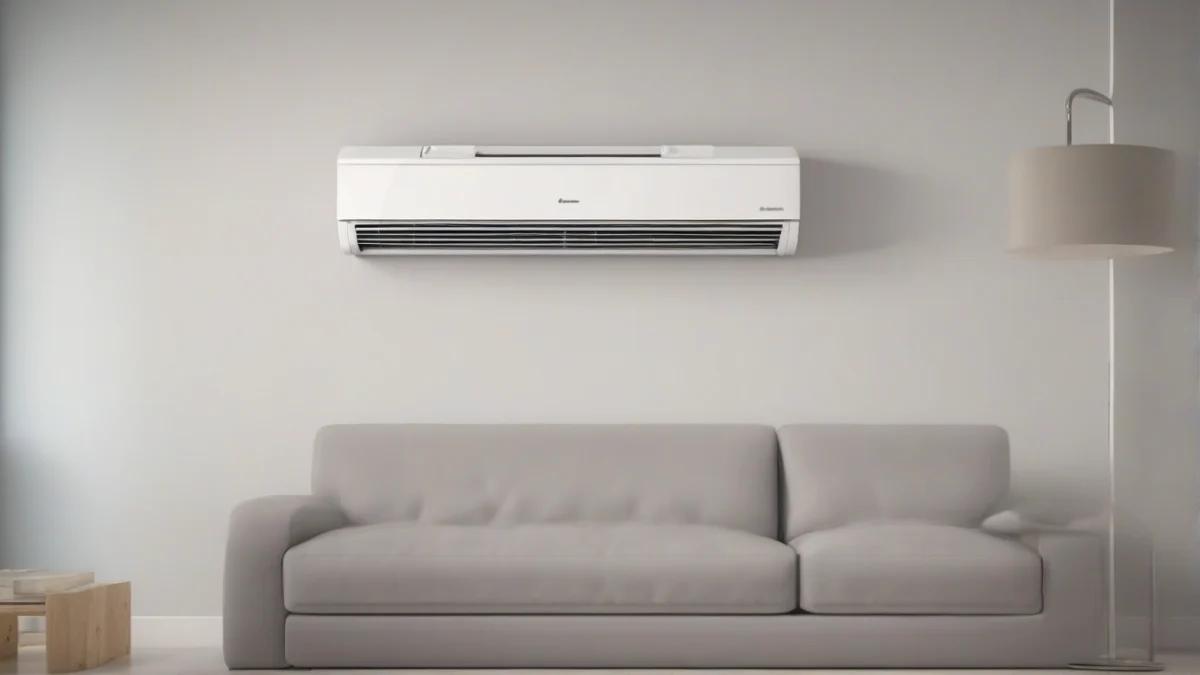
For a high, open room, a ductless mini-split heat pump is usually the most economical sufficient system when installation is practical, because its COP of 3–4 can deliver roughly 300–400% efficiency; size it from room volume and heat loss, not floor area alone. A single portable heater rarely spreads heat evenly across a large open plan.
Use Floor Area as the Starting Point
Begin with the simple BTU Calculator rule: floor area × 20 BTUs. A 24 × 24 ft room has 576 square feet, so its starting requirement is 576 × 20 = 11,520 BTUs. That figure assumes a typical ceiling and reasonably sound insulation, so it isn’t the final equipment size.
Add ceiling height with a volume factor: base BTUs × (actual ceiling height ÷ 8 ft). An insulation adjustment belongs in the same calculation: BTUs = area × 20 × (ceiling height ÷ 8) × insulation factor. Use the heater manufacturer’s sizing guidance or a professional heat-loss calculation for that last factor; don’t pretend a leaky barn and a tightly insulated room deserve the same multiplier.
Account for Shape and Open Plans
Split an irregular space into rectangles, calculate each rectangle, then add the results. A long L-shaped room might need separate estimates for its two legs because the far end can lose heat through more exterior wall and may sit outside the main airflow.
Open floor plans need a zone check after the BTU estimate. Add the connected areas, then look at exterior walls, windows, stairwells and doorways that divide warm airflow. Multiple mini-split heads, a ducted system or separate heating zones usually beat one oversized heater pointed hopefully toward the kitchen.
Adjust for Insulation and Humidity
Poor insulation, drafty doors, large windows and unheated rooms above or below the space increase the load; good insulation and draft proofing reduce it. Humid air also takes energy to heat, while moisture entering through infiltration can make the room feel clammy and harder to keep comfortable. Fix obvious air leaks before buying extra capacity.


Compare Heating Technologies for Large Spaces
For most large spaces, a ductless mini-split heat pump is the most cost-effective whole-room option when installation is practical; radiant floors suit major remodels, while portable and infrared heaters make more sense for occupied zones than for heating an entire open building.
Ductless Mini-Splits Keep More Heat Per Dollar
A ductless mini-split can achieve a coefficient of performance (COP) of 3–4, meaning it can deliver roughly three to four units of heat for each unit of electricity it consumes under suitable conditions. That gives it a strong long-term advantage over electric-resistance heaters, which turn electricity into heat at the point of use but don’t multiply the input.
Multiple indoor heads let you create separate zones for a workshop, living area and office instead of heating every corner to the same temperature. A mini-split also avoids duct losses, but its outdoor unit needs a suitable location, and very cold weather can reduce its output or require backup heat. For a large irregular floor plan, a ductless mini-split is usually easier to zone than one central heater blowing into the wrong-shaped hallway.
Radiant Floors Trade Installation Work for Even Heat
Radiant floor heating warms the floor and nearby objects, so heat rises gently from below instead of collecting at the ceiling first. Hydronic systems circulate heated water through tubing and are generally more efficient than electric mats, but installing tubing, a boiler or heat pump connection and floor controls can mean opening floors or planning the system during new construction.
Thermal mass is both the advantage and the catch: a slab stores heat and releases it slowly, yet it also takes time to warm. Radiant floors are a good fit for a large, regularly occupied space where comfort matters for many hours; they’re a poor fit for a room you heat for 30 minutes on an occasional Saturday.
Use Infrared and Portable Heaters for Zones
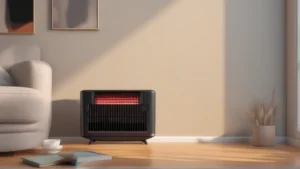
Infrared heaters warm people and nearby surfaces directly, so they can feel effective in a drafty or high-ceilinged area even when heating all the air would take too long. Electric space heaters typically provide 5,000–10,000 BTUs and work best as supplemental heat for one occupied zone; a single unit won’t heat a large open-concept area evenly.
A 1,500-watt infrared or electric heater uses the same electricity as any other 1,500-watt resistance heater at full power. At an assumed rate of 17 cents per kWh, eight hours costs about $2.04: 1.5 kW × 8 hours × $0.17. Higher wattage gives more heat, not better efficiency, and several portable heaters can overload a circuit or create cold spots if scattered without a plan.
| Heater | Watts | Per hour | Per day (8 h) | Per month (30 days) |
|---|---|---|---|---|
| 1,500 W infrared or electric space heater | 1,500 W | 26¢ | $2.04 | $61.20 |
Choose Wood and Pellet Stoves With Eyes Open
Wood and pellet stoves can provide strong heat where electrical service is limited, and pellets offer a more uniform fuel supply than split firewood. Both require a correctly listed venting system, regular ash removal and annual chimney inspection and sweeping; wood also needs dry, untreated fuel stored under cover.
Burning wood or pellets produces on-site combustion emissions, including fine particles, so renewable fuel doesn’t mean impact-free heat. Pellet stoves need electricity for the feed motor and fans, while wood stoves need hands-on loading and produce more variable heat. Never burn trash or treated wood.
Combine Systems When the Building Has Different Jobs
A hybrid system can pair a mini-split with radiant floors, a boiler or a wood or pellet stove so each technology handles the work it does best. For example, the heat pump can maintain background temperature, radiant heat can serve a regularly occupied slab, and a stove can provide backup during severe weather or an outage.
Set clear priorities before combining heaters: decide which thermostat controls each zone, keep combustion appliances on their required venting, and don’t run portable heaters as an improvised substitute for a failed furnace overnight. The cheapest system to operate is still a poor choice if its installation, fuel handling or controls don’t fit the building.
 Winter Heating Bill CutterSee what every heater in your home really costs, heat the rooms you use, and cut the waste in 30 days.Cost-per-hour tables for every heaterThermostat schedule and draft-proofing planRunning-cost and bill calculator (Excel)
Installation Challenges and Maintenance for Large Space Heaters
Radiant floor heating is the most disruptive large-space installation because the heating elements must go beneath the finished floor or inside a new slab. Hydronic systems use tubing, a boiler or heat source, a manifold and controls; electric mats are simpler to install but can be costly to run across a large floor. Hydronic radiant floor heating can make financial sense during a remodel, when the floor is already open. Otherwise, the labor, floor-height changes and thermal mass deserve a hard look. radiant floor heating is worth comparing with a ductless system before you remove anything but your patience.

A ductless mini-split needs an outdoor unit, an indoor head, a refrigerant line set, condensate drainage and suitable electrical service, with sealed wall penetrations between them. Have a qualified HVAC technician size and commission it; refrigerant work and electrical changes aren’t weekend projects. There is no dependable single lifespan or maintenance cost for every mini-split, because climate, installation quality, usage and replacement parts vary. Budget for routine filter cleaning and occasional professional service rather than trusting a brochure-shaped number.
Keep The Main Systems Serviceable
An annual inspection should cover the heat source, wiring, controls, venting and safety shutoffs before the first cold snap. For a pellet stove, that includes the flue and cleanout; for a mini-split, it includes airflow, condensate drainage and outdoor-coil condition. Sealing drafts belongs on the same appointment list, because the best-maintained heater still spends its fuel heating the driveway if cold air is entering around a door.
Optimizing Comfort and Efficiency in Complex Layouts
Open floor plans heat more evenly when you divide them into zones, give each zone its own control, and use gentle air circulation to move warmth past room boundaries. A single heater at one end can leave the dining table chilly while the sofa becomes a sauna; large spaces often need multiple heating zones or systems.
Set Up Zones Around How You Use the Space
Group areas with similar schedules and comfort needs rather than zoning by arbitrary walls. A living area used in the evening can run warmer then, while a rarely used dining area stays at a lower setting. A programmable thermostat can lower the temperature during work hours and bring it back up before you return, avoiding hours of heating an empty room.
For a forced-air HVAC system, zoning usually means motorized dampers in separate duct branches and thermostats that communicate with a central control panel. Existing systems need compatible controls, enough airflow, and a heat source that can handle the zones without short-cycling. Have an HVAC professional confirm those points before buying thermostats; swapping a wall control alone doesn’t create a zoning system.
A ductless mini-split can make zoning simpler because each indoor head controls its own area. Use the same principle with supplemental heaters: place each unit near the zone it serves, keep doors and furniture from blocking airflow, and don’t expect a 1,500-watt portable heater to cover an entire open floor plan.
Connect Smart Controls Without Losing Control
Smart heating controls help when they change the schedule you already follow, not when an app merely adds another button. Look for WiFi access, remote adjustment, programmable schedules, room-temperature feedback, and compatibility with your existing HVAC equipment. Set a maximum temperature and review the schedule after the first cold week so a faulty reading doesn’t leave a zone running all day.
A smart thermostat can integrate with existing HVAC equipment only when the wiring and system type match. Heat pumps, multi-stage equipment, electric heat, and conventional furnaces may use different terminals and control logic. Turn off power at the equipment before any thermostat work, and use an HVAC technician if the wiring is unclear.
Move Warm Air Down From the Ceiling
Run a ceiling fan in reverse at its lowest comfortable speed to push warm air downward without creating a cold draft. Warm air naturally collects above occupied height, especially in rooms with high ceilings; slow circulation helps the thermostat sense a more representative temperature. Stop the fan if it makes people feel colder, since moving air increases heat loss from skin.
Seal Windows Before Raising the Thermostat
Thermal curtains, door sweeps, and removable weatherstripping reduce the cold surfaces and drafts that make a room feel underheated. Close curtains after sunset, leave them open for useful winter sunlight, and check that curtains don’t cover a thermostat or block a heater’s required clearance. Proper draft proofing around windows and doors can reduce heat loss by 10–20%, so a small roll of weatherstripping may outperform another heater.
For more control hardware guidance, compare the benefits of a programmable thermostat and read how HVAC zoning systems divide a building into separately controlled areas.
Safety and Running Costs for Heating Large Spaces
Portable heaters are usually safest overnight when they are turned off; don’t leave one running while you sleep unless the manufacturer specifically says the model is designed for that use. A large open room may need several zones, but each heater still needs a wall outlet, 3 feet of clearance, tip-over protection and overheat protection. Never combine heaters on a power strip or extension cord.
Gas heating adds an indoor-air question that electric heat doesn’t: combustion can produce carbon monoxide and nitrogen dioxide. Use only an indoor-rated gas heater with the ventilation required by its manual, keep a working CO alarm near sleeping areas, and never bring a patio, torpedo or construction heater indoors. An oxygen-depletion sensor is required on indoor propane heaters; unvented gas heaters are also restricted or banned in some states and cities.
Calculate The Cost Before You Compare Heaters
A 1,500-watt electric heater uses 1.5 kWh for each hour at full output, so eight hours costs 1.5 × 8 × $0.17, or about $2.04, using an assumed electricity rate of 17 cents per kWh. A thermostat may reduce that total by cycling the heater off, but the nameplate wattage gives you the safe worst-case starting point.
| Heater | Watts | Per hour | Per day (8 h) | Per month (30 days) |
|---|---|---|---|---|
| 1,500 W electric heater | 1,500 W | 26¢ | $2.04 | $61.20 |
| 100 W heated blanket | 100 W | 1.7¢ | 14¢ | $4.08 |
Fuel costs require the heater’s actual burn rate, so use the label rather than guessing from room size. For example, a propane heater using 0.10 gallons per hour for eight hours burns 0.80 gallons; at an assumed $3.00 per gallon, that is $2.40. A pellet stove using 1 pound per hour for eight hours burns 8 pounds; at an assumed $300 per ton, that is $1.20. Those are worked examples, not promises of typical consumption—fuel prices, output settings and appliance efficiency change the result.
Heat pumps can beat resistance heaters on running cost because a ductless mini-split can reach a COP of 3 to 4, delivering roughly three or four units of heat for each unit of electricity it consumes. Pellet and wood systems avoid some electric use but add storage, ash, smoke and combustion maintenance; gas systems need correct venting and can worsen indoor air quality if combustion products enter the room.
Match Heater Noise To The Space
Oil-filled radiators and infrared heaters are generally quieter because they don’t need a strong circulation fan, while forced-air, pellet and many gas heaters make fan, ignition or blower noise. The Dreo Space Heater, for example, is specified at 34 dB and includes ECO mode, which may suit a workspace or bedroom when the manufacturer’s overnight instructions allow operation. A quiet heater still needs its tip-over switch, overheat cutoff and clearance.
Final Checklist Before Heating Your Large Space This Winter
The most cost-effective setup for a large space is usually a correctly sized heat pump or zoned system for whole-room heat, with a portable heater reserved for short-term spot heating. Check the building and controls before buying another box that turns electricity into heat with impressive enthusiasm.