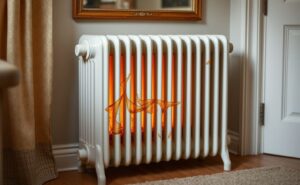
Pros and Cons of Oil Filled Radiator Heaters: About 12 Cents an Hour
On this page 7 sections
The biggest mistake is buying an oil-filled radiator for quick heat, then cranking the thermostat higher while the room is still cold. That usually just runs the element longer and can add a few dollars a week during a cold spell.
A 1,500 W unit uses about 1.5 kWh each hour it actually heats. At 17 cents per kWh, that’s about 25.5 cents an hour, whether the heater uses oil, a fan, or bare electric resistance.
Pros and Cons of Oil Filled Radiator Heaters
The pros and cons of oil filled radiator heaters come down to comfort versus speed: they’re nearly silent and steady, but slow to warm and awkward to move. Oil filled radiators are any good for bedrooms, offices, and long heating periods; they’re a poor fit when you need fast spot heat right now.
An oil-filled radiator uses sealed heat-transfer fluid, not fuel, so you never refill the oil. An electric element warms the fluid, the fluid warms the metal fins, and those fins heat the room by gentle natural convection plus some radiation toward nearby people and objects.
That design explains the main benefits of oil filled radiator heaters. There’s no fan blast, almost no operating noise, and less movement of dust than with a fan heater. After the thermostat clicks off, the hot oil and metal fins continue giving off heat for a while, so the room temperature changes gradually instead of jumping between hot and cold.
| Heater type | Noise | Warm-up speed | Best use |
|---|---|---|---|
| Oil-filled radiator | Nearly silent | Slow | Bedrooms, offices, and steady background heat |
| Fan heater | Fan noise | Fast | Short heating bursts and quick spot heat |
| Ceramic heater | Low to moderate, usually fan-assisted | Fast | Small rooms where quick electric heat matters |
The main drawbacks are physical and practical. A radiator cabinet is bulky, its metal surface gets hot, and the heat spreads gradually instead of aiming a strong stream at your hands or feet. Give it clear space around the heater, and don’t treat the warm casing as a shelf or drying rack.
Oil filled radiators explained simply: the element supplies the energy, the sealed fluid carries it through the radiator, and the fins release it slowly into the room. How oil filled radiator heaters work goes further into that heat path, including why the heater can remain warm after the element switches off.
For a bedroom or study, that slow release can feel comfortable because the heater doesn’t blow directly across you. For a cold entryway, workshop, or brief morning warm-up, the same feature can feel frustrating—you may leave the room before the radiator has caught up.
Are Oil Filled Radiators Economical To Run

Oil filled radiators can be economical to run for steady, targeted heat, but they aren’t inherently cheaper than other electric heaters. They’re effectively 100% efficient at the point of use: electricity becomes heat in the room, and the oil stores and spreads that heat; it doesn’t make extra heat. So how efficient are oil filled radiators? About as efficient as other electric resistance heaters.
How much electric does an oil filled radiator use? A 1,500-watt model running at full power uses 1.5 kilowatt-hours per hour. The standard cost formula is watts ÷ 1,000 × hours × your electricity price per kilowatt-hour. At 17 cents per kWh, running it for 8 hours a day for 30 days gives the estimate below. That assumes the heater draws full power the entire time.
| Heater | Watts | Per hour | Per day (8 h) | Per month (30 days) |
|---|---|---|---|---|
| 1,500 W oil filled radiator | 1,500 W | 26¢ | $2.04 | $61.20 |
Are oil filled radiators cheap to run, or are they expensive? It depends more on how long the element runs than on the oil-filled design. A 1,500 W oil-filled radiator and a 1,500 W fan heater cost the same per hour while both draw full power. The radiator may keep giving off stored heat after its element switches off, but that heat came from electricity it used earlier.
Your thermostat and the room’s insulation can change the bill more than the heater label. A thermostat that shuts off the element at the set temperature reduces runtime; drafts, poor insulation, and a high setting keep heat escaping and the element working. For more detail on controls, see oil filled radiator heaters with thermostat.
Are Oil Filled Radiators Safe Indoors
Oil filled radiators are generally safe indoors when you use them as the manufacturer directs; portable models need the same care as any electric space heater. Keep the heater upright on a level floor with 3 feet of clearance, plug it straight into a wall outlet, and never use an extension cord or power strip.
To use an oil filled radiator heater, place it clear of curtains, bedding, furniture, and foot traffic, then set the thermostat for the room. Its metal cabinet gets hot enough to burn skin, and it can stay warm after shutoff because the oil and metal release stored heat gradually. Keep children and pets away.
Don’t sleep with it running or leave it unattended unless the manual says that specific model is designed for those conditions. A timer or thermostat doesn’t replace the instructions. If you need faster heat before getting dressed, a ceramic heater can warm the area quickly, but it still needs the same clearance and outlet precautions.

 Winter Heating Bill CutterSee what every heater in your home really costs, heat the rooms you use, and cut the waste in 30 days.Cost-per-hour tables for every heaterThermostat schedule and draft-proofing planRunning-cost and bill calculator (Excel)
Oil Filled Radiator Vs Fan Heater
For quick heat at a desk or in a bathroom before use, a fan heater is the better fit; for a bedroom or a longer evening run, an oil filled radiator is usually more comfortable. That’s the practical answer to oil filled radiator vs electric heater: both turn electricity into heat, but they deliver it differently.
| What matters | Oil-filled radiator | Fan heater |
|---|---|---|
| Warm-up | Takes time to warm its oil and cabinet; keeps releasing heat after the element switches off. | Moves warm air into the room quickly; heat drops off soon after shutoff. |
| Noise | Usually near-silent, with no fan moving air. | Fan noise is audible while it runs. |
| Comfort | Steady heat suits a room you occupy for a long stretch. | Direct airflow suits short, targeted warm-ups. |
| Typical use | Bedroom or longer evening run. | Desk area or bathroom before use. |
Neither type is inherently cheaper to run, so are oil filled radiators cheaper than fan heaters? Not at the same wattage and runtime: a 1,500 W heater uses 1.5 kWh per hour, whichever type it is. A thermostat can reduce actual use by switching the element off once the room reaches its setting.
Oil-filled models are electric heaters, not a more efficient category; their advantage is how they deliver heat. They can be as useful as modern electric radiators for steady room heating, but they won’t match a fan heater for speed. In a cramped room, some ceramic heaters also take up less floor space than a radiator on casters.
If you need fast, directed heat, a compact ceramic model gives you that without waiting for oil and metal to warm. It still needs a direct wall outlet, 3 feet of clearance, and the same basic space-heater precautions.
Which Rooms Suit An Oil Filled Radiator
An oil filled radiator heater suits rooms where you want quiet, gradual heat for hours: bedrooms, home offices, small living rooms with the door mostly closed, and nursery-adjacent spaces only when the unit stays out of reach and the manual permits that use. An oil filled radiator is a poor match for a drafty garage, a workshop that needs immediate heat, or any room with constant door traffic.
| Room | Fit | Reason |
|---|---|---|
| Bedroom | Good | Quiet operation and steady heat suit long runtimes. |
| Home office | Good | The heater can maintain comfort without fan noise. |
| Small living room | Good with door mostly closed | Less heated air escapes as people come and go. |
| Drafty garage or workshop | Poor | Heat leaks away, and fast warm-up matters more. |
| Busy hallway or entry room | Poor | Repeated door opening keeps bringing in cold air. |
What To Do Before You Buy One
Which recommended oil filled radiators fit your room depends on three checks: measure the space, decide between fast heat and long steady heat, and confirm the outlet circuit can handle the heater. A 1,500 W unit on a 120 V circuit draws about 12.5 A, so check what else shares that circuit before plugging it in.
For a quiet heater with a thermostat for a bedroom or office, start with oil-filled space heaters with thermostat. Readers comparing infrared, fan, ceramic and other options should use the broader electric heater types guide. Claims about energy efficient oil filled radiators deserve a careful look: the oil improves heat storage and cycling comfort, but the wattage still sets electric use. This energy efficient oil filled radiators guide explains what the label can—and can’t—tell you.