Pros and Cons of Oil Filled Radiator Heaters: Worth It?
On this page 6 sections
The half-true belief is that the oil makes these heaters cheaper to run; the useful half is that it stores heat and smooths the temperature after the element switches off. Electricity still becomes heat at the same basic rate as in other resistance heaters.
That makes an oil-filled radiator a good fit for steady supplemental heat in an occupied bedroom or office, but a poor substitute for a whole-house heating system or a quick blast of heat across a large, drafty room.
Oil Filled Radiator Heaters With Thermostat

An oil filled radiator heater with thermostat is a sealed electric resistance heater that warms factory-filled oil, which then warms metal fins and the room. Oil filled radiators are a good choice when you want quiet, gradual heat and simple controls, but they warm slowly, have hot surfaces, and stop heating during a power outage.
The oil-filled radiator doesn’t burn oil, and you don’t top it up. Diathermic oil is sealed inside at the factory; its job is to carry heat from the electric element to the radiator’s fins. The element warms the oil, the oil warms the metal, and the fins release heat by natural convection plus some radiation.
How The Thermostat Works
The thermostat senses room temperature and cycles power to the element instead of running it continuously. When the room reaches the dial’s setting, the element switches off; hot oil and metal fins keep releasing heat for a short time, so the radiator cools gradually rather than stopping cold.
| Heater | Heat behavior | Noise and thermostat | Best room or use |
|---|---|---|---|
| Oil-filled | Slow start; steady heat after cycling | Nearly silent; cycles the element | Bedrooms, offices, and rooms where quiet matters |
| Fan-forced | Fast air movement and quick warm-up | Fan noise; cycles the heating element | Rooms needing quick spot heat |
| Infrared | Warms people and nearby objects directly | Usually quiet; thermostat behavior varies by model | Occupants sitting in one area rather than a whole room |
The direct tradeoff is straightforward: you get quiet operation, gradual and fairly even heat, no fan stirring dust, portability, and simple controls. You give up fast warm-up and compact weight; the fins can become hot, the unit is awkward to carry, output is limited, and electricity use rises with wattage and runtime.
An oil filled radiator heater needs a working electrical supply, so it produces no heat during an outage. For the broader mechanics, see how oil filled radiator heaters work; if you’re choosing a model, compare features in the best oil filled radiator heaters.
The Thermostat Changes The Cost
Oil-filled radiators are economical only when the thermostat limits runtime; at the same wattage, they use about the same electricity as fan heaters. Electric resistance heat converts essentially all the electricity consumed into heat at the point of use, so an oil-filled radiator isn’t magically more efficient. That answers the common searches for energy-efficient oil-filled radiators: the thermostat and your home’s heat loss matter more than the oil.
A 1,500 W heater running for 8 hours uses 1.5 kW × 8 hours = 12 kWh. At an assumed $0.17 per kWh, that’s $2.04 per night, or about $61.20 over 30 nights if it runs continuously. A thermostat can reduce that bill by switching power off after the room reaches its setting, then cycling back on as the room cools.
| Heater | Watts | Per hour | Per day (8 h) | Per month (30 days) |
|---|---|---|---|---|
| 1,500 W oil-filled radiator | 1,500 W | 26¢ | $2.04 | $61.20 |
Oil gives the heater thermal mass, which smooths comfort after the element switches off and avoids the sharp blast of a fan heater. A fan heater may feel faster because it moves warm air immediately, but 1,500 W for one hour still uses 1.5 kWh whether a fan moves the heat or hot fins release it quietly.
That doesn’t make whole-house electric heating automatically cheap or expensive. A small radiator can cost less than running a poorly controlled whole-house system when you’re heating one room, while a heat pump or another efficient primary system may cost less for the entire home. Compare the systems’ heat loss, output and energy rate—not the oil reservoir.
Match Wattage To The Room
Use 10 watts per square foot as a starting estimate, not a promise of comfort. The most efficient oil-filled radiator is usually the one with enough output to warm the room without running constantly; at the same wattage, oil-filled and other electric resistance radiators use about the same electricity.
Oil-filled radiator versus electric radiator is mostly a design comparison, because an oil-filled model is an electric radiator with sealed thermal oil and metal fins. A storage heater stores heat for later, often around an off-peak schedule; an oil-filled radiator responds when you switch it on, so it suits rooms that need heat now.
| Approximate area | Starting wattage | Use this as |
|---|---|---|
| Small area, about 70 sq ft | 700 W | A rough starting point |
| About 100 sq ft | 1,000 W | A typical small room |
| About 150 sq ft | 1,500 W | A larger bedroom or office |
| Larger or draftier room | Heat-loss check | The 10 W rule may undersize it |
A 1,500 W heater draws about 12.5 amps on a 120 V circuit, leaving little capacity on a standard 15 amp circuit. Plug it directly into the wall and don’t run another high-wattage appliance on that same circuit; a tripped breaker is the polite warning before wiring gets hot.
Set the radiator on a level, dry floor with air able to move around it, away from curtains and furniture. Under a desk or behind a sofa blocks convection and concentrates heat where you don’t want it.
For a bedroom or office needing 1,500 W, simple temperature controls, wheels, and a handle make product 1 a practical portable option. Its controls and ComfortTemp feature address room-by-room adjustment, but they don’t make an undersized heater suitable for a drafty large room.
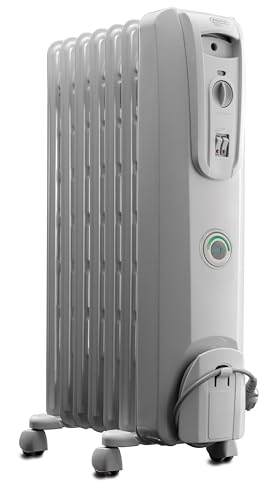
Oil-filled radiators suit occupied bedrooms, offices, and small living areas where quiet, steady heat matters. Garages, workshops, bathrooms, and whole-home heating need a model specifically approved for that setting plus suitable local conditions; a portable indoor radiator isn’t automatically the right tool for a damp room, dusty workspace, or large building.
 Winter Heating Bill CutterSee what every heater in your home really costs, heat the rooms you use, and cut the waste in 30 days.Cost-per-hour tables for every heaterThermostat schedule and draft-proofing planRunning-cost and bill calculator (Excel)
Use It Without Creating A Fire Risk
Yes, portable oil-filled radiators are generally safe when you use them as listed, but the hot fins, high electrical load, and nearby fabric still create fire risks. Plug the heater directly into a wall outlet—never an extension cord or power strip—and don’t use it with a damaged cord or plug.
After unplugging it and letting it cool, wipe dust from the exterior with a dry or slightly damp cloth as the manual permits. The oil reservoir is factory sealed, so don’t open the heater or try to add oil.
Run This Checklist Before Use
Choose an oil-filled radiator for quiet, steady supplemental heat; choose a fan heater for faster spot heating, and use a professionally sized primary system for whole-home heating. Match the heater’s wattage to the room and remember that the thermostat limits runtime—it doesn’t make an oversized heater safe in a cramped space.
You don’t put oil in an oil-filled radiator: its heat-transfer oil is factory sealed, and a missing or leaking charge means product failure, not a refill job. The heater does need electricity because resistance elements heat the sealed oil and metal fins; without power, there is no heat.
Replacing a thermostat in a complex oil-filled radiator is a service repair, not a sensible do-it-yourself adjustment. Stop using the unit for a failed control, damaged cord, oil leak, repeated breaker trip, or hot wall outlet; never bypass a safety switch or install an improvised thermostat.