


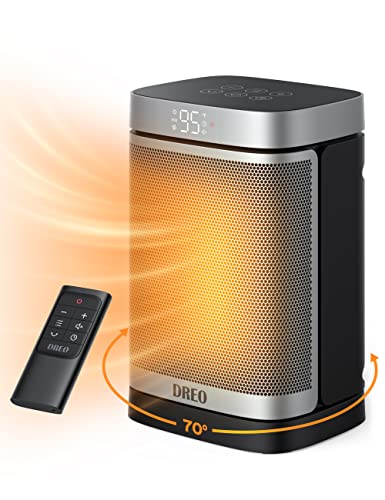


Silent space heaters deliver warmth without the distracting hum or buzz common in many models. The Dreo Quiet Space Heater combines advanced fan design and digital controls to heat rooms quietly and evenly, making it a top choice for bedrooms and workspaces.
Many buyers mistakenly assume fanless models are always quieter and better, but this often means sacrificing heat distribution and speed. Choosing the right heater means balancing noise, heating performance, safety, and features.
Silent Space Heater Comparison
| Model | Best for | Heat Output (W) | Noise Level (dB) | Safety Features | Oscillation | Price |
|---|---|---|---|---|---|---|
| DREO Quiet Space Heater 1500W Remote | Top Quiet Performer | 1500 | 34 | Child-lock, tip-over, overheat protection, flame retardant | 70° | Check price on Amazon |
| DREO Atom One Space Heater 1500W | Energy Saver | 1500 | 37.5 | Tip-over, overheat protection, flame retardant | 70° | Check price on Amazon |
| DREO Portable Space Heater 1500W Thermostat | Precise Control | 1500 | 34 | Tilt detection, overheat protection, flame retardant | — | Check price on Amazon |
| DREO Space Heater 1500W Remote Control | Remote Convenience | 1500 | 34 | Tip-over, overheat protection, flame retardant | — | Check price on Amazon |
| ASNUG Portable 500W PTC Ceramic Heater | Compact & Quiet | 500 | — | Tip-over & overheat protection, flame retardant | — | Check price on Amazon |
Best Silent Space Heaters Tested for Quiet, Efficient Warmth
DREO Quiet Space Heater 1500W Remote
DREO Atom One Space Heater 1500W
DREO Portable Space Heater 1500W Thermostat
DREO Space Heater 1500W Remote Control
ASNUG Portable 500W PTC Ceramic Heater
Quiet Levels That Define a Silent Space Heater
Quiet space heaters range from about 20 to 56 decibels, depending on model and settings. For context, typical indoor background noise sits between 25 and 40 decibels, so the quietest heaters are near or below that level. Fanless models generally produce the lowest noise but may not spread heat as evenly as those with fans.
Fanless heaters can be as quiet as 20 dBA, but they often sacrifice heat distribution and overall room-warming power. To keep noise low while maintaining performance, many quiet models use low-noise fans with brushless DC motors and aerodynamic blades. These design choices reduce fan noise to about 34 dBA, barely louder than a whisper and below typical conversation levels.
Oscillation adds some noise—usually a slight mechanical hum—but it’s a trade-off that spreads warmth more evenly, reducing cold spots in the room. So, a heater that oscillates quietly around 34 dBA can be a smart choice if you want consistent heat without sacrificing silence.
If you’re considering a diesel heater for indoor use, know that ‘silent’ doesn’t really apply. Diesel heaters generate combustion noise and require venting that makes them unsuitable for quiet, enclosed living spaces. Stick with electric models if silence is your priority.
Choosing the Right Silent Space Heater for Your Room Size
The best silent space heater depends on your room size. For small personal spaces up to about 100 square feet—a typical bedroom or office desk area—a 500-watt model usually suffices. It provides enough warmth without wasting energy or creating excess noise.
Room size guides heater wattage: roughly 10 watts per square foot for average insulation. A 150 sq ft room needs about 1,500 watts. Larger rooms require more power or multiple units for even warmth. Match heater capacity to room size to avoid under- or overheating.
Oscillation plays a key role in spreading warmth to corners and reducing cold spots, especially in larger rooms. A quiet heater with oscillation combines even heat coverage and low noise, essential for living rooms or open office spaces.
Room insulation and drafts affect heater sizing too. A poorly insulated or drafty room may need more than the typical wattage for its size or require supplemental heating. If your space leaks cold air, a 1,500-watt heater might have to work harder to keep you warm quietly.
Choosing the right heater for your room size balances heat output and noise. Smaller rooms benefit from lower wattage, quieter units, while larger spaces need more power and fan features to avoid cold corners without making too much noise.
For detailed picks by room size and quiet heating performance, see our guide to Best Quiet Space Heaters.
Essential Safety Features in Silent Space Heaters
Space heaters can be safely left on overnight only if they have the right safety features and you follow the manufacturer’s instructions closely.
Look first for safety certifications like UL or ETL, which show the heater has passed rigorous testing for fire and electric shock risks.
Look for heaters with tip-over switches and overheat protection; these are standard on top-rated models. A digital thermostat improves temperature control and energy use. Child locks and cool-touch exteriors add safety in homes with kids. Confirm the heater has a UL, ETL, or CSA safety listing.
Overheat protection is critical. It shuts off the heater automatically if internal parts get too hot, reducing fire risk if vents become blocked or dust accumulates.
Cool-touch exteriors reduce burn risk when you accidentally brush or touch the heater while it’s running. This is a key feature for anyone worried about curious kids or tight spaces.
Child locks and flame-retardant materials add extra layers of safety in family settings. Child locks prevent accidental button presses, while flame-retardant housing helps contain any electrical faults.
Impact of Oscillation and Fan Design on Noise and Heat
Oscillation moves warm air around, which helps heat spread evenly but can increase noise slightly. Fans boost heat distribution but raise sound levels compared to fanless units. When quiet is a priority, low-speed fans or fanless designs reduce noise at the cost of slower or less even heating.
Heaters with about 70° oscillation usually use a fan to move air, and that fan adds 2 to 5 dB of noise compared to non-oscillating models. Good designs keep that noise low enough to remain quiet by most standards.
Brushless DC motors paired with winglet or aerodynamic fan blades reduce airflow noise significantly. These components run smoothly and quietly, so the heater maintains low noise even when oscillating.
Fanless heaters avoid fan noise altogether, offering near-silent operation. The trade-off is slower, less even heating since they rely on direct radiant or convection heat without air circulation.
If you want absolute silence and don’t mind slower warming, a fanless heater is a strong choice. But if even warmth throughout a room matters more, oscillation with a quiet fan is worth the slight noise increase.
Maintenance Practices for Quiet and Safe Heater Operation
Keep heaters clean and dust-free to maintain quiet operation and prevent overheating. Check vents and fan blades regularly. Tighten any loose parts that might rattle. Replace worn-out filters if your heater has one. Regular maintenance extends heater life and keeps noise down.
A quick dusting or vacuuming with a soft brush attachment every few weeks can prevent that. Dust on ceramic elements or radiator fins acts like insulation, reducing heat transfer and forcing the heater to run harder and louder. Clean these parts gently with a dry cloth or a soft brush to avoid damage.
Check power cords and plugs often for cracks, fraying, or other signs of wear. Damaged cords can cause electrical risks and may produce noises like buzzing or clicking due to intermittent power flow. Replace damaged cords or have a qualified technician repair them promptly.
Some heaters have filters or replaceable parts to keep the airflow and heating efficient. Follow the manufacturer’s instructions closely on how often to clean or replace these. Skipping this step might make the heater louder and shorten its lifespan.
Never block the heater’s air intake or outlet. Restricted airflow causes the heater to overheat, which can trigger the overheat protection repeatedly and increase noise from fans running at higher speeds. Keep at least a few feet clearance clear and avoid placing objects directly in front or behind the unit.
More Questions, Answered
What makes a space heater operate silently?
Are all fan-forced heaters inherently noisy?
Which heater type is the most quiet for bedrooms?
Do silent heaters compromise on heating efficacy?
Can space heaters be safely left on overnight?
How does heater noise compare to typical household background noise?

I am a mechanical engineer and love doing research on different home and outdoor heating options. When I am not working, I love spending time with my family and friends. I also enjoy blogging about my findings and helping others to find the best heating options for their needs.
Related guides

Space Heater Stoves Explained: Fireplace Feel Without Fire
What's the right space heater stove for you? Get expert insights to make a safe, efficient choice this…
Multi-Color LED Flame TV Stand & Space Heater Combo
Warm your space while watching TV? This multi color LED flame TV stand doubles as a cozy space…
Vornado Baby Heater Review: Gentle Heat for Nurseries?
Which heater truly keeps your baby safe? Compare the top Vornado baby space heater options for the perfect…