A sensor stat thermostat temperature override is a way to ignore or adjust a thermostat’s sensor reading when the room temperature is wrong, the sensor is out of place, or the control needs a temporary hold. An infrared heater is a heater that warms objects and people directly rather than the air.
A bad reading usually comes from placement, a weak battery, a drifting sensor, or a thermostat that is sampling the wrong room. The fix depends on which part failed, because a thermostat can only control what it can measure.
In plain terms, the sensor tells the stat what the room feels like, and the stat decides whether to call for heat or cooling. If the reading is wrong, the equipment can short-cycle, run too long, or leave the room cold enough to make you question the whole purchase.
Sensor Stat Thermostat Temperature Override
A sensor stat thermostat temperature override lets you temporarily hold a setting, apply a temperature offset, or tell the thermostat to use a different sensor, depending on the model. If the thermostat seems wrong, it can only control the system using the temperature it senses or is told to use; a bad sensor, poor placement, low battery, or the wrong room selected as the reference can all skew that input.
So what if the sensor and thermostat are good? The system may be responding correctly to a reading that doesn’t match the room where you’re standing. Check the displayed temperature against a separate thermometer placed nearby, then confirm which sensor or room the thermostat is using. A faulty thermostat or temperature sensor is one possible cause, but bad data or settings can look much the same.
Sensor reading
Likely cause
Practical fix
Too low or too high compared with the room
Sensor near a window, vent, lamp, or draft
Move the thermostat or sensor if the model allows it; see placement causes in the next section.
Reading changes or display behaves erratically
Low battery or power issue
Check the thermostat’s power and replace its batteries if it uses them.
Thermostat reading is plausible, but the wrong room feels uncomfortable
A different room’s sensor is selected as the reference
Check the active sensor or room setting in the thermostat controls.
Reading remains far off after placement and power checks
Sensor or thermostat fault is possible
Use the manufacturer’s troubleshooting instructions or arrange service.
A reading mismatch is a clue, not proof that the thermostat has failed.
Myth
If the temperature is wrong, the thermostat is broken.
Fact
The thermostat may be working as designed while receiving a misleading sensor reading or using the wrong room as its reference. Check the input before assuming the control itself has failed.
In short
An override changes what the thermostat holds or which temperature input it follows; it doesn’t repair a faulty sensor. For the controls and limits of a manual hold, see thermostat override.
Where The Reading Goes Wrong
A thermostat or remote sensor can read the room incorrectly because of its location, a power problem, or a sensor fault; those errors can make heating stop too soon or run longer than needed. To calibrate a thermostat temperature sensor, compare it with a reliable thermometer near the sensor, then use the thermostat’s calibration or temperature-offset setting if it offers one. For an HME A/C thermostat, check its model instructions for the specific menu path; the controls aren’t universal.
A window, draft, or exterior wall can make a sensor read colder than the occupied room, prompting longer heating. A supply register can wash it with warm air and make the system stop early. Lamps and kitchen heat can also skew a nearby reading. Smart thermostats and remote sensors may misbehave when their battery is low or their power supply is interrupted; if a sensor uses replaceable batteries, try fresh ones first.
A Reading 2°F Low
Say the room is actually at 68°F, but the thermostat reports 66°F. If it’s set to 68°F, the thermostat still senses a 2°F shortfall and may keep calling for heat until its sensor reaches the target. The system can run longer than it should for the actual room temperature.
Actual room temperature68°F
Thermostat reading66°F
Difference2°F low
Calibration is a small offset for a consistent, modest mismatch, not a cure for a failing sensor. Recalibrating repeatedly without finding the cause is usually a waste of time; the reading may drift again as soon as the same draft or power problem returns.
Check Before Adjusting
Don’t use a large offset to hide a sensor that gives inconsistent readings. Check placement and power first, and follow the thermostat maker’s instructions before changing calibration.
How To Override Without Breaking The System
To calibrate a thermostat sensor, compare its reading with a reliable thermometer nearby, then adjust the temperature offset using the thermostat’s manual; replace a weak battery before changing settings. A manual override usually means selecting a temporary hold or adjusting the setpoint until the next schedule change. That’s safer than digging through settings and changing several things at once.
1
Replace the battery
Use the battery type and polarity shown in the manual. If the thermostat is hardwired, check whether it has backup batteries; don’t assume every model uses them.
2
Check placement
Make sure the thermostat isn’t getting a draft or direct sun. A heating system can still overrun if the thermostat is on the wrong wall, so an override is a patch, not a cure.
3
Adjust the offset
If the reading is consistently off, change the calibration offset a little at a time, following the manual. Wait for the room temperature to respond before judging the change.
4
Use a temporary hold
Choose Hold or the equivalent control, set the temperature you need, and check when the hold ends. If you need heat briefly while sorting out the thermostat, a separate room heater can warm the room without changing the main system.
For a small room while you troubleshoot
R.W.FLAME Small Space Heaters for Indoor Use
Its built-in thermostat and timer let you control temporary heat in a bedroom or office, with tip-over and overheat protection. It won’t fix the main thermostat; plug it directly into a wall outlet and keep 3 feet of clearance.
Write down the original offset and schedule settings before changing them. If the adjustment makes things worse, you’ll know what to restore.
From HeaterGuides · our own guideWinter Heating Bill CutterSee what every heater in your home really costs, heat the rooms you use, and cut the waste in 30 days.Cost-per-hour tables for every heaterThermostat schedule and draft-proofing planRunning-cost and bill calculator (Excel)$14.99$9.99Get it for $9.99See what's inside and watch the 2-minute video →14-page printable PDF + Excel calculator · instant download · 30-day refund
Sensors In Other Rooms And Whole-Home Comfort
A thermostat with sensors in other rooms can help balance a house where upstairs bedrooms or a far room always lag behind. Home thermostat multiple sensor locations can be useful when the system uses readings from occupied rooms, but averaging can hide a problem if one room is much hotter or colder than the rest.
Bedrooms, family rooms, and occupied offices are usually useful sensor locations. Bathrooms, kitchens, and sunny spaces are poor choices because showers, cooking, and direct sun can skew readings. A room-by-room setup can reduce the need to overheat one room just to get another comfortable.
Control
How it works
Best fit
Single-sensor
Uses the thermostat’s built-in reading.
A home that stays fairly even.
Multi-sensor
Uses readings from selected rooms; some systems average them or prioritize a room.
Uneven temperatures in rooms you use.
Manual override
Holds or changes the setpoint without adding another room reading.
A temporary adjustment while you troubleshoot.
Check your thermostat’s manual: sensor selection and averaging behavior vary by model.
Smart thermostat sensor failure reviews can point to recurring complaints, but a review alone can’t tell you whether a sensor is defective. Check its battery and connection, compare its reading with a thermometer, and confirm in the manual which rooms the thermostat is using.
In short
Add remote sensors for rooms you occupy that consistently run too warm or too cold. If one room is far off, investigate that room’s heat flow instead of letting an average disguise it.
What To Do Next
If your smart thermostat says “unable to load temperature sensor,” it usually can’t get a usable reading from that sensor because of a pairing, power, wiring, or sensor fault. For space heater thermostat sensor problems, first check whether the heater’s sensor is blocked or sitting in a warm pocket near the heater; then check power, compare readings, and only then adjust the setting.
1
Check placement
Make sure the thermostat or remote sensor isn’t in direct sun, beside a heat source, or covered by furniture or curtains. For a space heater, keep its intake and built-in sensor unobstructed; don’t move the heater closer to solve a room-reading problem.
2
Check power or battery
Confirm the thermostat has power and replace a weak battery if the model uses one. For a wireless sensor, check that it’s paired and within the system’s supported range.
3
Compare temperatures
Place a separate thermometer near the sensor, away from drafts and heat sources, and give both readings time to settle. A large difference points to placement or a sensor fault, not a reason to keep turning the setpoint up.
4
Apply a small offset
If readings differ consistently and your thermostat supports calibration, use its manual to set a small temperature offset. Don’t guess at wiring or force a sensor override the controls don’t offer.
If A Sensor Load Error Persists
Inspect accessible wiring for loose connections or visible damage; check wireless pairing.
Replace the sensor battery if applicable, then follow the manual’s reset or recovery steps until the fault clears.
Stop And Call For Service
Repeated sensor faults on a hardwired system, damaged wiring, or a thermostat that won’t hold settings need a qualified technician. Don’t open or rewire the thermostat while it’s powered.
Choose The Right Fix
Bedrooms and offices are good candidates for a remote sensor or careful override because their comfort needs are specific. A large, leaky room often needs a different heater or a better-controlled heating zone; a thermostat offset can’t fix heat escaping through the walls.
Frequently Asked Questions
What does sensor stat thermostat temperature override mean?
It means changing how the thermostat responds to a temperature sensor, such as setting a temporary hold, correcting a reading offset, or choosing another sensor. The exact options depend on the thermostat model.
How do you calibrate a thermostat temperature sensor?
First, let a reliable thermometer and the thermostat sit near each other long enough to stabilize, away from sunlight, vents, and exterior walls. If their readings differ consistently, use the thermostat’s temperature offset setting; don’t change the offset to compensate for a sensor that gives erratic readings.
Why does my smart thermostat say unable to load temperature sensor?
That message usually means the thermostat can’t retrieve a valid reading. Check that the sensor has power, is paired to the correct thermostat, and is within its supported connection range; if the message remains after reconnecting it, the sensor or thermostat may need service.
Can thermostat sensors in other rooms fix uneven heating?
They can help when the thermostat is in a room that reaches the set temperature before the rooms you use. A sensor can guide heating toward a selected room, but it won’t correct blocked ducts, poor airflow, or an undersized heating system.
Before you go · a welcome giftGet the Winter Heating Bill Cutter for $4.99See what every heater in your home really costs, heat the rooms you use, and cut the waste in 30 days. Normally $14.99; your welcome price saves $10.00. We'll email your link right now.One email with your link now. We never share your address.

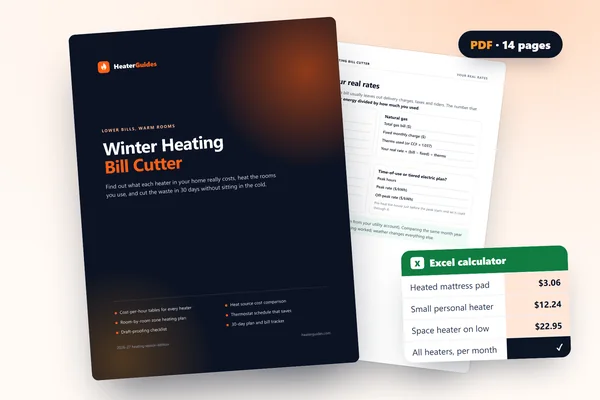 Winter Heating Bill CutterSee what every heater in your home really costs, heat the rooms you use, and cut the waste in 30 days.Cost-per-hour tables for every heaterThermostat schedule and draft-proofing planRunning-cost and bill calculator (Excel)