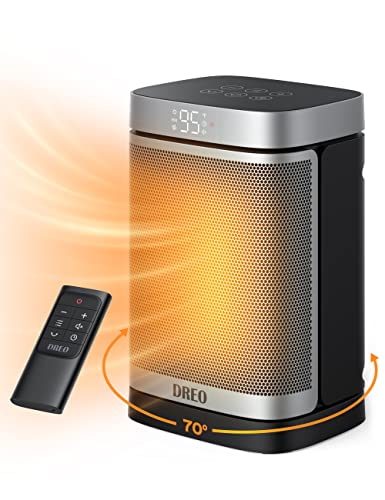
For most readers, the best safe indoor space heater is the DREO Space Heaters for Indoor Use because it pairs 1500W ceramic heat with ETL-listed safety, tip-over and overheat protection, 70° oscillation, and quiet operation. If you want one heater that covers a bedroom or office without fuss, that’s the cleanest place to start.
The most common mistake is buying by wattage alone and ignoring the outlet, clearance, and safety listing. A 1,500 W heater on a bad cord or buried under a desk can cost you a tripped breaker, a melted plug, or a very annoying conversation with the smoke alarm.
The second mistake is shopping for a “non-electric” heater indoors without checking whether it actually belongs inside. Outdoor propane heaters, patio torpedoes, and construction heaters are the wrong tools for a bedroom, and the cheapest mistake there is still a bad one.
Best Safe Indoor Space Heaters
#1Best Overall
DREO 1500W Oscillating Heater
Best for Bedrooms, living rooms, and offices where quiet, circulating heat matters
For most rooms, this is the strongest fit: it combines 1500W ceramic heat with ETL-certified safety, including tip-over and overheat protection. Its 70° oscillation spreads warmth across more of the room, while 34 dB operation suits work or sleep.
Heat output 1500WSafety ETL-certified; tip-over and overheat protectionOscillation 70°Noise 34 dBTimer 12-hour timer; 24-hour automatic power off
Why it made the cut
ETL-certified safety features include tip-over and overheat protection
70° oscillation and quiet 34 dB operation
ECO mode adjusts between 1000W and 1500W
Good to know
No specific room-size figure is provided
The 12-hour timer is shorter than the 24-hour automatic power-off feature
Skip it if Skip it if you need a heater with a stated square-foot coverage figure.
Best for Bedrooms or offices where quiet heat and a thermostat matter
The brushless DC motor and 9-blade design are specified for quieter airflow, with noise rated as low as 37.5 dB. A thermostat adjustable from 41 to 95°F and 70° oscillation make it a useful pick when you want to set a temperature and spread heat around the room.
Heat output Up to 1500WSafety ETL-listed; tip-over and overheat protectionThermostat 41 to 95°F; 1°F incrementsOscillation 70°Noise As low as 37.5 dB
Why it made the cut
ETL-listed protection includes tip-over and overheat protection
Thermostat adjusts from 41 to 95°F in 1°F increments
70° oscillation and 5 modes
Good to know
The product data gives no specific room-size coverage
Noise is rated at 37.5 dB, louder than product 5’s stated 34 dB
Skip it if Choose another model if you need a stated room-size rating or the quietest listed option.
Best for Small offices and bedrooms up to 200 sq ft
A stated coverage of up to 200 sq ft gives you a clearer sizing guide than several competing picks here. It also includes ETL certification, tip-over and overheat shutoff, and a child lock, which can help in a household where small hands or paws might reach the controls.
Heat output 1500WRoom coverage Up to 200 sq ftSafety ETL-certified; overheat and 45° tip-over shutoffTimer 24 hoursNoise 35 dB
Why it made the cut
Rated for spaces up to 200 sq ft
ETL-certified with overheat and 45° tip-over shutoff
Remote control, child lock, and 24-hour timer
Good to know
45° tip-over shutoff is narrower than the 70° oscillation offered by some other picks
The advertised 20% energy savings in ECO mode is compared with traditional heaters, without further calculation details
Skip it if Skip it if you want wider oscillation or a model with a stated thermostat range.
Best for Small rooms where you also want a cool-air fan mode
This heater offers 1500W and 750W settings plus a cool-air fan, so it can serve beyond heating season. Its thermostat cycles the heater to maintain a preset temperature, and the product data lists both overheat and tip-over shutoff.
Heat output 1500W / 750WRoom coverage Up to 200 sq ftSafety Overheat and tip-over protectionControls Automatic thermostatCord Six feet
Why it made the cut
Two heat settings and a cool-air fan mode
Thermostat control and tip-over and overheat shutoff
Coverage listed up to 200 sq ft
Good to know
No certification is stated in the product data
The product data does not give a noise figure
Skip it if Choose a different model if an ETL, UL, or CSA listing is a deciding requirement.
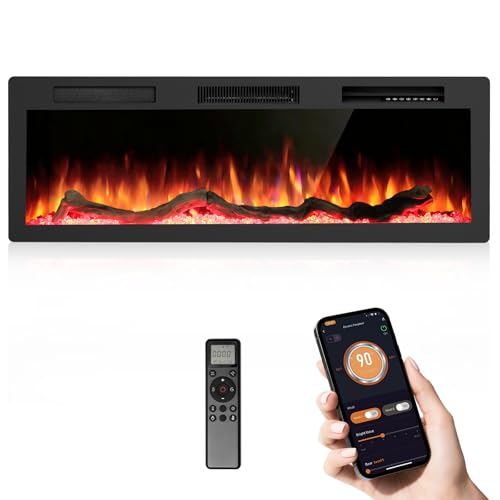
Best for Rooms up to 400 sq ft where you want a wall-mounted or recessed fireplace
This is the only pick here designed for wall mounting or recessed installation, with supplemental heating listed for up to 400 sq ft. It offers 750W and 1500W heat modes, plus remote, touch, smartphone, and Alexa control; choose it for a fireplace feature as well as heat.
Size 50 inchesHeat output 750W / 1500WRoom coverage Up to 400 sq ftTemperature range 59 to 95°FInstallation Wall-mounted or recessed
Why it made the cut
Supplemental heating listed for up to 400 sq ft
Wall-mounted or recessed installation
Two heat modes and several control options
Good to know
Requires wall-mounted or recessed installation rather than simple portable placement
The product data does not list safety protections or a certification
Skip it if Skip it if you need a portable heater or require documented tip-over and overheat protection.
For most homes, the safest indoor space heater is an ETL- or UL-listed 1,500 W electric ceramic model with tip-over and overheat shutoff. Safe indoor space heaters should also have a thermostat you can set, a stable base, and a cord that reaches a wall outlet without an extension cord.
A standard 15 A, 120 V circuit supplies 1,800 W in theory, but a 1,500 W heater draws about 12.5 A on its own. That leaves little room for other loads on the same circuit; avoid running another high-wattage appliance there. The 1,500 W limit is why shopping for the “most powerful” plug-in heater usually leads to more marketing than more heat.
Specs Worth Checking
A UL or ETL listing means the heater was evaluated to applicable safety standards; confirm the mark on the unit or its label.
Tip-over shutoff cuts power if the heater falls, and overheat protection shuts it down if temperatures get too high. Both are core portable heater safety features.
A thermostat should let you set a target temperature and cycle the element; a timer is useful for limiting run time, but it doesn’t replace supervision.
Oscillation spreads warm air across more of the room. Check the cord length against your outlet location, and plug the heater directly into a wall outlet.
Quiet operation helps you hear unusual sounds and keeps the fan from grating on everyone in the room. It’s useful, not a safety certification.
A Different Kind Of Electric Heat
Oil-filled electric radiators can be a good choice for steady heat. The oil stores heat, so the radiator’s surface stays hot for a while after the element cycles off; keep the same clearance around it as the manual requires.
From HeaterGuides · our own guidePage 8 is the room-by-room draft hunt; page 9 lists 25 cheap fixes.Winter Heating Bill CutterSee what every heater in your home really costs, heat the rooms you use, and cut the waste in 30 days.Cost-per-hour tables for every heaterThermostat schedule and draft-proofing planRunning-cost and bill calculator (Excel)$14.99$9.99Get it for $9.99See what's inside and watch the 2-minute video →14-page printable PDF + Excel calculator · instant download · 30-day refund
Which Room Size Matches Each Heater
A small room needs a different heater than a drafty basement or open living room. For a desk or compact room, the R.W.FLAME Small Space Heaters for Indoor Use and GiveBest portable heater are the smaller-room picks; DREO’s portable heater and DREO’s 1,500 W thermostat model suit larger rooms, while the R.W.FLAME 50-inch electric fireplace is the decor-first option for broader supplemental heat.
The best small indoor space heater is usually a compact ceramic model aimed where you sit. For a larger room, oscillation helps move warm air around; a fixed heater makes more sense for one chair, one desk, or one side of a bed. The safest electric space heater for home use still needs the basics: a safety listing, tip-over and overheat protection, and direct connection to a wall outlet.
A Cold 200 Sq Ft Office
Say your 200 sq ft office feels cold at the far end. Choose a heater with oscillation and thermostat control so it can distribute warmth and cycle toward a set temperature; a flashy flame effect won’t fix uneven coverage. Among these picks, the DREO models are the better fit for a larger room.
Room200 sq ft office
Look forOscillation and thermostat control
Less useful hereFlame effect alone
Once you reach 1,500 W, “most powerful indoor space heater” is usually the wrong search: coverage and control matter more than extra wattage. Ceramic models are practical for directed, fan-assisted heat; an infrared heater can suit a person or spot, but check its listed coverage and safety features rather than choosing by heater type alone. Search results for small space heaters indoor Walmart don’t change those checks.
Match Heat To The Room
For a bedroom or office, choose control and coverage over appearance. If you want a wider look at indoor models before buying, compare safe room heater picks.
What Safe Indoor Non Electric Means
A safe indoor non electric heater is usually a permanently installed appliance designed for indoor use and vented correctly, such as a wood or pellet stove or a code-compliant vented gas heater installed by a professional. For a portable option, propane heater safety depends on the exact model: use indoors only if the manufacturer rates it for indoor use, follow its ventilation instructions, and keep a working carbon monoxide alarm nearby.
The safest indoor non electric heater depends on the fuel and installation. Outdoor propane heaters stay outdoors; a patio heater or camping heater isn’t made safe by moving it into a hallway. If you want heat without plugging in, think about a properly installed appliance, not an outdoor unit brought inside.
Check the fuel and the room
Vent-free gas heaters are banned or restricted in some states and cities, so check local code before buying. Kerosene heaters require strict ventilation and a working CO alarm; burn 1-K kerosene only, never gasoline.
What “non-electric” can mean
A fuel-burning heater may still need electricity for a fan or controls, depending on the model. Check the manual before assuming it will run during a power outage.
Myth
A propane heater is safe indoors only when it is specifically designed for indoor use, equipped with an oxygen depletion sensor, and used with proper ventilation and a working carbon monoxide alarm. Simply opening a window is not enough to ensure safety.
Fact
No. Only use a propane heater indoors if the model is specifically rated for indoor use, and follow its manual’s ventilation requirements. An open window does not make an outdoor heater suitable for a room.
If you need a heater you can plug in and use today, electric is the safer answer for most homes. Indoor-rated combustion appliances need the right venting, fuel, installation and local-code approval; that’s more than a quick swap before the cold snap.
How Much Power And Money It Takes
A 1,500 W electric heater costs about $2.04 to run for eight hours at 17 cents per kWh, making electricity the most economical method for targeted heat when you warm one occupied room instead of the whole house. For economical safe space heaters indoors, run time and room heat loss matter more than a small difference in heater design.
The arithmetic is 1.5 kW × 8 hours = 12 kWh; 12 × $0.17 = $2.04. At the point of use, electric resistance heat is close to 100% efficient: nearly all the electricity becomes heat in the room. Your bill depends on how often the thermostat cycles the heater, how well the room holds heat, and how accurately the thermostat reads the temperature.
Heater
Watts
Per hour
Per day (8 h)
Per month (30 days)
1,500 W space heater
1,500 W
26¢
$2.04
$61.20
100 W heated blanket
100 W
1.7¢
14¢
$4.08
Calculated at 17¢ per kWh. Example assumes eight hours of use each day for 30 days and electricity at $0.17 per kWh. A blanket can use less power for one person in one chair because it heats the person directly, not the room.
Set expectations for controls
ECO mode and a decent thermostat can cut run time by cycling the heater off when the room reaches its set temperature. They don’t turn a 1,500 W heater into a low-power appliance while it’s heating.
Searches for a solar powered indoor space heater or battery operated space heater for indoor use usually point to the wrong tool for whole-room heat: stored electricity doesn’t change the energy needed to warm a room, and batteries have limited capacity. The best non-drying portable electric space heater still uses resistance heat; if dry-feeling air bothers you, lower the setpoint and add humidity with a separate humidifier rather than expecting a heater type to add moisture.
Why Space Heaters Start Fires
Space heaters become dangerous when they sit too close to fabric, run on bad wiring, tip over, or keep running when no one is there to notice a problem. The safest indoor space heaters reduce some risks with automatic shutoffs, but safe indoor use still depends on where and how you run the heater.
Keep at least 3 feet between the heater and curtains, bedding, paper, furniture, or anything else that can burn. Fabric can fall against a heater, and nearby items can heat up even without touching it. Give the air outlet room, too.
Plug Into The Wall
Plug an electric heater straight into a wall outlet, never an extension cord or power strip. A heater draws substantial current, and a thin or damaged cord can heat up at its connections or along the cord. Stop using a plug or outlet that feels hot, smells burnt, or looks discolored.
Safety Controls To Look For
Overheat shutoff that cuts power if the heater gets too hot
Tip-over shutoff that turns it off if it falls
Child lock if children or pets can reach the controls
A timer or automatic shutoff for a set run time
Portable heater safety also means staying close enough to notice trouble. Sleep with a heater on only if the manufacturer says that specific model is designed for unattended use; otherwise, turn it off before bed. A bedroom heater isn’t a nightlight with ambitions.
Make A Clear Spot
Set the heater on a stable, level floor where it can’t be bumped, and keep its cord out of walkways. Don’t drape clothes over it or use it to dry bedding.
What To Buy If You Want Quiet Heat
For the quietest practical whole-room supplemental heat among these picks, start with Product 3 or Product 5; Product 1 suits smaller spaces, while Product 4 is the budget-oriented option. If you’re comparing indoor space heaters at Walmart, check the exact model’s controls and safety listing rather than relying on the store name or a quietness claim.
In a bedroom or office, a remote, timer, and thermostat are more useful day to day than decorative extras: you can adjust heat without getting up, set a run time, and let the thermostat regulate operation. A quiet heater is easier to live with, but silence alone doesn’t make it safer; certification and shutoffs do that work.
Pick
Best fit
Why it stands out
Product 3
Quieter whole-room supplemental heat
One of the strongest choices for comfort and control
Product 5
Quieter whole-room supplemental heat
Another strong option for regular room use
Product 1
Smaller spaces
A strong all-around choice when you don’t need wider coverage
Product 4
Budget-conscious buyers
A simpler option if you don’t need extra controls
Product 2
A living room with a planned wall feature
Makes sense when you want heat and a built-in visual centerpiece
Compare the exact model’s included features before choosing; the product names alone don’t confirm every control.
For safe indoor electric space heaters, choose oscillation for wider coverage and a fixed unit for personal heat near a desk or chair. Choose the electric fireplace only if a wall recess or living room layout already calls for one; it isn’t the simplest safe heater for a desk or bedside table.
Best fit
Product 3 or 5 for quieter supplemental heat across a room
Product 1 for smaller spaces
Product 4 if you want the budget-oriented pick
Choose something else if
A fireplace adds a large visual feature when you only need desk-side heat
A quiet sound profile doesn’t replace safety certification or shutoffs
The safest space heaters for indoor use are the ones that match your room and have the safety features you need; compare the model details before buying, including when shopping for indoor space heaters at Walmart. For more options, see indoor heaters for cozy comfort.
More Questions, Answered
What are the safest types of indoor space heaters?
For portable heat, choose an electric heater listed by ETL, UL, or CSA with tip-over and overheat protection. A permanently installed, properly vented heater can also be safe when it’s approved for indoor use and installed to code.
Are non-electric heaters safe for indoor use?
Some are, but the model must be specifically rated for indoor use and installed or operated as its manual and local code require. Fuel-burning heaters need the specified ventilation and a working carbon monoxide alarm; outdoor and construction heaters don’t belong indoors.
Is a propane heater safe indoors?
Only use a propane heater indoors if its manufacturer explicitly rates that model for indoor use and it has an oxygen depletion sensor. Follow the manual’s ventilation requirements and use a working carbon monoxide alarm; never bring a patio or outdoor propane heater inside.
What makes a space heater dangerous?
Fire risk rises when a heater is near curtains, bedding, or furniture, or when it tips over or runs through damaged wiring. Plug electric heaters directly into a wall outlet, keep at least 3 feet of clearance, and turn them off when you leave the room or go to sleep unless the manufacturer says the model is designed for unattended use.
What size space heater do I need for a bedroom?
Match the heater to the room’s area and insulation, not just its label: measure the bedroom’s length and width, then check the model’s stated coverage. A drafty room or high ceiling may need more heat than a compact, well-insulated bedroom of the same floor area.
How much does a 1,500 W space heater cost to run?
At 17 cents per kWh, a 1,500 W heater running for eight hours uses 1.5 × 8 = 12 kWh and costs about $2.04. Your actual bill depends on your electricity rate and how long the heater’s thermostat keeps it heating.
Can I use a space heater with an extension cord?
No. Plug an electric space heater directly into a wall outlet, never an extension cord or power strip; the high current can overheat wiring and connections.
Before you go · a welcome giftGet the Winter Heating Bill Cutter for $4.99See what every heater in your home really costs, heat the rooms you use, and cut the waste in 30 days. Normally $14.99; your welcome price saves $10.00. We'll email your link right now.or buy it now for $9.99 without the gift →One email with your link now. We never share your address.




 Winter Heating Bill CutterSee what every heater in your home really costs, heat the rooms you use, and cut the waste in 30 days.Cost-per-hour tables for every heaterThermostat schedule and draft-proofing planRunning-cost and bill calculator (Excel)