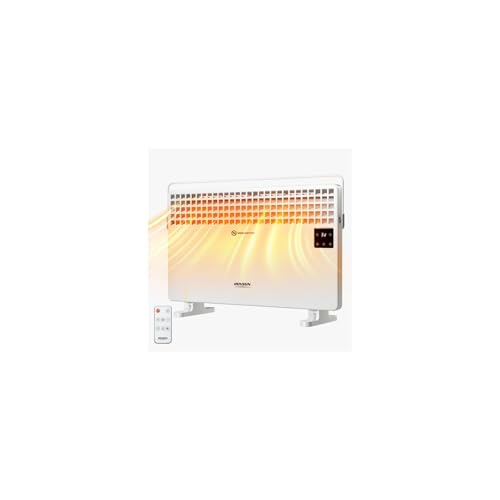
Panel Space Heaters Reviewed: Slim, Silent Heating for Modern Rooms
Joye
Updated October 10, 2026 20 min read
Straight answer
The best panel space heater for most readers is the DeLonghi Mica Panel Space Heater because it combines 1,500 W output, quiet heat, wall-mount or freestanding use, and built-in tip-over and thermal shutoff protection. If you want a simple, dependable panel heater for a bedroom, office, or medium living room, that’s the one to beat.
A half-true belief hangs around these heaters: panel models do run quietly and give steady warmth, but they only save money when you use them to heat one room instead of cranking up the whole house. The quiet part is true; the bill part depends on how you run it.
Smart controls, timers, and the right room size matter more than shiny marketing. A 1,500 W panel heater is still a 1,500 W heater, so the real question is how well it matches your space and how often it needs to run.
Best for Medium and large rooms where quiet, even heat matters
The 1,500-watt mica panel heater delivers gentle heat with two settings and an adjustable thermostat, making it a strong fit for bedrooms, offices, and living rooms. Its slim body works freestanding or wall-mounted, while the thermal shutoff and internal tip-over switch cover the two safety problems you most want handled automatically.
Heat output 1,500 WControls Adjustable thermostat and two settingsMounting Freestanding or wall mountSafety Thermal shutoff and internal tip-over switchStandby setting Turns on below 41°F
Why it made the cut
Quiet operation that won’t stir up dust, pollen, or dander
Freestanding or wall-mounted with the included kit
Thermal shutoff and internal tip-over switch
Good to know
No remote or app control listed
Only two heat settings
Skip it if Skip it if you specifically want WiFi, Alexa control, or a remote.
Best for Large rooms up to 250 sq ft needing app and voice control
Ballu’s convection panel uses an all-aluminum heating element and an exposed temperature sensor to spread warmth quickly and maintain the set temperature. Remote, digital-panel, app, and Alexa controls suit a living room or master bedroom where you want to adjust heat from the sofa.
Heating element Hedgehog Heating Element made from aerospace-grade aluminumWarm-up Heat in 30 secondsRoom size Up to 250 sq ftControls Remote, digital panel, app, and AlexaMounting Freestanding with casters or wall-mounted
Why it made the cut
App and Alexa control alongside a remote
Freestanding casters or wall mounting
Reaches heat in 30 seconds
Good to know
Room-size claim is limited to up to 250 sq ft
Safety shutoffs aren’t listed in the product data
Skip it if Skip it if built-in tip-over and overheat protection are requirements you want confirmed before buying.
Best for Large rooms where quiet, wide-angle heat and smart scheduling matter
The mica panels provide far-infrared warmth with 180-degree coverage and a 10-second heat-up, a useful combination for broad, gentle comfort. Remote, digital-panel, app, Alexa, casters, and wall mounting give you more ways to fit the heater into a bedroom, office, apartment, or living room.
Heating type Mica panels with far-infrared warmthCoverage 180-degree panoramic heatingWarm-up 10 secondsControls Remote, digital panel, app, and AlexaMounting Portable casters or wall mount
Why it made the cut
180-degree panoramic heating
10-second heat-up
Remote, app, and Alexa controls
Good to know
Safety shutoffs aren’t listed in the product data
The product data doesn’t state a room-size limit
Skip it if Skip it if you want a clearly stated tip-over or overheat shutoff.
Best for Indoor rooms where scheduling and automatic temperature control are priorities
DREO combines a 1,500-watt X-shaped aluminum heating element with ECO mode, which adjusts power to maintain your chosen temperature. The 1–24-hour timer, memory function, LED touch panel, and backlit remote make it practical for a set routine, while IP24 protection adds resistance to dust and water splashes indoors.
Heat output 1,500 WHeating element X-shaped aluminumControls LED touch panel and backlit remoteTimer 1–24 hoursSafety Overheat protection and IP24-rated design
Why it made the cut
1–24-hour timer and memory function
ECO mode adjusts output to the room temperature
IP24-rated design and overheat protection
Good to know
The product data doesn’t state wall mounting
The color-changing ambient light may be unnecessary if you prefer a plain panel
Skip it if Skip it if wall mounting or app control is essential.
Best for Rooms up to 400 sq ft where simple remote control matters
ROVSUN offers 1,500 watts, three heat modes, and a 59–99°F adjustable temperature range for readers who want more settings than a basic panel heater. The LCD touch screen and remote are easy to use across the room, and the handle makes carrying it between rooms straightforward.
Heat output 1,500 WRoom size Up to 400 sq ftControls LCD display, touch buttons, and remoteTemperature range 59–99°FSafety Automatic shutoff when tipped over or overheated
Why it made the cut
Room-size claim up to 400 sq ft
Three heat modes and 59–99°F temperature range
Automatic shutoff for tip-over and overheating
Good to know
Operating noise is listed as less than 45 decibels, not silent
The product data doesn’t state wall mounting
Skip it if Skip it if your first priority is the quietest possible heater or smart-home control.
Orion Convector Panel Room Heater Review: What To Check First
An Orion convector panel room heater review is really asking whether a convection panel heater is worth buying for steady whole-room comfort. These heaters warm air as it passes over the heated panel, so they suit background heat in a bedroom, office, or living room better than quick spot warming at your feet.
The useful part of convection panel heaters reviews is the specification check, not the word “convector” on the box. Start with wattage, thermostat control, and placement: those three details tell you how much heat the unit can deliver, how evenly it can maintain the room, and whether it fits your wall or floor.
12.5 A
What a 1,500 W heater draws
At 120 V, a 1,500 W panel heater uses about 12.5 A. Plug it directly into a standard 15 A wall outlet, with no other heavy load on that circuit; an extension cord or power strip is the wrong shortcut.
Check
What to look for
Why it matters
Wattage
1,500 W for a full-size plug-in model
More available heat for a larger or colder room, within the circuit limit
Thermostat
Adjustable digital or mechanical control
The heater can cycle instead of running continuously once the room reaches the set temperature
Mounting
Wall-mount hardware, freestanding feet, or both
Wall mounting saves floor space; feet make seasonal or room-to-room use easier
Controls
Timer, remote control, ECO mode, or app control
Useful only if you will actually schedule or adjust the heater
Protection
Tip-over switch and overheat protection
The heater can shut down if it falls or runs too hot
Compare the specification sheet before comparing the marketing names.
Before You Buy
Confirm the heater’s wattage and the outlet circuit serving its location.
Check that the thermostat has the control range you want, rather than only low and high heat.
Decide whether the heater will live on a wall or move between rooms.
Look for a recognized safety listing such as UL, ETL, or CSA.
Plan at least 3 feet of clearance around the heater and keep it away from curtains and furniture.
A thermostat matters because convection heating takes time to circulate through the room. The control senses room temperature and cycles the heating element, while the panel’s warmth continues moving through the air. Spot heat feels faster from an infrared panel, but convection can feel more even after the room has had time to warm.
In short
Choose a convection panel when you want quiet, steady background heat and have time for the room to warm. Check wattage, thermostat control, and wall or freestanding use before you worry about WiFi features.
If you want to compare models built around this same slim, steady-heating format, see our top 5 convection panel heaters after checking the electrical load first.
Choose The Heating Style That Matches Your Room
Infrared panel heaters are more effective for fast spot warmth, while convection models usually work better for even whole-room comfort. Energy efficiency is simpler: an electric heater turns nearly all of the electricity it draws into heat, so a 1,500 W infrared panel and a 1,500 W convection panel use the same maximum power. The difference is where that heat goes and how often the thermostat cycles.
Heating style
Best fit
What you feel
Main tradeoff
Infrared or radiant
Desk, chair, or small sitting area
Direct warmth reaches your body and nearby objects quickly
The far side of the room may stay cooler
Convection
Bedroom, office, or living room
Room air gradually warms and circulates more evenly
It can feel slower when you first turn it on
Micathermic or mica
Quiet rooms needing a mix of quick and steady warmth
The panel radiates heat while warm air rises from its surface
Coverage still depends on wattage and room layout
The heating element’s wattage sets the electrical draw; the heating style changes the pattern of comfort.
Infrared heating sends radiant energy straight to people, furniture, and other solid surfaces, so a Ballu Mica Infrared Space Heater can feel warm within seconds when aimed at your chair or desk. That direct sensation is useful when you’re occupying one part of a chilly room. A radiant heater doesn’t magically warm every corner at the same speed, though; walls and air outside its line of effect may take longer.
Convection heating warms air near the panel, and that warmer air rises while cooler air moves in to replace it. The circulation takes time, but it spreads comfort across a bedroom or living room more evenly. For a room you occupy for hours, that steady pattern often matters more than the first ten seconds of heat. See our guide to how convection heating works if you want the airflow explained in more detail.
Myth
Infrared heaters always heat a room faster than convection heaters.
Fact
Infrared heaters usually win at spot heating because your body feels radiant warmth almost immediately. Convection can win for whole-room comfort because moving warm air gradually reaches more of the room. Speed depends on the job: warming one person favors infrared, while balancing a closed room favors convection.
Micathermic panels sit between those experiences. A mica surface radiates some heat outward while also warming air that rises from the panel, giving you a quicker personal sensation than a plain convection unit with more even room warming than a narrowly aimed radiant heater. The DeLonghi Mica Panel Space Heater fits this middle ground, especially if quiet operation matters; mica panels have no fan motor to add a constant whir.
Compare the thermostat, not just the wattage
A 1,500 W heater running for 8 hours can use 12 kWh; at 17 cents per kWh, that is about $2.04 for the night. A thermostat may reduce actual use by cycling the element off after the room reaches its setting, but no heating style gets free warmth. Choose infrared for the area you occupy, convection for shared room comfort, and mica when you want a quiet compromise.
Match The Heater To The Room Size And Layout
Room size comes before heater features: the Ballu Convection Space Heater is claimed for rooms up to 250 sq ft, the ROVSUN 1500W Flat Panel Heater up to 400 sq ft, and the other models need a more cautious reading of “large room” coverage. A 1,500 W panel heater can warm a reasonably insulated room, but a leaky or high-ceilinged space may need supplemental heat.
Heater
Room guidance
Ballu Convection Space Heater for Large Room With WiFi&Remo…
Up to 250 sq ft
Ballu Mica Infrared Space Heater Indoor Use,Large Room Pane…
Framed for large-room coverage; no exact area stated
ROVSUN 1500W Flat Panel Heater w/Remote Control
Up to 400 sq ft
DeLonghi Mica Panel Space Heater
Medium and large rooms
DREO Convection Panel Space Heater for Indoor Use 1500W
No room figure given; IP24 is listed
These are product claims, not guarantees for every building.
An Orion convector panel room heater review should use the same rule: don’t assign an ideal room size unless the exact Orion model gives one. Check its wattage, room guidance, and installation instructions, then compare those details with your room’s insulation and drafts. A product page’s “large room” label is a starting point, not a heat-loss calculation.
Worked Example
Say your office is 12 by 14 feet, or 168 sq ft, with an average ceiling and decent insulation. A 1,500 W panel heater is a sensible size for maintaining that room when the door stays closed and the central system already keeps the rest of the house livable. In a drafty office above a garage, the same heater may run continuously and still provide only supplemental heat near your desk. Moving it away from a cold exterior corner and closing air leaks can matter as much as choosing another panel.
Room12 × 14 ft = 168 sq ft
Heater1,500 W
Likely usePrimary comfort for a modest, insulated
High ceilings, exterior walls, open doorways, and cold corners all make the rated area less useful. Heat rises, drafts carry it away, and a panel tucked behind furniture can’t circulate warmth well; leave the heater’s air path clear and place it where warm air can spread through the occupied area.
12.5 A
What a 1,500 W heater draws at 120 V
That leaves little spare capacity on a standard 15 A circuit, especially if another high-wattage appliance shares the circuit. The basic energy arithmetic is 1,500 W ÷ 1,000 = 1.5 kWh for each hour the heater runs at full output.
Heater
Watts
Per hour
Per day (8 h)
Per month (30 days)
1,500 W panel heater
1,500 W
26¢
$2.04
$61.20
Calculated at 17¢ per kWh. Uses 8 hours per day, 30 days, and $0.17 per kWh. A thermostat may cycle the heater off, so actual use can be lower than this full-output estimate.
Supplemental Means Supplemental
Panel heaters warm the room where they’re installed; they don’t replace central heat for every house. Treat the room claim as a comfort target, especially in an uninsulated garage, an open-plan area, or a space with several exterior walls.
Check Safety, Noise, And Indoor Air First
The safest panel heater for a home with children or pets is the model with a tip-over switch, overheat protection, a stable housing, and a recognized UL, ETL, or CSA listing when available. Among these picks, the DeLonghi Mica Panel Space Heater has built-in tip-over and thermal shutoff protection; a wall-mounted model can also keep a hot appliance out of the floor traffic, provided the installation follows the manual.
Electric panel heaters don’t burn fuel, so they don’t add combustion gases to the room, and they don’t create the dry-air effect people often notice from fan heaters. Convection and mica panels warm the room without a blower in many models, which also means less dust movement. They still raise the room temperature, so relative humidity can fall as warmer air holds more moisture; the heater isn’t removing water from the air.
Quiet operation is normal for convection and mica panels because there is often no fan motor running. Silence isn’t guaranteed, though: digital controls, thermostats, and relays may make a small click when the heater cycles on or off. A click is normal; buzzing, crackling, a hot-plastic smell, or repeated shutdowns is a reason to unplug the heater and investigate.
Bathroom use depends on the heater’s rating and instructions, not on its slim shape or a seller’s room-size claim. Product 5, the DREO Convection Panel Space Heater for Indoor Use 1500W, has an IP24 rating in its product data, but you still need to follow its manual and local electrical code; keep any heater away from splashing water unless the manufacturer specifically permits that location.
Before You Plug In
Confirm the heater has tip-over and overheat protection; look for a child lock if small hands may reach the controls.
Check for a UL, ETL, or CSA listing when the model provides one, and read the label for the correct voltage and wattage.
Use a grounded wall outlet directly, never an extension cord or power strip; a 1,500 W heater draws about 12.5 A at 120 V.
Keep at least 3 feet of clearance from bedding, curtains, furniture, clothing, and pet bedding.
Set a wall-mounted unit exactly as the manual shows, with its vents clear and its housing away from damp locations unless the model is approved for them.
Stop using the heater if the cord, plug, outlet, housing, or controls become unusually hot or damaged.
Damp Areas Need Permission
An IP24 marking helps describe protection against water intrusion, but it doesn’t make every bathroom installation safe. Water, outlets, clearance rules, and required ground-fault protection are governed by the model instructions and local code; don’t place a portable panel heater beside a tub, shower, sink, or wet floor on guesswork.
Good For
Quiet bedroom or office heating without a blower running continuously
Homes that want electric heat without combustion gases
Rooms where less air movement and dust stirring are useful
Families who can use a child lock, stable placement, or approved wall mounting
Not For
Thermostat and relay clicks can still be audible at night
A panel heater can lower relative humidity as the room warms, even though it doesn’t remove moisture
Safety features vary by model, and an IP rating doesn’t replace the manual or local code
No heater should be covered, blocked, or left near combustible materials
A Cool Housing Isn’t The Test
A panel may feel cooler than a glowing element while still heating effectively. Check the plug, outlet, cord, clearances, controls, and shutdown behavior instead of judging safety by touch alone; the warmest part should never be bedding, a curtain, or a pet’s blanket.
Decide Between Wall Mount, Wheels, And Smart Controls
Wall mounting is the least complicated option when the bracket is included and you have a clear wall, while freestanding placement wins if the heater must follow you from room to room. You’ll need to locate the studs or use the approved anchors, leave the specified clearances, and keep the panel away from curtains and furniture; mounting isn’t difficult, but it isn’t a two-minute decoration project either.
1
Choose the fixed spot
A wall-mounted panel saves floor space and can reduce knockover risk because it can’t be kicked across the room. Check the manual for bracket position, clearance around the heater, outlet location, and the wall’s construction before drilling.
2
Keep mobility practical
Freestanding units make sense for a bedroom by day and an office by evening. Casters are useful on larger panels because moving a heater without them turns a simple room change into a small strength test.
3
Decide if smart control earns its keep
WiFi app control can change the temperature remotely, set schedules, and sometimes work with voice assistants. It’s most useful for preheating before you get home or trimming runtime in a spare room; otherwise, a thermostat and timer do the job with fewer setup steps.
4
Check support before checkout
Warranty length and customer-service options vary by model and seller, so check the product listing, included manual, and manufacturer contact details before buying. Look for a clear return process and instructions for getting replacement parts or service; don’t assume every panel has the same coverage.
Use the thermostat, not full power
Set the thermostat lower and use a timer for the hours you actually need heat instead of running the heater flat out all day. A schedule that warms the room before breakfast and before you return can cut runtime without making you remember the switch every morning.
Best fit
Wall mounting frees floor space and reduces the chance of a knockover.
Freestanding panels are easier to move between rooms.
WiFi controls help with preheating, schedules, and spare-room runtime.
Trade-off
Wall mounting needs the correct bracket, a suitable wall, and careful placement.
Casters add convenience but don’t make a large heater weightless.
App control depends on a stable connection and may need more setup than a manual thermostat.
Manual controls still matter when an app signs out, loses connection, or decides that today is the day it needs an update. Treat WiFi as a convenience layer, not the part that keeps the room safe or warm.
What To Buy Next, In Order
The best value depends on the room and the feature you’ll actually use: choose Product 4 for simple quiet heat, Product 1 for smart control in a larger-room convection setup, and Product 2 for an infrared-style radiant feel with app control. Panel heaters can reduce how much central heat you use in one occupied room, but they don’t automatically lower the whole-house bill.
1
Start with the room
Measure the room and choose the heater’s stated coverage before comparing remotes and displays. Pick convection heating for more even whole-room warmth over time, or infrared heating for targeted warmth on people and objects nearby.
2
Match the model to the routine
Choose the DeLonghi Mica Panel Space Heater for a quiet, no-fuss bedroom or office heater. Choose the Ballu Convection Space Heater for Large Room With WiFi&Remo… if smart controls and a larger-room convection option matter. Choose the Ballu Mica Infrared Space Heater Indoor Use,Large Room Pane… if you want radiant-style warmth and app control.
3
Check the electrical setup
A 1,500 W heater draws about 12.5 A from a 120 V circuit, so check what else shares the outlet circuit. Plug the heater directly into a wall outlet, never an extension cord or power strip, and keep 3 feet of clearance around it.
4
Set expectations on savings
A space heater can let you turn down central heat in the room you’re using. Heating every room with plug-in heaters can erase that benefit, because the electricity cost follows the wattage and runtime.
In short
Room size decides the starting point; heating style and controls decide the better match. Product 4 is the simple pick, Product 1 suits smart convection heating, and Product 2 suits radiant-style warmth with app control.
Before Checkout And After Delivery
Confirm the room-size claim, heating style, controls, and wall-mount or freestanding setup.
Check the outlet circuit and make sure the heater has tip-over and overheat protection.
Read the warranty, return terms, manual, and customer-service contact details.
After delivery, inspect the cord and housing, place the heater with 3 feet of clearance, and plug it directly into the wall.
Test the thermostat, timer, remote or app, and any safety shutoff before relying on the heater.
More Questions, Answered
Which panel heater is best for a bedroom?
The DeLonghi Mica Panel Space Heater is the strongest bedroom choice for most readers because its 1,500 W output, quiet micathermic heat, and tip-over and thermal shutoff protection cover the usual needs. Choose a lower-output radiant model for a small, well-insulated room, such as the Könighaus units rated for 65 to 171 square feet.
Are infrared panel heaters more effective than convection models?
Infrared panel heaters are more effective for spot warmth because they heat people and nearby objects directly. Convection models usually make more sense when you want the whole room to reach a steadier temperature; neither technology is automatically faster or cheaper in every room.
How do panel heaters compare in energy efficiency?
A 1,500 W electric panel heater uses 1.5 kWh for every hour it runs at full power, regardless of whether the heat comes from infrared or convection elements. A thermostat, ECO mode, insulation, and your chosen room temperature control the actual consumption, so supplemental heat can lower whole-home heating use only when you turn down the main system.
Can panel heaters be used safely in bathrooms or damp areas?
Only use a panel heater specifically listed and designed for bathroom use; a general bedroom or living-room model doesn’t become bathroom-safe because it has a wall mount. The Cadet Com-Pak Bath is a purpose-built 1,000 W bathroom wall heater, but installation still needs to follow its instructions and local electrical code.
How reliable are WiFi and app controls in practice?
WiFi app control is useful for scheduling and preheating, but it depends on your home network, the app, and sometimes a remote service. Keep a physical control or remote available, and favor a model with a programmable thermostat and child lock if the heater will run in a family room.
What is the ideal room size for each heater model?
Start with the coverage published for that model, then reduce the target for poor insulation, high ceilings, or drafty windows. For reference, the Könighaus radiant models cover 65 to 171 square feet, Ballu lists some convection models for up to 250 square feet, and the ROVSUN 1500 W flat panel is claimed for up to 400 square feet; those are starting points, not promises that every room will feel equally warm.
Share
Written byJoye
HeaterGuides covers home heating, water heating and HVAC: how the equipment works, what it costs to run, and how to use it safely.