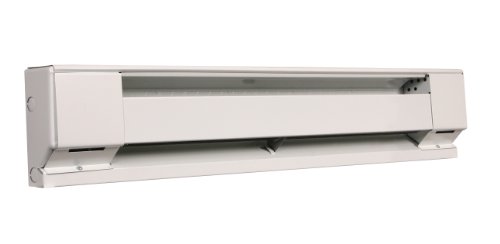
You walk into a cold room, flip a switch, and wait. Some heaters give you a blast of warm air within seconds but leave your feet cold. Others take forever to warm up but hold heat like a brick wall. The choice between convection and radiant heating shapes your comfort, your electric bill, and even the air you breathe.
This article breaks down convection radiators honestly. You’ll learn how they work, where they shine, where they fall short, and which alternative makes sense for each room in your house. I’ll also walk through a 10-year cost model that compares total ownership, not just the sticker price.

Manastin
Convection Panel Space Heater Indoor Use, Large…
- Experience next-level comfort with the Manastin 2025 31-inch convection panel heater, featuring a premium mica infrared heating sy…
- 【𝑹𝒆𝒍𝒊𝒂𝒃𝒍𝒆 𝑸𝒖𝒂𝒍𝒊𝒕𝒚, 𝑺𝒕𝒆𝒂𝒅𝒚 𝑾𝒂𝒓𝒎𝒕𝒉 𝑻𝒉𝒂𝒕 𝑳𝒂𝒔𝒕𝒔】Built tough with a durable metal shell and premium mica heating elements, this indoor…
- 【𝑭𝒂𝒔𝒕 & 𝑬𝒗𝒆𝒏 𝑯𝒆𝒂𝒕, 𝑰𝒅𝒆𝒂𝒍 𝒇𝒐𝒓 𝑳𝒂𝒓𝒈𝒆 𝑹𝒐𝒐𝒎𝒔】Turn it on, feel the heat in 10 seconds, enjoy cozy warmth in a minute, and let your whol…
If you’re considering a specific unit, the aluminum radiator comparison covers central heating options. For now, let’s focus on electric convection and its alternatives.
One product worth noting early: the Manastin Convection Panel Space Heater (ASIN B0FTBF8F38) uses a mica infrared heating element combined with convection airflow. It’s a hybrid approach that warms up in about 10 seconds and covers up to 500 square feet. We’ll discuss why that combination matters later in the hybrid strategy section.
What Are Convection Radiators and How Do They Work?
Convection radiators heat the air, not the objects in the room. They draw cool air from the floor, pass it over a heating element, and release warmer air from the top. This creates a natural air cycle that eventually raises the overall room temperature.
The physics is straightforward. Warm air is less dense than cold air, so it rises. As it rises, it pushes cooler air down, which then gets drawn into the heater. This loop continues until the room reaches the thermostat set point.
There are two main types of electric convection heaters:
- Fan-forced convection heaters use a blower to push air across the heating element. They heat a room faster but produce noticeable noise and can circulate dust.
- Natural convection heaters (like panel heaters and oil-filled radiators) rely on the natural buoyancy of warm air. They’re silent but take longer to warm a space.
The heating element matters too. Traditional convection heaters use metal coils or ceramic plates. The Manastin unit uses mica, a mineral that heats quickly and distributes temperature evenly across the panel surface. Mica has lower thermal mass than oil or cast iron, so it responds faster to thermostat changes.
One thing people often confuse: convection radiators are not the same as radiant heaters. Radiant heaters emit infrared waves that warm objects and people directly, like sunlight on your skin. Convection heaters warm the air around you. That distinction drives every pro and con below.
The Pros of Convection Heating (Speed, Cost, and Control)
Convection heaters have three genuine advantages that make them the default choice for many households.
Fast Warm-Up for Whole-Room Comfort
A quality convection heater can raise a room’s temperature noticeably within 15 to 30 minutes. Fan-forced models do it even faster. If you’re coming home to a cold house and want the living room comfortable by the time you take off your coat, convection delivers.
Radiant heaters, by contrast, warm you directly but leave the rest of the room cold. You’ll feel warm on one side and chilly on the other. Convection fills the entire volume of the room with warm air, eliminating that uneven sensation.
Lower Upfront Cost
Simple convection panel heaters cost less than most radiant systems. A basic 1500W panel heater runs between $40 and $100. Radiant floor heating or high-end infrared panels can cost several times that before installation.
Installation is also simpler. Most convection heaters are plug-and-play or wall-mountable with basic tools. You don’t need a contractor or electrical work unless you’re wiring a fixed unit into the mains.
Precise Temperature Control
Convection heaters pair well with thermostats because they respond quickly. When the room reaches the set point, the heater cycles off. When temperature drops a degree, it cycles back on. This cycling is efficient and maintains a steady, even temperature.
Modern units like the Manastin add programmability. You can set different temperatures for different times of day, or control the heater from your phone via WiFi. That level of control is harder to achieve with radiant systems that have high thermal mass and slow response times.
The Cons of Convection Heating (Drafts, Dust, and Dry Air)
Convection isn’t perfect. The same air circulation that warms a room also creates side effects you should know about before buying.
Air Circulation Means Dust and Allergens
Because convection heaters move air continuously, they also move dust, pet dander, and pollen. Every time the heater runs, it stirs up particles that would otherwise settle on surfaces. For allergy sufferers, this can make symptoms worse.
Fan-forced models are the worst offenders. The blower actively propels air and any contaminants it carries. Natural convection models are gentler but still create a slow, constant air current.
Radiant heaters don’t move air at all. They emit infrared energy that heats objects directly. If you’re sensitive to airborne particles, radiant is the cleaner option.
Dry Air and Static Electricity
Convection heating reduces relative humidity. Warm air holds more moisture than cold air, so the same amount of water vapor results in lower humidity as temperature rises. You’ll notice it as dry skin, scratchy throat, or static shocks when you touch metal.
This effect is more pronounced with fan-forced heaters because they push air past the hot element, which evaporates moisture quickly. Radiant heaters don’t dry the air as aggressively because they don’t move air across a hot surface.
Heat Stratification and Cold Floors
Warm air rises, so convection heaters naturally create warmer air at ceiling level and cooler air near the floor. In a room with 8-foot ceilings, the temperature difference between floor and ceiling can be 5 to 10 degrees Fahrenheit. Your feet stay cold while your head feels warm.
This is the opposite of radiant floor heating, which warms from the ground up. If you spend a lot of time sitting or standing on hard floors, convection’s stratification can be a real drawback.
Smart Alternatives: Radiant Heat, Panel Heaters, and Hybrid Setups
You don’t have to choose one technology for your whole house. Different rooms have different needs, and the best approach often combines multiple heating methods.
Radiant Heat: The Silent, Dust-Free Champion
Radiant heaters emit infrared radiation that travels through the air and heats solid objects directly. Think of standing in sunlight on a cold day. The air around you is chilly, but the sun’s rays feel warm on your skin. That’s radiant heating.
Radiant options include:
- Infrared panels that mount on walls or ceilings
- Radiant floor heating with electric cables or water tubes
- Freestanding infrared heaters that look like space heaters
Radiant heat doesn’t dry the air, doesn’t circulate dust, and operates in total silence. It also provides immediate warmth the moment you turn it on, because it heats you directly rather than waiting for the whole room to warm up.
The downside is uneven heating. Objects in the direct path of the infrared beam get warm; objects behind furniture stay cold. Radiant also has almost no thermal mass, so it stops heating the moment you turn it off. The room cools quickly.
Panel Heaters: The Middle Ground
Panel heaters combine convection with a radiant component. They use a flat panel that heats up and radiates some infrared energy while also warming the air through convection. The Manastin unit is a good example of this category.
Mica panels heat up faster than oil-filled radiators and cool down faster too. That makes them responsive to thermostat control. They’re also thinner and lighter than oil-filled units, so wall mounting is practical.
The trade-off is heat retention. An oil-filled radiator keeps radiating heat for 30 to 60 minutes after you turn it off. A mica panel cools down in 10 to 15 minutes. If you want residual heat after the thermostat cycles, you’ll need thermal mass.
Hybrid Strategy: Using Both for Zoned Comfort
The smartest approach for most homes is a hybrid system. Use convection for rooms you occupy during the day and radiant for rooms where you need focused warmth or have allergy concerns.
For example, a convection panel heater works well in a home office where you sit at a desk for hours. It maintains a steady ambient temperature and cycles on and off efficiently. In a bedroom, a radiant heater aimed at the bed provides cozy warmth without drying out your sinuses overnight.
You can also combine them in the same room. A radiant panel near your reading chair gives you immediate warmth while a convection heater runs at a lower thermostat setting to maintain the background temperature. This zoned approach lets you keep the whole room cooler and heat only the space you’re using.
Convection vs. Radiant: A Room-by-Room Comparison
Not every room benefits from the same heating strategy. Here’s a practical matrix based on room function, occupancy, and typical usage patterns.
| Room | Best Choice | Why | Watch Out For |
|---|---|---|---|
| Living Room | Convection panel or hybrid | Large volume needs whole-room warming; convection fills space evenly | Heat stratification leaves cold floors; use area rugs |
| Bedroom | Radiant infrared | Silent operation, no dust circulation, doesn’t dry sinuses | Direct beam may overheat the bed area; position carefully |
| Bathroom | Radiant ceiling or wall panel | Instant warmth when you step out of shower; no air movement | Must be IP-rated for moisture; check ingress protection |
| Home Office | Convection with thermostat | Steady ambient temperature for long sitting sessions | Fan models can be distracting; choose natural convection |
| Garage or Workshop | Fan-forced convection | Fast warm-up for occasional use; lower cost per BTU | Dust circulation is worse in workshops; use a filter |
| Large Open Plan | Multiple convection panels | Zoned control lets you heat only occupied areas | One big heater wastes energy; multiple small units are better |
The pattern is clear: convection wins where you need even, whole-room warmth for extended periods. Radiant wins where you need focused, quiet, dust-free heat for shorter sessions.
The 10-Year Cost Analysis: Which Actually Saves Money?
Upfront price tells you very little about total cost. Let’s build a 10-year model for a typical 200-square-foot room in a moderate climate, assuming 4 hours of heating per day during a 5-month winter.
Assumptions: electricity at $0.15 per kWh, 1500W heater running at an average 60% duty cycle (thermostat cycling), and no maintenance costs for either type. Here’s the math:
- Convection panel heater: Purchase $80, annual energy use = 1.5 kW × 0.6 duty × 4 hours × 150 days = 540 kWh. Annual cost = 540 × $0.15 = $81. Ten-year total = $80 + (10 × $81) = $890.
- Oil-filled radiator (convection + radiant): Purchase $120, same duty cycle, slightly lower efficiency due to thermal mass lag. Annual cost ≈ $85. Ten-year total = $120 + $850 = $970.
- Radiant infrared panel: Purchase $150, but you run it less because it heats you directly. Assume 3 hours per day instead of 4. Annual usage = 1.5 kW × 0.6 × 3 × 150 = 405 kWh. Annual cost = $60.75. Ten-year total = $150 + $607.50 = $757.50.
Radiant wins on paper because you run it fewer hours. But that assumes you’re willing to sit in the direct beam and accept uneven room temperature. If you need the whole room warm, radiant’s advantage disappears.
The real cost driver isn’t the heater type. It’s your thermostat habits. A programmable thermostat that lowers temperature when you’re asleep or away saves 10-15% regardless of heater type. That’s why smart thermostat pros and cons matter more than the heater itself.
For a more detailed look at oil-filled options, the oil-filled radiator guide breaks down their thermal mass benefits and slower response times.
Smart Thermostats and Automation: Making Convection Smarter
Convection heaters benefit enormously from automation because they respond quickly to thermostat signals. A smart thermostat or built-in WiFi control lets you schedule heat around your actual routine, not a fixed timer.
The Manastin heater includes WiFi and app control via the Tuya platform. You can set a schedule for weekdays versus weekends, adjust temperature from your phone, and use voice commands with Alexa or Google Assistant. The smart window mode detects a rapid temperature drop (over 4°F in 2 minutes) and pauses heating to save energy. Frost protection mode maintains 46°F to prevent freezing when you’re away.
These features matter because they turn a dumb heater into a responsive system. Instead of running full power until you remember to turn it off, the heater adjusts itself based on occupancy and temperature trends.
Geofencing takes this further. Some smart systems use your phone’s location to detect when you’re leaving home and automatically lower the temperature. When you’re 15 minutes away, they start warming up again. This eliminates the classic waste of heating an empty house all day.
One honest caveat: smart features add complexity. The Tuya app works well but requires a 2.4GHz WiFi network, not 5GHz. Voice control is limited to basic on/off and temperature commands. If you just want a heater that works without an app, the smart features are optional, not required.
Final Verdict: When to Choose Convection and When to Walk Away
Convection radiators are the right choice when you need even, whole-room heat with responsive temperature control and low upfront cost. They’re ideal for living rooms, offices, and any space where you’ll sit for extended periods.
Walk away from convection if any of these apply:
- You have severe allergies and can’t tolerate air movement
- You want silent, dust-free heat in a bedroom
- You’re heating a small space where you sit close to the heat source
- You want residual heat after the thermostat cycles off
For those cases, radiant panels or oil-filled radiators serve you better. The Amazon Basics oil radiator review shows how thermal mass changes the heating profile.
If you’re still undecided, start with a hybrid approach. Put a convection panel in your main living area and a radiant heater in your bedroom. Run both for a week and note which one you prefer in each space. Your comfort preferences will tell you more than any spec sheet.
Frequently Asked Questions (FAQs)
Do convection radiators use more electricity than radiant heaters?
Not necessarily. Both convert electricity to heat at roughly 100% efficiency. The difference is runtime. Radiant heaters warm you directly, so you can run them fewer hours. Convection heaters warm the whole room, which takes longer. In practice, radiant often uses less electricity for the same comfort level, but only if you stay in the beam of heat.
Are convection heaters safe to leave on overnight?
Modern convection heaters with tip-over protection, overheat sensors, and thermal cutoffs are generally safe. Natural convection models (no fan) are safer than fan-forced ones because they have fewer moving parts and lower fire risk. That said, never leave a heater running unattended in a room with flammable materials, and always follow the manufacturer’s clearance guidelines.
Why does my convection heater make the room feel stuffy?
Convection heaters dry the air as they warm it. Lower humidity makes the air feel heavier and less fresh. Opening a window briefly or using a humidifier counteracts this. If stuffiness is a recurring problem, consider a radiant heater that doesn’t dry the air at all.
Can I use a convection heater in a bathroom?
Only if it has an IP rating suitable for wet locations. Most portable convection heaters are IP21, which means they’re protected against dripping water but not jets. For bathroom use, look for a fixed wall-mounted unit with IP24 or higher, and keep it well away from the shower or bath. When in doubt, consult an electrician.
How long does a convection heater take to warm a room?
For a 1500W heater in a 200-250 square foot room, expect a noticeable temperature rise in 15-30 minutes. Full comfort to your thermostat set point can take 1-2 hours, depending on insulation, ceiling height, and outdoor temperature. Fan-forced models reach comfort faster but trade off noise and dust circulation.
What to Remember Before You Buy
- Convection heats the air; radiant heats you. Pick based on how you’ll use the room, not just the wattage.
- Expect to pay more in electricity if you rely on convection for large, poorly insulated spaces. The math is simple: more air volume equals more heating time.
- Look for programmable thermostats or WiFi control. They pay for themselves in energy savings within one season.
- If dust or allergies bother you, skip fan-forced models entirely. Natural convection or radiant is the better fit.
- Check the room’s square footage against the heater’s rated coverage. A 1500W unit covers roughly 150-300 square feet as a primary heat source.
- Wall-mounting a panel heater saves floor space and improves air circulation, but confirm the wall can support the weight and that you maintain the required clearance.
- Buy from a brand with a solid warranty and responsive support. Heating equipment fails eventually, and a good warranty saves you frustration.

I am a mechanical engineer and love doing research on different home and outdoor heating options. When I am not working, I love spending time with my family and friends. I also enjoy blogging about my findings and helping others to find the best heating options for their needs.
Related guides

Why the ptlsy 43inch Tall Chiminea is Perfect for Your Patio
Ignite your outdoor gatherings with the PTLSY 43-inch tall chiminea! Discover features, benefits, and why it's a must-have…
Top-Rated Heated Socks: Cozy Comfort for Cold Feet
Stay warm and cozy this winter with the best rated heated socks! Find your perfect pair for ultimate…
Cozy Nights: Our Pup Loves This Heated Dog Bed!
Looking for the best heated dog bed? Keep your furry friend cozy and warm all winter with our…