Best Portable Infrared Space Heaters for Fast, Quiet, Safe Heat
On this page 8 sections
- Portable Infrared Space Heater Comparison
- Best Portable Infrared Space Heaters for Direct Heat
- How Portable Infrared Space Heaters Work Without a Fan
- Key Specs to Compare When Choosing an Infrared Heater
- Sizing and Running Costs for Portable Infrared Heaters
- Safety and Certification for Peace of Mind
- Why Quiet Operation Matters and Which Models Deliver It
- Frequently Asked Questions
Portable Infrared Space Heater Comparison
| Rank | Model | Best for | Heat Output (W) | Room Coverage (sq.ft) | Safety Features | Price |
|---|---|---|---|---|---|---|
| 1 | R.W.FLAME Mini Portable Ceramic HeaterBest Overall | Rooms up to 200 sq.ft needing fast, quiet heat | 1500 | 200 | Tip-over shutoff, overheat protection, child lock | Check price |
| 2 | Dr Infrared Heater DR-968 Portable Space HeaterBest for Large Rooms | Large rooms needing strong heat output and quiet operation | 1500 | — | Tip-over and overheat protection | Check price |
| 3 | WEWARM Infrared Space Heater with ECO ModeQuietest Operation | Bedrooms and nurseries needing whisper-quiet heat | 1500 | 300 | Overheat protection, tip-over shutoff, cool-touch exterior | Check price |
| 4 | DR. INFRARED HEATER DR-978 Hybrid Portable HeaterBest Hybrid Heat | Users wanting a dual heating system with strong airflow | 1500 | — | Tip-over and overheat shutoff, UL and cUL certified | Check price |
| 5 | SONBION Portable Electric Infrared HeaterBest Energy Efficient | Energy-conscious users wanting fast, direct heat | — | — | Overheat and tip-over protection | Check price |
Portable infrared space heaters provide direct warmth by heating objects and people without warming the entire air volume. This makes them efficient for personal spaces like bedrooms, offices, and small living rooms.
Many believe infrared heaters only work in small spots, but the right model can warm larger areas quietly and safely while saving energy compared to convection heaters.
Best Portable Infrared Space Heaters for Direct Heat

R.W.FLAME Mini Portable Ceramic Heater

Dr Infrared Heater DR-968 Portable Space Heater

WEWARM Infrared Space Heater with ECO Mode
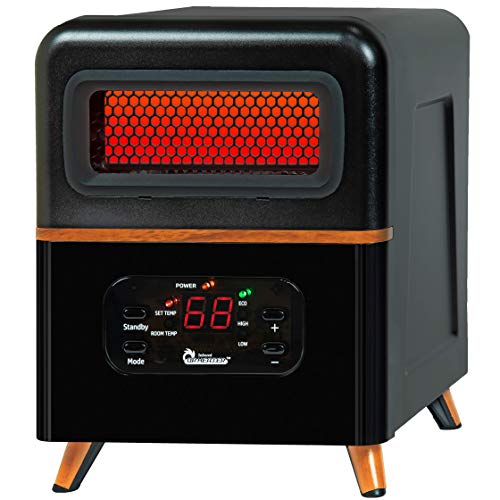
DR. INFRARED HEATER DR-978 Hybrid Portable Heater

SONBION Portable Electric Infrared Heater
How Portable Infrared Space Heaters Work Without a Fan

Portable infrared space heaters warm by sending invisible infrared radiation directly to objects and people, not by heating the air first. This direct heat transfer feels immediate and focused—perfect for spot heating a desk or a corner of a room.
Unlike conventional electric heaters that rely on a fan to blow warm air around, some infrared models skip the fan altogether. Without a fan, these heaters operate silently and don’t stir up dust or allergens. That quietness can make a big difference in bedrooms, offices, or anywhere you want heat without noise.
Fan-equipped infrared heaters use convection to spread heat faster by moving warm air around. While this speeds up warming a whole room, it also adds noise and may blow dust into the air. You get a trade-off: faster whole-room warmth versus quieter, targeted heat.
The way infrared works is similar to how the sun feels warm on your skin even on a cool day. The heater’s elements emit infrared waves, which objects absorb, warming up and then radiating heat themselves. That’s why an infrared heater can make you feel warm even if the surrounding air is still cool.
 Winter Heating Bill CutterSee what every heater in your home really costs, heat the rooms you use, and cut the waste in 30 days.Cost-per-hour tables for every heaterThermostat schedule and draft-proofing planRunning-cost and bill calculator (Excel)
Key Specs to Compare When Choosing an Infrared Heater
Choosing the right portable infrared heater means checking wattage, room coverage, thermostat quality, and safety features. These specs determine how well the heater fits your space, your comfort needs, and your budget.
Wattage controls heat output and running cost. Most portable infrared heaters max out at 1,500 watts, drawing about 12.5 amps on a 120 V circuit. Running a 1,500 W heater for 8 hours at 17 cents per kWh costs around $2.04 a day. Lower wattage means less heat and lower cost, but might not warm your room sufficiently.
Room size coverage estimates how much space the heater can comfortably warm. Infrared heaters excel at spot heating, so a unit rated for 150 to 200 sq.ft. suits a small bedroom or office. Larger rooms need bigger units or multiple heaters.
Thermostat precision is key for comfort and energy savings. A good digital thermostat keeps the temperature steady, cycling the heater on and off as needed. Cheap or no thermostat means swings in temperature and wasted electricity.
Safety features matter, especially in portable heaters. Look for tip-over switches that cut power if the heater falls, overheat protection that shuts it down if it gets too hot, and child locks if you have kids. These reduce risks during unattended operation.
Noise level varies. Infrared heaters without fans are silent. Fan models add some background noise, which might distract in bedrooms or offices. Think about where you’ll use it most.
Ceramic heaters use heating elements that warm the air via convection, often with fans. Infrared heaters heat objects directly and usually run quieter. Both can be portable electric heaters, but the heating method affects how and where you use them.
| Spec | What to Expect | Why It Matters |
|---|---|---|
| Wattage | 1,000–1,500 W | Higher wattage equals more heat but higher electricity cost |
| Room Coverage | Up to 200 sq.ft. | Matches heater size to room prevents under- or overheating |
| Thermostat | Digital or manual | Digital offers precise temperature control and saves energy |
| Safety Features | Tip-over switch, overheat protection | Prevents accidents and equipment damage |
| Noise Level | Silent (fanless) to moderate (fan-equipped) | Impacts comfort in quiet spaces |
For the best portable electric heater in 2026 with safety and efficiency, look for models combining reliable infrared heating with digital thermostats and comprehensive safety features. These are the heaters that balance comfort, cost, and peace of mind for indoor use.
Sizing and Running Costs for Portable Infrared Heaters
Match your heater’s wattage to the room size by calculating the area or volume. Most portable infrared heaters run from 1,000 to 1,500 watts, enough to warm spaces up to about 200 square feet efficiently.
Focus on square footage rather than volume for sizing. Say your living room is 15 by 12 feet, which is 180 square feet. A 1,500-watt infrared heater suits that well, providing direct warmth without wasting energy heating empty air.
Electricity cost comes down to simple math: watts divided by 1,000, multiplied by hours used, then multiplied by your electric rate per kilowatt-hour. For example, running a 1,500 W heater for 8 hours at 17 cents per kWh will cost about $2.04 daily (1,500 ÷ 1,000 × 8 × 0.17 = 2.04).
Infrared heaters save money by heating objects and people directly. Since they don’t waste energy warming all the air first, they often feel warmer faster and use less electricity than traditional convection heaters for the same space.
| Heater | Watts | Per hour | Per day (8 h) | Per month (30 days) |
|---|---|---|---|---|
| 1,500 W space heater | 1,500 W | 26¢ | $2.04 | $61.20 |
| Heated blanket | 100 W | 1.7¢ | 14¢ | $4.08 |
Safety and Certification for Peace of Mind
The best premium portable electric heaters for 2026 always carry UL, ETL, or CSA safety listings. These certifications confirm the heater meets strict electrical and fire safety standards.
Essential safety features include a tip-over switch that shuts off the heater if it falls, and overheat protection that cuts power if internal parts get too hot. Never ignore these—they prevent fires.
Homes with children or pets benefit from models with child locks and cool-touch surfaces. These reduce the chance of burns or accidental tampering.
Why Quiet Operation Matters and Which Models Deliver It
Infrared space heaters without fans run as quietly as 34 decibels, which is quieter than a whisper, making them ideal for bedrooms and offices.
Fan-assisted models usually produce noise levels between 35 and 40 decibels—noticeable but still low enough for many indoor spaces.
Keeping noise to a minimum helps maintain sleep quality and concentration, especially during late-night use or in quiet work environments.
Always check the decibel rating on the specs sheet to compare models. It’s the only reliable way to know if a heater will disturb your peace or blend into the background.
Models like the R.W.FLAME Small Space Heater and those from WEWARM excel in quiet operation because they use infrared heating without noisy fans.
If you’ve read dr infrared heater reviews wondering about noise, expect them to be in the fan-assisted range. They offer strong heat but won’t be as quiet as purely infrared models.
Choosing a quiet heater means balancing warmth, noise, and features. For the absolute quiet, fanless infrared models like the R.W.FLAME Small Space Heater are hard to beat.
For more on the best quiet heaters that deliver efficient infrared heat, check out our full buying guide Best Infrared Space Heaters.