For long-lasting, silent heat, the De’Longhi EW7707CM is the strongest pick for most readers: it’s a true 1,500W oil-filled radiator with ComfortTemp and no fan to circulate dust. The MEPTY adds a timer and remote; the Pelonis offers 600W, 900W, and 1,500W settings. Only three supplied products are oil-filled radiators.
The essentials
Choose the De’Longhi for simple controls and ComfortTemp.
Choose the MEPTY if you want a timer, remote, and child lock.
Choose the Pelonis for selectable 600W, 900W, and 1,500W output.
A 1,500W setting uses 1.5 kWh per hour while it runs at full power.
Plug an electric heater directly into a wall outlet and keep 3 feet of clearance.
The original five-product shortlist included a ceramic heater and an electric fireplace, neither of which is an oil-filled radiator. This rewrite keeps the comparison to the three supplied models that actually match your search.
Oil-filled heat suits rooms where you want quiet, gradual warmth rather than a fast blast. Check the wattage and your room’s heat loss before you choose.
Oil-Filled Space Heaters Reviewed
#1Best Overall
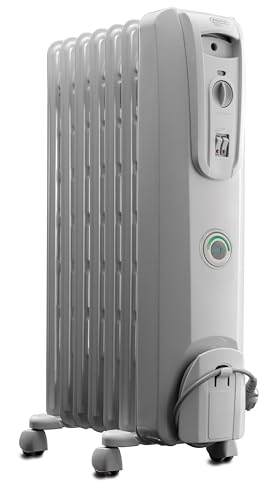
De’Longhi Oil-Filled Radiator EW7707CM
Best for Steady, quiet heat in a bedroom or home office
For most people seeking silent, steady heat, this is the strongest fit: its 1,500W output warms the room without a fan stirring dust, pollen or dander. ComfortTemp adjusts temperature and power to maintain the setting, and the integrated handle and wheels make room-to-room moves easier.
Maximum output 1,500WTemperature control ComfortTempHeating design Thermal slot designMobility Integrated handle and built-in wheels
Why it made the cut
No fan to circulate dust, pollen or dander
ComfortTemp adjusts temperature and power
Built-in handle and wheels for moving it
Good to know
No timer or remote is listed in the supplied details
Skip it if Skip it if you specifically want a remote or a programmable timer.
Best for Quiet rooms where a timer and remote are useful
The MEPTY suits you if you want to schedule heat rather than adjust it by hand: it has a 24-hour timer, remote control and an LED touch panel. Its sealed-oil radiator runs without a motor or blades, while the thermostat adjusts from 41°F to 95°F.
Maximum output 1,500WTimer 24-hourThermostat range 41°F to 95°FSafety features Tip-over and overheat protection
Why it made the cut
24-hour timer and remote control
No motor or blades for silent operation
Tip-over and overheat protection
Good to know
Its 1,500W maximum output is shared with the other full-size radiators here
Skip it if Skip it if you want the simpler controls of a knob-operated radiator.
Best for Quiet heating with three selectable power levels
Choose the Pelonis if you want to dial down output instead of running at full power every time. Its 600W, 900W and 1,500W settings give you three options, and the radiator operates without wind or noise once it reaches heating stability.
Maximum output 1,500WPower settings 600W, 900W and 1,500WControls Simple knob controlsMobility Caster wheels
Why it made the cut
Three power settings: 600W, 900W and 1,500W
Knob controls and caster wheels
Tip-over and overheat protection
Good to know
No timer or remote is listed in the supplied details
Skip it if Skip it if remote operation or scheduled heating is a priority.
Best for Personal heat when quick fan-forced warmth matters more than silent operation
This compact ceramic heater is not an oil-filled radiator, but it may suit a small office if you want heat to start quickly. It offers 950W and 1,500W settings, a thermostat, and tip-over and overheat shutoffs; its fan moves warm air, so it won’t provide the same fan-free operation as an oil radiator.
Maximum output 1,500WHeat settings 950W and 1,500WHeating type PTC ceramic with a fanSafety features Tip-over and overheat protection
Why it made the cut
950W and 1,500W heat settings
Tip-over and overheat protection
Compact design with a built-in handle
Good to know
Uses a fan, unlike an oil-filled radiator
Not an oil-filled heater
Skip it if Skip it if silent, fan-free heat is the reason you’re shopping for an oil-filled radiator.
Best for Supplemental zone heat with a built-in fireplace look
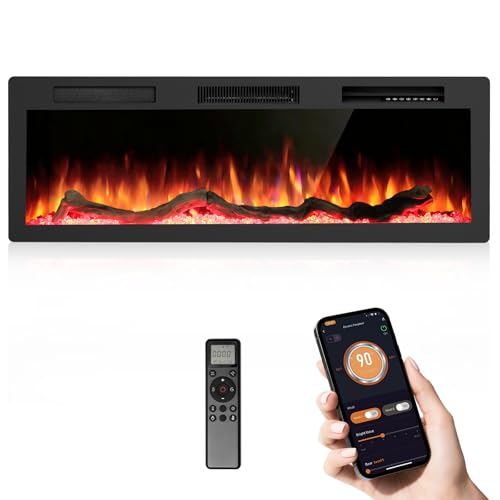
This is an electric fireplace, not an oil-filled radiator. Its 750W and 1,500W heat modes and remote may work for supplemental zone heating, while adjustable flame colors and speeds add a visual feature an oil radiator doesn’t provide.
Maximum output 1,500WHeat modes 750W and 1,500WInstallation Wall-mounted or recessedControls Remote, touch panel, smartphone or Alexa
Why it made the cut
750W and 1,500W heating modes
Remote control and timer
Wall-mounted or recessed installation
Good to know
Not an oil-filled radiator
Requires wall-mounted or recessed installation
Skip it if Skip it if you need a portable radiator you can roll between rooms.
An oil-filled heater uses electricity to heat sealed heat-transfer oil; the oil isn’t burned or used up. For an oil filled radiator review, these are product-data-based picks, not firsthand test results: choose the De’Longhi EW7707CM for straightforward operation and ComfortTemp, the MEPTY for a timer, remote and child lock, or the Pelonis for three selectable power levels.
1,500 W
The De’Longhi and Pelonis maximum output
The De’Longhi EW7707CM is rated at 1,500 W, and the Pelonis offers a 1,500 W setting. Check the MEPTY product listing for its rated wattage.
Choose by the control you’ll use
Pick the De’Longhi EW7707CM if you want ComfortTemp and uncomplicated controls.
Pick the MEPTY if its timer, remote and child lock fit how you’ll use the heater.
Pick the Pelonis if you want to select 600 W, 900 W or 1,500 W.
That’s three relevant Oil-Filled Space Heaters Reviewed—not five. The supplied list doesn’t support five oil-filled picks, so there’s no reason to pad it with unrelated ceramic or fireplace heaters. These radiators suit quiet supplemental heat for a Cozy Comfort corner, Stay Cozy Anywhere in a chilly room, or a little Cozy Warmth beside your desk; those are use cases, not performance guarantees.
From HeaterGuides · our own guidePage 6: heat only the rooms you use. Page 10 covers space-heater safety.Winter Heating Bill CutterSee what every heater in your home really costs, heat the rooms you use, and cut the waste in 30 days.Cost-per-hour tables for every heaterThermostat schedule and draft-proofing planRunning-cost and bill calculator (Excel)$14.99$9.99Get it for $9.99See what's inside and watch the 2-minute video →14-page printable PDF + Excel calculator · instant download · 30-day refund
What to Check Before Buying an Oil-Filled Radiator
How to choose an oil-filled space heater: compare its maximum wattage, lower heat settings, temperature controls and the timer, remote or safety features you’ll actually use. For quiet, steady supplemental heat, also account for gradual warm-up and the electrical load.
Model
Output and controls stated in the product data
De’Longhi EW7707CM
1,500 W; ComfortTemp
MEPTY
Timer, remote and child lock; confirm rated wattage on its product listing
Pelonis
600 W, 900 W and 1,500 W settings
The supplied product information doesn’t state comparable lower settings or safety features for every model.
A 1,500 W radiator draws about 12.5 A on a 120 V supply: 1,500 ÷ 120 = 12.5. That leaves little room on a typical 15 A circuit, so don’t share it with another high-draw appliance.
Oil-filled radiators have no fan, so they avoid fan noise and don’t blow air around the room. They warm gradually; after the thermostat cycles off, heated oil and metal fins continue releasing stored heat. That heat retention can smooth out the on-and-off cycle, but it doesn’t make the heater cheaper or more efficient than another resistance heater delivering the same heat.
Heat retention isn’t energy savings
At the same heat output, resistance electric heaters turn electricity into heat at roughly the same rate. Choose an oil-filled model for quiet operation and gradual heat, not a promise of a lower electric bill. For more choices, compare electric oil-filled space heaters for quiet heat.
Room Coverage for a 1,500W Oil Heater
A 1,500W oil-filled heater’s useful room size depends on heat loss, and the supplied specs don’t establish reliable square-foot coverage for any of the three radiators. The De’Longhi, MEPTY and Pelonis are all rated up to 1,500W. For oil-filled heater room size, judge whether that output can offset your room’s heat loss rather than relying on a coverage claim.
Insulation, drafts, ceiling height, outdoor temperature and your home’s existing heat all affect whether supplemental warmth feels adequate. A drafty room with a high ceiling can feel cold even with the heater running at full power; a better-sealed room may need less help.
What a night of full-power heat costs
At an assumed electricity rate of $0.17 per kWh, running a 1,500W heater at full output for eight hours costs $2.04.
Calculation1,500W ÷ 1,000 × 8 hours × $0.17/kWh
Nightly cost12 kWh over 8 hours at continuous full o
How much does a 1,500W heater cost to run? The full-power estimate is $2.04 for eight hours at $0.17/kWh; a thermostat cycling the heater off lowers actual consumption. It’s an example, not a promise about your monthly bill.
Heater
Watts
Per hour
Per day (8 h)
Per month (30 days)
1,500W oil-filled heater
1,500 W
26¢
$2.04
$61.20
Calculated at 17¢ per kWh. Assumes 8 hours a day for 30 days at $0.17/kWh; full-power use is an estimate, and thermostat cycling can lower consumption.
Where to Place an Electric Oil-Filled Heater
Oil-filled space heaters are safe to leave on only if the manufacturer says that specific model is designed for unattended or sleeping use; otherwise, turn it off when you leave or go to bed. Use the label and manual to check the safety features rather than assuming a model has them.
Plug In Safely
Connect the heater directly to a wall outlet, never an extension cord or power strip, and keep at least 3 feet between it and combustibles. Don’t leave it running unattended or while you sleep unless the manufacturer approves that use.
Before You Switch It On
Check the product label and manual for a UL, ETL or CSA listing, tip-over shutoff and overheat protection; don’t assume a feature or certification that isn’t listed.
Set the heater on a stable, level surface with 3 feet of clearance from combustibles.
Keep the heater uncovered; don’t use it to dry clothing.
Let the heater cool before moving it.
What to Do Before You Order
Buy the De’Longhi if you want ComfortTemp; choose the MEPTY for a timer and remote, or the Pelonis if selectable lower wattage matters most. Before ordering, make sure a fan-free radiator suits the way you need heat.
1
Choose the heat style
Oil-filled radiators heat quietly without a fan, but they warm a room more gradually than fan-forced heaters. If you need a quick blast of heat, a fan heater may fit better.
2
Check the room and circuit
Confirm the outlet circuit can handle the heater’s wattage, then look for drafts and a clear, stable spot on the floor. Check the model’s manual and safety label for operating instructions and any placement limits.
3
Match the controls to your routine
Pick De’Longhi for ComfortTemp, MEPTY for timer and remote controls, or Pelonis for 600W and 900W settings as well as 1,500W. Lower settings let you reduce the heater’s electrical draw when full output isn’t needed.
4
Set it up and check results
Plug the heater directly into a wall outlet, never an extension cord or power strip, and keep at least 3 feet of clearance. After it’s running, monitor the room’s comfort and your electricity use; adjust the thermostat or setting if either is higher than you want.
More Questions, Answered
Do oil-filled space heaters use oil as fuel?
No. Electricity heats sealed oil inside the radiator, and the oil transfers heat to the metal fins; it isn’t burned or consumed. If oil leaks from a radiator, stop using it and contact the manufacturer.
Can an oil-filled radiator run on a lower power setting?
Some models can, but check the controls for that exact heater. The Pelonis offers 600W, 900W, and 1,500W settings; lower wattage draws less power while it’s heating, though it may take longer to warm the room.
Why does an oil-filled heater stay warm after it shuts off?
The heated oil and metal fins hold heat after the thermostat cuts power, then release it gradually. The heater isn’t still using electricity during that off cycle, but it will cool as the room draws heat away.
Can you move an oil-filled heater while it is running?
Turn it off and let the fins cool before moving it. A hot radiator can burn you, and rolling or tilting an energized heater can create a spill or damage risk; follow the model’s manual for its handling instructions.
Before you go · a welcome giftGet the Winter Heating Bill Cutter for $4.99See what every heater in your home really costs, heat the rooms you use, and cut the waste in 30 days. Normally $14.99; your welcome price saves $10.00. We'll email your link right now.or buy it now for $9.99 without the gift →One email with your link now. We never share your address.



 Winter Heating Bill CutterSee what every heater in your home really costs, heat the rooms you use, and cut the waste in 30 days.Cost-per-hour tables for every heaterThermostat schedule and draft-proofing planRunning-cost and bill calculator (Excel)