



Choosing a space heater for an office requires balancing safety, noise, and energy use without sacrificing warmth. The right heater keeps you comfortable through the workday while meeting strict safety standards and fitting into shared spaces without disruption.
This guide compares top office-safe space heaters, explains what specs matter most for work environments, and gives practical advice on heater placement, running costs, and safety certifications to help you pick the right model quickly.
Office-Safe Space Heater Comparison
| Model | Best for | Heat Output (W) | Safety Features | Noise Level (dB) | Oscillation Range (°) | Price |
|---|---|---|---|---|---|---|
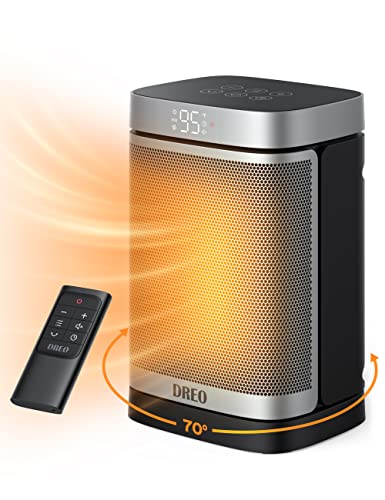
| DREO Portable Electric Space Heater | Best Overall | 1500 | Tip-over, Overheat, UL94 V-0 materials | 37.5 | 70 | Check price on Amazon |
| WINHL Portable Electric Space Heater | Best Oscillation | — | Tip-over, Overheat, ETL certified | — | 70 | Check price on Amazon |
| GiveBest Portable Ceramic Space Heater | Best Quiet Heater | 1500 | Tip-over, Overheat, Flame retardant | — | — | Check price on Amazon |
| Amazon Basics Ceramic Space Heater Silver | Best Budget | 1500 | Tip-over, Overheat | 43 | — | Check price on Amazon |
| Amazon Basics Ceramic Space Heater Black | Best Color Option | 1500 | Tip-over, Overheat | 43 | — | Check price on Amazon |
Top Office-Safe Space Heaters for Quiet and Efficient Warmth
DREO Portable Electric Space Heater
WINHL Portable Electric Space Heater
GiveBest Portable Ceramic Space Heater
Amazon Basics Ceramic Space Heater Silver
Amazon Basics Ceramic Space Heater Black
Choose Heaters With Essential Safety Features for Office Use
An office-safe space heater has specific safety features designed to prevent fires and injuries in a busy work environment. The most critical are tip-over shutoff and overheat protection, which automatically turn the heater off if it falls or overheats. These features stop accidents before they start, which is essential where people move around and might bump the unit.
Heaters with cool-touch exteriors reduce the risk of burns, crucial in offices where coworkers might brush against a unit or where small children visit. This means the outside casing stays safe to touch even when the heater runs at full power.
Look for heaters certified by ETL or UL. These marks mean the heater meets strict safety standards tested by independent labs. Certification covers electrical safety, fire resistance, and construction quality. Without it, a heater may not be reliable enough for office use.
Never plug a space heater into an extension cord or power strip. A heater drawing 1,500 watts pulls about 12.5 amps, close to the limit of typical household wiring. Extension cords or strips not rated for this load risk overheating and fires. Always plug heaters directly into a grounded wall outlet.
Space heaters with these features—tip-over shutoff, overheat protection, cool-touch surfaces, ETL or UL certification, and direct wall outlet use—define an office-safe heater. Without all of these, the risk of fire or injury rises sharply.
Match Heater Size and Type to Your Office Space
A typical office cubicle or small room performs well with a 1,500-watt heater. That wattage delivers about 5,100 BTU per hour, enough to raise the temperature in a 150-square-foot office by 10 to 15 degrees Fahrenheit in an hour.
Infrared heaters work by radiating heat directly to people and objects rather than heating the air. This makes them excellent spot heaters when you want warmth focused on one desk or area without warming the entire office. Their warmth feels instant and direct.
Ceramic convection heaters warm the air by passing it over heated ceramic elements. This air circulation spreads heat throughout a larger or enclosed office space, making them better for general heating than infrared units in open areas.
Oil-filled radiators heat oil inside the unit, which then radiates warmth into the room. They run quietly and keep the office warm for longer after switching off, but they take longer to heat up initially. They don’t blow air, which means no dust circulation or noise.
Oil-filled radiators can improve office air quality by not disturbing dust or allergens as fan heaters do. If you or coworkers have sensitivities or allergies, these are worth considering despite slower warm-up times.
Choosing the right heater means matching wattage to space size and selecting a type that fits your heating needs: infrared for immediate, focused heat; ceramic for efficient air warming; and oil-filled for quiet, sustained warmth with minimal air disturbance.
If your office is larger than 200 square feet or more open, multiple 1,500-watt units or a combination of heater types may be necessary to maintain comfort evenly.
Most portable office heaters draw between 750 and 1,500 watts. The 1,500-watt models are the most common and the maximum safe draw on a standard 15-amp circuit. Knowing this helps avoid overloading office circuits and tripping breakers.
Balance Noise Levels and Heat Distribution in Shared Workspaces
The quietest space heaters for open office layouts are typically oil-filled radiators and infrared models because they operate without a fan, producing near-silent heat.
Fan-forced ceramic heaters use a motor-driven fan to push warm air around, which can raise noise levels to about 40 decibels or more—noticeable but still below typical office background noise if the model uses a quiet brushless motor and aerodynamic fan blades.
Oscillation helps spread heat evenly across shared work areas, reducing cold spots where coworkers might shiver and preventing overheating near the heater.
Position the heater to avoid blowing directly on coworkers or sensitive equipment, aiming for indirect airflow to maintain comfort and prevent distractions.
Balancing placement means putting the heater where it warms the most-used space without causing hotspots. For example, a heater near an entryway might waste heat if the door opens often, so placing it centrally or near desks is better.
Brushless motors and aerodynamic fans lower operational noise by reducing vibrations and air turbulence, making fan-forced heaters quieter and more suitable for office use.
Calculate Running Costs to Keep Office Heating Affordable
A typical 1,500-watt office space heater running for 8 hours consumes 12 kilowatt-hours of electricity; at 17 cents per kWh, that adds up to about $2.04 a day.
Heaters with adjustable heat settings let you reduce power when full heat isn’t needed, which lowers energy use and monthly bills.
Many modern space heaters include ECO or programmable thermostat modes that cycle the heater off and on to maintain a set temperature, cutting runtime and saving energy.
Remote controls and programmable timers add convenience and help avoid leaving the heater on longer than necessary, directly reducing energy waste.
Smart controls that let you schedule heating or adjust it remotely are best for energy savings because they fit heating precisely to office hours and occupancy.
Place and Maintain Your Office Heater Safely for Best Performance
Space heaters should never be left unattended in an office, even if they have automatic shutoff features. Unplug the unit when you leave for the day or overnight to prevent any risk of fire or malfunction.
Select a heater sized for your cubicle or workspace. Compact portable models with tip-over protection and cool-touch exteriors fit well without crowding. Avoid cramped corners or high-traffic aisles where the heater could get knocked over or block movement.
Maintain at least 3 feet of clearance around the heater from combustibles like papers, curtains, and office furniture. Blocking nearby air vents or fire alarms reduces safety and heating efficiency, so keep the heater clear of those as well.
Regular cleaning of dust and debris from grills, fans, and heating elements is essential. Dust buildup restricts airflow, making heaters work harder and raising the risk of overheating or failure. Use a soft brush or vacuum attachment monthly to keep the heater running efficiently.
More Questions, Answered
What makes a space heater safe for office use?
Are infrared heaters more energy efficient than convection heaters in offices?
Can I use a space heater with an extension cord at work?
How quiet should an office space heater be for open-plan areas?
Is it safe to leave my office space heater running overnight?
Do oil-filled radiators affect indoor air quality?
What is the ideal wattage for a space heater in a small office cubicle?

I am a mechanical engineer and love doing research on different home and outdoor heating options. When I am not working, I love spending time with my family and friends. I also enjoy blogging about my findings and helping others to find the best heating options for their needs.
Related guides

Car Plug-In Space Heaters Tested: Real Help or Just Warm Air?
Ever get that winter chill driving? See which car plug-in space heater actually warms up fast. Our real…
Non-Toxic Space Heaters Explained: Materials & Safety Reality
Ever wonder if your space heater is safe? Find the best non-toxic space heater for your home and…
Space Heaters That Look Like Fireplaces: Style Meets Function
Discover the best space heaters that look like fireplaces for warmth and ambiance, with safety features and sizing…