
Skip to content

Expert home heating guides, reviews & repairs

Heater GuidesHeaterGuides
Space Heater

Non-Toxic Space Heaters Explained: Best Picks for 2026

Straight answer
Best for most readers: DREO Space Heaters for Indoor Use with Thermostat, 1500W Electric Heaters. It has the right mix of tip-over and overheat protection, ETL-certified safety, 34 dB operation, and ECO control for bedrooms and small rooms where you want electric heat without fuel fumes.
What to remember
Choose an electric heater with UL, ETL, or CSA listing, tip-over protection, and overheat protection.
For bedrooms, aim for quiet operation and a thermostat you can set in 1-degree steps if the model offers it.
A 1,500 W heater uses about 1.5 kWh per hour; at 17 cents per kWh, that’s about 26 cents an hour.
Skip extension cords and power strips. Plug the heater straight into a wall outlet.
If you need warmth for a bigger room, prioritize oscillation or stronger airflow over a flashier display.
The shortlist
1
ETL-Certified SafetyDREO 1500W Electric Space Heater with Thermostat
bedrooms and small rooms needing quiet, precise heat
See it on Amazon
2
Best for Quiet HeatDREO Portable Indoor Space Heater with Thermostat
small rooms and bedrooms where noise matters
See it on Amazon
3
Quiet, Energy-SavingGiveBest Portable Ceramic Space Heater
small rooms needing dual heat and fan modes
See it on Amazon
4
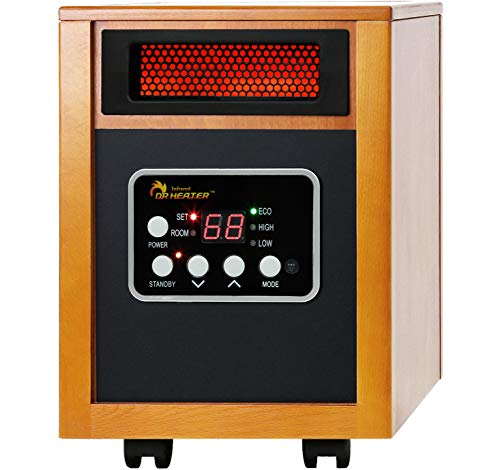
Large Room HeatDr Infrared Heater DR-968 Portable Space Heater
heating large rooms with infrared and PTC dual system
See it on Amazon
5
Compact and SimpleAmazon Basics Ceramic Space Heater, 1500W
small spaces needing fast, basic heating
See it on Amazon

Say your bedroom is 12 by 14 feet and the house drops to 62°F after sunset. A 1,500 W electric heater can cover that kind of space, but only if you place it on a wall outlet, keep 3 feet clear, and choose one with a thermostat and tip-over shutoff.

“Non-toxic” in this category mostly means electric heat with no combustion, plus materials and controls that don’t create avoidable problems. The buying decision comes down to room size, noise, thermostat range, safety listing, and how often the heater cycles on and off.

Non-Toxic Heater Comparison

ModelBest forHeat outputNoiseControlsSafety featuresPrice
DREO 1500W Electric Space Heater with ThermostatETL-Certified Safety1500W ceramic34 dBSmart thermostat, ECO mode, timerTip-over, overheat, flame retardantSee it on Amazon
DREO Portable Indoor Space Heater with ThermostatBest for Quiet Heat1500W PTC34 dBThermostat, heat modes, remoteTip-over sensor, overheat, flame retardantSee it on Amazon
GiveBest Portable Ceramic Space HeaterQuiet, Energy-Saving1500W/750W—Automatic thermostatTip-over, overheat auto shutoff, flame retardantSee it on Amazon
Dr Infrared Heater DR-968 Portable Space HeaterLarge Room Heat1500W, ~5200 BTU39 dBElectronic thermostat, timerTip-over, overheatSee it on Amazon
Amazon Basics Ceramic Space Heater, 1500WCompact and Simple1500W ceramic43 dBHigh/low/fan onlyTip-over, overheatSee it on Amazon

Best Non-Toxic Space Heaters for Indoor Use

#1ETL-Certified Safety

DREO 1500W Electric Space Heater with Thermostat

Best for bedrooms and small rooms needing quiet, precise heat
This DREO model combines ETL-certified safety with a V0 flame-retardant shell and smart tip-over and overheat protection for reliable peace of mind. It heats fast with 1500W ceramic PTC elements and runs very quietly at 34 dB thanks to oblique airflow fan technology. The wide 70° oscillation spreads heat evenly and the ECO mode optimizes energy use, making it ideal for bedrooms and offices.
Heat output 1500W PTC ceramicNoise 34 dBControls Smart thermostat, ECO mode, timerSafety features Tip-over, overheat, flame retardant shellOscillation 70° wide-angle
Why it made the cut
ETL-certified with multiple safety features
Whisper-quiet 34 dB operation
Wide 70° oscillation for uniform heat
Smart ECO mode saves energy
Good to know
Oscillation may not fit very small spaces
No remote control included
Skip it if Skip this if you want a heater with a built-in remote or no oscillation.
See it on AmazonPaid link · live price on Amazon
#2Best for Quiet Heat

DREO Portable Indoor Space Heater with Thermostat

Best for small rooms and bedrooms where noise matters
This DREO heater offers rapid warm-up and a heat funnel design that pushes warm air 200% farther than typical models. It includes a precise thermostat with 1°F increments from 41 to 95°F, plus multiple heat modes including ECO. Safety is strong with an advanced tilt sensor and V0 flame-retardant materials. Its brushless DC motor and winglet fan cut noise to 34 dB, making it great for quiet spaces.
Heat output 1500W PTCNoise 34 dBControls Thermostat, heat modes, remoteSafety features Tip-over sensor, overheat protection, flame retardantPortability Built-in handle
Why it made the cut
Advanced tilt-detection for tip-over safety
Precise 1°F thermostat control
Quiet 34 dB brushless motor fan
Multiple heating modes including ECO
Good to know
No oscillation feature
Remote control range limited
Skip it if Choose another model if you want oscillation or a larger room coverage.
See it on AmazonPaid link · live price on Amazon
#3Quiet, Energy-Saving

GiveBest Portable Ceramic Space Heater

Best for small rooms needing dual heat and fan modes
GiveBest’s ceramic heater offers two power levels plus a cool air fan, making it versatile year-round. It uses V0 flame-retardant materials and has automatic safety shutoff for overheating and tip-over. The fan and PTC heating tech deliver fast, quiet warmth suitable for bedrooms or offices. Its compact size and carry handle make it easy to move where you need targeted heat.
Heat output 1500W/750WNoise —Controls Automatic thermostatSafety features Tip-over, overheat auto shutoff, V0 flame retardantPortability Carry handle
Why it made the cut
Dual heating modes plus cool fan
Automatic tip-over and overheat shutoff
Quiet operation suitable for bedrooms
Compact and portable with handle
Good to know
Thermostat control is automatic, no manual setting
No oscillation or timer feature
Skip it if Skip this if you want a thermostat with manual temperature setting or oscillation.
See it on AmazonPaid link · live price on Amazon
#4Large Room Heat

Dr Infrared Heater DR-968 Portable Space Heater

Best for heating large rooms with infrared and PTC dual system
This Dr Infrared heater uses a dual heating system combining infrared quartz and PTC elements to deliver about 5200 BTU, which is more heat than typical 1500W heaters. It has tip-over and overheat protection plus a 12-hour timer. The noise level is 39 dB, slightly louder but still quiet enough for many rooms. It includes an electronic thermostat adjustable from 50 to 85°F and caster wheels for easy moving.
Heat output 1500W, about 5200 BTUNoise 39 dBControls Electronic thermostat 50-85°F, timerSafety features Tip-over, overheat protectionPortability Caster wheels
Why it made the cut
Dual heating system for more heat output
12-hour automatic shutoff timer
Electronic thermostat with wide range
Caster wheels for portability
Good to know
Heavier at 19 lbs
Uses more amperage (12.5 A) than typical plug-in heaters
Skip it if Avoid if you need a lightweight or lower amperage heater for smaller spaces.
See it on AmazonPaid link · live price on Amazon
#5Compact and Simple

Amazon Basics Ceramic Space Heater, 1500W

Best for small spaces needing fast, basic heating
Amazon Basics offers a compact ceramic heater with fast heating and three simple settings: high (1500W), low (900W), and fan only. It has built-in tip-over and overheat protection, plus a power indicator light. Noise is moderate at 43 dB, louder than some but still acceptable for many rooms. This model is non-oscillating and not recommended for humid areas like bathrooms.
Heat output 1500W ceramicNoise 43 dBControls High, low, fan only settingsSafety features Tip-over, overheat protectionSize 7.52″D x 6.34″W x 9.45″H
Why it made the cut
Compact and lightweight for portability
Fast ceramic heating
Basic safety features included
Simple three-setting control
Good to know
No oscillation or thermostat
Not suitable for humid environments
Noise level higher at 43 dB
Skip it if Skip if you want adjustable thermostat or oscillation, or for bathrooms.
See it on AmazonPaid link · live price on Amazon

How To Pick A Non-Toxic Space Heater

A non-toxic space heater is one that heats without producing harmful fumes like carbon monoxide, which means all electric heaters qualify because they don’t burn fuel indoors. If you want a safe electric heater for your bedroom with no fumes, focus on the specs and safety features rather than labels like “non-toxic,” which aren’t regulated for heaters.

Electric space heaters draw power to heat elements or ceramic plates without combustion, so they don’t emit gases. That makes them inherently free of toxic fumes, unlike propane or kerosene models that must be vented and monitored closely.

Myth
Ceramic space heaters are automatically non-toxic and safer by default
Fact
Ceramic refers only to the heating element type. It doesn’t guarantee safety or air quality. The heater’s materials, safety shutoffs, and certifications matter far more than whether the element is ceramic.

The specs that really separate electric heaters include wattage, thermostat range, noise level, oscillation, and safety listings like ETL or UL. Wattage shows heating power—most plug-in models top out at 1,500 watts, drawing about 12.5 amps on a standard 120 V circuit. Thermostat range controls room temperature and energy use. Noise matters if you run the heater in a bedroom or office. Oscillation spreads heat evenly but isn’t essential. Safety listings confirm the product meets strict electrical and fire standards.

Look for tip-over and overheat protection, automatic shutoffs, and an ETL or UL listing on the box or product page. These features are your best guarantee against fire or electrical faults.

What to Confirm Before Buying
Heater is electric with no fuel combustion
Wattage suits your room size (usually up to 1,500 W)
Thermostat controls temperature precisely
Has safety shutoffs: tip-over and overheat protection
ETL or UL safety listing visible
Noise level suits your intended space (under 40 dB for bedrooms)
Non-Toxic Label Isn’t a Standard
No official category or certification exists for “non-toxic” space heaters. Don’t trust the label alone. Instead, verify the heater’s construction materials, safety certifications, and emissions claims.
In short
Electric heaters are non-toxic because they produce no fumes. Choose one with proper wattage, thermostat, safety features, and certification for a safe, quiet, and efficient warm-up.

Measure The Room Before You Buy

A 1,500 watt space heater is typically best for bedrooms and smaller rooms up to about 150 square feet, providing spot heating rather than whole-house warmth.

Say your bedroom measures 12 by 12 feet, or 144 square feet. A 1,500 W heater matches that size well if the room is well insulated. But if the same room has drafty windows or poor insulation, the same heater may struggle to keep it warm.

Worked example
A 12 × 12 ft bedroom with good insulation needs about 1,500 W for comfortable heating. A drafty 12 × 12 ft room could require twice that, closer to 3,000 W, which usually means a second heater or a different heating type.
Room size144 sq ft
InsulationGood vs drafty
Heat needed1,500 W vs 3,000 W

Fans and oscillation in heaters help spread the warm air farther across the room, making heat feel more even. However, they don’t increase the total heat output, which depends on the wattage and heater type.

Tip
If your room is over 200 square feet or poorly insulated, a 1,500 W plug-in heater may not suffice. Consider a larger unit, two heaters, or a central heating source.

For a 200 square foot room, a single 1,500 W heater can provide some warmth but might not maintain comfortable temperatures in colder or drafty spaces. You might need multiple units or supplemental heating.

Oscillating models like the DREO Space Heaters for Indoor Use with Thermostat can make the heat spread more evenly in bedrooms and offices, but they don’t add heat beyond their rated wattage.

Check Noise, Thermostat, And Controls

A quiet space heater is essential for bedrooms and offices, where noise can disrupt sleep or concentration. The DREO Space Heaters for Indoor Use with Thermostat hit 34 decibels, roughly the sound of a soft whisper or rustling leaves, making it one of the quietest electric heaters suitable for bedroom use. The Dr Infrared Heater DR-968 is louder, typically around 50 dB, close to a quiet conversation, which could be distracting at night.

Thermostat precision matters more than many realize. The DREO models offer adjustments in 1°F increments, allowing you to maintain a steady, comfortable temperature without cycling the heater on and off too often. In contrast, the Dr Infrared Heater uses broader temperature bands that can cause more noticeable swings in room warmth. A thermostat with fine steps improves comfort and can reduce electricity use because the heater runs less frequently.

ModelNoise Level (dB)Thermostat PrecisionRemote ControlTimerECO Mode
DREO Space Heater341°F stepsYesYesYes
Dr Infrared Heater DR-968~50Broad bandsYesYesNo
Noise Level and Thermostat Features Compared

Remote control, timer, ECO mode, and oscillation are handy for convenience but don’t contribute to safety. ECO mode on the DREO models adjusts power to save energy while maintaining comfort, which is useful if you want to run the heater overnight without too much consumption. Oscillation on the Dr Infrared helps spread heat evenly but can add to the noise level.

Why 34 dB Matters
At 34 dB, the DREO heater won’t disturb your sleep or work. For comparison, standard conversation is about 60 dB, so this heater runs quietly enough to blend into the background.
Quiet Doesn’t Mean Safe
A low noise level is great for comfort but doesn’t guarantee safety. Always confirm your heater has tip-over and overheat protection before using it unattended or in bedrooms.

Match Safety Features To The Room

Space heater safety features include tip-over and overheat protection, plus a certification from ETL, UL, or CSA to prove they meet electrical and fire safety standards.

Tip-over protection shuts the heater off automatically if it falls. Overheat protection cuts power when internal temperatures get too high. Both are essential for any room, especially bedrooms and offices where you might forget the heater is on.

Look for an ETL certified space heater. ETL, UL, and CSA marks confirm the heater passed independent lab tests covering electrical safety and fire risk. Without one, the risk of a malfunction rises.

A tip over protection space heater is safer around pets, kids, or any busy household where a fall is likely. The DREO Space Heaters for Indoor Use with Thermostat include this feature, making them a solid bedroom choice.

Safe heater for bedroom overnight use depends on the model’s design. Most recommend you don’t run a heater unattended or while sleeping. Only choose a model the manufacturer says is safe for overnight use, and even then keep a smoke and CO alarm running.

Never plug a space heater into an extension cord or power strip. Use a dedicated wall outlet rated for the heater’s current. Keep at least 3 feet of clearance on all sides from furniture, curtains, and bedding to prevent heat buildup.

Moisture-prone rooms like bathrooms or laundry rooms need a heater approved for damp conditions. The Amazon Basics Ceramic Space Heater, for instance, says it is not for use in bathrooms or laundry rooms. Check your model’s manual closely for use restrictions.

Safety Checklist Before You Plug In
Confirm ETL, UL, or CSA certification on the label
Verify tip-over and overheat protection features
Use a dedicated wall outlet, never an extension cord or power strip
Maintain 3 feet of clearance around the heater
Check if the model is approved for use in damp rooms
Never run unattended or while sleeping unless specified safe
Heater Safety Warning
Running any space heater unattended or while sleeping is risky unless the manufacturer explicitly states it is designed for that. Even then, keep working smoke and carbon monoxide alarms in the room.
In short
Tip-over and overheat protection, plus an ETL or UL certification, matter most for safety. Always plug directly into a wall outlet and keep the heater away from flammable materials.

What Competitors Leave Out About Running Cost

How much does a 1500 watt space heater cost to run? Use this formula: watts ÷ 1,000 × hours × price per kWh. That gives you the kilowatt-hours used, multiplied by the electricity price.

A 1,500 W heater running 8 hours uses 1,500 ÷ 1,000 × 8 = 12 kWh. At 17 cents per kWh, that’s 12 × 0.17 = $2.04 a night. Multiply by 30 days for a monthly estimate of about $61.20 if used daily for 8 hours.

Space heater running cost per hour is about 1,500 ÷ 1,000 × 1 × 0.17 = $0.255, or 25.5 cents per hour at 17 cents per kWh electricity. This is a baseline before efficiency or thermostat cycling.

Electric heater monthly cost depends on daily use. If you run it 4 hours a day, costs halve. If you run a 100 W heated blanket instead, that’s 0.1 kW × 8 hours × 0.17 = $0.136 per night, much cheaper.

A thermostat can reduce costs by cycling the heater on and off to keep the room at temperature, instead of running full power all night. However, savings vary with room insulation, outdoor temperature, and thermostat quality.

HeaterWattsPer hourPer day (8 h)Per month (30 days)
1,500 W space heater1,500 W26¢$2.04$61.20
100 W heated blanket100 W1.7¢14¢$4.08
Calculated at 17¢ per kWh. Electricity cost comparison shows how wattage and run time drive your bill.
In short
Expect about 25 cents per hour to run a 1,500 W heater at 17 cents/kWh. A thermostat can cut costs by cycling power, but total savings depend on your room and outside weather.

What To Do Next For Your Room

Use your heater safely by placing it on a flat, stable floor away from combustibles. Always unplug it when you leave the room or go to sleep.

Start by measuring your room to confirm the heater’s size matches the space. A 1,500 watt heater suits up to about 150 square feet; larger rooms need more heat or multiple units.

Decide which control style fits your routine: a simple thermostat for hands-off warmth, or manual dials if you prefer quick, tactile adjustments.

Pick a model with the right safety listing—ETL, UL, or CSA—and noise level that fits the room’s purpose. Bedrooms and offices benefit from quiet models like the DREO Space Heaters for Indoor Use with Thermostat. For large spaces, consider higher output or dual heaters.

1
Measure your room
Use a tape to get length and width, then multiply for square footage.
2
Choose controls
Thermostat for automatic heat or manual for instant on/off.
3
Check safety and noise
Look for ETL/UL/CSA certification and read decibel specs.
4
Position your heater
Place on level surface, keep 3 feet clearance from combustibles.
5
Unplug when done
Never leave running unattended or while sleeping unless specified.
In short
Measure your room, pick controls you’ll use, and choose a certified, quiet model. Place it flat and clear, unplug after use.

Most readers will find the DREO Space Heaters for Indoor Use with Thermostat ideal for bedrooms and small rooms. For lowest cost and larger coverage, consider multiple units or a model like the Dr Infrared Heater DR-968 Portable Space Heater with higher output and safety features.

If you want something quieter for an office or bedroom, focus on models with noise ratings under 35 dB. Otherwise, prioritize certification and warranty for peace of mind.

Questions People Ask

What makes a space heater non-toxic?
A space heater is non-toxic if it does not release harmful fumes like carbon monoxide or nitrogen dioxide. Electric heaters qualify because they use electricity to generate heat without combustion. Avoid fuel-burning heaters indoors unless they have proper ventilation and safety sensors.
Are ceramic space heaters safer than other types?
Ceramic heaters are generally safe because their heating elements are enclosed, reducing burn risk. They also cool down quickly after turning off. Safety depends more on features like tip-over and overheat protection than the heating element type alone.
Can I run a space heater overnight in a bedroom?
Only if the heater is designed for unattended use, with automatic shut-off features and safety certifications like ETL or UL. Never leave fuel-burning heaters running overnight in bedrooms due to carbon monoxide risks. Electric heaters with tip-over and overheat protection are your safest bet.
How much does a 1,500 watt space heater cost to run?
Running a 1,500 watt heater for 8 hours uses 12 kWh of electricity. At 17 cents per kWh, that costs about $2.04 per night. The cost varies with your local electricity rate and how many hours you run it.
Where to go next
best non electric indoor heaterGuide to non-electric indoor heaters for safe warmth
small portable indoor heaterTop picks for small, portable indoor heaters
non-electric space heaters explainedExplanation of gas, kerosene and alternative heaters
Share
Written by Joye

I am a mechanical engineer and love doing research on different home and outdoor heating options. When I am not working, I love spending time with my family and friends. I also enjoy blogging about my findings and helping others to find the best heating options for their needs.

Keep reading

Related guides

Free newsletter

Heater deals and guides, worth opening

Price drops, new guides and safety recalls. One email, only when it matters.

No spam. Unsubscribe in one click. Privacy policy.
