Infrared Heating Costs and Efficiency: What to Expect
On this page 7 sections
- What Infrared Heat Is and How It Works
- How Infrared Heating Feels and Affects Comfort
- Comparing Infrared to Other Heating Types
- Choosing the Right Infrared Heater for Your Needs
- What Infrared Heater Maintenance and Safety Look Like
- What To Do Next: Using Infrared Heat This Winter
- Frequently Asked Questions
Many people think infrared heating is a newfangled technology, but it’s actually been around since the early 1800s and even used by ancient civilizations. The half truth is that while infrared is often described as heating the air, it actually heats objects and surfaces directly, which changes how rooms warm up and how you experience comfort.
What Infrared Heat Is and How It Works
Infrared heat is a type of electromagnetic radiation that warms objects and people directly. An infrared heater emits these waves, which excite molecules in surfaces to produce warmth immediately rather than heating the air first.

Infrared radiation lies just beyond visible red light on the electromagnetic spectrum, with wavelengths typically between 700 nanometers and 1 millimeter. It is divided into near, medium, and far infrared bands based on wavelength. This radiation transfers energy by vibrating molecules in solid objects, causing them to heat up.
Unlike convection heating, which warms air that then circulates to heat a space, infrared waves heat surfaces and objects directly. These heated surfaces slowly re-radiate heat, warming the surrounding air more evenly. That’s why infrared heaters can feel warmer at lower air temperatures than convective systems.
William Herschel discovered infrared radiation in 1800 by measuring temperature beyond visible red light from sunlight. Since then, infrared heating has been used in various forms, from ancient fires to modern ceramic and quartz heaters. Its rationale lies in efficient energy transfer without relying on air circulation, which can be slow and uneven.
How Infrared Heating Feels and Affects Comfort
Infrared heat feels more comfortable because it warms your body and objects directly, not just the air around you. This radiant heat mimics the natural warmth of sunlight, producing a soothing sensation without the dry, stuffy feeling caused by conventional heaters.
Far infrared waves penetrate up to 1.5 inches into the skin, improving blood circulation and promoting capillary expansion. These effects contribute to reduced muscle stiffness and joint pain, which is why infrared heat therapy is common in wellness treatments.
Since infrared heaters don’t heat air directly, they maintain the room’s natural humidity levels instead of drying the air out. This prevents irritation of the respiratory system and keeps skin from becoming dry.
Infrared heating technology is often misunderstood as a new invention or a source of harmful radiation. In reality, it is a well-established, natural form of heat that does not emit harmful ultraviolet rays or ionizing radiation. Its health benefits and comfort advantages make it a practical choice for home heating.

Comparing Infrared to Other Heating Types
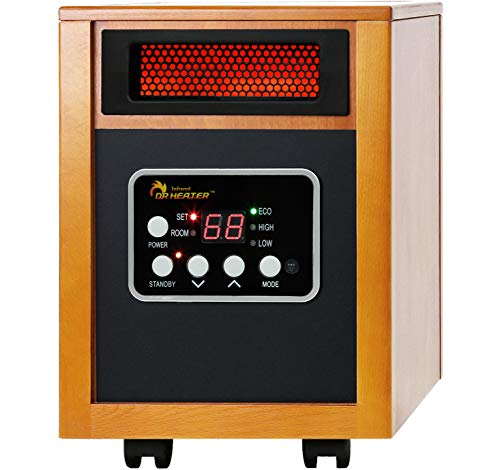
Infrared heating differs fundamentally from convection and ceramic heaters by warming objects and people directly, not the air first. This makes infrared more efficient in many cases, especially for spot heating or rooms with poor insulation.
A standard 1,500 W infrared heater uses the same power as a ceramic heater but transfers heat differently. Infrared waves excite molecules in surfaces, which re-radiate warmth, while ceramic heaters rely on a heating element that warms air by convection, often losing heat to drafts.
| Heater Type | Heat Transfer | Energy Use Efficiency | Best Use Case |
|---|---|---|---|
| Infrared Quartz | Radiant heat warms objects directly | ~85–90% efficient at spot heating | Large rooms, quick spot heating |
| Ceramic Heater | Convection heats air around the element | ~75–80% efficient, slower warming | Small spaces, general air heating |
| Oil-Filled Radiator | Radiation plus convection from hot oil | ~80% efficient, long heat retention | Whole-room steady heat |
| Carbon Infrared | Radiant heat with broad spectrum | ~90% efficient, gentle heat | Wellness and personal heating |
Infrared emitter materials affect performance. Ceramic emitters absorb 90% of the radiation they produce, providing uniform heat but slower warm-up. Quartz tubes heat quickly and emit strong near-infrared waves, ideal for rapid warming but with a shorter range. Carbon heaters distribute far-infrared waves evenly and are softer on the eyes, favored in wellness applications. Tungsten filament emitters produce intense near-infrared, commonly used in industrial settings rather than homes.
Infrared quartz heaters often rate higher in reviews for delivering immediate warmth and energy savings over ceramic-only models. Radiator heaters, while slower to respond, hold heat longer and suit continuous heating better than quartz infrared. Understanding these differences helps match heater type to your needs.
 Winter Heating Bill CutterSee what every heater in your home really costs, heat the rooms you use, and cut the waste in 30 days.Cost-per-hour tables for every heaterThermostat schedule and draft-proofing planRunning-cost and bill calculator (Excel)
Choosing the Right Infrared Heater for Your Needs
Infrared heating systems for home warmth differ from wellness devices like infrared heating pads or saunas in design and purpose. Home heaters focus on room-scale radiant heat, while wellness devices target localized heat penetration for therapy.

Your choice depends on wattage needs, emitter type, and control features. For rooms, look for 1,000 to 1,500 watts with quartz or ceramic emitters for quick or steady heat. Personal wellness devices use far infrared emitters with lower wattage designed for skin penetration and pain relief.
Thermostat control is crucial for efficient home heating—digital or electronic thermostats allow precise temperature maintenance. Many infrared heaters include safety features like tip-over switches and overheat protection, essential if you have pets or children.
For rooms, tower or panel infrared heaters with quartz tubes suit well because they warm objects quickly and maintain comfort without drying air. For personal use, infrared heating pads or smaller carbon infrared devices offer targeted relief and safer low-heat exposure.
What Infrared Heater Maintenance and Safety Look Like
Infrared heaters need routine cleaning and inspection to keep working efficiently and safely. Dust buildup on the heating elements or reflectors reduces output and can cause overheating. Turn off and unplug the unit before wiping surfaces with a dry or slightly damp cloth every few weeks during use.
Portable infrared heaters are generally safe when used properly. Leave at least 3 feet of clearance around the unit, avoid placing it near curtains or furniture, and never run one unattended overnight unless the model’s manual explicitly allows it. Many models include tip-over and overheat shut-off switches—check these features before buying.
Infrared heating pads, used for wellness, carry different safety concerns. Follow the manufacturer’s instructions closely to avoid burns or electrical hazards. Avoid folding or bunching the pad while it’s on, and never use it on infants or anyone unable to sense heat properly.
Whole-house heating with infrared units is uncommon and usually inefficient unless the home is very well insulated and the heaters are carefully sized and placed. Infrared heaters excel as spot or zone heaters because they warm objects directly without wasting energy on air circulation.
Choose infrared heaters with UL, ETL, or CSA certification to ensure they meet safety standards. Vent-free gas infrared models may be limited by local regulations, so confirm rules before installation. Electric infrared heaters produce no combustion emissions, though their environmental impact depends on how your electricity is generated.

