

You spent good money on a standby generator to keep the lights on when a winter storm hits. Then one morning the temperature drops to 10°F and your generator cranks but won’t start. You lift the hood and find the oil heater pad hanging halfway off the filter, held by a single zip tie. That’s not quality installation. That’s a failure waiting to happen.
This article gives you the same checklist a pro would run. You’ll learn exactly what to look for when evaluating an oil heater pad installation on a Generac or similar air-cooled standby generator. We’re talking specific temperature setpoints, wire connections, pad adhesion, and compatibility checks. By the time you’re done, you can walk up to any install and know within five minutes whether it was done right.
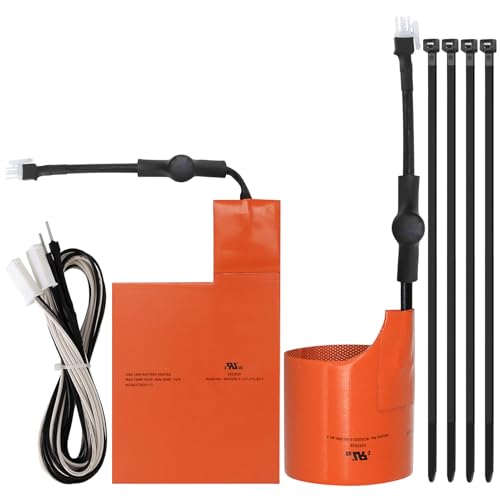
JIANBENKJ
Cold Weather Kit for Generac- Battery Warmer…
- Safety&Trusted: Our cold weather kit for Generac has passed UL certification. The Battery heater pad & oil heating kit for Generac…
- Compatible for: Our 7101 battery warmer for Generac&7102 oil heater kit for Generac generator is compatible with 9kW-22kW air-cool…
- Heating kit protection for Generac generator:No worried about forgetting to turn on the heater in cold temperatures, our battery h…
One product that makes this easy is the JIANBENKJ Cold Weather Kit for Generac (ASIN B0CPYD5KM7). It comes with a battery warmer pad and an oil heater pad that automatically turn on at 40°F and off at 55°F. The thermostatic control takes the guesswork out of operation — you plug it in and the pads handle the rest. We’ll reference its features as an example of what a well-designed kit should offer.
1. Check the Pad’s Physical Installation

Start with your eyes. The oil heater pad must wrap tightly around the oil filter canister. There should be no gaps, no folds, and no loose edges. If the pad hangs off even half an inch, it won’t transfer heat evenly to the oil. Cold oil means thick oil, and thick oil means a no-start.
Look for the pad’s adhesive backing or the included straps. The JIANBENKJ kit uses a simple wrap-and-secure design that stays put. A quality install uses the provided fasteners — not duct tape, not zip ties. If you see anything makeshift, that’s a red flag.
Also check the pad’s position relative to the filter base. The pad should cover the full height of the oil filter, not just the top half. Some installers leave the bottom inch exposed. That’s a problem because cold oil settles at the bottom, and you need heat there most.
2. Verify the Thermostat Behavior
A heater pad that runs constantly wastes power and risks overheating the oil. A quality install uses a thermostat that turns the pad on at a specific temperature and off at another. The industry standard for generator oil heaters is on at 40°F (4°C) and off at 55°F (13°C). The JIANBENKJ kit follows that exact range.
To test, you need a cold day or a fridge. If you can get the pad’s sensor below 40°F, plug the pad into a power source and check with a multimeter for continuity. If it shows closed circuit (continuity), the thermostat is working. Once the sensor warms above 55°F, the circuit should open. If the pad never turns on or never shuts off, the thermostat is defective — that install failed quality check.
Some installers skip the thermostat entirely and wire the pad to a manual switch. That’s a hack. You want automatic control every time.
3. Inspect Electrical Connections and Safety
Now look at the wiring. The pad should connect to a dedicated outlet or a weatherproof junction box. No splices made with twist connectors lying in the open. No exposed copper wire. If the cord is damaged or pinched somewhere, call it out.
The JIANBENKJ kit has a UL certification, which means it passed safety testing for fire and electrical risk. That matters because a shorted heater pad can start a fire inside your generator enclosure, especially near fuel and oil. Always verify that any pad you install carries a recognized safety mark — UL, CSA, or ETL. If it doesn’t, walk away.
For a deeper dive on post-install safety checks, see our guide on checking safety.
4. Confirm Compatibility and Coverage
Not every oil heater pad fits every generator. A quality install starts with a pad designed for your specific make and model. The JIANBENKJ kit fits Generac air-cooled standby generators from 9kW to 22kW, built in 2026 or later. It replaces OEM part numbers 7101 and 7102. If your generator is older than 2026 or a different brand, you need a different kit.
Two common mistakes: using a pad that’s too small for the filter, or using a pad that covers the filter but not the surrounding oil sump. The pad should warm the oil that circulates, not just the filter surface. Good kits are sized appropriately. Check the pad dimensions against your filter’s circumference. If in doubt, measure twice before buying.
Also consider coverage for cold weather. The kit includes both battery warmer and oil heater pads, which together reduce cold-start strain on the starter and battery. If your install only addresses oil, you’re leaving battery performance on the table.
Comparison of Approaches to Generator Oil Heating
Not all solutions are equal. The table below compares three common paths:
| Approach | Thermostat Control | Installation Difficulty | Safety Certification | Expected Reliability |
|---|---|---|---|---|
| No heater (rely on block heater) | None | N/A | None | Poor — requires manual warm-up |
| Generic 12V oil heater pad | Usually manual switch | Moderate — wiring needed | Rarely certified | Fair — prone to overheating or failure |
| JIANBENKJ thermostatic kit | Automatic 40/55°F | Easy — plug and play | UL certified | High — tested to OEM specs |
The JIANBENKJ kit wins on ease and safety. But even if you choose a different product, use the same criteria: automatic thermostat, UL certification, and correct fit.
Frequently Asked Questions
How do I know if my oil heater pad is working?
Plug it in on a day below 40°F. Wait 20–30 minutes, then touch the pad. It should feel warm to the touch. For a more precise test, use a multimeter on the resistance setting — a working pad shows a few ohms. If it stays cold or reads infinite resistance, the heater element or thermostat is dead.
What temperature should an oil heater pad turn on and off?
The standard is on at 40°F (4°C) and off at 55°F (13°C). This keeps the oil warm enough to flow without overheating. Kits that lack a thermostat or use a different setpoint can either waste energy or fail to prevent thick oil.
Can I install an oil heater pad myself?
Yes, if you’re comfortable with basic tools. The JIANBENKJ kit is plug-and-play — no wiring modifications needed. Most installations take about 20 minutes. Watch a YouTube installation video first, and follow the included instructions. If you’re not sure about electrical connections, hire a pro to verify.
Does the JIANBENKJ kit work on older Generac models?
It fits Generac 9kW–22kW air-cooled standby generators manufactured in 2026 or later. For older units, check the filter size and compare with the pad dimensions. If the filter circumference is within the pad’s wrap range, it may still work, but verify compatibility from the manufacturer.
How important is UL certification for heater pads?
Very. UL certification means the product passed safety tests for fire, electrical shorts, and overheating. Uncertified pads may work fine for a season, but they carry risk. If you insurance company ever asks, a UL-listed kit helps your case. For more on common installation mistakes, see our guide on fix common errors.
What to Look For Before Signing Off on an Install
- Pad wraps fully around the oil filter with no gaps or loose ends.
- Thermostat turns the pad on at 40°F and off at 55°F — test it if you can.
- Electrical connections are clean, dry, and use outdoor-rated cordage.
- Product has UL (or equivalent) safety certification.
- Kit is compatible with your generator’s make, model, and year.
- Both oil and battery heaters are installed, not just one.
- Follow up with a cold-start test before you need it in an emergency.
And if you’re unsure about oil capacity or how much oil your generator needs, check our oil level best practices before you fire it up.

HeaterGuides covers home heating, water heating and HVAC: how the equipment works, what it costs to run, and how to use it safely.
