

You walk into your house after a long day. The place is freezing. The thermostat is on the wall in the hallway, and you have to stand there pressing buttons while your coat stays on. Or worse — you forgot to turn down the heat before leaving, and your utility bill just took a hit.
Remote heating control solves that. But choosing the right one is not as simple as grabbing the first shiny gadget. You need to match the remote to your specific heating system, understand the trade-offs between wired and wireless, and ignore a lot of bad advice from people who haven’t actually used these things.

VIBOOS
Electric Heating pad with 6 Heat Settings,…
- Electric heating pad, perfect for for back, neck and shoulder, knee, abdomen, legs, arms, etc
- The heating pad has 6 temperature levels and 4 timer functions. The temp range is from 104°F to 140°F(40°C to 60°C). The timer can…
- Premium flannel, super soft material and better insulation effects. Disconnect the cable connection and hand washing or machine wa…
This article walks you through the real-world decisions — what matters, what doesn’t, and how to avoid a $200 mistake. I’ll also slip in a few specifics (like a handy electric heating pad for spot relief) to show you how local control complements whole-home systems.
For focused relief on a cold morning, the VIBOOS Electric Heating Pad (24″x12″, Gray Green) gives you direct, low-effort control with 6 heat levels and a timer that shuts off after 30, 60, 90, or 120 minutes. It’s a great tool for back, neck, or knee warmth while you sort out your main heating setup. Think of it as a backup that doesn’t need Wi-Fi or programming.
What Most People Get Wrong About Remote Heating Control
Three myths cause most of the confusion. Let me kill them one by one.
Myth #1: You Need a Smart Thermostat for Remote Control
Smart thermostats (like the popular Nest or Ecobee) are powerful, but they are not the only way to control your heating from a distance. A simple RF remote that talks to your boiler or baseboard heater works just fine. No app, no internet, no learning curve. Many people spend $250 on a smart thermostat only to use its app three times a year. A $40 RF remote with a wall mount does the same job if you only need on/off and temperature.
Myth #2: More Temperature Settings Mean Better Control
I’ve seen remotes with 20 temperature steps. Sounds great until you realize your body can’t feel a difference between 71°F and 72°F. What matters is a usable range (typically 60°F to 80°F) with 4–6 distinct settings. The VIBOOS heating pad, for instance, offers 6 temperature levels from 104°F to 140°F — that’s enough granularity without overwhelming you. More steps just mean more clicks to get where you want.
Myth #3: Wi-Fi Is the Only Reliable Wireless Option
Wi-Fi remotes depend on your network health and router placement. If your boiler is in a basement with thick concrete walls, Wi-Fi signal dies. Radio frequency (RF) remotes operate on dedicated frequencies like 433 MHz or 915 MHz. They have longer range (50 to 100+ feet) and penetrate walls better. No router rebooting, no app updates. For many people, RF is actually more reliable.
The Three Things That Actually Matter in a Heating Remote
Ignore the marketing fluff. Focus on these three specs.
1. Compatibility with your heating system type. A remote meant for a 24-volt gas furnace will not work with a 120-volt electric baseboard heater. Check the voltage and control protocol. Some systems use a simple relay (on/off), others need a proportional signal for modulating valves. If you have hydronic (hot water) radiators, you need a remote that talks to the zone valves or circulator pump. Read the fine print or ask the manufacturer before buying. If you want to understand the system better, read this solar panels for heating guide first.
2. Effective range in your home. Measure the distance from where you’ll keep the remote to the receiver. Add 20% for walls and obstacles. For a single-story house, 50 feet RF range usually suffices. For a two-story house with a basement boiler, go for 100+ feet. Wi-Fi remotes can reach anywhere if your network covers it, but RF is more predictable.
3. Battery life and feedback. A remote that dies after two months is worthless. Look for units that use common batteries (AA or AAA) and give you a low-battery warning. Also, does the remote show you the current temperature or just the set point? Some low-end models only show the target temperature — you have to walk to the thermostat to see the actual room temp. That defeats the purpose.
Wired vs Wireless vs Smart — Which One Fits Your Life?
Here’s the honest comparison. Wired remotes (installed directly to the heater controls) are the most reliable but least flexible. Wireless RF remotes hit the sweet spot for most homes. Smart Wi-Fi remotes add remote access from anywhere but come with setup headaches.
| Type | Reliability | Installation Difficulty | Range | Best For |
|---|---|---|---|---|
| Wired (hardwired) | Excellent — no batteries, no signal drop | High — requires wiring to heater control board | Unlimited (cable length) | Permanent installations, large homes, commercial |
| Wireless RF (dedicated frequency) | Very good — no network dependency | Low — plug receiver into heater, pair remote | 50–150 feet through walls | Most homes, basements, multi-floor |
| Smart Wi-Fi (app-based) | Good — depends on Wi-Fi network | Medium — need Wi-Fi router, app setup, account | Anywhere with internet | Tech-savvy users, vacation homes, geofencing |
My personal take: RF wireless is the least fuss for 80% of people. You don’t need to run cables or mess with networking. If you travel a lot, a smart Wi-Fi remote with scheduling saves energy — but only if you’re okay with occasional app glitches.
How to Match the Remote to Your Specific Heating System
Different heating types need different remote approaches. Here are the most common scenarios.
Electric baseboard heaters (line-voltage, 120V or 240V). These usually require a line-voltage thermostat or remote — not the low-voltage type used for gas furnaces. Look for a remote rated for your voltage. Some newer systems come with built-in receivers for wireless technologies for remote heating.
Hydronic radiant floors or radiators (hot water). Here the remote usually controls a zone valve or a circulator pump relay. The remote must match the valve’s actuator voltage (typically 24V AC). Many smart thermostats work here, but simpler RF units are cheaper and just as effective.
Ducted forced-air systems (gas furnace or heat pump). These use low-voltage (24V) control. Almost any standard remote thermostat works, but check if your system uses a C-wire for power. Without a C-wire, battery-powered Wi-Fi thermostats may drain fast. You can use a plug-in transformer adapter or choose a remote that doesn’t need constant power.
Wood stoves or pellet stoves. These need specialized remotes with temperature sensors near the stove. Some use thermocouples. Do not use a generic heating remote — you risk overheating or fire.
Real Questions People Ask About Heating Remotes
Can I use a universal remote for TV to control my heater?
No. TV remotes use infrared (IR) or Bluetooth, which lack the range and control protocol for heating equipment. Heating remotes use RF or wired signals to trigger relays or valves. Different voltage, different frequency, different safety requirements.
Do I need a professional to install a wireless heating remote?
Most RF remotes are DIY-friendly: you plug the receiver into your heater’s control port (some require wiring to the thermostat terminals). If you’re comfortable connecting two wires to a screw terminal, you can do it. Smart Wi-Fi thermostats are trickier — you might need to install a C-wire adapter. If your system is older (pre-1990s) or you’re unsure, hire an electrician to avoid shorting the control board.
Will a heating remote work if the power goes out?
Battery-powered remotes (RF or Wi-Fi) still let you change settings locally. But the heating system itself needs electricity to run — if the furnace or boiler has no power, the remote can’t do anything. Smart remotes that require internet will lose remote access if your router is down.
How often do heating remote batteries need changing?
It depends. Good RF remotes with LCD screens last 6–12 months on two AA batteries. Cheaper remotes with bright backlights might drain batteries in 2–3 months. Smart Wi-Fi thermostats that run on batteries often need replacement every 3–6 months because they constantly communicate. Hardwired units (C-wire powered) have no battery issue.
Can I control multiple heaters with one remote?
Some RF systems support multiple receivers on the same frequency — you pair each receiver to the remote, and the remote can address each one individually. Smart Wi-Fi systems often let you manage multiple zones through one app. But if you have a mix of heater types (electric baseboard and hydronic), you’ll likely need separate remotes. Check the product specs for ‘multi-zone capability.’
What To Do Next – A Quick Action Plan
You don’t need to overthink this. Stick with these steps and you’ll avoid regret.
- Identify your heating system type and voltage — this alone eliminates half the wrong remotes.
- Decide whether you need remote access from outside your home (Wi-Fi) or just within range (RF). Most people only need RF.
- Measure the distance from your common remote location to the heater. Add 20% for walls.
- Choose a remote with visible temperature feedback (actual room temp, not just set point) and easy-to-read buttons.
- If you have a hydronic system with zone valves, verify the remote’s compatibility with your valve actuator voltage (usually 24V).
- For occasional spot heating (back pain, cold feet), pick up a dedicated device like the VIBOOS Electric Heating Pad — it’s independent of your main system and gives you instant local control.
- Read the safety warnings on any heating remote or pad. Do not fold heating pads, do not cover them with blankets, and never use them while sleeping unless they have automatic shut-off (the VIBOOS pad does, with timers up to 120 minutes).
One last thing: don’t get seduced by features you won’t use. A remote that sits in a drawer because you never programmed it is useless. Pick something simple, reliable, and compatible. Your future self (warm, not frustrated) will thank you.

I am a mechanical engineer and love doing research on different home and outdoor heating options. When I am not working, I love spending time with my family and friends. I also enjoy blogging about my findings and helping others to find the best heating options for their needs.
Related guides
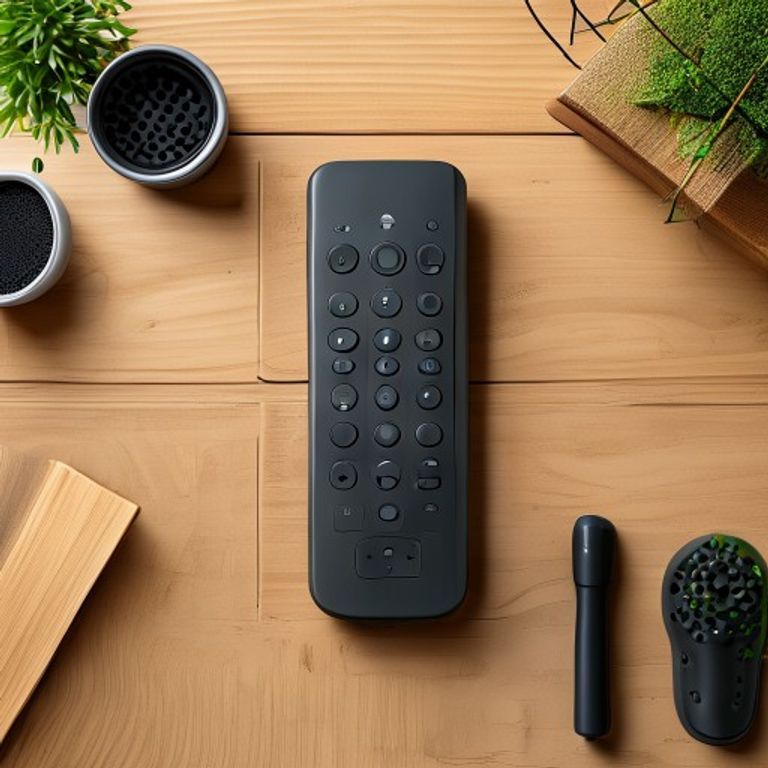
Smart Remote Heating Control: Ensure Full Compatibility
You buy a smart thermostat excited to control your home's heat from your phone. You open the box,…
How to Set Up Remote Control for Heating: Complete Guide
To set up remote control for heating, install a smart thermostat compatible with your heating system and follow…
Smart Heating Systems That Work With Remote Control
Many heating systems, including smart thermostats, electric heaters, and some gas furnaces, are compatible with remote control for…
