How Long Does a 100lb Propane Tank Last? (Full Guide)
On this page 6 sections
- 100lb Propane Tank Runtime and Usage Explained
- Calculate Propane Usage for Multiple Appliances at Once
- Inspect and Maintain Your Propane Tank for Safety and Longevity
- Avoid Common Mistakes That Cause Propane Tank Damage or Leaks
- When to Get a Permit or Hire a Licensed Pro for Propane Tank Work
- More Questions, Answered
A 100lb propane tank holds roughly 23.6 gallons but is only filled to 80% for safety, giving about 18.9 usable gallons. How long that lasts depends mainly on the BTU rating of your appliance and how often you run it.
Many assume propane tanks expire or that runtime calculations are exact, but propane doesn’t degrade and real-world usage is often less efficient than theory suggests. This guide clarifies those points and guides you through practical steps to estimate and extend your tank’s life.
100lb Propane Tank Runtime and Usage Explained
A full 100 lb propane tank holds around 23.6 gallons, but safety rules limit filling to 80%, so you get about 18.9 gallons of usable propane. Each gallon packs roughly 91,500 BTUs of energy, which powers your appliances until the tank runs out.
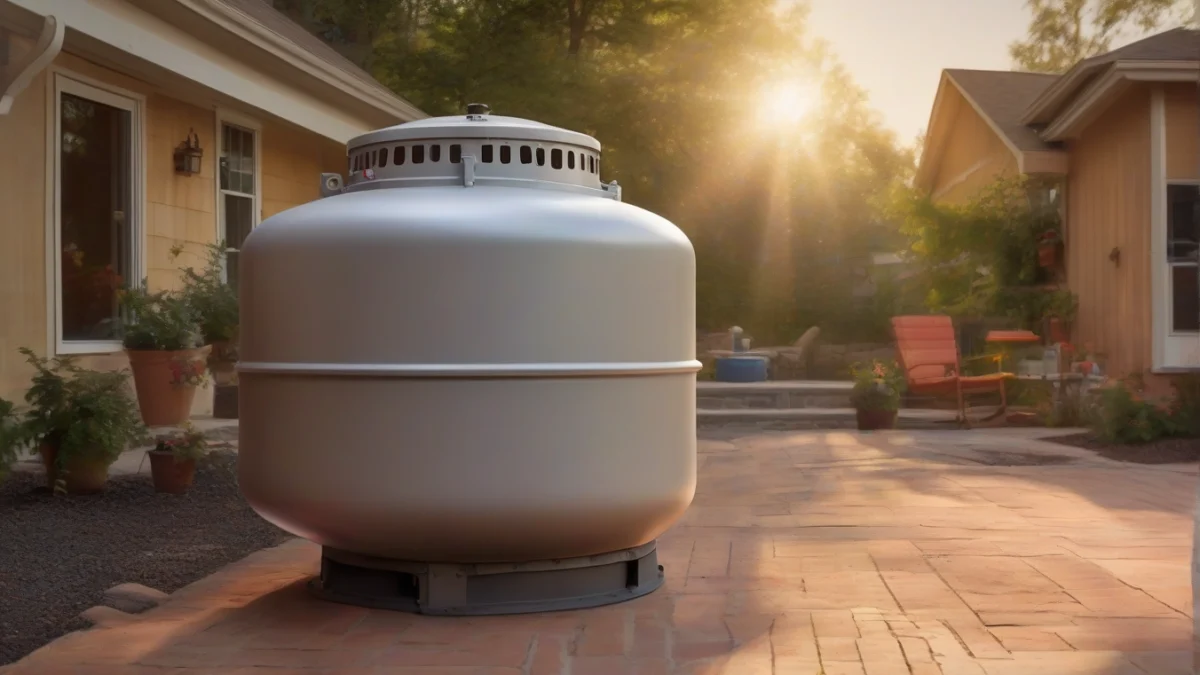
A 100 lb propane tank running a 30,000 BTU appliance lasts roughly 26 to 28 hours because real-world factors like appliance efficiency and weather reduce ideal runtime estimates.
To estimate runtime, divide the tank’s usable BTUs by the appliance’s BTU consumption per hour. For example, a 30,000 BTU heater uses 30,000 BTUs each hour, so 1,730,000 ÷ 30,000 equals about 57.7 hours. Real-world runtime is closer to half that due to appliance efficiency losses and cold weather effects that reduce pressure and heat output.
| Appliance BTU Rating | Approximate Runtime (hours) |
|---|---|
| 5,000 BTU (small heater) | 100+ |
| 30,000 BTU (typical home heater) | 25–30 |
| 50,000 BTU (large heater) | around 20 |
| 5,000 watt generator (~17,000 BTU) | 36 |
In a tiny home during winter, using a 30,000 BTU heater intermittently, expect the tank to last about 25 hours if running continuously. On a GasBruh heater, which typically runs around 30,000 BTU, runtime matches this estimate closely.
Lower efficiency or very cold weather can reduce these numbers because propane pressure drops and appliances burn more fuel to maintain heat. Higher efficiency units and proper maintenance extend tank life, but for rough planning, 25 to 30 hours is a practical baseline.
Calculate Propane Usage for Multiple Appliances at Once
To calculate propane use for multiple appliances, add up their BTU ratings. Divide your tank’s total usable BTUs by the sum to find how many hours the tank will last powering all appliances at once.
Add together the BTUs of all appliances running at the same time to estimate total hourly usage. For instance, if you run a 12,000 BTU stove and a 40,000 BTU tankless water heater simultaneously, your total consumption is 52,000 BTU per hour.
Divide the tank’s usable BTUs (around 1,730,000) by total hourly BTUs to get runtime. In this example, 1,730,000 ÷ 52,000 equals about 33 hours of continuous combined use, though efficiency and cycling reduce actual runtime.
A single 100lb propane tank can supply both an on-demand water heater and a stove, but runtime shrinks with simultaneous use. You’ll want to monitor consumption closely and consider usage patterns to avoid rapid depletion.
To test a propane tank heater, check for steady flame size, proper ignition, and no gas odor around connections. Watch fuel use over several hours to verify it matches expected consumption based on the appliance’s BTU rating and your calculation.
Efficiency varies: tankless water heaters often operate more efficiently than traditional tanks, using 0.5 to 2 gallons per hour versus about 1.5 gallons per day for traditional water heaters. That difference can significantly affect how long your tank lasts when multiple appliances share fuel.
Inspect and Maintain Your Propane Tank for Safety and Longevity
Propane tanks don’t degrade or lose energy over time, but they require regular inspection and maintenance to stay safe and last decades.

Most small propane tanks, like the 100 lb size, need recertification every 10 years from the manufacture date, with some states requiring inspection at 5-year intervals after that. Large stationary tanks can last up to 30 years with proper care and requalification.
Start with a visual inspection. Look over the tank for rust spots, deep dents, or any bulges in the metal. Check the valve and regulator for cracks or corrosion. Use a leak detection solution—soapy water works well—applying it around the valve and fittings. Bubbles indicate leaks that must be fixed before use.
Tank expiration dates don’t mean the propane inside is unsafe; they mark when the tank needs testing and recertification. Propane itself remains stable indefinitely if stored properly.
Store tanks upright in a well-ventilated, dry place away from ignition sources and direct sunlight. Avoid storing indoors or in unventilated sheds. Keeping the tank dry prevents corrosion that leads to leaks.
If your propane heater shows signs of poor performance, like sputtering or inconsistent flame, check the tank condition and connections first. Faulty valves or regulators often cause these issues before the tank itself does.
Avoid Common Mistakes That Cause Propane Tank Damage or Leaks
Filling a propane tank beyond 80% capacity is a major safety hazard. Overfilling leaves no room for vapor expansion, risking leaks or even tank rupture.

Never store propane tanks on their sides or lying down. Tanks must remain upright to keep the liquid propane and vapor properly separated and to maintain pressure regulation.
Keep tanks away from heat or ignition sources, like heaters, stoves, or open flames. Even a small spark near a leaking tank can cause a fire.
Avoid DIY repairs on valves, regulators or fittings. These components require professional service to ensure they seal correctly and operate safely.
Keep the tank and its fittings clean and dry. Dirt and moisture accelerate corrosion, shortening tank life and increasing leak risk.
A 100 lb propane tank used to heat a tiny home in winter will last about 25 to 30 hours running a typical 30,000 BTU heater, but poor maintenance or misuse can reduce this significantly.
For more on heater types and runtime, see forced air heater and construction heater guides.
When to Get a Permit or Hire a Licensed Pro for Propane Tank Work
Permits are usually required for installing or relocating a 100 lb propane tank, especially when connecting it to a house or building. Local codes set the rules, so check with your city or county before starting. Installation must meet National Fire Protection Association (NFPA) standards and the tank manufacturer’s instructions.
Work involving gas lines, regulators, or pressure relief valves should be done by a licensed professional. These components must be installed and tested precisely to avoid leaks and carbon monoxide hazards. DIY is fine for checking tank levels or replacing hoses only if the manual permits it and you follow safety protocols.
Propane tanks need periodic inspection and recertification, typically every 5 or 10 years depending on the tank type and local regulations. This inspection ensures the tank’s integrity and compliance with safety standards. Never skip it to avoid penalties and unsafe conditions.
Installation code varies by location but often includes minimum clearances from buildings, property lines, and ignition sources. For example, most codes require outdoor tanks to sit at least 10 feet from any building openings. Follow all local rules precisely to pass inspection and keep your home safe.
If your area requires it, apply for a permit before installing or moving your propane tank. When in doubt, hiring a licensed propane technician saves time and reduces risk. They handle permit paperwork, code compliance, and safety testing, protecting you from costly mistakes.
