Forced-Air Diesel Heaters That Heat Large Spaces Fast
On this page 8 sections
Forced-Air Diesel Heater Comparison
| Rank | Model | Best for | Heat output | Tank / runtime | Fuel options | Price |
|---|---|---|---|---|---|---|
| 1 | BILT HARD 135,000 BTU Forced Air HeaterBest for most shops | Garages, jobsites, and workshops up to 3,200 sq ft that need steady heat all day | 135,000 BTU | 8 gal / 8+ hours | Kerosene, diesel #1 & #2 | Check price |
| 2 | Mr. Heater 140,000 BTU WiFi Forced Air HeaterWiFi monitoring | Contractors who want low-fuel alerts and remote control from across the site | 140,000 BTU | — | Kerosene, diesel | Check price |
| 3 | VEVOR 125,000 BTU Forced Air HeaterLong runtime | Warehouses and workshops where you want 9 hours between fills | 125,000 BTU | 9 gal / 9 hours | Kerosene, diesel | Check price |
| 4 | BILT HARD 215,000 BTU Forced Air HeaterHighest output | Pole barns, large warehouses, and open jobsites over 8,000 sq ft | 215,000 BTU | 13.2 gal / — | Kerosene, diesel #1 & #2 | Check price |
| 5 | BILT HARD 85,000 BTU Forced Air HeaterSmaller spaces | Single-car garages, small shops, and outbuildings up to 2,200 sq ft | 85,000 BTU | 5 gal / 9 hours | Kerosene, diesel #1 & #2, jet A | Check price |
Forced-air diesel heaters are for big, open spaces that lose heat faster than a smaller heater can make it. They move a lot of hot air, so output, fuel tank size, and airflow matter more than a tidy sales pitch.
These are combustion heaters, so they belong in the right setting with the right ventilation. If you want indoor living-room heat, stop here and buy an electric heater or a properly installed furnace instead.
Top Forced-Air Diesel Heater Picks

BILT HARD 135,000 BTU Forced Air Heater

Mr. Heater 140,000 BTU WiFi Forced Air Heater
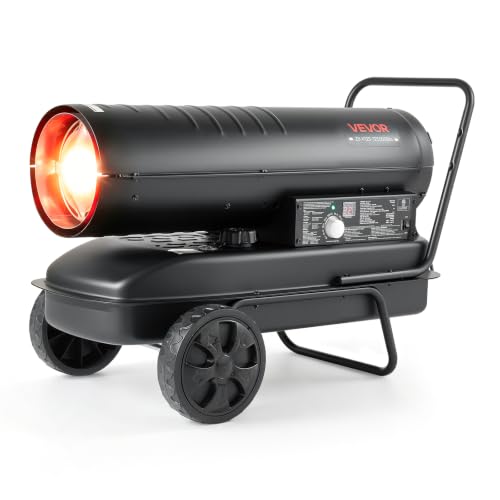
VEVOR 125,000 BTU Forced Air Heater

BILT HARD 215,000 BTU Forced Air Heater

BILT HARD 85,000 BTU Forced Air Heater
How To Choose A Forced-Air Diesel Heater

For most buyers searching for the best forced air heater, start with a diesel or kerosene forced-air model sized for the space, then check its tank, thermostat, wheels, and safety listing. The BILT HARD 135,000 BTU heater is the strongest all-around choice here for a large drafty garage, workshop, or jobsite because it combines high output, portability, thermostat control, and CSA certification. These heaters deliver fast heat by burning fuel and pushing the warmed air with a fan; they aren’t living-room heaters.
Choose The Fuel For The Space
A diesel forced-air heater makes sense where you already use diesel or 1-K kerosene and can provide the ventilation required by the manual. Most portable direct-fired units are for outdoor work or well-ventilated garages, shops, and jobsites—not sealed rooms, tents, vehicle cabins, or ordinary bedrooms. Keep a working carbon monoxide alarm nearby, and never burn gasoline in a kerosene heater.
Propane forced-air heaters are another fast-heating option, but they need a compatible cylinder, ventilation, and an oxygen-depletion or other safety system when the model is approved for indoor use. For a propane-specific comparison, see best forced-air propane heaters for fast heat. Electric forced-air heaters avoid combustion and fuel storage, but a plug-in model is limited by the outlet and typically tops out at 1,500 watts, so it won’t match a 135,000 BTU fuel heater in a large drafty space; see our electric forced air heater picks for smaller areas.
Match Output To The Building
BTU tells you how much heat the burner can release, while insulation, drafts, ceiling height, and open doors decide how much of that heat stays with you. An 85,000 BTU unit is the sensible starting point for a smaller workshop or two-car garage; 135,000 to 140,000 BTU fits a larger or poorly insulated space; 215,000 BTU belongs in a warehouse bay, equipment shed, or open jobsite where heat escapes quickly.
More BTUs heat a space faster, but they also consume fuel faster at full output. Don’t buy the largest heater simply because the number looks impressive. Oversizing can mean more fuel use, more noise, and short cycling if the thermostat reaches its setting quickly.
Check Runtime And Controls
Tank size divided by the listed fuel burn rate gives the rough full-power runtime: a 10-gallon tank burning 1 gallon per hour lasts about 10 hours. Read both figures in the specification sheet, because a large BTU rating with a small tank can turn your workday into repeated fuel-can trips.
A thermostat and CSA certification make the BILT HARD 135,000 BTU model easier to live with than a bare-bones manual unit, especially in a large garage where you won’t want to stand beside the controls. Choose a simpler heater only if you can monitor it closely and don’t need automatic cycling.
How Much Heat And Runtime You Need
Output matters most when you’re trying to warm a space before the work shift starts. An 85,000 BTU heater will take the edge off a two-car garage in half an hour; a 135,000 BTU model does it in fifteen minutes and then cycles down, or keeps up in a much larger building. Manufacturers list coverage in square feet, but those numbers assume a sealed, insulated room with an eight-foot ceiling and moderate outdoor temperatures. Real sheds, warehouses and jobsites leak air, have twelve-foot ceilings, and sit in January wind.
Tank size determines how long the heater runs between fills. Most forced-air diesel heaters in the 85,000 to 135,000 BTU range burn between 0.8 and 1.2 gallons per hour on high. A ten-gallon tank gives you eight to twelve hours; a five-gallon tank means refilling at lunch. Bigger heaters sometimes justify themselves by reaching temperature faster and then shutting off or idling, so total fuel use over a day can end up lower than running a smaller unit at full throttle.
Diesel heaters aren’t the only fast-heat option for large spaces. If you’ve got a natural gas line already run to the garage, a forced-air natural gas model eliminates fuel handling and refills. Propane delivers similar output and you’ll find a wider choice of forced-air propane heaters with thermostats and indoor ratings, though you’re trading tank size for portability. Both burn cleaner than diesel and smell less on startup.
Which Pick Fits Your Space
For most buyers looking for the best forced air heater for a large garage or jobsite, choose the BILT HARD 135,000 BTU model: its 10-gallon tank runs about 11 hours, and wheels and a built-in thermostat make it practical to move and regulate. It burns diesel or kerosene. Treat the square-foot figures below as rough guidance; insulation, ceiling height, drafts, and outdoor temperature all change how much heat you need.
If you specifically need a propane model, this guide’s picks aren’t propane heaters; see our guide to best forced-air propane heaters for fast heat. Fuel-burning forced-air heaters need the ventilation required by their manual and a working carbon monoxide alarm. Don’t use an outdoor-only heater in an enclosed space.
Best Overall for Garages and Jobsites
Choose the BILT HARD 135,000 BTU for a typical two- or three-car garage, a barn, or a jobsite where you need substantial output and can roll the heater out of the way. Its thermostat can cycle the burner toward a set temperature instead of leaving it at full output, and the wheels and lift handle make moving it easier. The stated capacity is up to 3,400 square feet, but a drafty, uninsulated building may need more heat than that figure suggests.
Best for a Large Warehouse or Equipment Shed
Pick the BILT HARD 215,000 BTU when the space is too large or leaky for the 135,000 BTU model to keep up. It has a 13.2-gallon tank and up to 14 hours of reported runtime at half throttle; full-output use burns fuel faster. At 53 pounds empty and about 135 pounds with a full tank, it’s a poor choice if you’ll need to carry it often.
Best Mid-Size Option
The VEVOR 125,000 BTU suits an insulated two-car garage or workshop where 85,000 BTU may fall short but the larger BILT HARD models are more heater than you need. Its 9-gallon tank is reported to run about 9 hours, and the adjustable temperature dial gives you a target to work toward. Check the manual for the approved fuel and operating requirements before filling it.
Best for Remote Controls
Choose the Mr. Heater 140,000 BTU if remote start, fuel-level checks, and low-fuel alerts are useful enough to justify extra electronics. It offers WiFi and Bluetooth controls, movement shutoff, and runtime logging, with a reported 10-hour runtime from its 8-gallon tank. Skip it if you want a simpler heater with fewer electronic features to troubleshoot.
Best for a Small Garage or Job Trailer
The BILT HARD 85,000 BTU is the smaller, easier-to-carry pick for a one-car garage, a 10-by-20-foot job trailer, or a compact workshop. Its 5-gallon tank is reported to run about 8 hours, and the heater weighs 31 pounds empty. Don’t choose it for a large, uninsulated space in severe cold; the lower output may leave you waiting for the temperature to rise.
| Model | Output | Tank | Reported Runtime | Good Fit |
|---|---|---|---|---|
| BILT HARD 135,000 | 135,000 BTU | 10 gal | About 11 hours | Most garages, jobsites, and barns |
| BILT HARD 215,000 | 215,000 BTU | 13.2 gal | Up to 14 hours | Large warehouses and equipment sheds |
| VEVOR 125,000 | 125,000 BTU | 9 gal | About 9 hours | Insulated garages and workshops |
| Mr. Heater 140,000 | 140,000 BTU | 8 gal | About 10 hours | Remote control and fuel alerts |
| BILT HARD 85,000 | 85,000 BTU | 5 gal | About 8 hours | Small garages and job trailers |
Safety And Certification
Forced-air diesel and kerosene heaters belong in well-ventilated workshops, garages, and jobsites—not sealed rooms, tents, or vehicle cabins where carbon monoxide can build to dangerous levels. Carbon monoxide is colorless, odorless, and the main hazard with any fuel-burning heater. Use the heater only in spaces the manual approves, with enough air exchange to carry exhaust away, and keep a working CO alarm within earshot. Certification from CSA, UL, or ETL tells you the heater passed third-party testing, but it doesn’t replace ventilation or override the manual’s clearances.
Forced-air propane heaters follow the same rules: indoor-rated models need an oxygen depletion sensor and the air exchange the listing requires. Outdoor torpedo heaters and construction models that lack ODS belong outside, period. Vent-free gas heaters are banned or restricted in California, Massachusetts, and several other states and cities, so check local code before installing anything that exhausts combustion gases indoors. Diesel and kerosene forced-air heaters vent their exhaust into the room, which makes generous ventilation non-negotiable.
Fuel type matters as much as air supply. When the manual calls for 1-K kerosene, use 1-K kerosene—the clear, low-sulfur grade sold at hardware stores and fuel distributors. Red-dyed kerosene and diesel work in heaters approved for both, but gasoline is out. Gasoline’s lower flash point and higher vapor pressure create fire and explosion risk in a heater designed for kerosene’s burn characteristics. Improvising with whatever liquid fuel is cheapest or closest invites incomplete combustion, soot buildup, and a shop full of acrid smoke.
CSA certification appears on the BILT HARD 135,000 BTU, BILT HARD 85,000 BTU, and BILT HARD 215,000 BTU models in the product data. That mark confirms the heater met North American safety standards for construction, materials, and performance. It’s a baseline, not a free pass. You still need to follow the clearances, use the recommended fuel, and provide ventilation. Certification reduces the chance of a manufacturing defect causing a fire; it won’t save you from running a heater in a space too small or too sealed for safe operation.
What Competitors Skip About Diesel Heaters
Fuel quality shapes how the heater starts, how much it smells, and how much soot collects on the combustion chamber. Cleaner fuel means fewer hydrocarbons left unburned, which translates to less odor during startup and shutdown. When a heater is rated for both kerosene and diesel, kerosene usually delivers the better experience—faster ignition, less smoke, and a thinner residue inside the burn chamber. Diesel works, but it’s heavier, slower to vaporize in cold weather, and produces more particulate matter that eventually clogs the nozzle and fouls the heat exchanger.
Every forced-air heater here runs on electricity as well as liquid fuel. The fan motor, electronic ignition, and thermostat control draw between 3 and 6 amps at 120 volts, depending on output. Extension cords matter: a 14-gauge cord works for runs up to 50 feet; go to 12-gauge beyond that. Undersized cords cause voltage drop, which shows up as slow fan speed, weak ignition spark, and a heater that won’t hold a flame. Plug straight into a grounded outlet when you can. Power strips and household indoor extension cords rated for lamps won’t handle the sustained draw.
Most complaints about ‘bad heaters’ trace to maintenance skipped between seasons. Air filters clog with dust, inlet screens collect lint and cobwebs, and stale fuel leaves gum in the fuel line and nozzle. Clean or replace the air filter before each heating season, flush the tank if fuel sat all summer, and check that the photocell sensor and ignition electrodes are free of soot. Storage matters too: drain the tank and run the heater dry before putting it away, and keep it in a space where condensation won’t rust the burner assembly or corrode electrical connections.