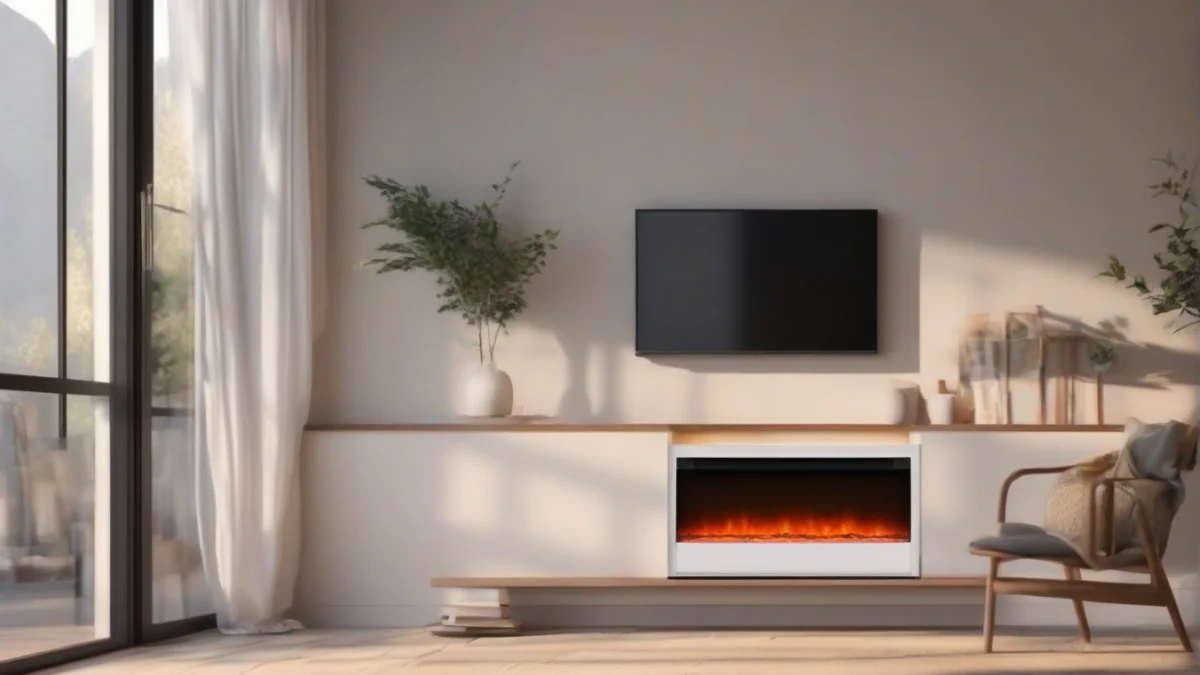
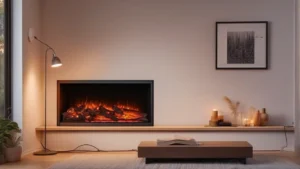
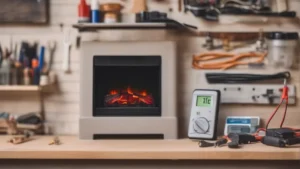
Electric fireplaces work by using LED lighting for the flame effect and a 750W to 1500W electric heater, usually with a fan, to warm the room. An infrared heater is a heater that warms objects and people directly rather than the air. Say your living room is 200 square feet and you want a little extra heat after dinner: a 1,500 W unit can help, but it still runs on regular household electricity and the room layout matters.
A good electric fireplace gives you two things at once: a visual flame effect and a modest room heater. The first is for mood, the second is for comfort, and the two systems are separate inside the cabinet.
The main question is not whether it “looks like” a real fireplace. It is whether the heater size, mounting style, and clearance fit the room you actually have.
What to remember
A 1,500 W electric fireplace draws about 12.5 A on a 120 V circuit, so it should have its own wall outlet.
LEDs make the flame effect; the heater element and fan make the warmth.
Most models are for zone heating, not whole-house heating.
Clearance rules come from the manufacturer, but many wall-mounted units want space above them and open air around the intake and outlet.
If you see an E3 or similar error, check airflow, sensor location, and the manual before buying parts.
How Electric Fireplaces Work
Electric fireplaces create the flame with LEDs, reflectors and sometimes a rotating effect, then heat the room with a 750W or 1500W resistive heater and fan. There’s no burning fuel, chimney or flue draft: the flame is an optical effect, while electricity becomes heat at the element. That is how electric fireplaces work, including built-in models and duraflame electric fireplaces.
This electric fireplace showcases how it creates a flame effect.
The flame bed usually hides LEDs beneath or behind translucent material. Reflectors spread and break up the light, while a moving strip, spinner or similar effect makes the pattern look like flames. Changing LED colors, brightness and movement changes the appearance without changing the heat output. The heater is separate, so you can often run the flame effect with no heat.
Part
What it does
LEDs and flame bed
Provide the colored light and glowing ember effect.
Reflectors and moving effect
Scatter or shift the light so it resembles flickering flames.
Resistive heating element
Turns electrical energy into heat.
Fan
Moves warmed air into the room.
Infrared element, on some models
Warms nearby people and objects directly instead of relying only on room air.
The decorative flame system and the heating system are separate.
A 750W setting draws less power and produces less heat than a 1500W setting. At 120 volts, a 1500W fireplace draws about 12.5 amps, so plug it straight into a suitable wall outlet and don’t share that circuit with other appliances; never use an extension cord or power strip. Product 1 specifies a 120V, 15A circuit and says not to plug other appliances into the same circuit.
Worked Example
Run a 1500W fireplace for 8 hours: 1.5 kW × 8 hours = 12 kWh. At 17 cents per kWh, 12 × $0.17 is about $2.04 for the night. Your bill changes with the heat setting, runtime and electric rate.
Power1,500 W
Runtime8 hours
Energy used12 kWh
Assumed rate$0.17 per kWh
Heater
Watts
Per hour
Per day (8 h)
Per month (1 days)
Electric fireplace on high
1,500 W
26¢
$2.04
$2.04
Calculated at 17¢ per kWh. This uses 1,500W for 8 hours at an assumed 17 cents per kWh.
An electric fireplace doesn’t need a chimney because it produces no combustion gases. That also means there’s no gas flue, wood-smoke draft or vent pipe to size; the unit still needs the clearances and electrical connection in its manual. A 1500W model is best treated as zone heat for one small or medium room, not the main heater for a drafty whole house.
The phrase electric fireplace heater dimensions covers more than the visible front: check the full cabinet depth, required opening and clearances. For a log-style decorative option, you can compare duraflame electric fireplaces before deciding whether you need a heater-capable insert.
In short
The flame is light, not fire; the heat comes from an electric element and fan. A 1500W setting can warm one zone, but it uses the same substantial electrical load as a 1500W space heater.
Myth
The flame effect means the fireplace is burning fuel behind the screen.
Fact
The flame is produced by light and moving visual parts. With the heat switched off, the fireplace can show the effect without combustion, smoke or a chimney.
Measure The Room Before You Buy One
Measure the room, the wall opening and the recess depth before choosing an electric fireplace; a 1500W insert is usually one-room or zone heat, and the correct height depends on the model’s opening, clearances and the furniture around it. Wall-mounted and recessed units can have different installation dimensions even when their fronts look similar.
Measuring the wall ensures the correct fit for your electric fireplace.
1
Measure the room and heat zone
Treat a 1500W insert as supplemental heat for one room. An oversized or poorly insulated room may need better air sealing or another heater; a larger-looking screen does not create more heat from the same 1500W input.
2
Measure the opening
For an existing fireplace, record the opening width, height and depth at several points. Product 1 fits a 49 × 15 × 6 inch opening, while its front measures 50 × 15.75 inches and its back-install dimensions are 48.75 × 14.35 × 5.56 inches.
3
Check the wall and overhead space
A wall-mounted unit sits proud of the wall; a recessed unit needs a cavity that accepts the full body, not merely the screen. Product 1 calls for at least 11.8 inches from the ceiling, mantel and anything mounted above it.
4
Plan the outlet and furniture
Confirm the power requirements before buying: Product 1 uses a 120V, 15A circuit, and its instructions say not to share that circuit with other appliances. Keep the mantel, TV and electronics at the manual’s spacing; rising heat can damage equipment even when the fireplace itself is operating normally.
Useful for an existing opening
Westinghouse 50 Inch Electric Fireplace Heater
Product 1 is worth checking when your measured recess is 49 × 15 × 6 inches or larger in the required directions, because it supports both wall mounting and in-wall recessed mounting; verify the complete manual dimensions before cutting anything.
A slim front doesn’t mean the whole box is slim. Measure from the finished face into the cavity, including trim, wiring space and any obstruction behind an old fireplace opening.
What to measure
Why it matters
Room size and insulation
Shows whether 750W or 1500W can serve the room as zone heat.
Opening width and height
Determines whether an insert physically fits.
Recess depth
Catches cabinets, masonry or wiring that block the heater body.
Ceiling, mantel and TV distance
Protects overhead surfaces and electronics from heat.
Outlet and circuit
Confirms the fireplace can run safely without sharing an overloaded circuit.
Measure the finished space, not only the advertised screen size.
Useful Models For This Topic
These models make the wall-mount, recessed fit, controls, and heater settings easier to compare.
Flexible Installation
Westinghouse 50-Inch Wall/Recessed Fireplace
The interchangeable log and crystal ember beds help explain the decorative side of an electric fireplace, while the 750W/1500W heater settings and 62F to 82F thermostat cover the heating side. Its wall-mount and in-wall options also make clearance and circuit planning part of the installation decision.
Its 3.86-inch-thick design shows how a slim insert can sit in a wall without making the surround do all the visual work. The remote and touchscreen controls separately handle flame effects, temperature, and the 1–8 hour timer, while overheat protection supports its heating mode.
Electric fireplace remote symbols usually control power, heat, flame brightness or color, and the timer; a lock icon usually locks the touch panel so buttons can’t be changed accidentally. The exact icons vary by model, so match each symbol with the manual before assuming the fireplace has failed. A flame symbol can work with the heat turned off, which is normal on many electric fireplaces.
No Pilot Light
An electric fireplace has no gas burner, so there is no pilot light to light or relight. The flame is an LED effect, while the heater and fan operate separately.
Check These First
Set the main power switch to on. On many rocker switches, I or | means on and O means off, but use the markings on your unit if they differ.
Plug another small appliance into the wall outlet to confirm the outlet has power, then plug the fireplace directly into that outlet.
Replace the remote batteries with the correct type and check that the battery contacts are clean.
If a lock icon appears on the control panel, follow the manual’s instructions to release it—usually by pressing a specific button or combination.
Turn heat on separately from the flame effect and check that the timer has not switched the heater off.
If the display changes but the fireplace still doesn’t blow heat, check the heat mode, the air intake and outlet, and the overheat cutoff before replacing a part. Dust or a blocked grille can stop the heater while leaving the display and flame effect working.
In short
A flame that won’t stay on may be affected by the timer, flame setting, lock, remote batteries, or a loose power connection. Start with the outlet, main switch, remote, and separate heat and flame controls; don’t search for a pilot light that isn’t there.
Fix E3 And Other Common Error Codes
An electric fireplace E3 code isn’t universal. Depending on the brand and model, E3 may point to overheating, blocked airflow, or a temperature-sensor problem, so the manual for your exact unit is the authority. The same caution applies to an E3 error on an electric fireplace in a camper, where the appliance still needs its model-specific code list.
Stop Repeated Resets
Don’t bypass a thermal cutoff or keep resetting the fireplace after the code returns. A cutoff is there to stop unsafe heat buildup; repeated trips mean the cause needs attention, not more button presses.
1
Shut it off
Turn off the fireplace with its control, then unplug it from the wall outlet. Don’t work around the grille while the heater is powered.
2
Clear the air path
Remove dust, lint, curtains, furniture, and other obstructions from the intake and outlet openings. Keep the grille from being pressed against a wall or trim.
3
Let it cool
Leave the unit unplugged until the heater and surrounding grille are cool. A hot casing after an overheat code is a reason to wait, not a reason to open the cabinet.
4
Restart once
Restore power and run one restart using the normal controls. If E3 returns, the fan, airflow, sensor, or control circuit may need service; stop using the heater until the manual or a qualified technician gives you the next test.
An electric fireplace that isn’t blowing heat may have heat turned off while the flame remains on, or it may have entered an overheat condition. If the fan never starts after a cool, unobstructed restart, don’t assume the heating element is the only failed part.
Myth
E5 or EE has one standard meaning on every electric fireplace.
Fact
E5 and EE codes can mean different faults by brand, including sensor or control problems. Confirm the code in the manual before ordering a replacement board, and replace a fuse only with the exact type and rating specified by the manufacturer—or have a technician do it.
Choose Between Decorative And Heating Models
A decorative electric fireplace gives you the flame display without room heat, while a heating model adds a 750 W or 1500 W resistive heater and fan. That distinction answers most searches for the most realistic electric fireplace or most realistic looking electric fireplace: visual realism comes from flame color, brightness, speed, logs and ember media, not from the heater itself.
Choose flame-only when the fireplace is mainly artwork, especially in a room that already has dependable heat. Choose a heater-capable model for supplemental warmth after dinner; a 1500 W setting draws about 12.5 A from a 120 V circuit, so it isn’t a magic replacement for a furnace. For electric fireplace space heaters, look for adjustable heat, a thermostat and overheat protection rather than judging the unit by flame effects alone.
Style
Best use
What to check
Decorative
Flame display with no room-heating expectation
Flame colors, brightness, speed and ember options
Mantel
A fireplace that doubles as furniture
Cabinet footprint, television clearance and outlet access
Insert
A wall feature or remodel
Opening width, height, depth and approved surround materials
Wall mount
A simpler feature wall installation
Wall support, outlet location and clearance above the unit
Pick the form around the room and the job, not the flame picture alone.
The best electric fireplace with mantel is the one whose cabinet fits your furniture layout and television clearance; a mantel model makes sense when the fireplace is furniture. An electric fireplace TV stand combo follows the same rule. For the best 16 inch electric fireplace, first confirm what the 16 inches measures and compare it with your opening—height, width and depth are different measurements.
A recessed insert suits a clean wall feature better than a mantel cabinet. Product 2 is a style-driven example: it offers 12 flame colors, 12 bed colors, adjustable brightness and speed, plus 750 W and 1500 W heat settings. Its 3.86-inch thickness and recessed or wall-mounted design suit a modern feature wall, but the opening still has to match.
Useful for comparing flame realism
Electactic 36 Inch Electric Fireplace Insert Ultra-Thin
Product 2 is worth considering when adjustable flame and ember colors matter as much as heat; skip it if you need a mantel cabinet or your measured opening doesn’t suit its 36-inch format.
Their appearance can be judged separately from heating capacity
Skip them if
They won’t warm a cold basement or garage
They can’t replace a heater-capable model for supplemental room heat
Flame settings don’t tell you how much heat the room receives
Install It Safely In A Wall Or Existing Fireplace
Installing an electric fireplace in a wall usually means framing a correctly sized cavity, providing the outlet the manual calls for, and preserving every listed clearance; a fireplace opening does not automatically fit any insert. A gas-fireplace conversion can be practical, but the gas supply and any venting changes belong with the appropriate licensed professional before the electric unit goes in.
1
Measure the actual opening
Record width, height and depth at several points, then compare those measurements with the insert’s installation dimensions. Check the manual for framing, ventilation and clearance requirements before cutting drywall.
2
Plan power before closing the wall
Keep the unit on the required 120 V circuit and don’t use an extension cord or power strip. If the fireplace is hardwired, or the circuit also carries other loads, have an electrician check it before winter use.
3
Build only the approved surround
Use the manual’s listed materials and clearances around the heat outlet. Don’t assume wood trim, tile backer, sheetrock or another finish is acceptable simply because it fits the cavity.
4
Finish the exterior trim
Painting an electric fireplace means painting the exterior surround or trim, not coating the heater cabinet or blocking its outlet. Use only a finish the manufacturer allows for the cabinet heat, and keep paint out of vents and controls.
Useful for wall planning
Westinghouse 50 Inch Electric Fireplace Heater
Product 1 suits a wall-mount or flush recessed layout, but its listed opening is 49 by 15 by 6 inches and it calls for at least 11.8 inches above the fireplace, mantel or anything mounted over it.
Sheetrock inside the fireplace cavity depends on the model’s instructions, not a generic remodeling rule. Keep combustibles and finishes away from the heat outlet unless the listing specifically permits them, and stop the project if the manual and your planned materials disagree.
Existing fireplace openings
An old masonry or gas-fireplace opening may need a level platform, a resized surround or a protected outlet location before an insert can sit safely. Remove or alter gas components only through the qualified trade required by local code; an empty opening is not proof that the conversion is ready.
Questions People Ask
How do electric fireplaces work without real fire?
They use LEDs, reflectors and a screen or rotating effect to create the appearance of flames, so there’s no burning fuel, ash or combustion gas. The heating element works separately, which lets you run the flame display without turning on the room heater.
How far from the floor should an electric fireplace be mounted?
No fixed height suits every electric fireplace; use the mounting height, clearance and ventilation dimensions in your model’s manual. Keep the controls reachable, leave the heater outlet unobstructed, and avoid placing anything directly in the hot-air path.
What does E3 mean on an electric fireplace?
E3 is model-specific, so the code may point to overheating, blocked airflow, a temperature sensor or another fault depending on the manufacturer. Turn the unit off, let it cool, check that the air inlet and outlet are clear, and use the manual’s code chart before trying a reset; a recurring E3 needs service.
Can you plug an electric fireplace into a wall outlet?
A plug-in model can use a properly grounded wall outlet if the manual allows it, but never use an extension cord or power strip. A 1,500 W heater draws about 12.5 A at 120 V, so check what else shares that circuit and stop if the breaker trips or the plug feels hot.
Do electric fireplaces need a chimney or vent?
No chimney or combustion vent is needed because an electric fireplace burns no fuel and produces no flue gas. You still need the specified clearances, unobstructed air openings and the correct outlet, especially for a recessed installation.