

Your heating bill keeps climbing, but the house never feels warm enough. Maybe you’ve got an old boiler that cycles on and off every ten minutes, gulping fuel. Or maybe you just moved into a place with radiant floor heat and you’re not sure how to get the most out of it. That’s where high efficiency hydronic boilers come in — they’re not just new boxes on the wall. They change how heat is delivered, how much you pay, and how long the system lasts.
By the time you finish this article, you’ll know what makes a boiler actually efficient, how to size one right (hint: bigger is not better), what to do when leaks show up, and which controls save the most. I’ll also point you to a product that fixes leaks without tearing apart your system — because even the best boiler develops a problem now and then.
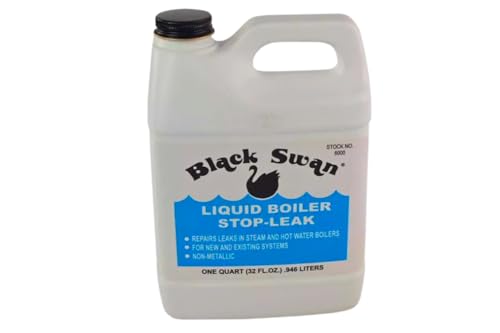
Black Swan
Black Swan Liquid Boiler Stop-Leak – Boiler…
- LASTING BOILER LEAK REPAIR Designed to repair leaks in steam and hot water boilers. Works in both high and low pressure systems wi…
- HANDLES EXTREME SYSTEM CONDITIONS Works effectively in high temperatures and pressures while withstanding expansion, contraction,…
- TARGETS LEAKS DIRECTLY Sticky liquid combined with heavy-duty particles flows through the system to locate leaks, plug openings, a…
One quick caveat: this won’t replace a pro’s advice for your specific house. But it will give you the right questions to ask and the numbers to back them up.
Leaks happen. A pinhole in a pipe, a weeping valve stem, a crack in the heat exchanger — they drive efficiency down and water damage up. The Black Swan Liquid Boiler Stop-Leak is a pour-in sealer for steam and hot water systems that handles high temperatures and pressures without shutting the system down. It carries sticky particles that find the leak, plug it, and form a permanent seal. Works in both low and high pressure setups. It’s not magic — you still want to fix major failures — but for common small leaks it saves a lot of time and money. Check the current price on Amazon; it’s a cheap insurance policy.
What Actually Makes a Boiler ‘High Efficiency’?

In the hydronic world, efficiency is measured by AFUE — Annual Fuel Utilization Efficiency. A standard boiler hits maybe 80-83%. A high efficiency condensing boiler runs 90-95% or higher. That 10-15% gap is real money, especially if you live somewhere with long winters.
The trick is in how they extract heat. Old boilers let hot exhaust gases fly up the chimney at 300°F or more. Condensing boilers pull so much heat from those gases that the water vapor in the exhaust actually condenses into liquid — that’s where the name comes from. The exhaust temperature drops to 100-120°F. That extra heat goes into the water, not the sky.
But condensing only happens when the return water is cool enough — below about 135°F for most models. If your system runs hot (old radiators, no outdoor reset), the boiler never condenses and efficiency drops to around 85-88%. That’s still better than an old cast-iron beast, but not the 95% you paid for. So a high efficiency boiler needs a low-temperature distribution system — radiant floor loops, panel radiators, or oversized baseboard. Pair it with an smart thermostat that runs outdoor reset or weather compensation, and you’ll actually see the savings.
Right-Sizing: Why Bigger Boilers Are Usually Dumber
Contractors love to oversize boilers. ‘Better to have extra capacity, just in case.’ Problem is, an oversized boiler short-cycles — fires up, reaches temperature in five minutes, shuts off, repeats. That wastes fuel, wears out parts, and never gets the system to condense. A properly sized high efficiency hydronic boiler runs longer, steadier, and at lower temperatures. That’s where the magic lives.
How do you size one? Do a Manual J heat loss calculation for the house. That gives you the BTU/hour needed at design conditions (the coldest day of the year). Then pick a boiler that matches that number, plus maybe 10-20% for recovery. Not 50% or 100% extra. I’ve seen houses with a 100,000 BTU boiler that needed only 40,000. The owner was burning through fuel and wondering why the house felt clammy.
If you’re retrofitting an old system, you might also need to look at the distribution side. Small pipes with high flow resistance can choke a new boiler. And if you’re adding underfloor heating loops, you need to make sure the boiler can modulate down low enough — many condensing boilers turn down to 20% or less of full fire.
Handling Leaks Without a Complete Headache
Even the best-installed system springs a leak eventually. A small drip at a fitting, a weeping pump flange, a hidden pinhole in a zone pipe. The standard fix is to cut out the section, sweat in a new piece, or replace the valve. That’s expensive and disruptive, especially if the leak is behind a wall or under a concrete slab.
Before you call for a tear-out, consider the pour-in route. The Black Swan product I mentioned earlier handles both steam and hot water systems up to 300°F and high pressures. The particles are designed to be drawn into small openings by the pressure differential. Once they lodge, they harden into a durable plug. It doesn’t clog valves or heat exchangers because the particles are sized to only stop flowing water in a gap. The application is dead simple — pour it into the hot boiler through an opening (air scoop, expansion tank fitting, pressure relief valve port) and let it circulate for a few hours. The label says to run the system until leaks stop, which usually takes 24-48 hours of normal operation.
Is it a cure-all? No. Big cracks, split sections of cast iron, or failed heat exchangers need replacement. But for the common small leaks that drive homeowners crazy, it’s a fraction of the cost and hassle. I’ve used it on a friend’s 20-year-old system with a weeping boiler drain — sealed in two days, still dry a year later.
Controls and Integration: The Brains Behind the Boiler
High efficiency potential means nothing if the controls are dumb. A basic aquastat that fires the boiler to 180°F no matter what the weather does is working against you. You want a control system that adjusts water temperature based on outdoor temperature — called outdoor reset or weather compensation. Some boilers have it built in. Others need an add-on controller.
When the outdoor temperature is 40°F, the system can run at 120°F water and still heat the house. That lets the boiler condense fully, squeezing every BTU out of the fuel. When it’s 10°F outside, the water temp might need to be 150°F — still cool enough to condense part of the time. The result is fuel savings of 10-20% over a fixed-temperature system.
Then there are zone controls. Individual thermostats for each zone are standard, but many people pair them with a smart thermostat that learns schedules and occupancy. That eliminates heating empty zones. Just make sure your boiler can handle the variable flow — some need a minimum water flow to stay alive, especially mod-con boilers. A bypass valve or a primary-secondary piping setup solves that.
High Efficiency vs Standard Hydronic Boilers: A Quick Comparison
| Feature | Standard Boiler (80-83% AFUE) | High Efficiency Condensing (90-95% AFUE) |
|---|---|---|
| Exhaust temperature | 300-400°F | 100-130°F |
| Chimney required | Yes, metal flue | No, PVC vent through sidewall |
| Best with | High-temp radiators, baseboard | Radiant floor, low-temp distribution |
| Fuel savings vs old boiler | 10-15% | 25-40% |
| Life expectancy | 20-30 years | 15-20 years (more complex) |
| Install cost | Lower upfront | Higher upfront, but rebates often available |
| Repair complexity | Simple, many parts available | More electronics, specific parts |
That table is a generalization — real numbers depend on your system design and climate. But it shows the trade-offs. High efficiency isn’t automatically better for every house. If you have old cast-iron radiators and don’t plan to change them, a standard boiler might actually perform better because it can run at higher temperatures without condensing inside the boiler itself (which can corrode it). On the other hand, if you’re building new or doing a deep retrofit, high efficiency plus low-temp distribution is the smartest path.
Frequently Asked Questions
How long do high efficiency hydronic boilers last?
Most condensing boilers last 15-20 years with regular maintenance. The heat exchanger is the weak point — stainless steel or aluminum, both can eventually corrode if water chemistry isn’t right. Annual flushing and checking pH helps. Compare that to old cast-iron boilers that sometimes ran 30+ years, but they were less efficient and cost more to run.
Can I replace my old boiler with a high efficiency model myself?
Legally, in most areas a licensed contractor must handle gas line modifications, venting, and safety testing. Even if you’re handy, the setup for a condensing boiler — condensate neutralizer, proper piping for temperature protection, correct vent material — is not a beginner job. Hire a pro who specializes in hydronic heating, not a general plumber.
Do high efficiency boilers make loud noises?
Some do, especially during startup if there’s trapped air or if the water velocity is too high. The condensing process itself can sound like a soft gurgle as the acidic condensate drains. If you hear banging or hammering, that’s usually air in the pipes or thermal shock from cold return water hitting hot heat exchanger surfaces. Install a properly sized expansion tank and air separator to cut noise.
Should I add a heat pump or solar thermal to my hydronic system?
If you’re after maximum efficiency, a heat pump that feeds your buffer tank is becoming a popular hybrid setup. The heat pump covers mild days, the high efficiency boiler fills in during extreme cold. Solar thermal for domestic hot water can also tie into the system, but it’s less common now that heat pumps are so efficient. The key is to have a controller that decides which source to use based on outdoor temperature and cost of fuel.
Will a boiler stop-leak product void my warranty?
Check your boiler’s warranty first. Many manufacturers forbid any chemical additives in the system. That said, for out-of-warranty systems or for a small leak that’s not under the boiler itself (like a pipe or fitting), the risk is minimal. The Black Swan product is not a chemical — it’s a mechanical sealer with particles. I’ve never seen it cause a problem on residential systems, but always read the fine print.
What To Do Next
- Get a professional heat loss calculation before buying a new boiler. Don’t let anyone sell you based on square footage alone.
- If your system runs hot (180°F+), consider converting to low-temp distribution — radiant floors, larger radiators, or adding an outdoor reset control.
- For small leaks that don’t require major surgery, the Black Swan Liquid Boiler Stop-Leak is a solid first try. It’s cheap, easy, and works on both steam and hot water.
- Invest in a smart thermostat with outdoor reset or weather compensation. That single upgrade boosts your system’s efficiency by 10-20% without touching the boiler.
- Flush your system annually if you have a condensing boiler. The acidic condensate can lower pH and eat away at metal components over time.
- Don’t oversize. A boiler that runs 30 minutes per cycle is fine. If it runs less than 10 minutes, it’s oversized and wasting fuel.
- Check for rebates — many utilities and states offer cash back for upgrading to a high efficiency hydronic boiler. That can knock $500-$1,500 off the install cost.

HeaterGuides covers home heating, water heating and HVAC: how the equipment works, what it costs to run, and how to use it safely.
