

A useful rule of thumb is that the boiler is only part of the footprint; the fuel hopper, ash handling, and service clearances usually decide whether the system fits. A compact pellet unit might look manageable on paper, then the installer asks where the fuel store goes and the room starts shrinking fast.
Old biomass boilers can work well, but newer controls, better heat exchangers, and cleaner combustion usually mean less ash, steadier output, and fewer nuisance shutdowns.
Biomass Boiler
A biomass boiler is a heating system that burns solid biomass fuels like wood pellets, chips, or logs to heat water for your home. The fuel burns in a firebox, transferring heat to water inside a jacket or heat exchanger, which a pump then circulates to radiators, underfloor heating, or a hot water storage tank.

The boiler itself usually fits in a compact cabinet, but the space needed for fuel storage and service access often exceeds the size of the unit. For example, the fuel store can take up two to three times the floor area of the boiler cabinet. That matters because your boiler room needs enough space for ash removal, refueling, and maintenance clearances without cramped access.
Biomass boilers work best where there’s a steady heat demand—like a full house or a small commercial building—and where you can keep the fuel dry and protected. Damp fuel causes combustion problems and can block the feed system.
Measure The Room First
How much space does a biomass boiler need? The footprint depends on your boiler’s size, the type of fuel you use, and the design of its hopper or bunker. Local code sets minimum clearances for service access and safety, which add to the total area required.
Fuel storage needs vary. Pellet systems use compact hoppers or silos, requiring less room, while chip systems need a larger bunker with easy delivery access. Log systems usually require the most space for manual handling and storage.

Learn The Parts Of A Biomass Boiler
Biomass boilers have several key parts that work together to turn solid fuel into heat for your home. Knowing what each part does helps you spot what needs cleaning or repair before it causes a shutdown.
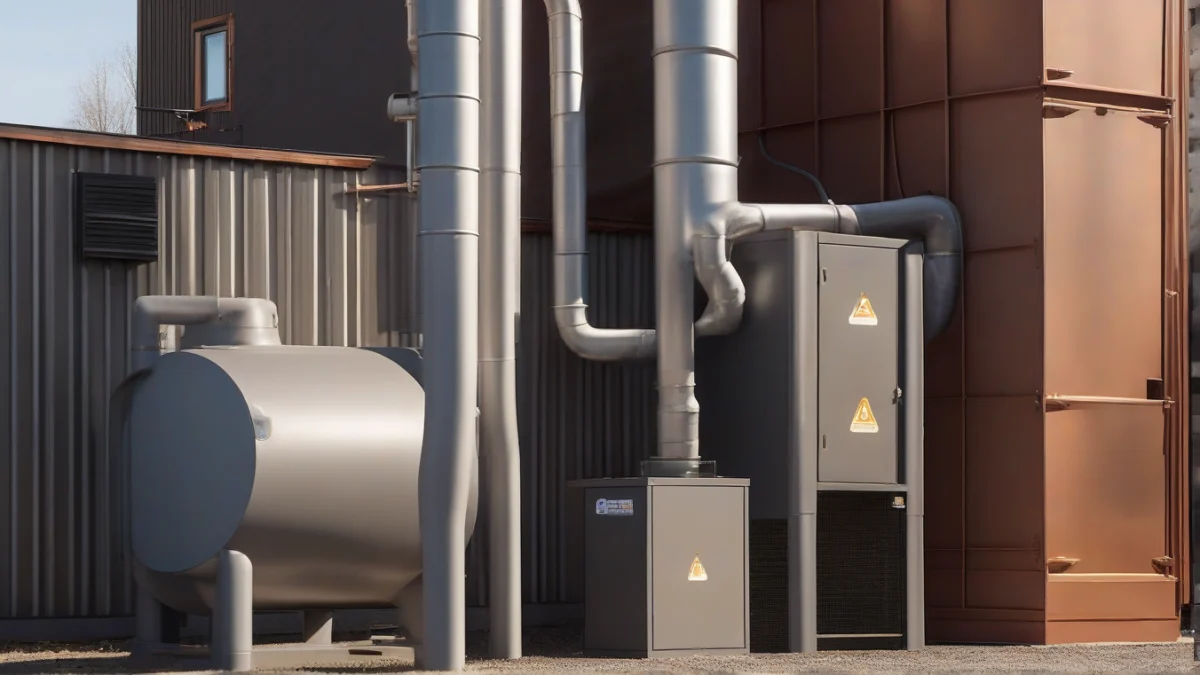
The fuel hopper or bunker stores wood pellets, chips, or logs before they enter the system. An auger or other feed mechanism moves this fuel steadily into the combustion chamber, where it burns to produce heat.
Heat generated in the combustion chamber passes through the heat exchanger, warming water that circulates through your heating system. The ash pan collects leftover ash and must be emptied regularly to avoid blockages.
Controls manage fuel feed rate, combustion air, and system temperature. They keep the boiler running efficiently and safely by adjusting the burn based on demand and temperature feedback.
A pump circulates hot water through your radiators or underfloor heating. The expansion vessel handles water volume changes as it heats and cools, preventing pressure problems.
The flue vents combustion gases outside. It needs inspection and cleaning to prevent dangerous blockages or corrosion.
Some biomass boilers also include buffer tanks to store hot water and smooth out temperature swings, and economizers that recover extra heat from exhaust gases to improve efficiency.
| Part | Job | What Fails If Neglected |
|---|---|---|
| Fuel hopper or bunker | Stores fuel before burning | Fuel jams or moisture damage |
| Auger or feed mechanism | Moves fuel into combustion chamber | Feed blockages or motor failure |
| Combustion chamber | Burns fuel to produce heat | Incomplete burn or ash buildup |
| Heat exchanger | Transfers heat to water | Scaling, corrosion, or clogging |
| Ash pan | Collects ash from combustion | Overflow causes blockages |
| Controls | Manage fuel feed and temperature | Poor efficiency or unsafe operation |
| Pump | Circulates hot water | Failure stops heat distribution |
| Expansion vessel | Prevents pressure spikes | Leaks or pressure loss |
| Flue | Vents exhaust gases | Blockages cause smoke or CO hazards |
| Buffer tank (optional) | Stores hot water to smooth output | Temperature swings |
| Economizer (optional) | Recovers heat from exhaust | Reduced efficiency |
Cleaning the ash pan and inspecting the combustion chamber and feed mechanism are the most frequent maintenance tasks. Ash buildup or fuel jams are common causes of shutdowns and fire hazards.
Compare Old And Modern Biomass Boilers
Older biomass boilers typically run less efficiently than modern units due to simpler heat exchangers, looser combustion controls, and dirtier burning. The basic parts remain the same: a fuel feed system, combustion chamber, heat exchanger, and controls, but how these parts work together has evolved.
Modern boilers modulate fuel feed and combustion air more precisely, using sensors to keep the burn clean and minimize smoke and soot. This tight control improves fuel use and reduces ash and emissions. Older boilers tend to run at fixed rates, wasting fuel during low heat demand periods.
Efficiency numbers alone don’t tell the whole story. Ash build-up, how often the stove starts and stops, and maintenance intervals influence real-world performance and user effort. Modern designs often make cleaning and ash removal easier and require less frequent servicing.
| Feature | Older Boilers | Modern Boilers |
|---|---|---|
| Controls | Manual or basic thermostats | Automatic modulation with sensors |
| Ash Management | Higher ash volume, manual removal | Lower ash, often automated or easier access |
| Emissions Behavior | More smoke and soot | Cleaner combustion, less smoke |
| Maintenance Burden | Frequent cleaning, more manual work | Longer intervals, easier maintenance |
Check Safety, Housekeeping, And Code
Dust, ash, and fine fuel particles can accumulate near the feed path, ash pan, and fuel storage, creating a serious fire hazard if not cleaned regularly. Keeping these areas tidy reduces risk and helps the boiler run properly.
The flue and venting must follow the manufacturer’s specifications and local building codes. Regular inspection and cleaning of chimneys and vents prevent blockages and dangerous backdrafts.
Smoke, carbon monoxide, and poor draft conditions are major safety concerns with biomass boilers. These risks increase after retrofits or fuel changes, so monitoring and adjustment by a professional are crucial.
Local regulations may limit emissions or specify how you store fuel. Retrofits especially require a technician who understands the interaction between the boiler, venting, and your building’s heating load.
Use It Where The Load Is Steady
Biomass boilers fit best in buildings with a steady winter heat demand and enough space for fuel storage and ash handling. Retrofitting one into a small or tightly packed home often fails due to lack of room for dry biomass fuel and the boiler itself.
They make practical sense for larger houses, workshops, rural properties, or any place already using hydronic heating systems. You need a dry, secure spot for wood pellets, chips, or logs that keeps fuel quality high and delivery manageable.
Tiny houses and cramped utility rooms generally can’t handle the size and storage needs. Without a dedicated space for fuel and ash, the system becomes inconvenient or unsafe. Delivery access matters too — wet biomass means poor combustion and higher maintenance.
The environmental benefits depend on the fuel’s source and condition. Renewable wood fuel reduces fossil fuel reliance, but transport emissions, moisture content, and local air quality rules all affect the overall impact. Regular cleaning and proper ventilation also play roles.
A simple rule: if your property can’t safely store dry biomass fuel and handle ash removal, a biomass boiler isn’t the right choice. Electric, propane, or natural gas systems often work better in tight spaces or where steady fuel supply and storage aren’t possible.
More Questions, Answered
How much space does a biomass boiler need?
What are the main parts of a biomass boiler?
How efficient are old biomass boilers compared with modern ones?
Why is housekeeping important for biomass boiler fire safety?
Can I retrofit a biomass boiler into an existing heating system?
What are the environmental benefits and risks of biomass boilers?

I am a mechanical engineer and love doing research on different home and outdoor heating options. When I am not working, I love spending time with my family and friends. I also enjoy blogging about my findings and helping others to find the best heating options for their needs.
Related guides
Hydronic Heating & Condensing Boilers: Ultimate Efficiency Guide
Hydronic heating uses water to transfer heat, while a condensing boiler maximizes efficiency by recovering heat from exhaust…
Top 7 Benefits of Hydronic Boilers for Home Heating
You walk across the tile floor in January and your feet tell you everything: that cold shock travels…
Condensing Hydronic Boilers: The Ultimate Efficiency Solution
A condensing hydronic boiler is an efficient heating system that recycles exhaust gases to maximize energy use and…
