Habitio vs Mr Heater: Forced Air Propane Heater Comparison
On this page 8 sections
- Head-to-Head Comparison: Habitio Forced Air vs. Mr. Heater Portable
- Key Specifications & Performance Breakdown
- Safety, Certifications & Ideal Use Cases
- Pros, Cons & User Experience
- Final Verdict & Buying Recommendation
- Portable Cooling Without a Window
- Choosing Other Portable Heaters
- Comparing Portable Tankless Water Heaters
Finding the right propane heater can feel like a high-stakes decision. You need reliable warmth, but the choice between a powerful forced air unit and a compact radiant heater isn’t always clear. The Habitio 60,000 BTU Forced Air Heater and the Mr. Heater Portable Buddy represent two fundamentally different approaches to solving the cold. One is built for sheer power, the other for intimate, targeted warmth. Let’s break down which one deserves a spot in your garage, tent, or workshop.
Head-to-Head Comparison: Habitio Forced Air vs. Mr. Heater Portable

At their core, these heaters solve different problems. The debate between forced air technology and radiant heat is central here. Forced air heaters work like a hair dryer on a massive scale, using a fan to blast heated air throughout a space. Radiant heaters, like the Mr. Heater Buddy, emit infrared energy that warms objects and people directly in its path, similar to the sun.
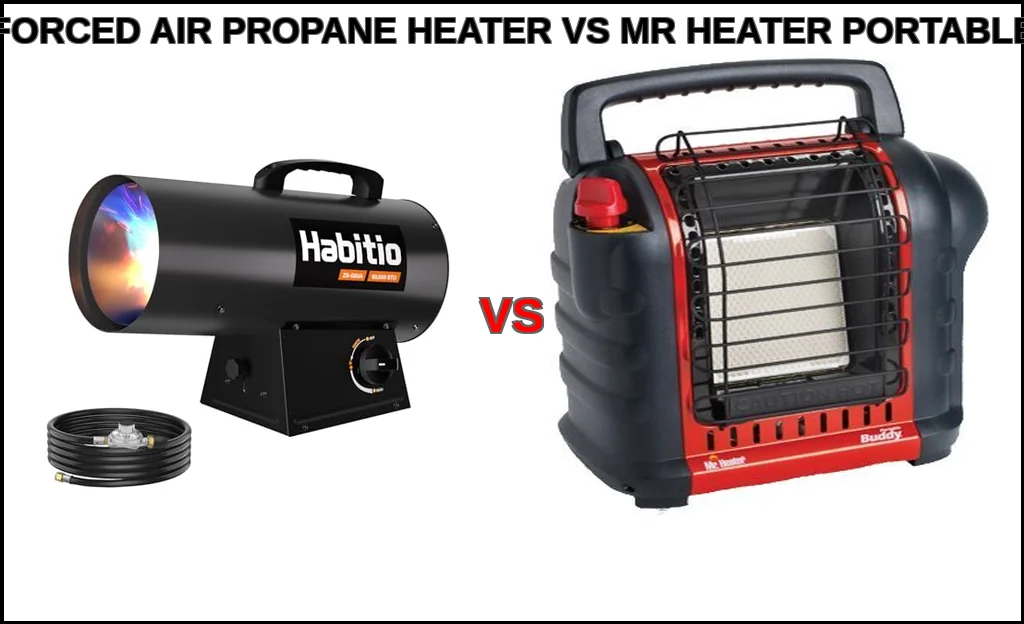
This fundamental difference dictates their entire design philosophy. The Habitio is a tool for large, open, and often unfinished spaces. The Mr. Heater Buddy is an appliance for small, enclosed areas where you need direct, immediate warmth. It’s the difference between heating a room and heating you.
| Feature | Habitio 60,000 BTU Forced Air Heater | Mr. Heater Portable Buddy |
|---|---|---|
| Primary Heat Technology | Forced Air | Radiant |
| BTU (British Thermal Unit) Output | 40,000 – 60,000 BTU/h | 9,000 BTU |
| Coverage Area | Up to 2195 sq. ft. | 200 sq. ft. |
| Key Safety Features | Overheat protection, automatic shutdown on power outage | Low-oxygen sensor (ODS), tip-over switch |
| Portability | Portable handle, adjustable height, 10 ft hose & regulator included | Compact, lightweight design |
| Noise Level | Produces an acceptable level of noise when running (fan-driven) | Quiet operation (radiant, no fan) |
| Certification | CSA certified | Information not specified in provided data |
| Check price on Amazon | Check price on Amazon |
Key Specifications & Performance Breakdown
Heating Power & Efficiency
The BTU output comparison here is stark. The Habitio operates between 40,000 and 60,000 BTU/h, making it a true garage heater or jobsite workhorse. It’s designed for rapid, whole-space heating in large-scale settings like factories or construction sites. The Mr. Heater Buddy’s 9,000 BTU output is modest by comparison, but that’s the point. It’s perfectly calibrated for a small room, ice fishing hut, or tent.
Efficiency is measured differently for each. For forced air, efficiency is about moving a high volume of warm air quickly. The Habitio’s adjustable fan speed lets you control this airflow. For radiant heaters, efficiency is about direct energy transfer with minimal loss to the air. If you need the most efficient propane heater for large spaces, forced air is typically the answer. For a small, enclosed area, radiant can feel more direct and cost-effective.
Runtime & Fuel Considerations
Runtime is a major factor for any portable fuel-based heater. The provided Habitio heater specs note an impressive runtime: up to 53 hours on low and 36 hours on high with a 100 lb. propane tank. This highlights its design for prolonged, commercial or heavy-duty use. The Mr. Heater Buddy runs on standard 1 lb. propane cylinders, and while exact runtime isn’t specified here, its lower BTU output generally allows for longer use per pound of fuel in its intended small space.
Your choice heavily depends on your fuel logistics. Are you connecting to a large, stationary tank? Or do you need the ultimate portability of disposable cylinders?
Safety, Certifications & Ideal Use Cases
Critical Safety Systems
Both units incorporate important safety features, but they differ due to their designs. The Habitio’s listed safety suite includes pulse ignition for reliable starts, overheat protection, and an automatic shutdown during a power outage. This is crucial for a high-BTU device that relies on a fan.
The Mr. Heater Buddy is famous for its low-oxygen sensor (ODS) and tip-over switch, which are critical for any indoor safe propane heater. The ODS is a non-negotiable feature for use in tents, cabins, or rooms with limited ventilation. Always check the specific model’s certification and manual for the latest ventilation requirements.
Where Each Heater Excels
This is where the propane forced air vs radiant decision crystallizes into a practical choice.
The Habitio 60,000 BTU Forced Air Heater is ideal for:
- Large, open spaces: Garages, workshops, barns, construction sites.
- Rapid heat-up: Needing to take the chill off a 2,000 sq. ft. space quickly.
- Industrial settings: Farming functions, factory floors, patios during cold-weather events.
- Situations where some operational noise is acceptable.
The Mr. Heater Portable Buddy is ideal for:
- Small, enclosed spaces: Camping tents, ice shanties, small cabins, tailgating tents.
- Personal, direct warmth: Heating you and your immediate surroundings rather than the entire air volume.
- Quiet operation: Bedrooms, living rooms, or any setting where fan noise is undesirable.
- Ultimate portability: Throwing it in the car for a weekend trip.
So, which is better for a garage Habitio or Mr. Heater? For a standard multi-car garage, the Habitio’s forced air is typically superior for whole-space comfort. The Mr. Heater Buddy would be better suited for spot-heating a workbench in that same garage. For insights on other top performers, see our guide to the best portable propane heaters available.
Pros, Cons & User Experience
Habitio 60,000 BTU Forced Air Heater
Pros:
- Immense Power: Can heat very large areas (up to 2195 sq. ft.) rapidly.
- Long Runtime: Exceptional fuel economy with a large tank.
- Adjustable & Flexible: Variable BTU output and fan speed for control.
- Robust Design: Includes a 10-foot hose and regulator, adjustable height, and a handle for mobility on a jobsite.
Cons:
- Noisy: The fan creates an “acceptable level of noise,” which may be disruptive in quiet settings.
- Less “Indoor Safe” for Living Spaces: While CSA certified, its high output and ventilation needs make it less suited for occupied living areas compared to a radiant buddy heater.
- Requires Large Propane Tank: Optimal performance assumes a 100 lb. tank, which is less portable.
Mr. Heater Portable Buddy
Pros:
- True Portability: Lightweight, compact, and runs on easy-to-find 1 lb. cylinders.
- Quiet Operation: No fan means silent radiant heat.
- Excellent Safety for Indoor Use: Features like the ODS make it a trusted choice for tents and rooms.
- Simple Operation: Easy to set up and use with minimal configuration.
Cons:
- Limited Coverage: Only designed for areas up to 200 sq. ft.
- Spot Heating: Heats objects in its line of sight rather than circulating warm air.
- Lower BTU Output: Not suitable for large spaces like a drafty workshop.
Reading through propane heater reviews, a common theme emerges. Habitio users praise its ability to transform a freezing garage into a workable space in minutes. Mr. Heater Buddy users love its reliability and safety for camping and power outages. It’s often cited as a best portable heater for camping due to its indoor-safe design.
Final Verdict & Buying Recommendation
Choosing between the Habitio forced air and the Mr. Heater Buddy isn’t about picking the “better” heater. It’s about matching the tool to the task.
Choose the Habitio 60,000 BTU Forced Air Propane Heater if: Your primary need is heating large, open, or industrial spaces quickly. Think garages, workshops, construction sites, or barns. You have access to a large propane tank and prioritize raw heating power over silent operation. You need a tool for the job, not just comfort.
Choose the Mr. Heater Portable Buddy if: You need safe, quiet, portable heat for small, enclosed areas. Your use cases are camping, tailgating, small rooms, or emergency indoor heating during a power outage. You value the convenience of 1 lb. propane cylinders and the peace of mind that comes with its robust safety features like the ODS.
For those still weighing a Mr. Heater Portable Buddy vs forced air system, remember this: the Buddy is for heating people, the Habitio is for heating places. If you’re curious about other indoor safe options that blend these features, our review of the best portable indoor propane heater models is a great resource.
Finally, regardless of your choice, always prioritize safety. Ensure proper ventilation as per the manufacturer’s instructions. For workplaces, understanding guidelines from an official source on environmental controls is a smart practice. In 2026, we have excellent tools at our disposalusing them wisely is what keeps us warm and safe all winter long.
Portable Cooling Without a Window
A conventional portable air conditioner needs a window or another approved route to exhaust hot air outside; without one, it can’t cool a room effectively. A fan can move air, but it won’t lower the room temperature. If you can’t use a window, look for a portable evaporative cooler, which works best in dry air and needs ventilation, or consider a room air conditioner designed for a different installation.
Choosing Other Portable Heaters
A residential indoor portable propane heater must be specifically rated for indoor use; a jobsite forced-air heater is not a substitute. Check the manual for required ventilation, use a working carbon monoxide alarm, and never run an outdoor-rated heater inside a home. Vent-free gas heaters are restricted or prohibited in some locations, so check local code before buying.
A tabletop propane heater is usually for outdoor use, not indoor room heating. Confirm the exact model’s label and manual before using it, and keep it away from combustibles; never bring an outdoor patio heater into a tent, vehicle, or home.
An oil-filled radiator is a better fit for steady room heat, while a portable heat pump can use less electricity when it can move heat from outdoors and the outdoor temperature is within its operating range. The radiator turns electricity directly into heat; the heat pump transfers heat, but needs an outdoor unit and suitable installation. Compare installed cost, available space, and the heat pump’s cold-weather capacity before choosing.
Comparing Portable Tankless Water Heaters
Compare the exact GASLAND D and CAMPLUX models by their rated flow at a stated temperature rise, fuel and water connections, and required water pressure; brand names alone don’t establish which will deliver a better shower. In cold weather, incoming water is colder, so a unit’s usable flow falls if it can’t raise the water temperature enough. Check each model’s manual and specifications for those details before buying.
Portable tankless water heaters that burn propane produce carbon monoxide and need the installation and ventilation specified by the manufacturer. Use only a model approved for the location, with a working CO alarm where appropriate; don’t use an outdoor-rated unit inside a home, tent, or vehicle. Have a licensed plumber handle gas or permanent water connections where required.