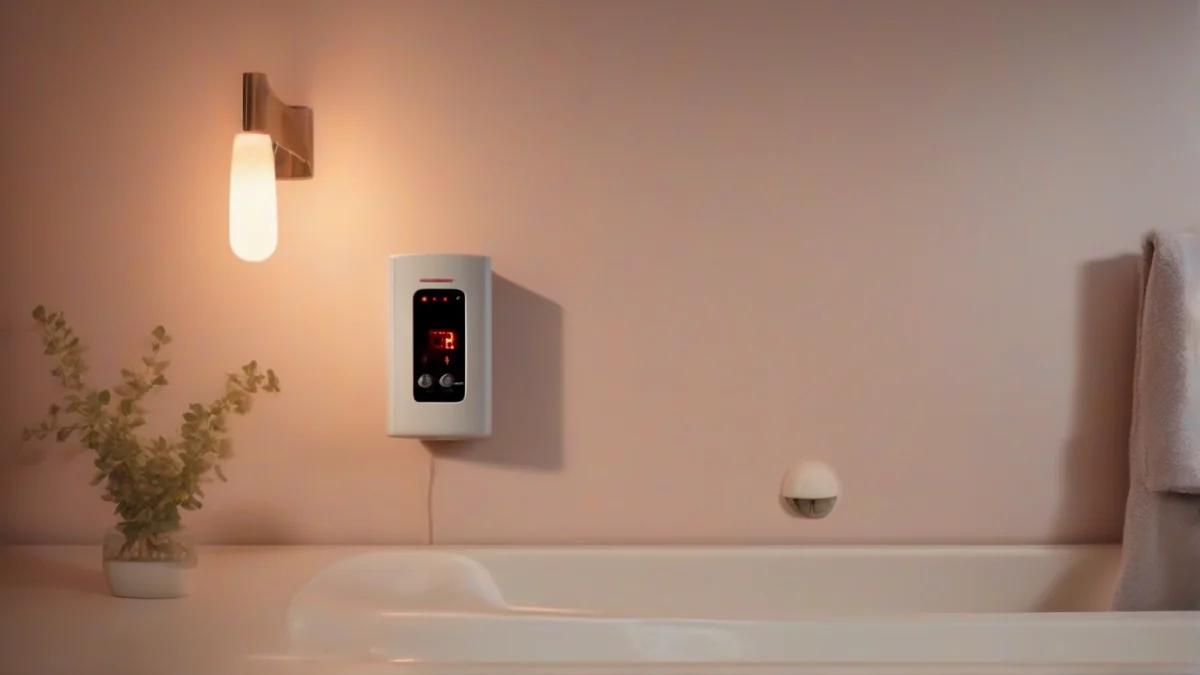
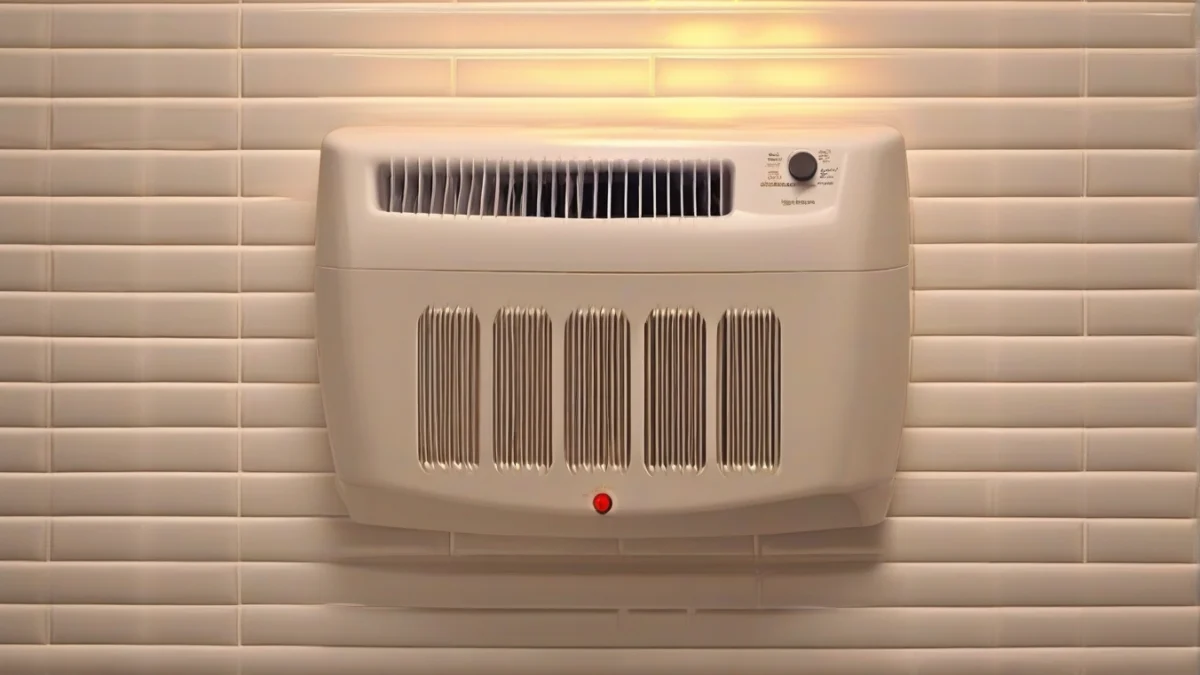
Golf course bathroom wall heaters work best when they’re sized for the room, rated for damp spaces, and mounted where splash risk is low. An infrared heater is a heater that warms objects and people directly rather than the air. In a restroom, that usually means faster comfort, less wasted heat, and lower run time than a heater that waits for the whole room to warm up.
The most common mistake is buying a wall heater by wattage alone and ignoring ceiling height, airflow, and wet-location limits. That can leave a restroom cold at the sinks and hot near the unit, which wastes power and annoys everyone in line.
For a golf course bathroom, the real job is quick spot warmth with safe wiring, quiet operation, and controls that keep staff from running the heater longer than needed.
The essentials
Choose a heater that matches the room size and mounting height, not just the restroom label.
Infrared heat feels quicker because it warms people and surfaces directly.
Ceramic and fan heaters spread heat faster into the air, but they can be louder.
Use timers, thermostats, or smart scheduling to cut run time in low-traffic hours.
In damp rooms, safety features and proper installation matter as much as output.
Golf Course Bathroom Wall Heaters
Golf course bathroom wall heaters are usually electric infrared, ceramic/fan, or convection units; the right choice depends on room size, splash exposure, noise tolerance, and whether you can hardwire the heater. For the heater in the wall when you’re in the bathroom, choose a bathroom-rated or damp-location model, keep the required clearance around it, and treat wattage as the main running-cost lever.
This electric infrared heater is ideal for golf course bathrooms.
A bathroom wall heater can mean a recessed unit, a surface-mounted cabinet, or a compact plug-in heater fixed high on the wall. Bathroom heaters electric models are usually simpler than fuel-burning heat because they don’t create carbon monoxide, but electricity still demands care: plug-in models go directly into a wall outlet, never an extension cord or power strip, and the heater needs at least 3 feet of clearance from towels, paper, clothing, and other combustibles.
How The Three Main Types Heat
Infrared heating warms people, walls, floors, and fixtures directly, so you can feel useful warmth before the whole room reaches the thermostat setting. That makes a radiant wall heater for bathroom use a good fit for short visits and drafty entrances; the beam can feel warm quickly, although areas outside its line of sight may stay cooler. For the mechanism, see how infrared heating works.
Ceramic and fan heaters warm air and push it around the room. Near the grille, ceramic heating can feel quicker than convection, but a larger restroom may develop warmer and cooler pockets unless airflow reaches the whole space; the ceramic heater heating capacity guide explains why the wattage and room shape matter.
Convection wall units heat air that rises naturally and circulates through the room, usually with less moving-air noise than a fan heater. They provide steadier background warmth, but they take longer to make a cold restroom feel comfortable. Those are the main types of wall heaters for bathroom installations.
Type
Comfort
Noise
Best-fit room size
Infrared
Fast warmth on people and nearby surfaces; can create warmer zones
Nearly silent
Small rooms, short visits, or drafty areas where direct warmth matters
Ceramic/fan
Fast sensation near the unit; airflow can spread heat but may leave uneven spots
Low fan noise
Small to medium bathrooms needing quick air heating
Convection
Gradual, more even background warmth after the air circulates
Very quiet to silent, depending on the model
Small to larger enclosed restrooms with time to preheat
Room shape, ceiling height, door swings, and outside-air leakage can change the result; wattage sizing belongs in the next section.
Public restrooms need durable controls and tamper-resistant placement more than a bedroom does. A recessed thermostat, a control mounted out of splash range, a timer, or a locked control cover can prevent constant adjustment and reduce damage from carts, bags, and curious hands. Smart features such as Wi-Fi connectivity can help staff schedule heat, but the control still needs to be reliable when the network is having a bad day.
Worked Example: 1,500 W Versus 750 W
Say a heater runs for 8 hours during a cold day and electricity costs $0.17 per kWh. A 1,500 W setting uses 1.5 kW × 8 hours = 12 kWh, or about $2.04 for that day. A 750 W setting uses 0.75 kW × 8 hours = 6 kWh, or about $1.02. The lower setting costs half as much while running, but it also supplies half the electrical heat, so choosing 750 W only works if the room stays comfortable.
Useful for a hardwired 100–150 sq. ft. r
174 White Grille Wall Heater with Built-in Adjustable Thermostat
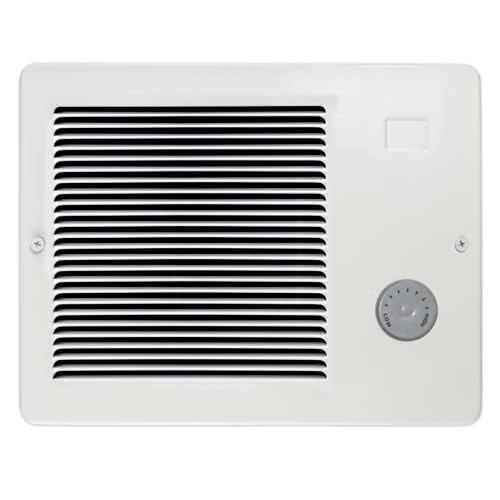
Product 1 suits a compact golf-course restroom that needs a wall-mounted unit with 750/1500 W settings, a built-in adjustable thermostat, downward-directing steel louvers, and manual-reset thermal overload protection; skip it if you need a plug-in heater or a model with a stated bathroom or damp-location listing.
A heater being sold for a bathroom doesn’t automatically make every location safe. Confirm the manual allows bathroom or damp-area use, keep the unit outside the sink, shower, and splash path, follow its clearance diagram, and use a listed ALCI-equipped plug when the model provides one. Hardwired units need the correct circuit and installation method; call a licensed electrician if the wiring, breaker, or junction box isn’t already suitable.
In short
Infrared is the quickest-feeling choice for people near the heater, ceramic/fan heat spreads warm air quickly, and convection suits slower background heating. In a busy golf-course restroom, safe placement, durable controls, and the correct location listing matter as much as the heating type.
How Long A 20 Lb Tank Lasts
Bathroom natural gas heater installation is usually the wrong path for a stall or wet restroom because burning fuel adds carbon monoxide and venting concerns. A bathroom natural gas heater installation guide should start with the local code, the heater’s listing, and a licensed gas professional—not the mounting screws. Electric wall heat is usually the practical choice for a bath area.
In short
Yes, heaters can be used in bathrooms, but choose an electric model specifically listed for bathroom or damp-location use. No, you can’t assume all Dreo heaters are bathroom-safe; use only the model whose manual and safety listing allow it.
Combustion Needs A Safe Exit
Never install an outdoor, patio, torpedo, or construction heater in a bathroom. Vent-free gas units can be restricted or banned by state and local code, and a working CO alarm doesn’t make an unlisted installation safe. If an existing building already has gas heat, a licensed professional must check the gas connection, venting, clearances, combustion air, and local requirements.
Some direct-vent gas heaters may be permitted in a bathroom, but only when the specific model is approved for that location and installed according to its instructions. For a semi-public golf-course restroom, the traffic, moisture, door openings, and inspection requirements make electric wall heat easier to place and easier to verify. An ALCI anti-leakage plug, found on the Dreo WH517AS, adds electrical protection in a moist setting; that feature doesn’t approve every Dreo heater for bathroom use.
What A 20 Lb Tank Can Do
A 20 lb propane cylinder holds about 4.7 gallons. Using about 91,500 BTU per gallon, that’s roughly 430,000 BTU of fuel. A hypothetical 10,000-BTU-per-hour heater would use it in about 43 hours of continuous operation: 430,000 ÷ 10,000 = 43. At an assumed $3 per gallon, the fuel would cost about $14.10, or roughly 33 cents per running hour. Real runtime changes with the heater’s setting, outdoor temperature, and tank conditions.
Propane equipment must use the fuel and regulator specified by its manual. Kerosene heaters burn 1-K kerosene only, never gasoline, and neither fuel-burning type is a bathroom recommendation here. If you’re comparing an existing gas system with electric options, keep the gas unit in the licensed-installation category and use an electric bathroom-rated wall heater for the restroom itself.
Products That Fit This Use
Use these where a practical purchase answer helps, not everywhere.
Fast Bathroom Warmth
faasiu 174 Wall Heater, 750/1500W
The downward steel louvers send warm air into the room quickly, while the built-in adjustable thermostat helps hold the temperature between restroom visits. Use it where splash risk is low and have the voltage and wattage setup checked before installation.
To size bathroom wall heaters, start with about 10 watts per square foot for an 8-foot ceiling, then move toward the higher end for a frequently opened door, constant exhaust fan, poor insulation, or a ceiling above 8 feet. A practical thermostat setting is the lowest temperature that feels comfortable, often around 68–72°F; turning the dial higher won’t make the heater warm faster.
Room and conditions
Starting wattage
Sizing note
Up to 50 sq. ft., 8-ft. ceiling
250–500 W
A small powder room needs far less heat than a locker room.
50–100 sq. ft., 8-ft. ceiling
750–1,000 W
Use the higher end if the door opens often.
100–150 sq. ft., 8-ft. ceiling
1,000–1,500 W
A useful range for many golf-course restroom zones.
Above 150 sq. ft. or ceiling above 8 ft.
1,500 W or more
Consider a second heater or a closer radiant mounting position rather than one oversized unit.
Starting points for a reasonably insulated bathroom; follow the heater’s listed coverage and installation instructions.
A 3-by-8-foot powder room under stairs is only 24 square feet, so a 250–500 W heater or properly rated radiant floor may be enough. A small bathroom sink heater should have a compact wall footprint and fast response, but keep it outside the sink’s splash zone and clear of the door swing. Radiant flooring can feel pleasant underfoot, while a small wall heater is usually simpler to add after the room is finished.
Worked Example
Say the bathroom is 12 by 15 feet with an 8-foot ceiling: 12 × 15 equals 180 square feet. A 750 W heater supplies about 4.2 W per square foot, so it will likely struggle as the door opens and the exhaust fan runs. A 1,500 W unit supplies about 8.3 W per square foot and is the better single-heater starting point, though a drafty or high-traffic restroom may need a second unit or improved air sealing.
Room12 × 15 ft = 180 sq. ft.
750 W optionAbout 4.2 W per sq. ft.; likely undersiz
1,500 W optionAbout 8.3 W per sq. ft.; better starting
Useful for the sizing step
174 White Grille Wall Heater with Built-in Adjustable Thermostat
Product 1 fits a 100–150 sq. ft. zone because it can be wired for 750 or 1,500 W, has an adjustable thermostat, and lists coverage in that range; don’t treat it as enough for a drafty 180 sq. ft. restroom without checking the layout and local requirements.
Oversizing creates hot spots near the grille and short cycling, where the thermostat shuts the heater off before the rest of the room catches up. Undersizing does the opposite: the air near the floor and sinks stays cold while the heater runs continuously. In a golf-course restroom, place the unit where the open door won’t dump warm air straight outside and where the exhaust fan won’t pull heat across the room before visitors feel it.
Check The Layout
Measure the room, ceiling height, door swing, sink location, and exhaust path before choosing wattage. A heater that fits the math but blocks a door or points heat into a constant draft is a poor fit.
How Smart Controls Cut Bathroom Run Time
Wi-Fi connectivity, timers, and occupancy-friendly schedules reduce bathroom heater run time by turning heat on for use periods instead of leaving it on all day. Smart heater connectivity options include Wi-Fi for app control, timer functions on the heater itself, and remote control from a staff phone; Wi-Fi is the useful choice when a golf clubhouse has changing hours or slow periods.
Smart heaters save the most energy when staff currently leave a heater running from open to close. They don’t make a watt of heat more efficient, but they can cut the hours that watt runs. Say a 1,500 W heater runs 10 hours a day for 30 days at $0.17 per kWh: 1.5 × 10 × 30 = 450 kWh, or $76.50. Two scheduled hours per day uses 90 kWh, or $15.30, before the room’s actual heat loss is considered.
Control
Useful setting
What it prevents
Wi-Fi app
Schedule opening, closing, and event periods
Heating an empty restroom
Timer
Short run after a door-heavy period
A heater forgotten overnight
Eco mode
Hold a lower target temperature
Constant full-power operation
Occupancy-friendly schedule
Warm before tee times or clubhouse events
Starting with a cold room
Smart controls save run time only when the schedule matches how the restroom is used.
A Dreo-style feature set is worth looking for: app scheduling, usage statistics, Eco mode, fan-only mode, and temperature tracking. The WH517AS tracks usage and ambient temperature every 15 minutes, so a manager can see whether a schedule is helping instead of guessing from the electric bill.
Useful for scheduled restroom heat
174 White Grille Wall Heater with Built-in Adjustable Thermostat
The Dreo WH517AS fits a golf-course restroom that needs Wi-Fi scheduling, 120-degree oscillation, app usage tracking, Eco and fan-only modes, and an ALCI anti-leakage plug for a moist environment.
A fan that drones beside the clubhouse lounge or tee sheet desk can become its own complaint. Choose a quiet model and use fan-only mode only when moving air serves a purpose; a schedule that runs less often also reduces noise during slow periods.
A bathroom heater light fan needs separate controls whenever the wiring and fixture allow it. The light may need to run for every visitor, while the heater should run only during cold hours; tying both to one switch wastes heat and can leave the fan running longer than needed. If you want that combination, compare units in a guide to the best bathroom heater light fan options rather than assuming the most features make the best fit.
In short
Smart heaters significantly reduce energy usage only when they replace unattended run time with a useful schedule. Set heat around opening, busy tee times, and events, then let Eco mode or a timer handle the quiet gaps.
How To Install A Wall Heater Safely
A plug-in bathroom wall heater is a reasonable DIY project; a hardwired heater should usually be installed by a licensed electrician. Electric in-wall bathroom heaters involve fixed wiring, breaker sizing, grounding and bathroom-location rules, so mounting the grille is the easy part.
Proper installation is crucial for safety and efficiency.
Can all Dreo heaters be used in bathrooms? No. Use only a Dreo model whose manual and safety listing allow bathroom or damp-area use. The WH517AS, for example, has an ALCI anti-leakage plug and is designed with features for moist environments; that does not make every Dreo heater bathroom-safe.
Before You Drill
Confirm the heater is listed for the bathroom location and the voltage matches the circuit.
Find a solid wall position and check for studs, plumbing and electrical cables before drilling.
Keep the grille away from the shower, tub, sink splash zone, towels and other combustibles; follow the clearance diagram in the manual.
Check circuit capacity. A 1,500 W heater at 120 V draws about 12.5 A, leaving little room on a standard 15 A circuit.
Use GFCI protection or the supplied ALCI plug where the product instructions or local code calls for it.
Plan a separate line and breaker for a fixed heater when the manual requires it, rather than sharing a busy bathroom circuit.
Plug-In Installation
1
Choose the location
Mount the heater where warm air can reach the room without blowing directly into the shower or toward stored towels. Keep the cord clear of water and never route it under a rug, through a wall or across a walkway.
2
Secure the bracket or cabinet
Use the supplied hardware and a stud where the instructions call for one. A compact plug-in heater can be mounted by a careful DIYer, but a loose unit can vibrate, fall or pull on its cord.
3
Check the protection
Plug straight into a grounded wall outlet—never an extension cord or power strip. Reset the GFCI or ALCI only if the manual permits it; repeated trips mean stop using the heater and find the fault.
4
Test before opening the restroom
Run the heater briefly while checking for warm-plastic smells, abnormal noise, cord heating, airflow blockage and nuisance trips. Set the thermostat or timer only after the unit operates normally.
Useful for a fixed 120 V install
174 White Grille Wall Heater with Built-in Adjustable Thermostat
Product 1 suits a straightforward 100–150 sq. ft. wall installation because it is factory-wired for 1,500 W at 120 V, can be adjusted to 750 W at 120 V, and has a built-in thermostat plus manual-reset thermal overload protection. Have an electrician handle its fixed wiring, especially if you plan to use its 240 V option.
Hardwired installation is no longer a simple mounting job. Turning off a breaker, opening a junction box, connecting 120 or 240 V conductors, or adding a circuit should go to a licensed electrician in most places; the breaker being off is necessary, not proof that every conductor is safe.
For a small restroom, a simple wall heater for bathroom use is often the plug-in route if the outlet, clearance and damp-location requirements all check out. If you’re comparing fixed options, best bathroom wall heaters 120v should be limited to models whose bathroom listing, protection and installation instructions match your room.
What Maintenance Keeps It Safe
You don’t descale a bathroom wall heater like a kettle; dust, lint, blocked grilles, and moisture are the maintenance problems that matter. Turn the heater off, let it cool, and clean the grille and fan intake with a soft brush or vacuum about once a month during the heating season, then inspect it again before winter. Keep water and spray cleaners out of the heater housing.
Check the thermostat, mounting screws, power cord or ALCI anti-leakage plug, and any visible discoloration around the grille or case. Rust, bubbling paint, a damp mounting surface, or a grille that stays partly blocked means the heater needs attention before you put it back into daily service; don’t open the electrical housing unless the manual specifically permits that work.
Heater type
Normal operating sound
What to expect
Infrared or radiant wall unit
Nearly silent
No fan noise; heat is directional, so mounting position matters.
Ceramic or fan heater
Noticeable fan sound
Moves warm air quickly, but the motor and airflow are audible.
Convection heater
Silent to very quiet
Natural airflow makes little noise, though a thermostat may click.
A busy restroom usually benefits from quieter radiant heat near sinks or stalls, while fan heat suits faster warm-up where airflow noise isn’t a problem.
Humidity Is The Durability Test
A high watt rating doesn’t protect a heater from steam. Choose a model listed for the bathroom location, look for corrosion-resistant parts, and mount it on a dry wall away from direct splash. Ventilation helps remove humidity, but it doesn’t turn an indoor heater into a wet-location appliance.
After A Busy Weekend
Inspect the grille after a tournament, outing, or other heavy-use period. Paper towels, lint, and cleaning residue can collect around the intake, forcing a fan heater to run hotter and louder; clear the obstruction only with power removed.
Before Each Heating Season
Vacuum the grille and fan intake with power off and the heater cool.
Confirm the thermostat responds and the heater shuts off at its set temperature.
Tighten loose mounting screws without disturbing the wiring or wall box.
Look for rust, moisture marks, melted plastic, hot spots, or a damaged cord.
Keep the exhaust and intake clear, and confirm the heater still has its required clearance.
Replace or service the unit if it smells electrical, trips protection repeatedly, or makes a new grinding noise.
More Questions, Answered
Are wall heaters safe to use in wet or damp bathroom areas?
Yes, but only when the heater is listed for bathroom or damp-area use and kept out of direct spray. An ALCI anti-leakage plug adds protection against current leaking through an unintended path; it doesn’t make a heater suitable for a shower wall. Keep the grille and plug dry, preserve the listed clearances, and follow local electrical code for a public restroom.
What wattage is best for a small bathroom wall heater?
Use the room area as the starting math: 50 square feet × 10 watts is about 500 watts, while 80 square feet points to about 800 watts. Add capacity or allow longer run time if the door opens often, the exhaust fan runs continuously, or the ceiling is taller than 8 feet. The heater must also be listed for the room’s moisture exposure.
How do infrared heaters compare with ceramic bathroom heaters?
Infrared heats people and nearby surfaces directly, so it can feel warm quickly at a sink without first raising every cubic foot of air. A ceramic heater warms moving air and usually spreads heat more evenly, though its fan can add noise and hot air can collect near a high ceiling. Both are electric resistance heaters, so the lower bill comes from shorter run time or better control, not from one element creating extra heat.
Can you install a bathroom wall heater without an electrician?
A plug-in bathroom wall heater can usually be mounted by a careful DIYer if the unit is listed for the location and the existing receptacle meets the manual’s requirements. Mount the bracket, keep the required clearances, plug straight into the wall, and never use an extension cord or power strip. New wiring, a dedicated circuit, or hardwired installation belongs to a licensed electrician.
Do smart bathroom wall heaters actually save energy?
Smart controls save energy only when they cut unattended run time. If a 1,500-watt heater runs two fewer hours each day, it avoids 3 kWh daily; at 17 cents per kWh, that’s about 51 cents a day or $15.30 over 30 days. A timer or schedule can create that saving without Wi-Fi, while Wi-Fi adds remote changes and usage tracking.
How often should you clean a bathroom wall heater?
Clean the intake and outlet grille at least monthly during the heating season, and check a busy golf restroom weekly for visible lint or dust. Unplug the unit or switch off its breaker before vacuuming the grille, and never spray cleaner into the housing. Restricted airflow can make a fan heater noisy, reduce heat, or trip overheat protection, so a recurring trip deserves service rather than repeated resets.