The best gas fireplace logs for most homes are the RealFyre 18 Inch Vented Gas Fireplace Logs Kit, because it’s a complete natural‑gas burner and log set with realistic ceramic logs, strong radiant heat and included glowing embers. The other four picks are lighter ceramic log sets that upgrade the look of an existing gas, propane, gel or electric fireplace.
The essentials
Pick a full burner-and-log kit if you want real heat; decorative ceramic logs are mainly for looks on an existing burner.
Match your logs to your venting: vented sets always need an open flue; vent‑free only go where local code allows and where the room is big enough.
Confirm fuel type before buying: some sets are natural gas only, others work over propane, gel, ethanol or electric inserts.
Size logs to your firebox opening—most manufacturers want 2–6 inches of clearance from the side walls and enough height for the flames.
Before lighting, run a quick safety check: clearances, vent open (for vented sets), carbon monoxide alarm working and pilot or ignition in good shape.
Say your living room is 14 by 18 feet with a tired old gas log set that barely shows a flame and a drafty chimney above it. You don’t have to rebuild the whole fireplace to make the room feel warmer and look better.
Gas fireplace logs split into two camps: full burner kits that actually heat the room, and decorative ceramic logs that ride on the burner you already own. Once you match the logs to your venting and fuel, the choice gets much faster—and a lot safer.
Top 5 Gas Fireplace Logs for Heat and Realistic Flames
#1Best for Real Heat
RealFyre Gas Log Kit 18″ Live Oak NG
Best for Homeowners with a vented natural-gas fireplace who want strong heat and a complete burner-and-log kit.
This is a full vented natural-gas system, not just loose logs, so you get a matched burner, grate, embers and connection kit designed to work together. The refractory ceramic logs are internally reinforced with steel rods, which helps them last and throw out strong radiant heat even after the burner shuts off. The hand-painted Live Oak bark detailing looks like seasoned firewood instead of a flat brown lump. It suits anyone upgrading an existing vented masonry or factory-built fireplace that’s already plumbed for natural gas.
Type Vented natural gas log and burner kitLog Style Live Oak hand‑painted refractory ceramic logsIgnition Match-light ignition systemReinforcement Logs internally reinforced with steel rodsIncluded Components Burner, grate, silica sand, glowing embers, damper clamp, ga
Why it made the cut
Complete kit with burner, grate, silica sand, glowing embers and connection components
Vented natural-gas design for real fire appearance and strong radiant heat
Steel‑reinforced refractory ceramic logs for durability and lingering warmth
Match‑light ignition keeps the setup simple and reliable
Includes damper clamp to help keep the chimney safely locked in a vented position
Good to know
Natural gas only; won’t work on propane without a different model
Requires a code-compliant vented fireplace and proper flue, so installation may need a pro
Match‑light start isn’t as push‑button convenient as a remote system
Skip it if Skip this and pick a ceramic log-only set if your fireplace is electric, gel-fueled, or not plumbed and vented for natural gas.
Best for Upgrading the look of an existing gas or electric fireplace or fire pit with a small, realistic log cluster.
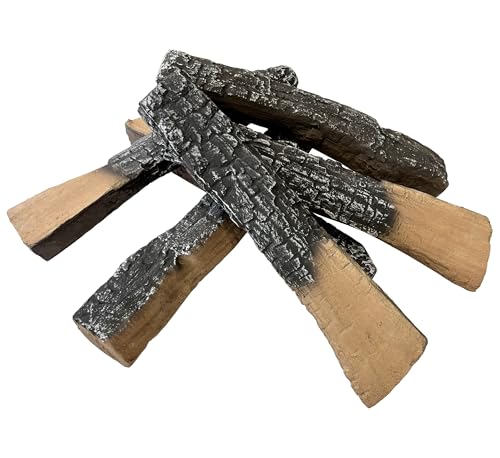
These four ceramic logs are sized like real firewood, from 9.5 to 13.7 inches, so they stack into a believable mini log set. They’re made from durable refractory ceramic fiber that’s lightweight but holds heat well, helping the flames look more natural once everything is warmed up. The logs are designed to burn cleanly without dust or odor, which helps in small indoor rooms. They’re a good fit if you already have a burner in a natural gas, propane, or electric fireplace insert and just want a more realistic log look.
Pieces 4 ceramic logsLog Lengths Approx. 13.7″, 11″, 10″, 9.5″Material Inorganic refractory ceramic fiberUse Ventless and vented gas fireplaces, indoor/outdoor fireplaceFuel Compatibility Natural gas, propane, electric fireplace inserts
Why it made the cut
Set of 4 life‑sized ceramic logs at 13.7″, 11″, 10″ and 9.5″
Pure inorganic refractory fibers for high durability and heat resistance
Realistic hand‑colored wood look that disperses flames nicely once heated
Clean burning with no dust or noticeable residue released into the air
Compatible with ventless and vented gas fireplaces, fire pits and electric inserts
Good to know
Logs only—no burner, grate or embers included
Four pieces may look a bit sparse in a very wide firebox
Sizes are fixed, so you can’t choose shorter pieces for a very small insert
Skip it if Skip this if you want a full heating setup; it’s for upgrading the look of an existing burner, not adding heat output by itself.
Best for Owners of gas, gel or standard fireplaces who want a fuller six‑piece log stack with varied shapes.
This six‑piece set uses lightweight ceramic fibre logs in three different lengths and shapes, so you can build a more natural-looking stack than with identical logs. The fiber material is designed for very high temperatures without breaking or splintering, and it burns with minimal ash or residue. When the burner is on, the hand‑painted grain and glowing orange/red hot spots under the logs help mimic real firewood without the mess. It’s a solid choice if you’ve already got a burner and want to fill a mid‑size firebox with a realistic layout.
Pieces 6 ceramic fibre logsMaterial Lightweight, heat‑resistant ceramic fibreLengths Three different length sizesAppearance Hand‑painted log grain with glowing hot spots when burningUse Vented, outdoor and indoor gas fireplaces, gel and standard
Why it made the cut
Six ceramic fibre logs in three different lengths and branch shapes
Heat‑resistant material that won’t break or splinter at high temperatures
Minimal ash and residue, with little released into the air
Hand‑painted grain for realistic wood appearance and glowing hot spots
Suitable for a wide range of fireplace types, including gas, gel and standard fireplaces
Good to know
No specific inch measurements if you need exact sizing
Decorative only—no burner, grate or embers included
Doesn’t list propane explicitly among compatible fuels
Skip it if Skip this if you need exact log dimensions for a very tight or narrow insert and can’t work with mixed, unspecified lengths.
Best for Fireplaces or fire pits where you want a clean, modern white birch log display with gas, propane, gel, ethanol or electric setups.
This set gives you six long ceramic white birch logs, each roughly 15.7 to 16.1 inches, which fills most fireboxes with a stacked-wood look. The ceramic fiber construction is made for high‑temperature fireplace use, keeping the bark texture and shape while cutting out ash and wood chips. They’re rated for vented gas fireplaces, propane and gas fire pits, gel and ethanol fireplaces, and decorative electric fireplace displays, so they adapt to a lot of setups. If you’re after a bright birch style instead of dark oak, this is the one that will change how your fireplace looks.
Pieces 6 ceramic white birch logsLog Length Approx. 15.7″ to 16.1″Material Lightweight ceramic fiberAppearance Detailed bark texture and natural white birch stylingUse Vented gas fireplaces, outdoor gas and propane fire pits, et
Why it made the cut
Six matching white birch‑style ceramic logs for a cohesive look
Each log about 15.7″ to 16.1″ long, suitable for many fireboxes and fire pits
Lightweight ceramic fiber holds up to high temperatures while keeping shape
No ash, chips or debris compared with real birch logs
Works with vented gas fireplaces, propane fire pits, ethanol, gel and electric displays
Good to know
All logs are similar in length, so there’s less size variety for complex stacking
White birch finish may highlight soot buildup if flames contact the logs
Logs only—no burner, fire glass or embers included
Skip it if Skip this if you prefer the darker, rustic look of oak-style logs instead of white birch.
Best for Adding realistic glowing pine cone accents to gas or propane fireplaces, fire pits or tabletop burners, especially for holiday decor.
This set swaps traditional logs for six ceramic fiber pine cones in assorted 3.5 to 5.2 inch sizes, great as accents around an existing log set. The high‑purity ceramic fiber is fireproof up to 1000 °C, very lightweight and designed to glow and retain heat for a while after you shut the burner off. Thin edges on the cones turn red when burning, creating flickering light and dark highlights that look more like real embers. They’re sized for everything from indoor gas inserts to outdoor fire bowls and small tabletop fireplaces.
Pieces 6 ceramic pine conesSizes Approx. 3.5″ to 5.2″Material High‑purity ceramic fiberHeat Rating Fireproof up to 1000 °CFuel Compatibility Works with natural gas, propane, electric, ethanol and gel f
Why it made the cut
Set of 6 decorative pine cones from about 3.5″ to 5.2″
High‑purity ceramic fiber rated fireproof up to 1000 °C
Extremely realistic pine cone look that glows red at the edges in the fire
Retains heat for a period after the flames are turned off
Compatible with natural gas, propane, electric, ethanol and gel fireplaces
Good to know
Accent pieces, not a full log set on their own
Small sizes can look undersized in a very large firebox if used alone
No burner, grate or embers included
Skip it if Skip this if you need primary log coverage for a big fireplace rather than smaller decorative accents around an existing burner.
Gas fireplace venting requirements come down to how the burner moves exhaust out of the room and what firebox and chimney you already have. If you are working through gas fireplace vent requirements for a vented gas fireplace, code first asks which type it is and where it will sit in the house. Inspectors everywhere, from Pennsylvania on, enforce a gas fireplace building code based on national fuel‑gas rules plus local amendments, and those rules also limit where you can place gas fireplaces.
There are four common arrangements: vented burner‑and‑log kits, vent‑free (ventless) sets, sealed direct‑vent systems, and decorative ceramic logs that sit on an existing burner. Among the products on this page, only the RealFyre 18 Inch Vented Gas Fireplace Logs Kit is a true vented burner‑and‑log set; the Skyflame 4pcs Gas Fireplace Ceramic Wood Logs, MrGas Log 6pcs Gas Fireplace Logs, Faux, QuliMetal 6PCS Ceramic White Birch Gas Fireplace Logs, 16-I… and Heyfurni Gas Fireplace Logs are decorative pieces that must be paired with a fireplace or fire pit that already meets its venting and fuel requirements. Decorative sets don’t create or remove a venting obligation — they only change flame appearance and how heat is radiated.
Type
Where exhaust goes
Where it can be used
Key venting limits
Vented log set (e.g. RealFyre)
Up a working chimney or listed metal vent
Open masonry or listed metal firebox with damper open
Needs a functioning, correctly sized flue; sends room air up the chimney whenever it burns.
Vent‑free log set (not among these picks)
Into the room air
Special vent‑free firebox rated for that exact set
Banned or restricted in some areas; strict room‑volume and usage limits; must follow the manual exactly.
Direct‑vent gas fireplace
Sealed coaxial pipe through wall or roof
Factory‑built unit installed per its instructions
You cannot alter the logs, glass, or venting; only factory parts and layouts are allowed.
On top of a listed gas, gel, ethanol, or electric display
Cannot change venting category or block burner ports, pilots, or air gaps.
How vented, vent‑free, direct‑vent, and decorative log options differ on venting.
Vented log sets belong in a traditional masonry fireplace or a factory‑built box listed for a vented gas log, with a full‑height chimney or metal vent sized and lined per the manual. For a set like the RealFyre 18 Inch Vented Gas Fireplace Logs Kit, the damper must be locked open whenever the burner is used so flue gases rise outdoors. That keeps combustion products out of the room but also means a vented gas fireplace can pull a fair amount of warmed air up the flue.
Vent‑free log sets are different: the burner is engineered to burn cleanly enough that exhaust stays in the room air, which makes them efficient on paper. In practice they add moisture, can stress indoor air quality, and are heavily regulated or outright banned in some states and cities. If your firebox is rated for vent‑free logs, you still have to meet the manufacturer’s minimum room size, follow any time limits in the instructions, and keep a working carbon monoxide alarm nearby.
Outdoor burners never go indoors
Never run any gas log set without the venting and fresh air the manual calls for, and never bring an outdoor‑only burner, fire pit pan, or patio heater indoors just because the ceramic logs look similar. Using an unvented or mis‑vented burner in a living room risks carbon monoxide buildup, fire, and serious code violations.
Decorative ceramic logs like the Skyflame, MrGas, QuliMetal and Heyfurni sets do not change the venting rules at all; they simply sit on top of the burner that is already there. As long as that burner and firebox are listed for indoor use and the fuel you have, and you do not block any ports, pilots or air gaps, the venting category and safety limits stay exactly the same.
Any new gas installation—running a gas line, adding a burner, or converting a wood fireplace to gas—has to follow the manufacturer’s instructions, the adopted fuel‑gas code, and any local amendments. In most jurisdictions that means a permit, an inspection, and work done by a licensed plumber or HVAC contractor, even if the visible part is as simple as a log set. Once you are sure your flue and code situation check out, guides that compare the best vented gas heaters like best vented gas heaters are the right next step.
Most gas log sets do not need a new electrical circuit; many use a millivolt gas valve that works even in a power outage. Optional blowers, electronic ignition modules, and wall controls do need wiring to a junction box or outlet, and that work has to follow the National Electrical Code and any local rules, so calling an electrician is wise if you are unsure.
Where you can place a gas fireplace
Building officials limit where you can place gas fireplaces: the firebox has to meet clearances to framing and finishes, the vent has to terminate far enough from windows and doors, and some models are barred from small bedrooms or bathrooms. Pennsylvania, for example, adopts model mechanical and fuel‑gas codes statewide, then lets each town add its own rules, so always check with your local office before you cut a hole for a vent or order a new unit.
How to Choose Gas Fireplace Logs for Your Home
Choosing fireplace logs for a gas fireplace starts with deciding whether you want the best gas fireplace logs vented for heat, or decorative pieces that mainly improve the look of the flame. Gas fireplaces in homes today are usually vented, vent‑free, direct‑vent, or electric inserts, and those are the main types of indoor gas fireplaces you will run into. Matching the logs to that type, plus your fuel and firebox size, is what keeps the setup both attractive and safe.
You can see examples of modern gas fireplace styles in showrooms: long ribbon flames behind glass, minimalist openings with white logs, or units framed by bold gas fireplace decorative fronts. Search results for “fireplace logs electric” are mostly decorative sets sitting in front of or inside an electric firebox, and in that case the logs are purely for appearance and must not block air inlets or outlets.
In short
Pick a full vented kit like RealFyre 18 Inch Vented Gas Fireplace Logs Kit if you are adding real gas heat in a vented fireplace; pick lighter ceramic logs if you are just upgrading the look of a gas, propane, gel, ethanol, or electric flame you already have. Size any logs so they stay within the burner area, clear of air and safety openings, and then let style finish the decision.
On this page there are two broad product categories. The RealFyre 18 Inch Vented Gas Fireplace Logs Kit is a full vented burner‑and‑log kit designed as a heater for a vented fireplace, while the Skyflame, MrGas Log, QuliMetal, and Heyfurni sets are lighter ceramic logs and pine cones that change the look of the flame without changing how the burner works. Use a full kit when you are adding or replacing a gas log heater in a vented firebox; use decorative ceramic logs when the fireplace or fire pit already has a listed burner underneath.
Sizing Gas Fireplace Logs
Measure the firebox first: write down front width, rear width, depth, and opening height in inches.
For a burner/log kit, pick a nominal log length that is comfortably less than the front opening; an 18‑inch set like the RealFyre 18 Inch Vented Gas Fireplace Logs Kit usually suits smaller to mid‑size fireboxes.
For decorative sets, choose pieces that do not overhang the burner pan; the QuliMetal 6PCS Ceramic White Birch Gas Fireplace Logs, 16-I… logs reach up to about 16 inches, while many Skyflame and MrGas pieces are shorter accents you
Check the manufacturer’s side, rear, and height clearances and any log placement diagram for your burner; those clearances beat any rule of thumb.
Make sure logs never block burner ports, pilot flames, oxygen‑depletion sensors, or, on electric units, any air inlets or outlets.
Fuel is the next filter. The RealFyre kit listed here is built for natural gas, so you only install it on a natural‑gas supply or with the exact conversion kit the maker specifies. Decorative ceramic logs like Skyflame, MrGas, QuliMetal and Heyfurni are just refractory pieces, so they will sit over natural gas, propane, ethanol, gel cans, or an electric flame effect as long as the underlying burner is rated for that fuel. They never change the fuel rating or capacity of the burner underneath, and they do not increase its BTU output; they simply absorb and re‑radiate the heat it already makes.
Start by matching the log set to the fireplace type and the burner the manufacturer approves. In a traditional vented masonry or metal firebox with a working chimney you can install a vented kit such as RealFyre or place decorative logs the burner manual allows. Vent‑free fireboxes accept only vent‑free burners/log sets listed for that box; extra ceramics are allowed only when the box maker permits them because they can alter flame patterns and safety sensors. Sealed direct‑vent units are the strictest: keep the factory log layout and avoid third‑party ceramic logs. Electric inserts, gel trays and outdoor fire pits usually allow more styling freedom, but always follow the burner manual for clearances, drainage and air openings.
Style is the last call. If your gas fireplace has a traditional brick opening, a classic “oak” look like the Skyflame or MrGas sets tends to fit, while for a clean, modern gas fireplace with a wide opening or bold decorative front the white birch look of the QuliMetal logs or the sculpted shapes in the Heyfurni Gas Fireplace Logs set usually work better. Decorative glass, trim, and fronts can frame those logs so the flame looks designed instead of like a few random sticks; if you mainly care about styling options, ceramic logs for gas fireplaces compares more designs in this same decorative category.
Heat Output, Room Size and Gas Log Running Cost
Heat from gas fireplace logs depends on the burner BTU rating and whether you’re on natural gas piping or a propane gas tank, not on how pretty the logs look.
Only a full burner and log kit with a stated BTU rating, like the RealFyre 18 Inch Vented Gas Fireplace Logs Kit, should be treated as a gas fireplace heater. The other four picks in this list are decorative ceramic logs that ride on the gas burner you already have and don’t change its fuel use. Most residential fireplace gas valves feeding those burners are 1/2 inch gas valves (sometimes 3/4 inch on bigger fireplaces), so any new kit has to match what your installer sized and your local code allows.
For room sizing, a quick rule of thumb is 20–40 BTU per square foot, with 20 BTU/ft² for a mild climate or tight insulation and 35–40 BTU/ft² for older, drafty rooms. A 20,000 BTU/h log set is often comfortable for a 400–600 sq ft reasonably insulated living room; a 30,000 BTU/h vented kit handles more like 500–800 sq ft, depending on drafts and ceiling height.
Worked example
Say your den is 15 by 18 ft with 8 ft ceilings and average insulation. That’s 270 sq ft. At 30 BTU per square foot, you’d aim for about 8,100 BTU/h (270 × 30). A typical vented log kit in the 20,000–30,000 BTU/h range easily covers that on paper, but because vented sets send a big chunk of heat up the flue, you’ll feel more like half to two‑thirds of that in the room. In a larger 20 by 20 ft room (400 sq ft) at the same 30 BTU/ft², you’d target around 12,000 BTU/h of usable room heat, so a 30,000 BTU/h vented kit again makes sense.
Room15 × 18 ft
Target load≈ 8,100 BTU/h
Typical kit20,000–30,000 BTU/h vented
Vented log sets give the most natural flame but send a noticeable share of heat up the chimney, so they’re best for ambiance plus some warmth. Vent‑free log sets (not in this top 5 list) keep more heat in the room for the same BTU input, but they also add moisture and combustion byproducts into the air and are restricted in some areas—something your gas fitter and inspector will address.
Decorative ceramic logs like the Skyflame 4pcs, MrGas Log 6pcs, QuliMetal 6PCS White Birch and Heyfurni Gas Fireplace Logs soak up heat and radiate it back after the burner shuts off, which makes the fireplace feel warmer a little longer. They don’t change how much gas your burner uses per hour, though.
On fuel use, the math runs on burner size. A 30,000 BTU/h natural gas burner uses 30,000 ÷ 100,000 = 0.3 therms per hour. If your gas rate is $1.20 per therm, one hour on high costs about $0.36; three hours is roughly $1.08. A 20 lb propane tank holds about 430,000 BTU, so that same 30,000 BTU/h burner would drain it in around 430,000 ÷ 30,000 ≈ 14 hours of full‑blast run time.
Heater
Watts
Per hour
Per day (4 h)
Per month (30 days)
1,500 W electric fireplace or space heater
1,500 W
26¢
$1.02
$30.60
Electric log set for looks only
300 W
5.1¢
20¢
$6.12
Calculated at 17¢ per kWh. How electric fireplaces compare on running cost; gas logs with a similar heat output usually cost less per hour to run, based on local gas prices.
20–40 BTU/ft²
Rule of thumb for sizing a gas log heater
Stay near the low end for a tight, well‑insulated room and closer to 35–40 BTU/ft² for older or drafty spaces. For higher heat needs, consider gas fireplace logs for heaters with higher BTU ratings rather than small decorative sets.
Gas vs Electric Fireplaces and Starting Your Fire Safely
Starting a gas fireplace safely comes down to using the right ignition method for your valve, opening the damper on vented units, and never forcing anything that smells like gas.
1
Find the control type
Look at the control area to see if you have a knob marked OFF–PILOT–ON (standing pilot), a push button for piezo ignition, an electronic ignition module, or only a wall switch/remote. This tells you how to start a gas fireplace on your model.
2
Open the damper on vented fireplaces
Before you start a gas fireplace with a chimney, pull or rotate the damper so it’s fully open. You should see the flue passage above the firebox. Vent‑free units don’t have a flue damper to open.
3
Light a standing pilot system
Turn the knob to PILOT, press it in, and click the built‑in igniter until the small pilot flame lights. Keep holding the knob in for 20–30 seconds so the thermocouple warms up, then release and turn the knob to ON. Use the burner knob or wall switch to start the main flame.
4
Use intermittent pilot or electronic ignition
For electronic systems, turn the control to ON or use the wall switch/remote. The unit will spark and light the pilot automatically, then open the main burner. If it doesn’t start after a couple of tries, stop and let any gas clear before calling a technician.
5
Shut it down correctly
Turn the main burner OFF when you’re done. For standing pilots that you won’t use for weeks, you can also turn the knob to OFF to extinguish the pilot and re‑light it later following the same steps.
Many people asking how to start gas fireplace units also wonder, does a gas fireplace need electricity? A traditional standing‑pilot, millivolt system will still light and run during a power outage, because the valve is powered by the pilot flame, though the blower and wall thermostat won’t work. Newer units with electronic ignition or control boards usually do need house power; without it, they either won’t light at all, or you’ll be limited to a backup manual lighting method described in the manual.
For a fireplace conversion to gas, you can usually convert a wood fireplace to gas in two broad ways. The simpler route is a gas log set that sits in your existing firebox and uses the existing chimney as a vent; the more involved option is a sealed gas insert with its own metal vent liner. Both start with proper gas line installation to the fireplace by a licensed gas fitter, checking the chimney, and matching the insert or log set to the venting and clearances. That wood fireplace to gas conversion is not a DIY weekend job.
Running the other direction, it’s common to replace a tired gas fireplace with an electric insert or electric log set. A plumber or gas fitter must cap and test the old gas line, then you can close the flue if the unit is electric only. If the electric insert needs a 240 V circuit or a dedicated 120 V line, have an electrician install and test that before you push the unit into the opening.
As long as a fireplace is correctly sized and installed, you can put a listed gas insert or gas log set into most traditional masonry fireplaces and keep the masonry surround you like. The installer will size the gas line to the fireplace for its BTU rating, confirm the chimney or direct‑vent route is up to code, and set up the ignition so you’re back to a simple wall switch or knob instead of hauling wood.
Safety add‑ons that matter
Any fuel‑burning fireplace—gas, propane or wood—deserves a working carbon monoxide alarm on the same floor and an annual service visit to clean burners, check the gas valve and verify the vent. Those two small habits catch most fireplace issues long before they become dangerous.
Gas work needs a pro
Don’t try to run new gas lines, move a fireplace gas valve or modify venting yourself. A licensed gas fitter or plumber has the tools to size, leak‑test and permit the work so your fireplace passes inspection and runs safely for years.
Quick Checklist Before You Buy or Light Gas Fireplace Logs
A quick checklist before you buy or light gas fireplace logs keeps you from ordering the wrong set or running it unsafely. For “gas fireplace glowing embers”, only use ember material the burner and log manuals list and never bury the ports. For a “gas fireplace draft stopper” in a wood-burning fireplace now using vented gas logs, a damper clamp or listed draft-stop device keeps the flue locked partly open. If you’re thinking about “connecting heter to gas fireplace” lines or doing a before and after wood fireplace to gas insert conversion, that gas piping and vent work belongs to a licensed gas fitter, not DIY.
Quick checks before you hit Buy or Light
Identify your fireplace type and venting from the rating plate or manual: masonry wood fireplace, factory-built box, gas insert, or vent-free firebox.
Confirm the fuel: natural gas or propane, and only choose logs or a kit like the RealFyre 18 Inch Vented Gas Fireplace Logs Kit that match that fuel.
Measure the firebox (front width, rear width, depth and opening height) so the log set you pick leaves a few inches of clearance on each side and at the back.
Inspect any existing burner for rusted parts, warped pans or clogged ports; if it’s in bad shape, replace the burner instead of just dropping in ceramic logs like the Skyflame or MrGas sets.
Check clearances to mantel, trim and TV against your fireplace manual, and in a wood-burning fireplace used with vented gas logs, fit the required damper clamp or draft-stop device before regular use.
Decide now if you’ll add gas fireplace glowing embers or fire glass; only plan on them if both the burner and log manufacturers say they’re allowed, and arrange logs with small gaps between pieces, as the QuliMetal white birch set suggests,
Before the first burn, test your carbon monoxide and smoke alarms, then read the fireplace and log-set manuals end to end before moving logs or adding any decorative media around the burner.
Bring measurements, not guesses
Write down your firebox dimensions and fuel type, and snap a photo of the rating plate so you can match size, fuel and venting against gas fireplace logs for heat and similar options without guessing from memory.
Call a pro for gas work
Shut everything down and call a licensed gas fitter if you smell gas at any time, if you’re unsure how the gas line, shutoff or flex connector are supposed to be arranged, if a new gas line needs to be pulled to the fireplace, or if you’re changing fuel type or converting a wood fireplace to a gas insert. Don’t try to tee another heater into the fireplace gas line yourself; incorrect pipe sizing and joints can lead to leaks, poor combustion and carbon monoxide in the room.
More Questions, Answered
Does a gas fireplace need electricity to work?
Many gas fireplaces will keep burning without house power, but some won’t. A standing-pilot millivolt system generates its own low-voltage power from the pilot flame, so the burner and basic controls still work in an outage, though blowers and smart remotes will be dead. Newer units with electronic ignition or touch controls usually shut down without electricity unless they have a battery backup pack. The data plate or manual will tell you which type you own and what still operates in a power cut.
How do you safely start a gas fireplace with logs installed?
Safe startup is slow and deliberate. Confirm the damper is fully open on vented fireplaces, clear anything within about 3 feet of the opening, then follow the label sequence: set the control to pilot, press the knob in, and use the igniter until the pilot stays lit. Holding the control in for 20 to 30 seconds lets the thermocouple heat up so the safety valve will remain open when you turn the knob to On. If the burner does not light or you smell raw gas, shut the control off, air out the room for several minutes, and only try again once the smell is gone.
Can I convert my existing gas fireplace to an electric fireplace insert?
You can often convert a masonry or factory-built wood-burning fireplace to an electric insert, and many decorative open gas fireboxes can be repurposed too. The gas line has to be capped by a licensed pro, and you will need a properly rated electrical receptacle either in the firebox or through a side wall for the insert’s cord. Sealed direct-vent gas fireplaces are different: they are tested and listed as a complete system, so removing burners and glass to fit an insert usually violates the listing and local code. Before you buy an electric unit, measure width, height and depth of the opening and compare them to the insert’s framing dimensions with at least a small clearance margin.
Can I install a gas log set in a traditional wood-burning masonry fireplace?
A traditional masonry fireplace is often a good candidate for a vented gas log set if the chimney, flue tile and mortar joints are in solid condition. A chimney sweep should inspect and, if needed, clean the flue first, then you typically add a damper clamp so the damper can never be fully closed while gas is connected. The log set has to be sized to the firebox and built for your fuel type, and the gas line, shutoff valve and sediment trap all need to be installed to local code. Vent-free log sets are a separate category and are only allowed in some regions and room sizes, so your code office and the manual both matter before you choose one.
What are the main types of indoor gas fireplaces?
Indoor gas fireplaces fall into three broad families. Vented systems include open fireplaces with gas log sets and B-vent metal boxes that send exhaust up a lined chimney. Direct-vent units seal the fire behind glass and use a coaxial pipe through a wall or roof, which gives more usable heat and wastes less room air. Vent-free heaters and fireboxes exhaust into the room instead of a flue, which boosts efficiency but adds moisture and combustion byproducts and is banned or restricted in some areas.
What are gas fireplace glowing embers, and how should I use them with log sets?
Glowing embers are small piles of mineral or ceramic fibers that sit over parts of the burner to mimic live coals at the base of the logs. They do not add much total BTU output, but they make the flame base look fuller and spread a warm glow across the firebox floor. Only use ember material supplied or approved by the log manufacturer, and fluff it into a thin, uneven layer so it does not block burner ports or the pilot flame. Because embers slowly break down and darken with heat, replacing or topping them up every few seasons keeps the effect looking fresh.