The common mistake is assuming the gas line alone means the heat will keep running. In practice, a dead outlet, dead thermostat circuit, or dead blower can leave a gas-heated home cold even though the utility supply is fine.
That mistake gets expensive in a hurry. If your system needs 120 volts and you have no backup power, you can end up paying for fuel you can’t use until the lights come back on.
Natural Gas Heating and Electricity Use Explained
Natural gas itself does not need electricity to burn, but many natural gas heating systems need power for ignition, controls, a thermostat, or a blower. A natural gas furnace usually stops during an outage, while a standing-pilot heater or blower-free ventless unit can keep heating if its design allows manual operation without power.
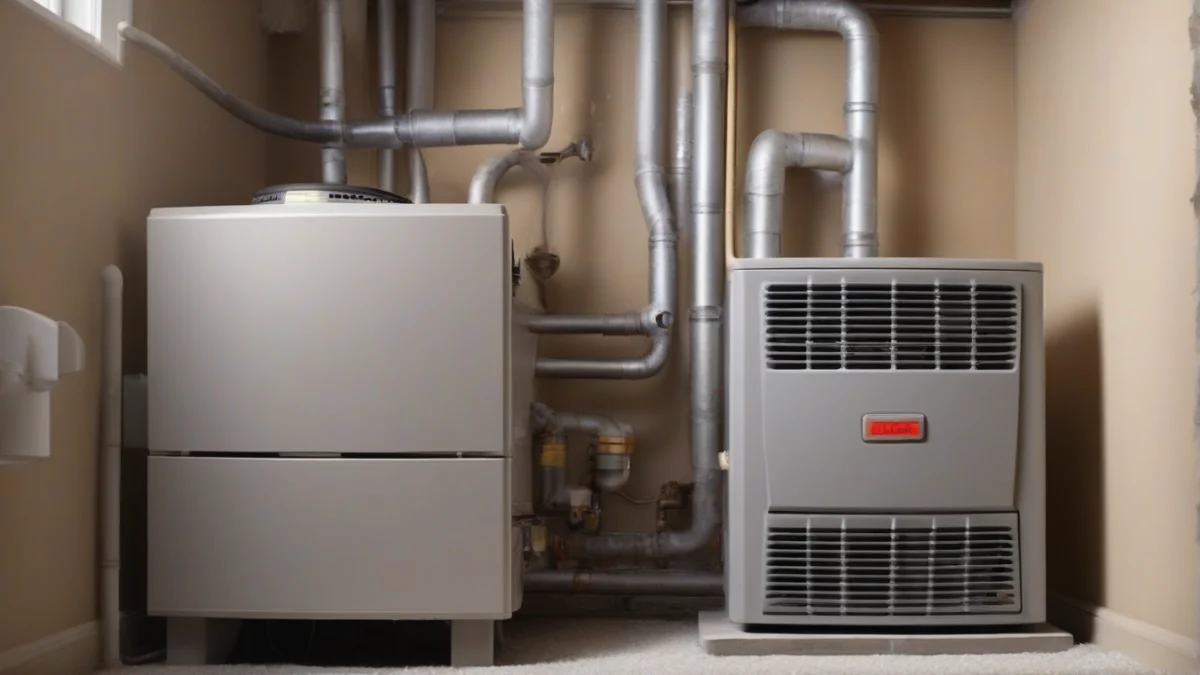
How does natural gas home heating work? Gas reaches a burner, the burner releases heat, and the system moves that heat into the room or through ducts, radiators, or baseboards. A modern furnace adds an electronic ignition, control board, blower motor, thermostat, and safety switches; if any required electrical part loses power, the gas valve closes and heating stops.
A natural gas furnace is the forced-air type most homes have: the burner heats a metal heat exchanger, then the blower pushes household air across it and into ductwork. A natural gas furnace can be highly efficient, but natural gas heating efficiency depends mainly on combustion, heat-exchanger losses, venting, and how much warm air the system delivers—not simply on whether the burner uses electricity.
Natural gas boilers for home heating work differently because they heat water instead of blowing air. The burner may light during an outage, but an electric circulator pump, zone valve, aquastat, or control board usually cannot move that hot water, so the radiators or baseboards stop receiving useful heat.
| Gas heating system | What electricity runs | During an outage |
|---|---|---|
| Standing-pilot heater | Usually no blower; the pilot and gas valve use mechanical or pilot-generated control | Often keeps heating if the controls are designed for manual operation |
| Modern forced-air furnace | Electronic ignition, control board, thermostat, blower motor, and safety switches | Normally stops because the ignition, controls, and blower lose power |
| Boiler with circulators | Ignition, controls, pumps, and often zone valves | Normally stops circulating heat, even if the burner could light |
| Ventless wall heater | Often a push-button igniter and a mechanical thermostat; no blower is required | Can run without electricity when the model is designed for it |
| Gas fireplace | Ignition system, remote receiver, control board, and optional fan vary by model | Some work manually; others need power for ignition or controls |

A heating system with a natural gas fireplace is generally called a natural-gas fireplace or gas fireplace heating system; if it heats several rooms through ducts, the equipment is usually a gas furnace instead. Infrared models warm nearby people and objects directly, so a blower-free infrared or ventless unit can feel warm without circulating air through the house.
What The Power Bill Really Changes
Natural gas is often cheaper than heating oil, but there is no honest nationwide percentage; your answer depends on local fuel prices, the heater’s efficiency, and how much heat your home needs. Gas and electricity are separate parts of the bill for most systems, so a furnace can use cheap gas and still add a smaller electrical charge for its blower, controls, and ignition.
For a fair heating cost comparison, compare the price of the useful heat delivered into the house, not the price printed on one fuel bill. A gas furnace’s AFUE rating tells you how much of the gas becomes indoor heat; the rest leaves through the vent. An oil boiler or furnace works the same way, while an electric blower adds a separate power cost.
| Heating setup | Gas or oil bill | Electric bill | Comfort tradeoff |
|---|---|---|---|
| Forced-air gas furnace | Gas burned at each heating cycle | Blower, controls, and ignition | Even whole-home heat when ducts are sized and sealed well |
| Gas boiler | Gas burned to heat water | Controls and circulator pump | Quiet, steady heat; slower response than forced air |
| Ventless gas heater | Gas burned directly in the room | Often little or no operating electricity | Can feel immediate, but heat may be less even and room size may be limited |
| Oil furnace or boiler | Heating oil delivered to the tank | Burner, controls, blower or circulator | Can heat reliably, but fuel delivery and equipment efficiency affect the total |
A furnace blower usually draws modest power compared with electric resistance heat, but it still runs every time the system moves warm air. A ventless heater may avoid that electrical charge, yet its lower operating cost can be offset by uneven room temperatures, restricted installation locations, or the need to heat another room separately. A how ventless natural gas heaters work guide explains why that tradeoff exists.
Old or oversized equipment can erase a fuel-price advantage. A short-cycling furnace wastes some startup and standby energy, while an oversized boiler may heat the water quickly and shut off before the rooms warm evenly. Check the delivered fuel price, the efficiency rating, repair condition, and typical winter runtime together; the cheapest fuel on paper isn’t always the cheapest comfortable heat.
Which Rooms A Gas Heater Suits
A gas heater suits one properly sized room best, not an entire home by default. A direct room heater can give you heat without a large boiler, but the room still needs the clearances, venting or ventilation, and fuel supply required by the model’s manual and local code.
For an apartment, small bedroom, or enclosed office, a natural gas ventless heater deserves extra caution because its flame sends combustion products and water vapor into the room. Health dangers can include carbon monoxide exposure, reduced oxygen, headaches, and excess moisture that encourages condensation or mold. A working CO alarm is essential, but it doesn’t make an illegal installation legal.
| Room or heat need | What usually fits | Main caution |
|---|---|---|
| One small room | A listed direct-vent or properly installed ventless room heater | Check local rules, room size, clearances, and ventilation |
| Several rooms or a whole house | A furnace or boiler with correctly sized distribution | Leaky ducts, weak airflow, or poor zoning can waste heat |
| People and nearby surfaces | Infrared or radiant heat | Warmth can feel uneven outside the heater’s direct reach |
| A room needing even air temperature | A convector or forced-air system | Warm air movement can feel drafty if the fan or ducts perform poorly |
Radiant heat warms people, floors, walls, and furniture directly, so you can feel it before the whole room reaches the thermostat setting. A natural gas radiant heating panel mounted on a ceiling can work only when that specific product is listed for ceiling installation and its gas connection and venting meet code; many ceiling panels are electric, so check the nameplate rather than the marketing photo.
A natural gas convector works by heating air near the burner: warm air rises, cooler air drops toward the heater, and the cycle circulates without necessarily using a fan. Forced-air heating moves room air with a blower and can heat faster, but leaking ducts or a weak fan leave cold spots and add a drafty feel.
Match The Heater To The Room
What To Do During A Power Outage
During a power outage, assume a modern gas furnace or boiler will stop until you confirm its ignition, controls, and fan or pump still have power. A furnace can fail at ignition, when the blower starts, or after a control-board lockout; a gas boiler may light but still fail to circulate hot water if its pump and controls are off. That is the practical answer to common problems with natural gas heating.
A tank-style natural gas water heater has different failure points. A standing-pilot model may keep heating without electricity, while an electronic-ignition model usually needs power to light the burner. If your natural gas hot water tank is not heating up and a red light is flashing, treat the light as a fault signal: the control has found a problem, and the manual’s code table matters more than guessing. gas water heaters work without power
Natural gas boilers work for home heating by burning gas to heat water, then sending that hot water through radiators, baseboards, or radiant tubing. The burner may be gas-fired, but the thermostat, ignition system, circulator pump, and safety controls commonly need electricity. A boiler that lights during an outage may still leave the house cold if the pump can’t move the heat.
Should You Convert From Oil To Gas
Converting from oil to natural gas heating can make sense when your oil boiler or furnace is near the end of its life and gas service is already available, but the cost of converting an oil heating system to natural gas depends on far more than the fuel price.

Heating oil to natural gas conversion may require a new burner, a new boiler or furnace, gas piping, venting changes, controls, and electrical work. If your property runs on oil for heating, upgrading to natural gas starts with a licensed contractor checking the equipment, chimney or vent, gas-service availability, and local permit requirements.
| Cost or check | Why it matters |
|---|---|
| Gas service and meter | A utility hookup or service extension can change the project total before the heater is installed. |
| New heating equipment | An old oil boiler usually cannot be converted by swapping fuel alone; the burner, controls, or entire appliance may need replacement. |
| Gas piping | The pipe must be sized, routed, tested, and approved for the appliance load. |
| Venting and chimney | The new appliance may need a different vent, liner, or termination than the oil system uses. |
| Electrical work | Ignition, controls, pumps, thermostats, and a furnace blower may need new wiring or a suitable circuit. |
Compare natural gas versus oil heating systems for Pennsylvania, the Northeast, or another oil-heavy region by looking at delivered heat per season. Fuel price per gallon or per therm is only the starting point: multiply the fuel used by its energy content, then account for the appliance efficiency and the heat your home actually needs.
The cheapest fuel can lose its advantage if the oil equipment is failing, the venting needs replacement, or utility hookup costs are high. Have a licensed plumber or HVAC professional size the gas line, set up combustion, and verify draft and safety controls; fuel conversion is a poor place to save money with improvised fittings.
Before You Buy Or Call A Technician
Natural gas heaters for home heating installation need a fuel, power, room-size, venting, and code check before you spend money; residential natural gas heating setup costs vary with the appliance, gas connection, vent route, electrical needs, permits, and labor.
For natural gas usage at home with central heating boiler systems, ask the contractor how the boiler’s input, efficiency, controls, and expected seasonal load affect consumption rather than relying on the burner size alone. Gas piping, venting changes, and many boiler or water-heater connections belong to a licensed plumber or HVAC technician in most places.
More Questions, Answered
Do natural gas furnaces work without electricity?
Will a natural gas wall heater run during a power outage?
Are ventless natural gas heaters safe in an apartment?
Is natural gas cheaper than heating oil?
What does a flashing red light on a natural gas water heater mean?
Can I convert an oil heating system to natural gas?
Do gas fireplaces need electricity to work?

I am a mechanical engineer and love doing research on different home and outdoor heating options. When I am not working, I love spending time with my family and friends. I also enjoy blogging about my findings and helping others to find the best heating options for their needs.
Related guides

How Ventless Natural Gas Heaters Work: Safety & Efficiency
Ventless natural gas heaters operate by burning gas to produce heat, utilizing oxygen from the room and emitting…
Do Natural Gas Garage Heaters Need Venting? Safety Guide
Yes, natural gas garage heaters typically need to be vented to safely expel combustion gases and ensure proper…
Enhancing Safety with Gas Fireplace Maintenance: A Complete Guide
You light your gas fireplace and settle into the evening. An hour later, you notice the flames look…