DeLonghi ComfortTemp Radiant Heater Review & Performance
On this page 10 sections
- The Specs
- DeLonghi ComfortTemp Radiant Heater Review
- What the Dragon Does Well In A Quiet Room
- Measure The Room Before You Buy
- Check Running Cost Before You Leave It On
- Safety Features And Bathroom Limits
- How It Compares With Oil-Filled Radiators
- Who Should Buy The Dragon Instead
- DeLonghi ComfortTemp Alternatives
- Questions People Ask
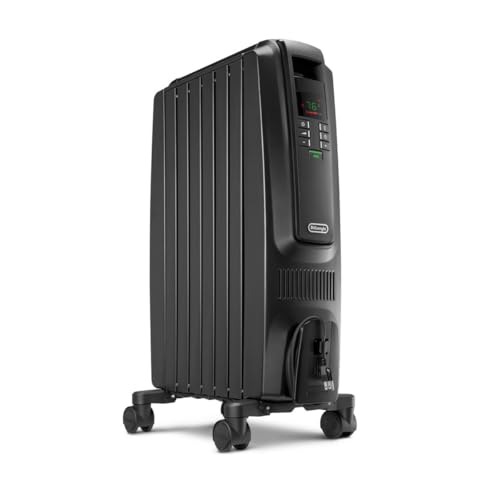
De’Longhi Dragon Oil-Filled Radiator
The appeal is simple: no fan noise, a programmable timer, and a radiant panel that warms people and nearby surfaces without blowing dust around. That makes sense if you want steady supplemental heat and hate the sound of a small turbine trying to impersonate winter.
The catch is equally simple. Radiant heaters feel great close in, but a cold, leaky room can outrun them if you expect furnace-level output from a plug-in appliance.
The Specs
| Power | 1500W |
|---|---|
| Timer | 24 hour timer |
| Controls | Digital control panel with LED display |
| Heat design | 75% more radiant surface area than RadiaS due to its unique |
| Dimensions | 16″x10″x26″ |
DeLonghi ComfortTemp Radiant Heater Review
The DeLonghi ComfortTemp radiant heater is a 1,500 W indoor space heater for quiet, targeted warmth in a bedroom, office, or similar enclosed room. Its digital control panel, 24-hour timer, and ECO Plus mode make it easier to run on a schedule, while radiant heat warms nearby people and surfaces without a fan stirring dust or dander.
That makes the ComfortTemp a better full-room radiant heater for a quiet, reasonably enclosed space than for an open or drafty area. Radiant warmth has direction: sit within its useful heating zone and you feel the benefit sooner, while cold air entering through a door or leaky window keeps demanding more heat. A fan heater may recover that kind of room faster, but it brings fan noise with it.
The strongest reason to buy the ComfortTemp is the quietness. There’s no blower motor pushing warm air around, so it suits reading, sleeping, video calls, and other jobs where a cycling fan becomes the loudest coworker in the room. The digital controls and 24-hour timer are useful conveniences; ECO Plus can reduce output or cycling when the room is near the selected comfort level.
For a broader look at similar quiet DeLonghi models, compare this design with DeLonghi radiant heater options before choosing the heater that matches your room and routine.
What the Dragon Does Well In A Quiet Room
The DeLonghi ComfortTemp earns its keep in a quiet bedroom or office because its large radiant surface warms steadily without a fan. DeLonghi oil-filled radiator reviews often favor that quiet, even heat; a DeLonghi panel heater review points to a similar benefit, though panel heaters usually feel more immediate and less gradual.
DeLonghi says the ComfortTemp has 75% more radiant surface area than a comparable standard radiator. More metal surface gives the heat more room to spread, so each section can release warmth more gently instead of concentrating it in one hot stream. The room still receives the heater’s rated output; the difference is how that heat reaches you.
No fan means no fan noise and less air movement carrying dust around the room. That suits a desk, reading chair or bedside position, where the steady warmth matters more than a blast of hot air. The trade-off is slower recovery after a door opens or a draft rolls through.
| Feature | What it does | Trade-off |
|---|---|---|
| Radiant heating | Spreads warmth across the larger surface | Feels gradual rather than blast-fast |
| No fan | Runs quietly and moves less dust | Can’t force warm air into distant corners |
| Integrated handle | Makes room-to-room carrying simpler | You still need to move it carefully when hot |
| Control panel | Keeps settings on the heater | Controls aren’t as convenient from across the room |
The integrated handle and built-in control panel matter more than they sound on paper. You can move the heater from a home office to a bedroom without hunting for a separate remote, then set it where the warmth is useful. If you want to compare the wider range of DeLonghi oil-filled radiators, look for the same quiet-heating advantage alongside differences in controls and heat-up behavior.
 Heating System Upgrade PlannerChoose between a heat pump, a furnace, a boiler or a hybrid with your own numbers, and hire the right installer.Every system compared side by side25 questions for contractors, red flagsRunning-cost, payback and quote calculator (Excel)
Measure The Room Before You Buy
The DeLonghi ComfortTemp is commonly presented as covering up to about 300 square feet, but that figure assumes a reasonably contained room; insulation, ceiling height and drafts can change the result sharply. The plain rule is simple: it suits a closed medium room better than a large, leaky or open-plan space.
Searches for how many squares the DeLonghi heater heats usually lead to the 300-square-foot claim. A DeLonghi full-room radiant heater review should treat that number as a planning ceiling, not a promise that every 300-square-foot room will feel comfortable. “Full room” means the heater can warm the space under suitable conditions, not that every cold corner will match the area near the unit.
Size by room conditions, not headline wattage alone. Check whether the door can stay closed, note cold exterior walls and windows, and account for a high ceiling before deciding that 1,500 W settles the question. Wattage tells you the electrical input; it doesn’t measure how quickly your room loses heat.
Check Running Cost Before You Leave It On
A DeLonghi ComfortTemp heater costs about 1.5 kWh for every hour it runs at its full 1,500 W setting, so a delonghi comfort temp heater review should include runtime—not just wattage. The same applies to a delonghi convector heater review or delonghi convection heater review: electricity use follows the hours the heating element is energized.
| Heater | Watts | Per hour | Per day (8 h) | Per month (30 days) |
|---|---|---|---|---|
| DeLonghi ComfortTemp at full power | 1,500 W | 26¢ | $2.04 | $61.20 |
The plain arithmetic is 1.5 kWh per hour × 8 hours × 30 days × $0.17 per kWh. That full-power example is a ceiling for a thermostat-controlled room, since the heater can stop heating after the room reaches its target temperature, then turn back on as heat leaks away.
ECO Plus can reduce runtime or power draw, but the saving depends on the room’s heat loss. A tight office may cycle off often; a drafty bedroom may keep calling for heat. Leaving any heater on longer than needed costs more than the wattage label suggests, because the clock keeps doing its quiet little job.
Safety Features And Bathroom Limits
The built-in tip-over switch and overheat protection are the key safety features to look for, but they don’t make the DeLonghi ComfortTemp bathroom-safe by default. Searches for “bathroom safe 1200w radiant heater radiator space heater trn0812t delonghi.com,” “delonghi bathroom safe 1200w radiant heater,” and “delonghi bathroom safe 1200w radiant heater trn0812t” point to a model-specific question: check that exact heater’s listing and manual.
This unit is an indoor space heater, so don’t assume it belongs in a bathroom or near a splash zone unless DeLonghi specifically says so for that model. Moisture can reach the heater, and bathroom outlet placement may put the cord or receptacle too close to water. A 1200 W bathroom-rated model’s instructions don’t automatically approve a different 1,500 W heater.
Tip-over protection cuts operation if the heater is knocked over, while overheat protection responds to excessive internal temperature. Neither control replaces clear space, a sound wall outlet or supervision; protection circuits are a backup, not a permission slip.
How It Compares With Oil-Filled Radiators

DeLonghi Dragon heater reviews, DeLonghi slim style heater reviews and DeLonghi oil radiator heater reviews usually come down to the same choice: the ComfortTemp responds faster, while an oil-filled radiator gives steadier residual warmth. The DeLonghi ComfortTemp suits quick zone heating; the DeLonghi Dragon Digital Oil Filled Radiator Heater suits long, quiet runs in one room.
Inside an oil-filled radiator, an electric element heats sealed oil, and that oil transfers heat to the metal fins. When the thermostat clicks off, the hot oil and fins keep giving off warmth for a while. ComfortTemp’s radiant panel has less stored heat, so its output changes sooner when the thermostat cycles.
| Feature | ComfortTemp | Oil-filled radiator |
|---|---|---|
| Response | Faster zone heat | Slower warm-up |
| After shutoff | Less residual warmth | Keeps warming from stored heat |
| Noise | Quiet, with no fan | Quiet, with no fan |
| Best fit | Shorter heating periods | All-day background heat |
Choose the oil-filled style when one occupied room needs gentle background heat for hours and you want longer warmth after shutoff. Pick the ComfortTemp when you move between a desk, chair and bedroom or want the room to feel warmer soon after switching it on. Lighter handling also favors the ComfortTemp when you reposition the heater during the day.
For a bedroom or office that needs predictable warmth through a long work session, the Dragon has the smoother feel. For shorter periods of directed heat, the ComfortTemp is the more responsive choice; the oil-filled radiator wins when residual warmth matters most.
Who Should Buy The Dragon Instead
A DeLonghi tower heater review points toward a different shape and use case than this radiant panel: choose a tower heater if a narrow footprint matters, but don’t assume the DeLonghi tower heater or DeLonghi slim style heater is automatically better for a large room.
Buy the ComfortTemp for a quiet bedroom, home office or other enclosed room where you want programmable radiant heat without fan noise. Its 24-hour timer and LED display help you set predictable heating periods instead of leaving the control to guesswork.
Choose the Dragon instead for all-day background heat in one room, especially when longer residual warmth after a thermostat cycle matters. Skip both compact radiant choices if you’re heating a very large room or a drafty basement; reducing air leaks and choosing a heater sized for that space comes first.
Use this buying rule: pick ComfortTemp for scheduled, quiet zone heat; pick the Dragon when stored warmth and long background operation matter more than quick response.
DeLonghi ComfortTemp Alternatives

De’Longhi Convection Panel Heater


