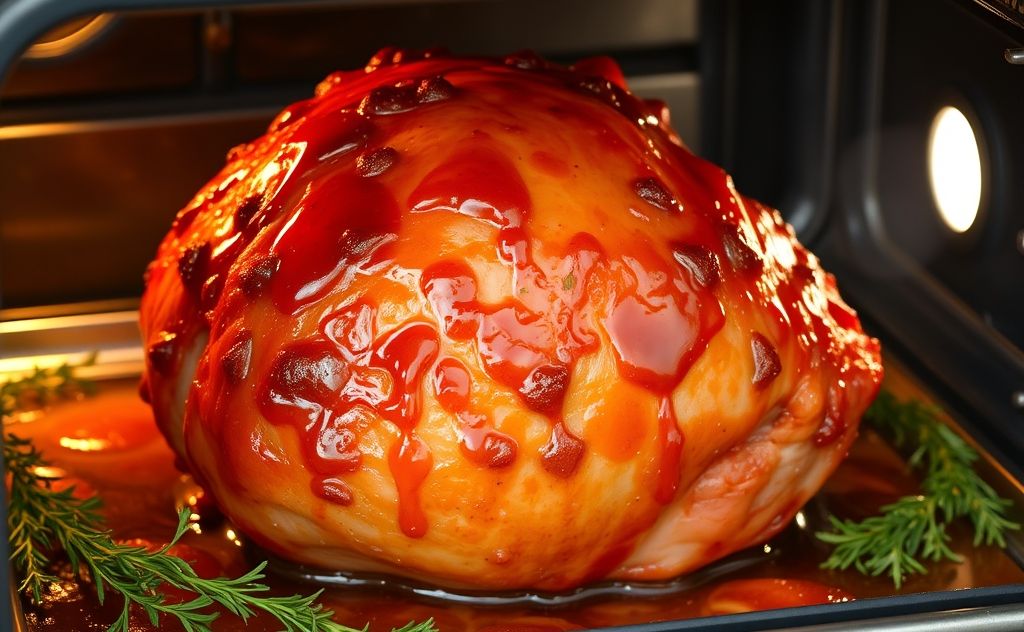
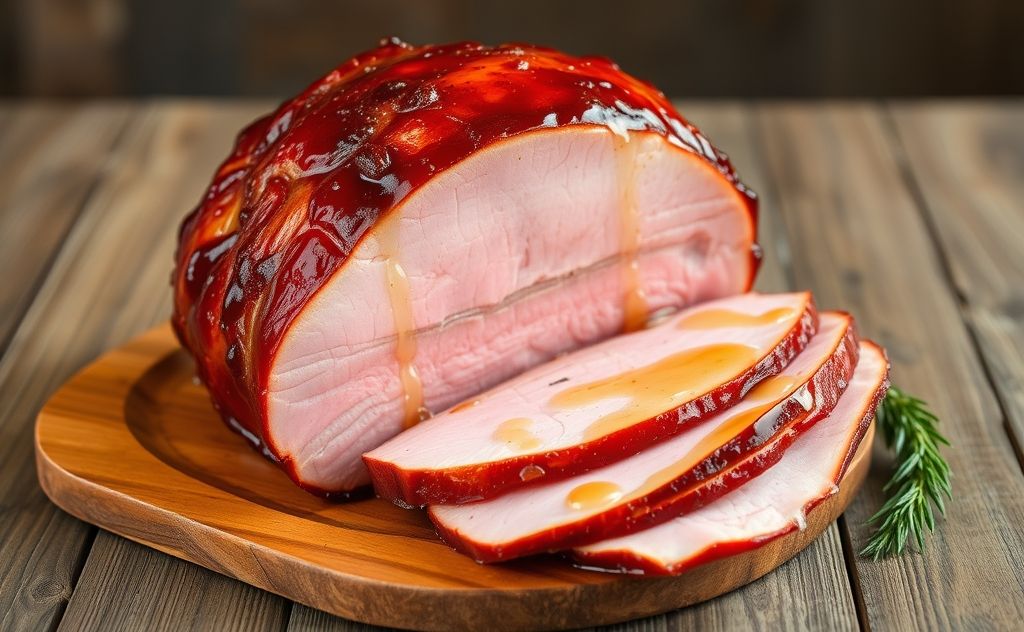
You pull the spiral-cut ham from the fridge. It’s glistening, still wrapped in that signature sugary crust. You know that one wrong move in the oven will turn it into a dry, salty brick. The glaze will burn before the center warms. The slices will separate and lose their moisture. It’s a high-stakes game for a holiday centerpiece.
This guide walks you through the exact method to reheat Honey Baked Ham properly. You’ll get the precise oven temperature, the timing per pound, and the foil technique that traps steam without steaming off the glaze. You’ll also see why the microwave is a trap and how to handle leftover slices for sandwiches.
EHOMEA2Z
EHOMEA2Z Disposable Aluminum Foil Steam Table Pans…
- ALUMINUM FOIL PANS Sturdy pans, great for cooking, roasting or heating in the oven and serving straight to the table.Safe for use…
- PROUDLY MADE IN USA : Recyclable eco friendly aluminium
- DIMENSIONS: Top outer measures 12.75 x 10.25 inches; top inner measures 11.75 x 9.25 inches; bottom measures 10.25 x 8 inches, dep…
You’ll leave with a clear process: tent, heat low, pull early, rest. No guesswork.
To get the best results, you need a pan that conducts heat evenly and can handle the oven’s heat without warping. A disposable aluminum steam table pan works well here. It’s sturdy enough for a 10-pound ham, and the aluminum transfers heat efficiently so the bottom doesn’t scorch while the top waits for warmth.

Why Oven Reheating Beats Microwave and Slow Cooker
Honey Baked Ham is fully cooked. You’re not trying to cook it. You’re trying to warm it to serving temperature without losing the moisture that’s already inside. The microwave does the opposite. It excites water molecules rapidly, which boils off moisture and turns the exterior rubbery. The slow cooker, unless you watch it like a hawk, will braise the ham in its own juices and wash away the glaze.
The oven is the only method that gives you dry, ambient heat. That dry heat, when controlled, keeps the crust intact while the interior warms gently. The key is the temperature. Too hot and the sugars in the glaze caramelize and burn. Too low and you’re waiting three hours for a 10-pound ham.
The sweet spot is 275°F (135°C). At this temperature, the ham heats through in about 12 to 15 minutes per pound. A 10-pound ham takes roughly 2 to 2.5 hours. That sounds long, but you can prep everything else while it warms.
One caveat: every oven runs slightly different. An oven thermometer is worth the $10. If your oven runs hot, the glaze will darken faster than expected. Check the ham at the halfway mark.
The Step-by-Step Oven Method
Here’s the exact process. Follow it and you’ll get a ham that’s tender, juicy, and ready to carve.
- Take the ham out of the fridge 45 minutes before heating. Room temperature ham heats more evenly. Cold ham in a hot oven means the outside warms while the center stays cold.
- Preheat the oven to 275°F (135°C). Do not go higher. The glaze on a Honey Baked Ham contains sugar. Sugar burns at around 320°F. At 275°F, you have a safety margin.
- Score the surface lightly (optional). If the glaze is thick and hard, use a sharp knife to make shallow crosshatch cuts. This lets heat penetrate the crust. Don’t cut deep into the meat.
- Place the ham cut-side down in a roasting pan. The flat cut side should rest on the bottom. This keeps the exposed meat from drying out. Use a rack if you have one, so the bottom doesn’t sit in rendered fat.
- Tent the ham loosely with heavy-duty aluminum foil. This is the most important step. The foil traps steam and creates a mini-oven effect. It keeps the surface moist while the heat penetrates. Crimp the foil around the pan edges, but leave a small gap for steam to escape. A tight seal will make the glaze runny.
- Heat for 12 to 15 minutes per pound. Set a timer. For a 10-pound ham, that’s 2 to 2.5 hours. For a 5-pound half ham, it’s about 1 to 1.25 hours.
- Check internal temperature at the 75% mark. Insert an instant-read thermometer into the thickest part of the meat, avoiding the bone. You’re aiming for 130°F to 140°F (54°C to 60°C) in the center. The ham is already safe to eat cold, so you’re heating for texture, not food safety.
- Remove the foil for the last 15 minutes. This lets the glaze re-crisp and set. Watch it closely. If it starts to darken too much, put the foil back on.
- Rest for 20 minutes before carving. This is non-negotiable. The residual heat continues to rise about 5°F, and the juices redistribute. Cut into it immediately and the slices will crumble.
Pro tip: Save the juices that collect in the pan. They’re liquid gold. Drizzle a spoonful over each slice when you serve it. It adds moisture back with almost no effort.
Handling Leftovers and Single Slices
What if you only have a few slices left for tomorrow’s lunch? The oven method is overkill. For individual slices, use a skillet.
Heat a non-stick skillet over medium-low heat. Add a teaspoon of butter or a splash of water. Place the slice in the pan. Cover with a lid. Warm for 2 to 3 minutes per side. The steam from the water or the butter’s milk solids keeps the meat moist. You’ll get a slight sear on the edges, which is a bonus.
For a larger leftover portion, the foil tent method works in a toaster oven too. Same temperature, same timing, just smaller. Set it to 275°F and check after 10 minutes.
Avoid the microwave for anything thicker than a sandwich slice. The microwave’s uneven heating will create hot spots that dry out the lean muscle fibers. If you absolutely must use it, wrap the slice in a damp paper towel and use 30% power for 60-second intervals. It’s a compromise, not a solution.
Comparison of Reheating Methods
| Method | Temperature | Time per Pound | Moisture Retention | Glaze Integrity |
|---|---|---|---|---|
| Oven with foil tent | 275°F (135°C) | 12-15 minutes | High | Excellent |
| Oven without foil | 275°F (135°C) | 10-12 minutes | Low | Good, but edges burn |
| Slow cooker | Low (200°F) | 1-2 hours total | Medium | Poor, glaze dissolves |
| Microwave | High (varies) | 3-5 minutes total | Very low | Poor, becomes rubbery |
| Skillet (slices only) | Medium-low | 2-3 minutes per side | Medium | Fair |
The oven with foil tent wins on every metric that matters. The slow cooker is convenient but ruins the glaze. The microwave is only for emergencies.
Three Common Mistakes That Ruin the Ham
I’ve seen these three errors ruin more hams than anything else. Avoid them and you’re ahead of most home cooks.
Mistake 1: Cranking the oven to 350°F to speed things up. At 350°F, the glaze burns before the center reaches 100°F. The sugar turns bitter and dark. You’ll see black spots on the crust. There’s no recovery from that. Stick to 275°F and plan ahead.
Mistake 2: Skipping the rest period. You’re hungry, the guests are waiting, and the ham smells incredible. But cutting it right out of the oven releases all the juices onto the cutting board. The slices will look pale and dry. Twenty minutes of rest makes the difference between a great ham and a mediocre one.
Mistake 3: Overheating to 165°F. That’s the USDA guideline for reheating leftovers, but it’s overkill for a cured, fully cooked ham. At 165°F, the muscle fibers have already squeezed out their moisture. You’ll end up with something that tastes like deli meat left out overnight. Target 130°F to 140°F and you’re good.
Frequently Asked Questions
Can I reheat a Honey Baked Ham in the slow cooker?
Technically yes, but the glaze will melt into the liquid at the bottom, and the ham will taste boiled. If you have no oven access, place the ham in the slow cooker with a cup of apple juice, set it on low, and check after 2 hours. Slice and serve immediately, but expect a softer crust.
How do I keep the glaze from burning?
The foil tent is your primary defense. It blocks direct radiant heat from the oven elements. If you want extra protection, brush a thin layer of honey or brown sugar over the glaze before tenting. This acts as a barrier and actually helps the glaze stay glossy.
Can I reheat the ham in its original plastic packaging?
No. The plastic wrap is not oven-safe and will melt. Remove the ham from the packaging, discard the plastic, and place the ham in a pan. If you bought a half ham with a plastic cap on the cut end, remove that too.
Is it safe to eat Honey Baked Ham cold?
Yes. The ham is fully cooked and cured, so it’s safe to eat straight from the fridge. That’s why the internal temperature target for reheating is lower than for raw meat. You’re heating for flavor and texture, not safety.
What’s the best way to reheat a spiral-cut ham without it falling apart?
Spiral-cut hams have pre-sliced layers that separate easily. To keep them intact, place the ham cut-side down in the pan. The weight of the ham holds the slices together. When carving, use a long, thin knife and follow the existing cuts. Don’t saw back and forth.
What to Do With the Leftovers
After the big meal, you’ll have scraps, slices, and maybe the bone. Don’t throw them away. The bone makes an excellent split pea soup base. The leftover slices are perfect for breakfast hash or a ham and cheese omelet.
For storage, wrap the leftover ham tightly in plastic wrap, then in foil. It’ll keep in the fridge for 5 days. For longer storage, freeze slices in a single layer on a baking sheet, then transfer to a freezer bag. They’ll keep for 2 months. Reheat frozen slices directly in a skillet with a splash of water.
If you’re planning a big gathering and need to keep the ham warm for serving, a chafing dish or steam table pan works well. The reheating guide covers the full process in more detail, including timing for partial hams. For a broader look at keeping food warm without drying it out, check the safe heating practices article, which has useful principles for even heat distribution.
One last thing: don’t stress about the exact minute. A ham is forgiving within a 10-minute window. Pull it at 135°F, rest it, and you’ll be fine.
Quick Checklist Before You Serve
- Oven set to 275°F, not higher.
- Ham at room temperature for 45 minutes first.
- Foil tent is loose, not tight.
- Internal temp hits 130-140°F, not 165°F.
- Rest for 20 minutes before carving.
- Save pan juices to drizzle over slices.
- Use a low and slow mindset for any reheating task.
Related guides
Rechargeable Socks That Warm Entire Foot Not Just Toes
Heated Socks for Men, APP Control Heated Socks Women, Electric Rechargeable Thermal Socks, Washab... ✅ Prime Shipping Available…
Best Hot Water Heater Temperature for Safety & Savings
Finding the best hot water heater temperature setting feels like a puzzle. You want safety, efficiency, and comfort,…
Finding the Best Heater Temp for Winter Comfort
Stay cozy this winter! Find out the best heater temp for winter to keep your home warm and…