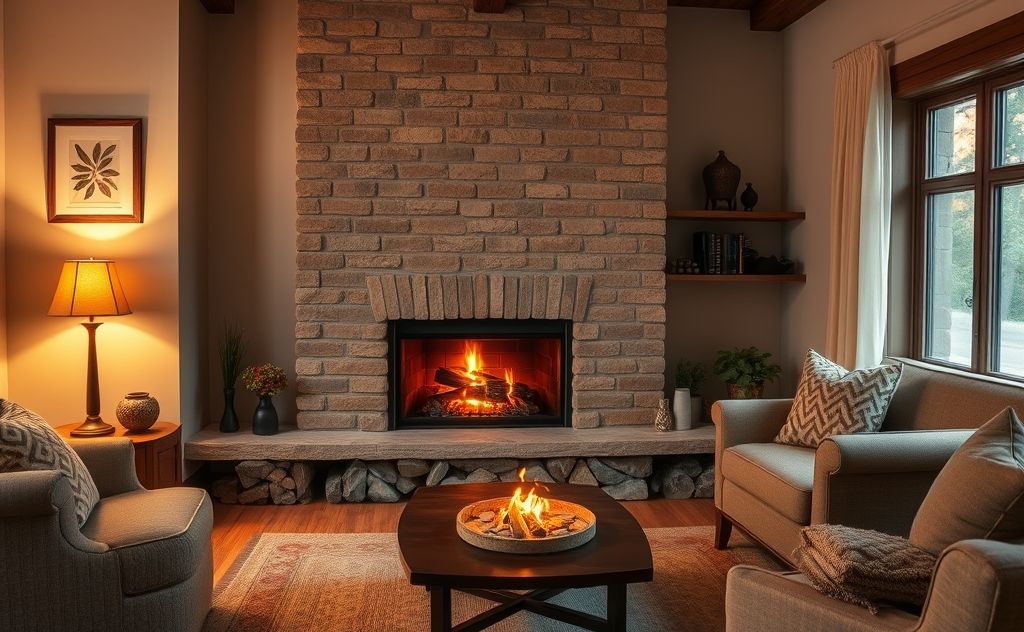
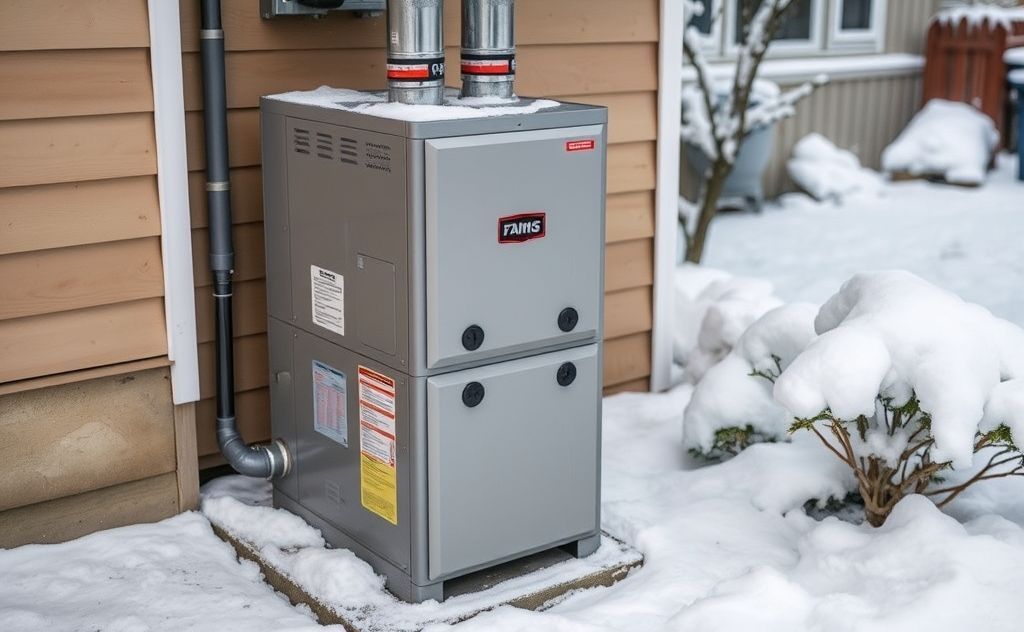
You know that moment in late January when the furnace kicks on and the living room still feels drafty, and you catch yourself doing the math on your last utility bill? That’s the moment most people start researching heating options. The problem is, the market is flooded with efficiency ratings, tax credit promises, and installers who each swear their system is the only one worth buying.
This guide cuts through that noise. You’ll walk away knowing which systems actually make sense for your specific home, how to calculate your real payback period using local fuel prices, what rebates you qualify for in 2026, and the installation hurdles nobody mentions until after you’ve signed the contract. We’ll treat your house as one integrated system, not a collection of appliances.
Rellytech
Rellytech Mini Split AC/Heating System, 12000 BTU,…
- Powerful 12,000 Btu Cooling & Heating: Rellytech mini split AC/heating system delivers 12,000 BTU cooling and 12,500 BTU heating,…
- 4 Modes & Smart Eco Function: Our mini split ductless heat pump features cooling/heating/fan/dry modes for year-round comfort. The…
- Customizable Airflow & Wide Coverage: Rellytech AC split unit includes 4 fan speeds (high/medium/low/Auto) and a 90°vertical swing…
One option worth considering for smaller spaces or room additions is a ductless mini-split. The Rellytech Mini Split AC/Heating System delivers 12,000 BTU of cooling and 12,500 BTU of heating, covering up to 750 square feet. It runs on standard 115V/110V power, which means you don’t need a dedicated 240V circuit, and its 19 SEER2 rating keeps operating costs down. It’s not a whole-house solution, but for a garage, office, or an addition, it’s a practical fit.

The 2026 Heating Landscape: Why “Efficiency” Means More Than AFUE
For decades, the only number that mattered was AFUE (Annual Fuel Utilization Efficiency). A 95% AFUE gas furnace sounds great — 95 cents of every dollar goes to heat. But here’s the catch: that number measures the furnace in isolation, not the house. It ignores electricity for the blower, standby losses from the pilot light, and duct leakage that can waste 20-30% of the heated air before it reaches your rooms.
In 2026, the smarter metric is the system’s performance across an entire heating season, including part-load conditions. That’s where HSPF2 (Heating Seasonal Performance Factor) for heat pumps comes in. A heat pump with an HSPF2 of 8.5 or higher will beat a 95% AFUE gas furnace on cost in most climates, especially where electricity rates are below roughly 16 cents per kWh and natural gas is above $1.50 per therm.
The Shift to Electrification and Grid-Interactive Homes
The Inflation Reduction Act (IRA) changed the math substantially. Federal tax credits now cover 30% of heat pump costs up to $2,000, plus additional incentives for electrical panel upgrades and insulation. Many states stack their own rebates on top. This isn’t a small nudge — it can cut the installed price of a cold-climate heat pump by 40% or more.
Grid-interactive homes are the next layer. Utilities in several states now offer time-of-use rates where electricity is cheaper at night. A heat pump with a smart thermostat can preheat your home during off-peak hours and coast through peak pricing. Pair that with a heat pump water heater and an EV charger, and you’re essentially shifting your energy load to save money without changing your comfort.
The Contenders: A Side-by-Side Comparison of Top Systems
Let’s get specific. Each system below has a sweet spot, and the right choice depends on your ductwork, climate, and fuel prices.
Air-Source Heat Pumps (Cold Climate Models)
Modern cold-climate heat pumps use variable-speed compressors and enhanced vapor injection to maintain full heating capacity down to -5°F or even -13°F. The days of “heat pumps don’t work below freezing” are over — but only if you buy a unit rated for it. Look for models with an HSPF2 of at least 9.0 and a low-temperature capacity rating that shows output at 5°F, not just at 47°F.
The real advantage is efficiency in shoulder seasons. In October and April, a heat pump can deliver 3 to 4 units of heat for every unit of electricity. No gas furnace comes close to that. The downside is installation complexity: you need a competent technician who understands refrigerant charging and duct static pressure, not just someone who can bolt a box to the wall.
Geothermal (Ground-Source) Heat Pumps
Geothermal systems move heat through buried loops of fluid, taking advantage of the stable 50-55°F ground temperature. They deliver a Coefficient of Performance (COP) of 3.5 to 5.0 year-round, regardless of outdoor air temperature. That consistency is their superpower — no efficiency drop in January.
The catch is upfront cost. A residential geothermal loop field runs $20,000 to $40,000 before any equipment costs. Even with the 30% federal credit, payback often stretches to 10-15 years. It makes sense if you’re building new, have significant land for horizontal loops, or plan to stay in the house for two decades. For a retrofit on a tight budget, it’s usually a stretch too far.
High-Efficiency Gas Furnaces & Hybrid Heat
Condensing gas furnaces with 95-98% AFUE remain the workhorses in cold climates where natural gas is cheap. They heat fast, work with existing ductwork, and don’t care about outdoor temperatures. A 98% model uses a secondary heat exchanger to wring extra heat from exhaust gases, but that complexity means more parts that can fail.
The smart play in 2026 is a hybrid or dual-fuel system: a heat pump paired with a gas furnace. The thermostat decides which to run based on outdoor temperature and current fuel prices. Above 35°F, the heat pump runs. Below that, the furnace takes over. This gives you the efficiency of a heat pump without the risk of being stranded on the coldest nights.
Ductless Mini-Splits & Radiant Flooring
Ductless mini-splits are the fastest-growing segment for good reason. They eliminate duct losses entirely, offer zoned heating (you only heat the room you’re using), and install in hours, not days. The best heating options for home often include a mini-split for additions or converted garages where running ductwork is impossible. The main drawbacks: visible wall units and the need for professional installation.
Radiant flooring is the luxury option. Warm water tubes or electric mats under the floor provide even, silent heat that feels different from forced air — no dust blowing, no cold spots. Hydronic systems require a boiler, which adds cost. Electric radiant is cheaper to install but expensive to run unless it’s in a small bathroom or a single room. It’s a comfort investment, not an efficiency play.
The Hidden Costs: Installation, Noise, and Indoor Air Quality
Efficiency ratings don’t tell you how loud a system is or what it does to your air. Let’s address both.
Noise ratings matter more than most people think. A furnace blower at 70 dB in the hallway will wake you up at 3 a.m. Heat pumps have two noise sources: the outdoor compressor unit (typically 55-65 dB) and the indoor air handler. Ductless mini-splits are the quietest — many operate around 42 dB indoors, which is quieter than a refrigerator. If you’re a light sleeper, look for a unit with a low decibel rating and place the outdoor unit away from bedroom windows.
Indoor air quality (IAQ) is the other hidden variable. Forced air systems recirculate dust, pet dander, and anything else in your ductwork. Radiant systems don’t move air at all, which is a blessing for allergy sufferers. Heat pumps and mini-splits have multi-stage filters that catch more particulates than a basic furnace filter. If you have asthma or allergies, this alone might justify the switch.
Installation quality is the biggest wildcard. A poorly installed heat pump can underperform by 30% and consume more power than a well-maintained 15-year-old furnace. Always get three quotes, ask for references, and verify the contractor is certified by the manufacturer for the specific brand they’re installing.
How to Calculate Your Real-World Payback Period (With a Simple Formula)
Forget generic “you’ll save 40%” claims. Here’s how to calculate your actual payback in five steps.
- Find your annual heating load in therms or kWh. Look at your last 12 months of utility bills. Add up the gas used in winter months, or the electricity used by your current heat source. Convert everything to a common unit: one therm of natural gas equals 29.3 kWh.
- Calculate your current annual heating cost. Multiply your annual therms by your local gas rate, or your annual kWh by your electric rate. Write this number down.
- Estimate the new system’s annual cost. For a heat pump, divide your annual heating load (in kWh) by the HSPF2 rating. That gives you the kWh the heat pump will consume. Multiply by your electric rate. For a gas furnace, divide therms by AFUE (as a decimal) and multiply by your gas rate.
- Subtract the new cost from the current cost. That’s your annual savings. It will be negative if the new system costs more to run — which happens if your electricity is very expensive.
- Divide the installed cost (minus rebates) by your annual savings. The result is your payback period in years. If it’s longer than the system’s expected lifespan, you’re making a comfort choice, not a financial one.
Here’s a worked example. Your home uses 800 therms per year at $1.40 per therm, so you spend $1,120 annually. A cold-climate heat pump with an HSPF2 of 9.5 will use about 2,470 kWh (800 therms x 29.3 / 9.5). At $0.15 per kWh, that’s $370 per year. Annual savings: $750. If the installed heat pump costs $12,000 and you get $2,000 in federal credits, your net cost is $10,000. Payback: 13.3 years. That’s borderline. If your state adds a $1,500 rebate, payback drops to 11.3 years.
Pro tip: run this calculation before you call any contractor. It takes 15 minutes and prevents you from being swayed by sales pitches.
The 2026 Rebate & Tax Credit Cheat Sheet (IRA Explained)
The federal tax credits are straightforward. You get 30% of the installed cost for heat pumps, heat pump water heaters, and biomass stoves, capped at $2,000 per year. Geothermal systems get a separate 30% credit with no dollar cap. These are tax credits, not deductions — they reduce your tax bill dollar-for-dollar.
State rebates vary wildly. Some states offer point-of-sale rebates that reduce your upfront cost immediately. Others require an application after installation. A few states have income-qualified programs that cover 50-100% of the cost for low- and moderate-income households. Check the Database of State Incentives for Renewables & Efficiency (DSIRE) to see what’s available in your zip code.
One practical detail: the federal credit applies to the total installed cost, including labor. Many people miss this. If your heat pump costs $8,000 in equipment and $4,000 in labor, the credit is 30% of $12,000, not 30% of the equipment. Keep all invoices and the manufacturer’s certification statement for your tax records.
What to Do If Your Home Isn’t Ready for a Heat Pump (Panel Upgrades, Ductwork)
You’ve done the math, the heat pump makes sense, and then the electrician says your 100-amp panel can’t handle the new load. This is the “electrification failure” scenario, and it’s more common than you’d think. A typical heat pump needs a 30-50 amp circuit, and older homes with electric ranges and dryers often have no spare capacity.
Your options, in order of cost: First, add a sub-panel for the heat pump. This runs $1,000-$2,500 and often solves the problem without a full service upgrade. Second, install a load-shedding device. These smart switches monitor total house load and temporarily cut power to the heat pump when the dryer or oven is running. They cost $500-$1,000 and work well for homes that rarely hit peak loads. Third, upgrade to a 200-amp panel. This costs $2,000-$5,000, but the IRA offers a credit for electrical panel upgrades when done in conjunction with a heat pump installation.
Ductwork is the second hurdle. Your existing ducts might be undersized, leaky, or located outside the conditioned envelope. A blower door test and duct leakage test will tell you. Sealing and insulating ducts costs $1,500-$3,500 and usually pays back in two to three years through reduced losses. If your ducts are too small, a high-static heat pump or a ductless system might be the better path.
The 2026 Maintenance Calendar: Keeping Your System at Peak Efficiency
Every heating system drifts from its rated efficiency over time. A simple maintenance routine keeps you close to the sticker numbers. Here’s what to do and when.
Fall (September-October): Replace or clean filters on all forced air systems. For heat pumps, clean the outdoor coil with a gentle stream of water and check that the unit is level. For gas furnaces, inspect the flue pipe for blockages and test the carbon monoxide detector. For radiant systems, bleed the radiators to remove trapped air.
Winter (December-February): Check the condensate drain on high-efficiency furnaces and heat pumps — a clogged drain will shut the system down. Clear snow and ice away from the outdoor heat pump unit. Keep the area within 24 inches clear of debris.
Spring (March-May): Switch to cooling mode and verify the system transitions properly. Lubricate blower motor bearings if your unit has oil ports. Check the refrigerant line insulation for cracks or gaps.
Summer (June-August): This is the best time to schedule a professional tune-up. Contractors are slow, and you can negotiate better rates. Have them check refrigerant charge, measure airflow, and verify thermostat calibration.
Pro tip: buy a pack of high-quality filters (MERV 8 or higher) and set a reminder on your phone to change them every three months. This one habit extends equipment life and keeps efficiency high.
Final Verdict: The Best Way to Heat Your Home in 2026
There’s no single best system, but there is a best strategy. Treat your home as a system, not a collection of appliances.
- If you have ductwork and cheap natural gas, a hybrid heat pump + gas furnace is the smartest play. It captures heat pump efficiency in mild weather and gas reliability in deep cold.
- If you have no ducts, ductless mini-splits are the clear winner. They’re efficient, quiet, and zoneable. The best alternative home heating options often start here.
- If you’re building new or renovating, consider radiant flooring for comfort and a heat pump for the rest of the house.
- If you’re on a tight budget, a high-efficiency gas furnace with a smart thermostat is a solid, low-risk choice.
Quick Recommendations by Home Type
Small home or apartment (under 1,000 sq ft): A single ductless mini-split covers most of the space. Look for a 12,000 BTU unit like the Rellytech model mentioned earlier. It handles 750 sq ft and runs on standard 115V power, so installation is simpler.
Medium home with existing ducts (1,500-2,500 sq ft): A cold-climate heat pump with a backup heat strip or a hybrid system. Get a load calculation done before choosing the size.
Large home or open-plan layout (over 3,000 sq ft): A two-stage or variable-speed heat pump with multiple zones, or a geothermal system if you’re staying long-term. Zoning is essential to avoid heating unused rooms.
Old home with radiators: Keep the boiler if it’s in good shape, but consider adding a heat pump for shoulder seasons. This lets you turn off the boiler when outdoor temperatures are above 40°F.
Three Mistakes to Avoid
- Sizing by square footage alone. BTU requirements depend on insulation, window area, ceiling height, and climate. Insist on a Manual J load calculation. An oversized system short-cycles, wastes energy, and fails to dehumidify properly. An undersized system runs constantly and still never catches up.
- Ignoring the backup heat question. In cold climates, a heat pump without adequate backup will struggle during extreme cold snaps. Know your system’s low-temperature cutoff and have a plan for those three nights a year when it hits -10°F.
- Choosing the cheapest installer. Heat pumps are precision machines. A sloppy installation can cost you more in wasted energy over five years than you saved on labor. Pay for competence; it’s the cheapest insurance you’ll buy.
For more context on the broader options landscape, check out best ways to heat house — it covers additional approaches like wood stoves and solar-assisted systems that might fit your specific situation. And if you’re wondering about the ideal thermostat setting to balance comfort and cost, the best heat temperature in a home guide offers practical numbers.
The bottom line: 2026 is the year to stop thinking about heating as a single appliance and start thinking about it as a system. Run the numbers, check your rebates, and hire someone who does load calculations, not guesses. Your wallet — and your winter comfort — will thank you.
Related guides
Cozy Up This Winter with the Best Indoor Electric Space Heater!
Stay cozy this winter! Find the best indoor electric space heater to keep your home warm and energy-efficient.…
Sacramento’s Best Water Heater Repair: Fast & Reliable Fixes
For the best water heater repair in Sacramento, trust licensed professionals who offer prompt service and reliable solutions…
Seamlessly Cozy: The Best Heated Mattress Pads Reviewed
Cozy up with the best heated mattress pads for ultimate warmth and comfort. Sleep better tonight—your perfect night's…