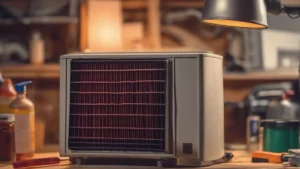
The best pick for most garages is Product 1 because its 240V, 4,000-watt output is strong enough for up to 500 sq. ft. without jumping straight to a hardwired 10 kW unit. That matters because a garage heater that’s too small wastes time and one that’s too large can trip the breaker, cook your bill, or leave cold corners anyway.
What to remember
For most single-bay garages, a 240V unit around 4,000 watts is the practical middle ground.
A 1,500-watt plug-in heater is fine for spot heat, not for a whole drafty garage.
Hardwired 10,000-watt heaters belong in bigger spaces with the right breaker and wiring.
Ceiling mounting saves floor space, but you need enough clearance and a secure bracket.
If your garage is uninsulated, expect the heater to run longer and cost more.
A garage is a bad place to guess. Miss the voltage, the wattage or the mounting style, and you end up with a heater that warms the ceiling, not your hands.
Pick by room size, circuit capacity and how long you actually stay in there. The cheapest mistake is a heater you do not have to replace; the expensive one is the fire risk.
Best for Garages up to 500 sq. ft. with a 240V circuit
Product 1 is a solid choice for garages needing strong, whole-area heating: its 240V, 4,000-watt output covers up to 500 sq. ft. The 20-amp electrical requirement gives a clear guideline for circuit capacity before installation. Choose this model when a 120V plug-in heater won’t provide enough heat for the space.
Voltage 240VOutput 4,000 wattsElectrical rating 20 ampsCoverage Up to 500 sq. ft.
Why it made the cut
4,000-watt output for up to 500 sq. ft.
240V electric design
20-amp electrical specification
Good to know
Requires a 240V circuit
No mounting method is listed
Skip it if Skip it if your garage only has standard 120V outlets and you don’t want electrical work.
Best for Large garages or shops needing powerful hardwired heat
Product 3 is the high-output choice, with 10,000 watts, adjustable power levels and wall-mounted or hanging installation. Its digital temperature control is designed to hold a temperature difference of 2°F, while the remote and 9-hour timer make overhead operation easier. The required breaker rating of at least 42A puts this in the hardwired, larger-garage category.
Best for Localized radiant heat over two work areas
Product 2 uses dual quartz tubes to warm people and objects directly in front of each heater, which suits a workbench better than trying to heat every cubic foot. Each unit offers 750W and 1,500W settings, a built-in halogen work light and 90° adjustment. The two-pack also saves floor space because both heaters mount to the ceiling.
Voltage 120VOutput 1,500W/750WMounting Ceiling mountedAdjustment 90°Package 2 electric garage heaters
Why it made the cut
Two ceiling-mounted heaters
750W and 1,500W settings
90° adjustment and built-in work light
ETL Listed
Good to know
Radiant heat is most effective in front of the heater
Each unit uses a 120V plug
Less suited to heating an entire large garage
Skip it if Skip it if you need even whole-room air heating instead of targeted warmth at specific work areas.
Best for Small covered work areas and damp garage zones
Product 5 is a portable 1,500-watt fan heater with a 0-25° adjustable body, so you can aim warm air at a bench or work area instead of heating the ceiling. Its alloy steel housing, IP24 rating, overheat protection and ETL certification suit covered damp work areas. Fan-only mode also gives it a job when the garage doesn’t need heat.
Best for Small garage work areas up to 200 sq. ft.
Product 4 is a portable 1,500-watt PTC ceramic heater rated for areas up to 200 sq. ft. Its fan-only, 750W and 1,500W modes let you scale the output, while the handle and non-slip base make moving it between work areas straightforward. The 7.8-foot wire gives you more placement flexibility than a very short cord.
Output 1,500WCoverage Up to 200 sq. ft.Technology PTC ceramicCord length 7.8 ftModes Fan-only, 750W and 1,500W
Why it made the cut
Rated for up to 200 sq. ft.
750W, 1,500W and fan-only modes
Portable handle and non-slip base
Overheat protection
Good to know
Only 1,500 watts at maximum output
Listed as an outdoor and patio heater
Portable design won’t distribute heat through a large garage
Skip it if Skip it for enclosed garage heating unless the manual specifically approves that use; it’s marketed as an outdoor and patio heater.
Electric heaters for garages work by turning electricity into resistance heat, then spreading it with a fan or sending it straight out from a radiant element. A fan warms more of the room; a radiant element warms whatever sits in its line of sight, so a heater can feel hot while the far side of the garage stays cold.
The best way to heat a garage starts with voltage and amperage, then wattage, mounting style and the safety listing. A standard 120V, 1,500W plug-in heater draws about 12.5A, which leaves little headroom on a typical 15A circuit. A 240V garage heater can deliver more heat at a lower current than an equally powerful 120V design, but it needs the right circuit and installation.
1
Check voltage and amperage
Match the heater to the circuit before comparing heat output. Plug-in 120V models suit light-duty spot heating; 240V models usually handle the real garage work.
2
Compare wattage
Wattage tells you how much electrical heat the unit can make. A 1,500W heater is roughly 5,100 BTU per hour of electric input; a heater near 4,000W has more than twice that input.
3
Choose the mounting style
A ceiling or wall mount saves floor space and keeps the heater away from boxes, sawdust and vehicles. The mount must be solid, correctly positioned and installed as the manual requires.
4
Check the safety listing
Look for a UL, ETL or CSA listing, plus overheat protection and a tip-over switch where the model’s design allows one. A listing doesn’t make a bad location safe.
Garage job
Heater type to consider
What to expect
Spot heat
120V, 1,500W plug-in heater
Warms a person or workbench area; limited whole-room heat
Medium garage
240V heater near 4,000W
More useful for heating the room when the circuit supports it
Large or very drafty bay
A properly sized higher-output unit
Needs a suitable circuit, mounting and envelope improvements; don’t pick by wattage alone
Use the heater’s voltage, wattage and installation requirements together.
A quick fit check
The Dura Heat 240V Electric Space Heater is the sensible type for a garage that needs room heat rather than a warm patch in front of the workbench. The Shinic 120V units fit lighter spot-heating jobs, especially where a 240V circuit isn’t available.
For heating garages, airflow matters as much as the heating element: keep the discharge path clear so warm air can reach the room instead of bouncing off a wall. A patio heater or other outdoor-rated unit isn’t a substitute for an indoor-rated garage heater.
How Much Heat A Garage Needs
A garage without insulation needs more heat and better air sealing before it needs a giant heater; for many small spaces, 1,500W is spot heat while a unit around 4,000W is the practical middle ground. The right choice depends on the garage’s size, leaks, insulation and circuit.
Worked examples
Say a small detached garage has a closed door, modest insulation and one person working near a bench. A 1,500W heater may make that work area comfortable, but it won’t reliably heat every corner. A larger drafty garage with an unsealed overhead door can lose heat faster than a small heater supplies it, so a heater near 4,000W is more useful if the circuit and mounting support it. Neither example promises a particular indoor temperature.
Small detached garage1,500W for spot heat
Larger drafty garageAbout 4,000W as a mid-range choice
Main variablesInsulation, air leaks, door seals and ci
For heating a garage without insulation, start with the gaps around the overhead door, service door and windows; adding insulation and sealing leaks can save more heat than stepping up to a larger element. That is also the efficient way to heat a garage and cool it later, because the same sealed envelope slows unwanted heat movement in both directions.
12.5 A
A 1,500W heater at 120V
The calculation is 1,500W ÷ 120V = 12.5A, so a plug-in heater can use most of a standard 15A circuit by itself.
Use this simple running-cost formula: divide watts by 1,000, multiply by hours per day, multiply by days used, then multiply by your electric rate. The block below assumes eight hours a day for 30 days at 17 cents per kilowatt-hour; your bill will change with runtime and rate.
Heater
Watts
Per hour
Per day (8 h)
Per month (30 days)
1,500 W heater
1,500 W
26¢
$2.04
$61.20
4,000 W heater
4,000 W
68¢
$5.44
$163.20
Calculated at 17¢ per kWh. Sample comparison at 8 hours per day, 30 days and $0.17 per kWh. A thermostat may reduce actual runtime, but the heater’s full-load cost uses these wattages.
A 10,000W unit only makes sense for a genuinely large heat load and a circuit and breaker designed for it. It isn’t a shortcut for a leaky small garage; without enough electrical capacity, the heater won’t be a safe upgrade.
For the middle ground
Dura Heat 240V Electric Space Heater for Garage, 3750W, 12800 BTU
The Dura Heat 240V Electric Space Heater fits the common case where a small detached garage needs more than plug-in spot heat but doesn’t call for a 10,000W installation.
A garage heater belongs on a properly sized wall outlet or hardwired circuit, never on an extension cord or power strip. A 220-volt garage heater is usually a 240V appliance, and a 4,000-watt model draws about 16.7 amps (4,000 ÷ 240), so the breaker, wire and disconnect must match the manual and local code.
For a garage wall heater natural gas installation, choose an indoor-rated, listed appliance with the venting and clearances its manual requires, then have the gas and vent work handled by a licensed professional where local rules require it. Propane heaters for garages follow the same indoor-use rule and need the ventilation specified by the manufacturer plus a working carbon monoxide alarm. A patio heater, torpedo heater or construction heater doesn’t belong in a garage, and a diesel heater is only suitable when it is specifically rated for the space with exhaust routed outdoors as directed.
Top rated electric garage/shop heaters should have tip-over protection and overheat protection, along with a UL, ETL or CSA listing where that model carries one. Those safeguards help with a blocked intake or a knocked-over unit, but they don’t replace clearance around the heater or a sound circuit. The Dura Heat 240V electric garage heater is the kind of installation that deserves a circuit check before you mount it.
Before You Power It
Read the manual’s front, side, rear and ceiling clearances; the listed distances win over a guess.
Mount the heater at the height and angle the manual specifies, with the discharge path clear.
Keep cardboard, sawdust, paint, solvents, gasoline, propane cylinders and stored clothing away from the intake and hot-air outlet.
Confirm the breaker and wire serve the heater’s voltage and amperage; don’t share a marginal circuit with a compressor or welder.
Test the tip-over and overheat protections only as the manual permits, and keep a working smoke alarm and carbon monoxide alarm in appropriate locations.
Fuel Changes The Risk
Opening the garage door a crack is not a substitute for the required ventilation on a fuel-burning heater. Carbon monoxide has no reliable smell; shut the heater down and leave if the alarm sounds, then call emergency services from outside.
One Useful Distinction
A 120V, 1,500-watt heater can plug into a suitable wall receptacle, but it still draws about 12.5 amps. A 240V unit usually needs a dedicated circuit and may need hardwiring, so an electrician should handle new 240V work.
The Bit Competitors Leave Out
A garage heater fixes winter temperature; it doesn’t provide fresh air, remove moisture or cool the room in July. Cost to install garage ventilation has no single honest figure because the job may involve a wall or roof penetration, a fan, controls, wiring and a route for replacement air.
Ventilation deserves its own plan when you paint, store fuel, run a server or regularly find a damp slab floor. A fan can remove fumes and humid air, but it shouldn’t be aimed at a fuel-burning heater unless the appliance manual and local code allow that arrangement. Dehumidification may be the better answer for condensation on tools, walls or the garage door.
Garage heating and cooling options usually split into two systems: a winter heater and a summer cooling method. If you want garage heating and cooling from one setup, look at a properly sized mini-split or heat pump instead of expecting a plug-in garage heater to do both jobs; that is a different buying decision and installation category.
Myth
One hot-air appliance can heat the garage in winter and cool it in summer.
Fact
A heater adds heat, so it cannot cool the garage when the outdoor temperature rises. Fans move air without lowering its temperature, while an air conditioner or heat pump must move heat outside.
A heat pump water heater can make a garage somewhat cooler while it operates because it pulls heat from the surrounding air, and it also needs a suitable space and a condensate drain. That makes a heat pump water heater a possible side effect to consider, not a dependable answer to how to cool a garage.
Plan Around The Garage’s Job
Choose the heater for winter first, then plan ventilation or cooling separately if the garage stores fuel, holds a server, produces fumes, develops damp floors or doubles as a workspace.
Questions People Ask
How do space heaters for garages work?
Electric garage heaters turn electricity into heat, then either push it around with a fan or radiate it toward nearby surfaces. A thermostat cycles the heating element off at the set temperature, so the fan and element may stop before the garage feels evenly warm. Radiant heaters warm you and the workbench first; fan-forced models spread heat farther.
What size heater do I need for a small detached garage?
Start with the garage’s square footage, insulation and air leaks rather than floor area alone. A well-sealed garage up to about 500 square feet can suit a 4,000-watt heater, while an uninsulated space may need air sealing before more output helps. Measure the circuit before choosing a 240V model.
Is a 1,500-watt heater enough for a garage?
A 1,500-watt heater can warm a small, insulated garage area or a single work zone, but it usually won’t heat a drafty garage evenly. At 120 volts, it draws about 12.5 amps, which nearly maxes out a standard 15-amp circuit. Always plug the heater directly into a dedicated wall outlet to avoid overloading wiring or causing a fire risk.
Can I use a propane heater in my garage?
Only use a propane heater specifically listed for indoor use, with the ventilation required by its manual and a working carbon monoxide alarm. An indoor-rated propane model should have an oxygen depletion sensor, and you must keep it away from gasoline, solvents, sawdust and other ignitable materials. Patio, construction and outdoor propane heaters don’t belong in a garage.
Do I need ventilation for a garage heater?
Electric heaters don’t burn fuel or consume oxygen, but ventilation still matters if a vehicle runs in the garage or fumes collect from paints and solvents. Fuel-burning heaters require the exact ventilation stated in the manual, plus a working carbon monoxide alarm. Never treat an open garage door as permission to ignore the heater’s instructions.
What is the best way to heat and cool a garage?
A properly sized heat pump is usually the better year-round choice when you need both heating and cooling, because one system handles both jobs more efficiently than electric resistance heat. Improve the garage door seals and insulation first; otherwise, heated air leaves through the same gaps that defeat cooling. Choose a dedicated electric heater instead when you only need occasional winter heat and don’t want a permanent installation.